
Executive Function Monitor Template for ADHD Management
Navigating neurodivergence requires specialized tools to manage daily cognitive demands effectively. An ADHD executive function monitor template serves as a vital visual framework for tracking working memory, emotional regulation, and task initiation. By documenting patterns in focus and impulse control, individuals can identify specific triggers and optimize their productivity routines.
This structured approach reduces mental fatigue while supporting better time management and self-regulation. Utilizing a dedicated tracker empowers users to implement sustainable coping strategies. Please check already made variation of templates below.
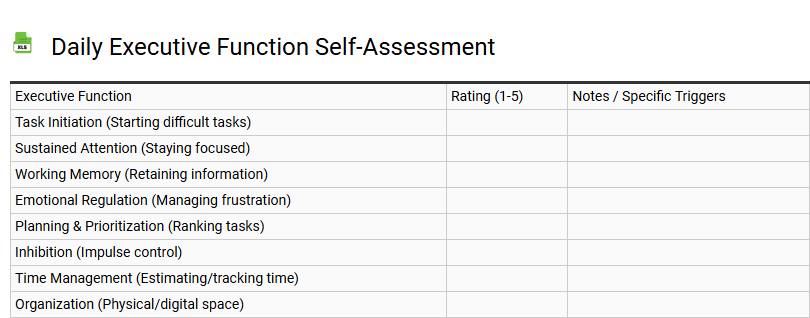
Daily Executive Function Self-Assessment
💾 Daily Executive Function Self-Assessment .xls
This daily executive function self-assessment template serves as a vital tool for monitoring cognitive control and self-regulation skills. By engaging in consistent reflection, individuals can track their capacity for task initiation, impulse control, and working memory efficiency.
Utilizing this structured framework allows for better management of cognitive load and identifies specific areas needing support, such as:
- Time management and prioritization.
- Emotional regulation during high-stress transitions.
- Maintaining sustained focus and organization.
This systematic approach enhances personal productivity and mental clarity by highlighting patterns in behavioral performance. Incorporating these metrics into a routine fosters proactive goal setting and improves overall executive dysfunction management. Designed to optimize mental bandwidth, the template streamlines the evaluation of planning and adaptive thinking abilities for improved daily outcomes.
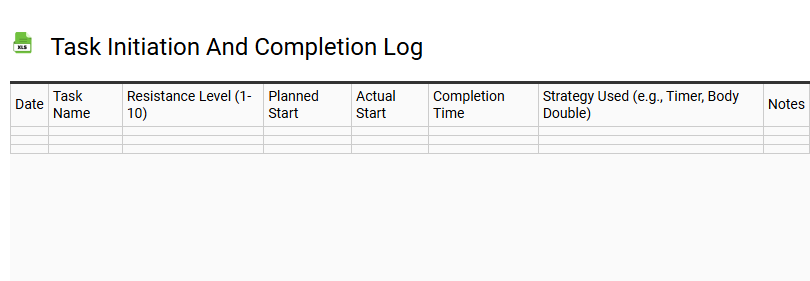
Task Initiation and Completion Log
💾 Task Initiation and Completion Log .xls
A task initiation and completion log serves as a vital productivity tracking tool designed to optimize workflow efficiency. This structured template captures essential timestamps, including precise start times and finish times, to ensure total accountability across all project milestones. By documenting operational cycles and task duration, organizations can identify bottlenecks and refine resource allocation strategies.
Each log entry functions as a critical performance metric, facilitating enhanced time management and administrative transparency. Utilizing this activity log provides a comprehensive audit trail for process monitoring and quality assurance. Whether managing asynchronous collaboration or individual output, this documentation system ensures deliverables consistently meet deadlines. Implementing a robust monitoring log transforms raw data points into actionable workflow insights, ultimately driving continuous operational improvement and strategic planning success.
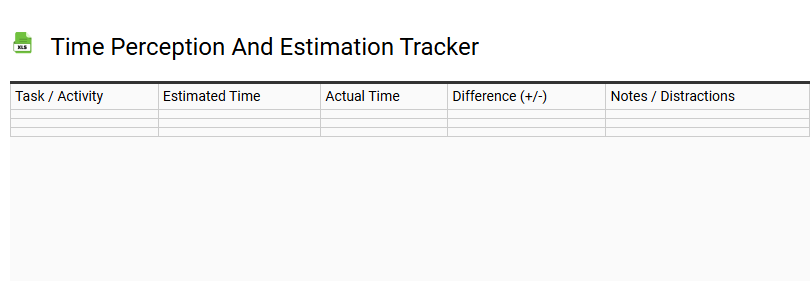
Time Perception and Estimation Tracker
💾 Time Perception and Estimation Tracker .xls
Utilizing a Time Perception and Estimation Tracker is essential for reconciling subjective time with objective reality. This systematic tool helps identify the planning fallacy, a cognitive bias where individuals underestimate task duration. By documenting predicted versus actual time spent, users enhance their temporal awareness and refine their internal clock for superior scheduling precision.
Key benefits of conducting a consistent time audit include:
- Improved task forecasting and workload management.
- Minimizing time dilation during high-intensity focus intervals.
- Optimizing flow states by aligning capacity with demands.
- Gathering productivity metrics to eliminate scheduling friction.
This template provides a framework for temporal projections, ensuring daily goals align with actual bandwidth. Tracking these data points fosters an accurate psychological perception of time, leading to enhanced project delivery, better time-blocking habits, and reduced stress through realistic expectations.
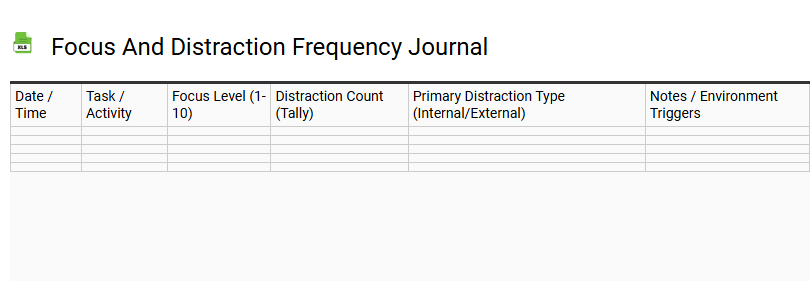
Focus and Distraction Frequency Journal
💾 Focus and Distraction Frequency Journal .xls
A Focus and Distraction Frequency Journal serves as a robust productivity framework designed to audit daily workflow efficiency. By leveraging this structured template, users can meticulously track peak concentration levels and pinpoint specific triggers that disrupt deep work sessions. Monitoring the frequency of interruptions-including digital notifications and internal cognitive drift-enables data-driven adjustments to your immediate environment.
This systematic log enhances mindful awareness, helping professionals manage mental energy while minimizing costly context switching. Implementing such a tracking system fosters an optimized state of flow, effectively reducing cognitive load and accelerating task completion rates. Utilize this journal to refine your time management strategy, cultivate sustainable focus habits, and reclaim your attention span within a fragmented digital landscape.
Eisenhower Matrix Priority Planner
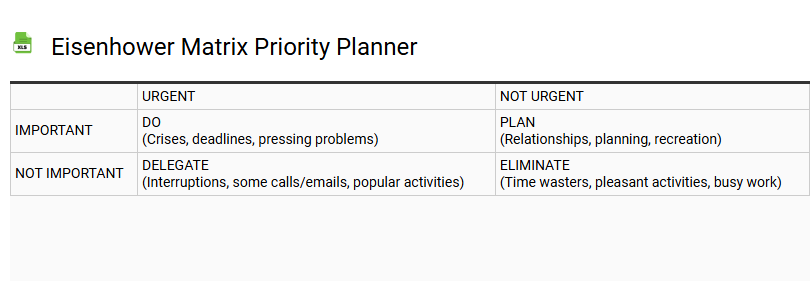
💾 Eisenhower Matrix Priority Planner .xls
The Eisenhower Matrix Priority Planner is a strategic productivity framework that categorizes tasks based on two key metrics: urgency and importance. This logical segmentation allows users to visualize their workload and allocate energy toward high-impact objectives while minimizing distractions.
- Do (Urgent & Important): Immediate priorities that require swift action to avoid negative consequences.
- Schedule (Important & Not Urgent): Strategic goals and personal development that foster long-term growth.
- Delegate (Urgent & Not Important): Necessary administrative tasks that can be handled by others to free up cognitive bandwidth.
- Eliminate (Neither): Time-wasting activities and low-value interruptions that should be removed.
By utilizing this matrix template, professionals can reduce decision fatigue and shift from reactive firefighting to proactive planning, ensuring that daily efforts align with core mission-critical results.
Dopamine Activity and Mood Correlation Log
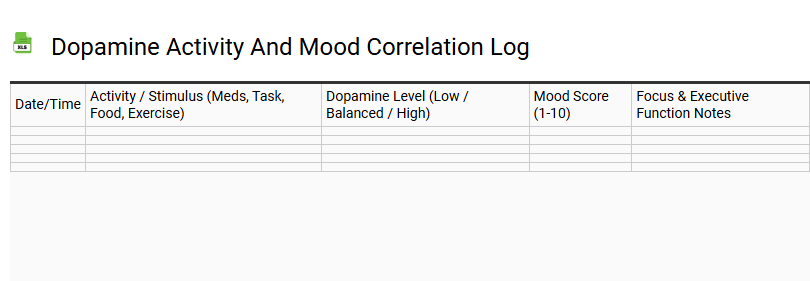
💾 Dopamine Activity and Mood Correlation Log .xls
This Dopamine Activity and Mood Correlation Log serves as a sophisticated tool for analyzing the intricate relationship between specific behaviors and neurotransmitter fluctuations. By documenting daily stimulus-response patterns, users can identify how reward-seeking behaviors, physical exertion, or digital consumption impact their baseline mood and long-term motivation. Monitoring these behavioral triggers provides critical insights into the brain's reward circuitry and overall mental wellness.
- Record habitual triggers and subsequent emotional shifts.
- Analyze the impact of lifestyle choices on cognitive performance and focus.
- Identify dopamine spikes and potential crashes to improve emotional regulation.
- Establish data-driven correlations between brain chemistry and productivity.
Utilizing this log facilitates neuroplasticity and helps in engineering a balanced lifestyle through targeted behavioral activation. By recognizing these patterns, you can optimize your internal reward system for sustained mental clarity and emotional stability.
Medication Side Effect and Efficacy Chart
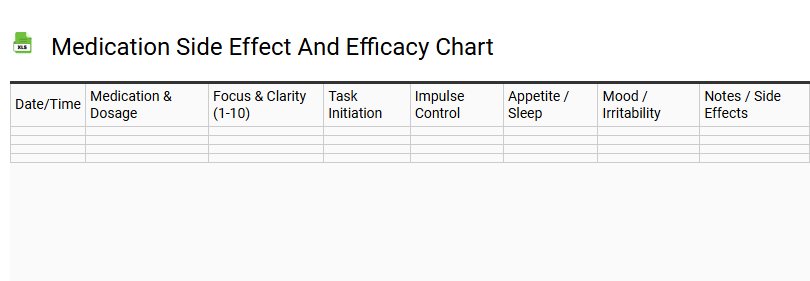
💾 Medication Side Effect and Efficacy Chart .xls
A comprehensive medication side effect and efficacy chart serves as a vital clinical tool for monitoring pharmaceutical outcomes and patient safety. By documenting specific adverse reactions alongside therapeutic benefits, healthcare providers can analyze the dose-response relationship to optimize treatment adherence. This structured template facilitates the tracking of:
- Drug interactions and potential contraindications.
- Secondary symptoms and pharmacological tolerance.
- Clinical efficacy and symptom relief progression.
- Necessary dosage adjustments based on empirical data.
Utilizing a standardized log ensures precise symptom management and improves health outcomes. Patients and clinicians benefit from a clear visualization of how pharmacological interventions impact overall wellness. Integrating this data into a medical record promotes long-term safety and minimizes the risks associated with polypharmacy during chronic disease management.
Working Memory Brain Dump Template
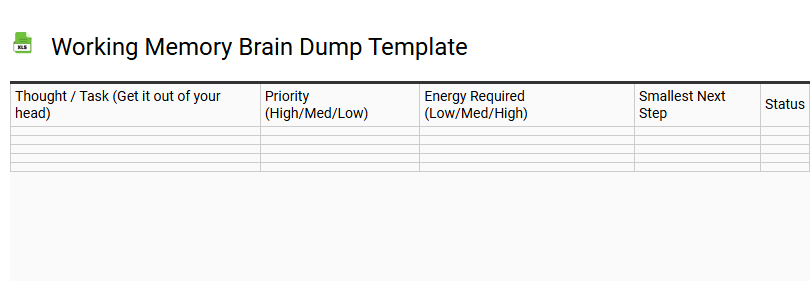
💾 Working Memory Brain Dump Template .xls
A working memory brain dump template serves as a critical cognitive tool designed to minimize cognitive load and maximize mental bandwidth. By externalizing internal thoughts, users can bypass the inherent limitations of short-term memory, allowing for more efficient information processing. This structured approach enhances executive function by capturing intrusive ideas, fleeting inspirations, and pending tasks into a centralized system, facilitating immediate cognitive decluttering.
Implementing this productivity workflow fosters mental clarity and significant stress reduction. It prevents the psychological strain of juggling multiple data points, optimizing the brain's capacity for deep work and complex problem-solving. This neuroplasticity-friendly habit ensures that critical information is preserved externally, transforming chaotic mental states into organized, actionable insights. By offloading the mental burden, you maintain peak focus and improve overall task management efficiency.
Sensory Trigger and Overload Log
💾 Sensory Trigger and Overload Log .xls
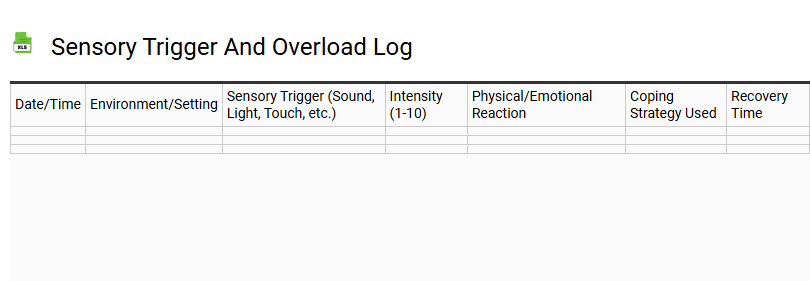
A sensory trigger and overload log serves as a critical diagnostic tool for individuals navigating neurodivergence or sensory processing sensitivities. By systematically documenting environmental stimuli-such as auditory volume, visual glare, or tactile textures-users can identify specific patterns leading to sensory dysregulation.
- Triggers: Cataloging immediate stressors like high-frequency noise, olfactory inputs, or flickering lights.
- Symptoms: Tracking physiological responses including anxiety, irritability, or cognitive fatigue.
- Coping Strategies: Evaluating the efficacy of sensory diet interventions and environmental modifications.
Maintaining this log facilitates better emotional regulation and supports the development of a personalized sensory profile. Consistent tracking helps predict potential meltdowns, allowing for proactive meltdown prevention and more effective communication with healthcare providers regarding sensory hypersensitivity and baseline stability.
Impulse Control and Decision Tracker
💾 Impulse Control and Decision Tracker .xls
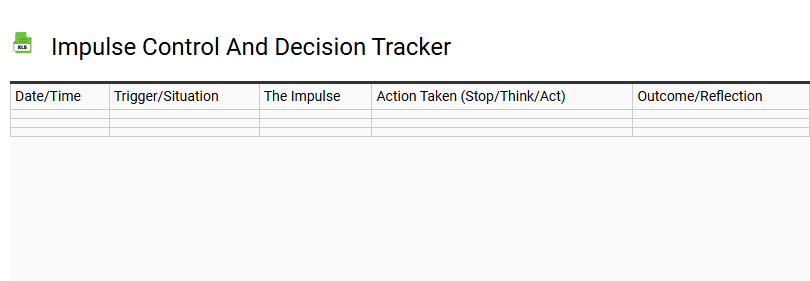
An Impulse Control and Decision Tracker serves as a cognitive framework designed to bridge the gap between an immediate stimulus and a reactive response. By documenting the trigger, the initial urge, and the potential consequences, individuals create a vital psychological buffer that facilitates mindful choice over habituated behavior.
This structured template typically captures key data points such as:
- Emotional State: Identifying feelings like stress, boredom, or anxiety that precede an impulse.
- The Pause: Implementing a timed delay to allow the prefrontal cortex to re-engage.
- Alternative Actions: Selecting a constructive behavior that aligns with long-term goals.
- Outcome Reflection: Evaluating the success of the intervention to reinforce self-regulation.
Consistent use of this tracker promotes neuroplasticity, strengthening the executive functions required for disciplined decision-making and sustainable self-mastery.
Energy Level and Focus Heat Map
💾 Energy Level and Focus Heat Map .xls
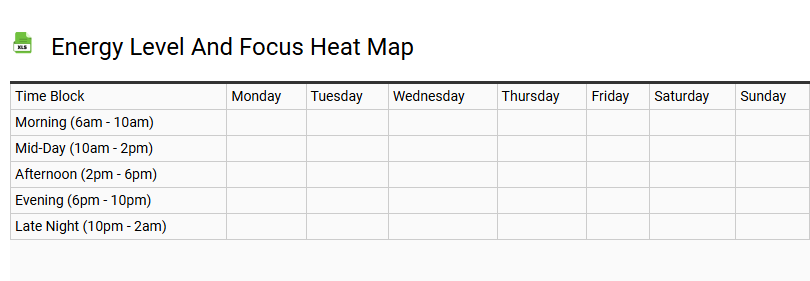
An Energy Level and Focus Heat Map serves as a strategic productivity tool designed to visualize fluctuations in your circadian rhythm and ultradian cycles. By systematically tracking bio-rhythms over a week, users can identify personal periods of peak performance and mental clarity.
This energy auditing process enables effective time blocking, aligning high-priority deep work with maximum cognitive capacity. Utilizing a heat map template transforms subjective feelings into actionable data, highlighting energy slumps and productivity windows. Optimizing your workflow based on specific chronotypes ensures superior task management and prevents burnout.
By mapping focus intensity against daily time slots, professionals can synchronize their schedule with natural biological peaks, maximizing output while minimizing cognitive load during periods of fatigue. This data-driven approach to self-awareness fosters sustainable performance tracking and long-term efficiency.
Project Deconstruction and Micro-Task List
💾 Project Deconstruction and Micro-Task List .xls
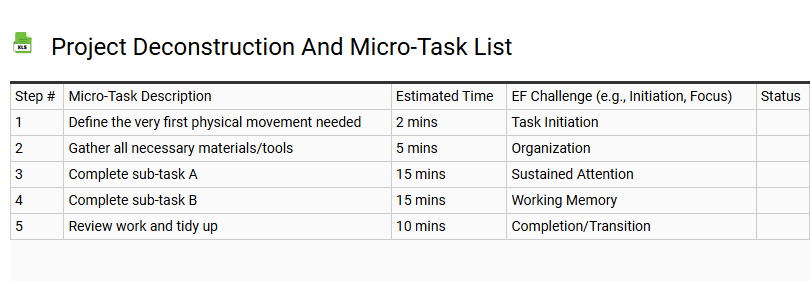
Effective project deconstruction involves transforming high-level objectives into a granular work breakdown structure (WBS). This strategic approach mitigates complexity by isolating specific deliverables and identifying critical task dependencies. By utilizing a micro-task list, project managers can optimize workflow efficiency and ensure precise resource allocation across the entire project lifecycle.
Each action item serves as an atomic unit of progress, reducing cognitive load and improving productivity metrics. Integrating this framework facilitates:
- Enhanced milestone tracking and stakeholder accountability.
- Granular sprint planning for agile environments.
- Streamlined execution strategies for cross-functional teams.
This template acts as a blueprint for operational excellence, turning abstract concepts into actionable operational steps. Refining task granularity ensures every project phase remains strictly aligned with the defined scope of work and timeline constraints.
Habit Formation and Routine Checklist
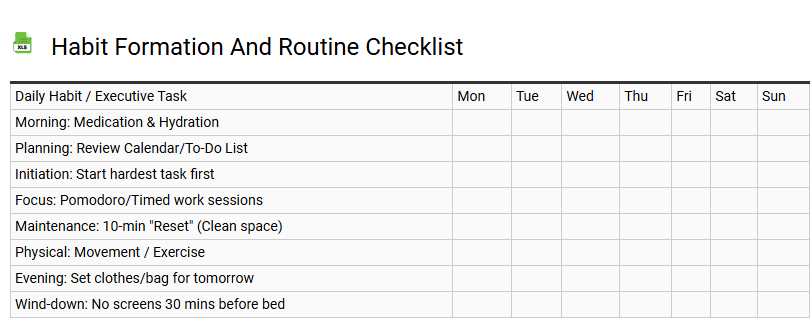
💾 Habit Formation and Routine Checklist .xls
Utilizing a structured habit formation template leverages behavioral psychology to transform sporadic actions into automatic routines. By implementing a comprehensive routine checklist, individuals can effectively navigate the cue-action-reward cycle, which is fundamental to neuroplasticity and long-term behavioral change. This systematic approach emphasizes incremental growth through micro-habits, significantly reducing cognitive load and overcoming initial resistance.
A well-designed tracker fosters daily accountability, allowing users to visualize consistency and reinforce the dopamine loop associated with achievement. Integrating behavioral triggers and environmental design into your daily workflow ensures that atomic habits become sustainable rituals. Whether optimizing a morning ritual or improving discipline, these templates serve as a blueprint for self-mastery. By monitoring progress, you can identify habit stacking opportunities, ensuring that new behaviors are seamlessly woven into your existing lifestyle for permanent transformation.
Emotional Regulation and Rejection Sensitivity Log
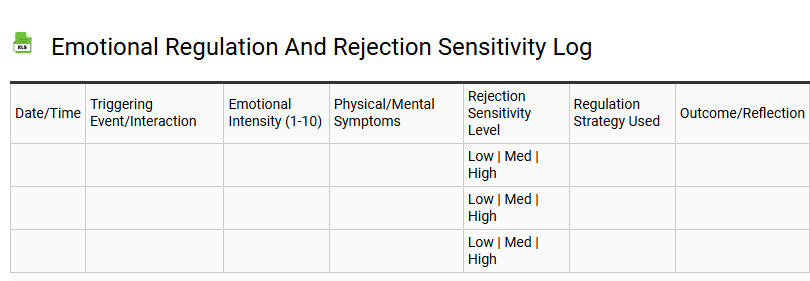
💾 Emotional Regulation and Rejection Sensitivity Log .xls
An Emotional Regulation and Rejection Sensitivity Log serves as a vital cognitive behavioral tool for individuals navigating neurodivergence, particularly those managing ADHD and Rejection Sensitivity Dysphoria (RSD). This structured template facilitates mood tracking by documenting specific sensory triggers and physiological responses to perceived social cues.
By engaging in consistent reflective journaling, users improve their self-awareness and distress tolerance. The log helps distinguish between internal cognitive distortions and objective reality, fostering long-term psychological resilience. Utilizing this systematic approach allows for the identification of patterns in emotional dysregulation, enabling the application of targeted coping mechanisms and grounding exercises. This data-driven method empowers users to manage social anxiety and intense affective states, ultimately enhancing interpersonal stability and mental well-being through proactive self-regulation strategies.
Sleep Quality and Cognitive Performance Tracker
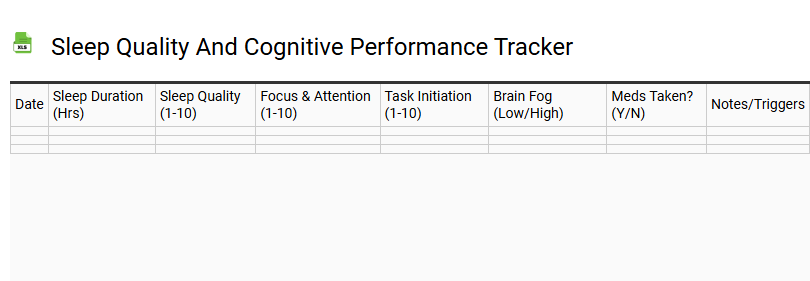
💾 Sleep Quality and Cognitive Performance Tracker .xls
Optimize your mental clarity and physical recovery using this comprehensive Sleep Quality and Cognitive Performance Tracker. By monitoring specific metrics such as REM cycles, deep sleep duration, and sleep latency, you can identify direct correlations between restorative rest and peak executive function. This data-driven template empowers users to refine their circadian rhythm and daily sleep hygiene to effectively eliminate brain fog and enhance memory retention.
Tracking biometric data alongside daily alertness levels allows for precise habit adjustments, fostering improved neuroplasticity and sharper reaction times. Whether you are managing fatigue or seeking peak productivity, logging your sleep efficiency provides the insights needed to synchronize your biological clock with demanding cognitive tasks. Consistent use of this tracker ensures that every sleep cycle contributes to sustained focus, long-term brain health, and optimal neurological performance across all daily activities.
Utilizing a dedicated ADHD Executive Function Monitor serves as a vital cognitive scaffold for managing daily tasks. This specialized template streamlines task initiation, working memory, and time management, offering a clear visual of neurodivergent progress. By tracking executive dysfunction through structured productivity tools, individuals can enhance their self-regulation and focus. Implement this system to bridge the gap between intention and action, ensuring sustainable organization and long-term mental clarity in both your professional and personal life.