
Printable Asthma Inhaler Tracker Template: Daily Medication and Symptom Log
Managing chronic respiratory conditions requires precise monitoring of medication adherence. A dedicated asthma inhaler tracker helps patients log every puff, distinguishing between maintenance doses and emergency relief. By tracking usage frequency alongside breathing triggers and peak flow readings, you gain valuable insights into your pulmonary health. Using a structured log simplifies communication with healthcare providers, ensuring your asthma action plan remains effective. Stay organized and prioritize your respiratory wellness with our versatile tracking tools. Please explore our diverse selection of pre-designed templates provided below.
Daily Asthma Inhaler Usage Log
💾 Daily Asthma Inhaler Usage Log .xls
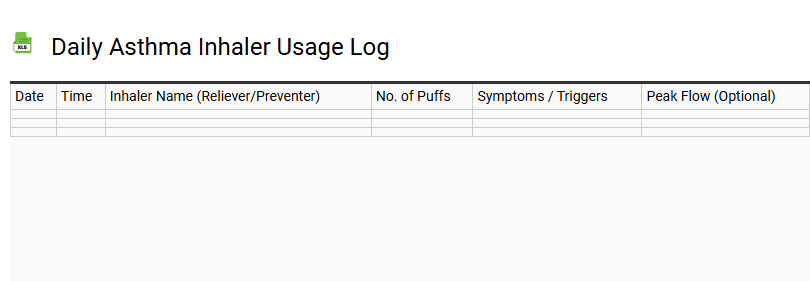
A daily asthma inhaler usage log is an essential tool for proactive respiratory health management and ensuring strict medication adherence. This structured template allows patients to meticulously record each dose of their bronchodilator or long-term controller medication. By documenting specific details such as the date, time, number of puffs, and any localized asthma symptoms, users can effectively identify environmental triggers and breathing patterns.
Maintaining this clinical record assists healthcare providers in evaluating the efficacy of an asthma action plan. Tracking the frequency of rescue inhaler use versus maintenance therapy provides vital data for adjusting dosages and preventing exacerbations. Consistent monitoring of pulmonary function and inhaler reliance promotes better control over wheezing and shortness of breath, fostering improved long-term pulmonary wellness and informed medical consultations.
Asthma Symptom and Inhaler Frequency Tracker
💾 Asthma Symptom and Inhaler Frequency Tracker .xls
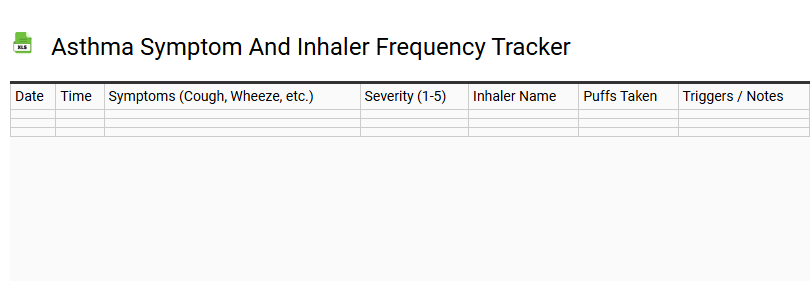
Efficiently managing respiratory health requires a structured asthma symptom tracker to monitor daily patterns. This template facilitates the recording of essential data points, including shortness of breath, wheezing, and chest tightness. Users can precisely log their rescue inhaler frequency alongside maintenance medication adherence to evaluate treatment efficacy and bronchodilator dependency.
- Document asthma triggers such as allergens, cold air, or physical exertion.
- Record peak flow meter readings to assess current lung function.
- Monitor nocturnal symptoms and sleep disruptions caused by bronchospasms.
- Track corticosteroid usage and nebulizer treatments.
By maintaining a detailed asthma log, patients provide healthcare providers with actionable insights to refine an asthma action plan. Consistent documentation of respiratory distress episodes helps prevent severe asthma flare-ups and optimizes chronic airway management for improved pulmonary wellness and long-term control.
Peak Flow Meter and Inhaler Log
💾 Peak Flow Meter and Inhaler Log .xls
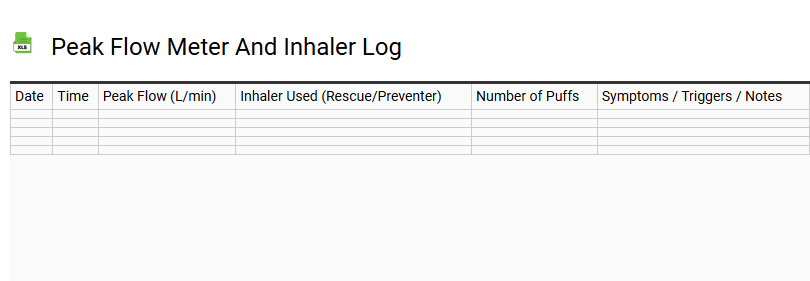
A Peak Flow Meter and Inhaler Log serves as a vital tool for managing respiratory health and monitoring lung function over time. This template allows individuals to record daily peak expiratory flow readings alongside medication usage, providing a clear overview of airway stability.
By consistently documenting these measurements, users can:
- Identify early warning signs of respiratory distress or flare-ups.
- Track the frequency and effectiveness of prescribed inhalers.
- Observe patterns related to environmental triggers or physical activity.
- Share precise data with healthcare providers for more informed clinical decisions.
The structured format typically includes dedicated spaces for morning and evening readings, dosage counts, and symptom notes. Maintaining this log fosters proactive management of conditions like asthma or COPD, ensuring that treatment plans remain aligned with actual lung performance and daily wellness needs.
Rescue Inhaler Usage Monitor
💾 Rescue Inhaler Usage Monitor .xls
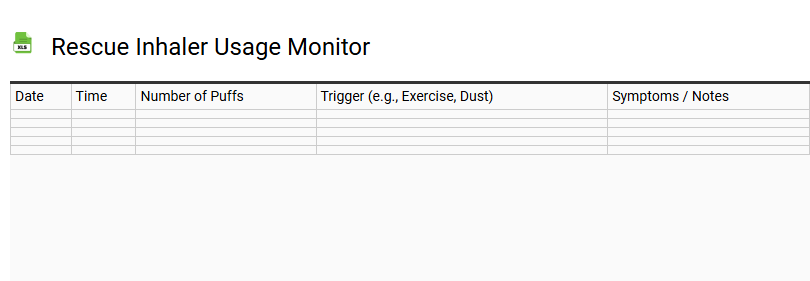
A rescue inhaler usage monitor serves as a vital diagnostic tool for effective asthma management and COPD oversight. By utilizing a structured template to track short-acting bronchodilators, patients can accurately record puff frequency and identify specific respiratory triggers. This medication adherence log provides clinicians with essential data to evaluate pulmonary health and adjust treatment protocols accordingly.
- Monitor dose counts to prevent the depletion of emergency medication.
- Identify patterns in shortness of breath or wheezing episodes.
- Correlate environmental allergens with increased albuterol reliance.
- Enhance patient-provider communication during clinical reviews.
Implementing a digital or paper-based tracker ensures precise symptom monitoring, promoting proactive respiratory wellness and reducing the risk of acute exacerbations through informed, data-driven healthcare decisions and improved lung function awareness.
Preventative Inhaler Compliance Calendar
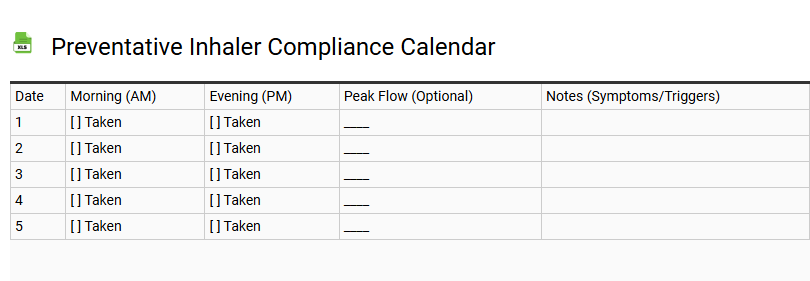
💾 Preventative Inhaler Compliance Calendar .xls
A preventative inhaler compliance calendar serves as a vital asthma management resource for tracking maintenance medication consistency. This adherence tool empowers patients to monitor their controller inhaler doses, ensuring optimal respiratory health through a structured medication schedule. By maintaining daily logs of puffer usage, individuals can achieve better symptom control and reduce the frequency of acute flare-ups.
Utilizing a template for dose tracking simplifies the management of chronic conditions, providing clear visibility into medication adherence patterns. Healthcare providers often recommend these trackers to evaluate the effectiveness of preventative care strategies. Integrating this compliance tool into your daily routine fosters long-term respiratory wellness, helping to ensure that maintenance therapy remains a top priority for maintaining stable lung function and overall pulmonary health.
Asthma Trigger and Medication Diary
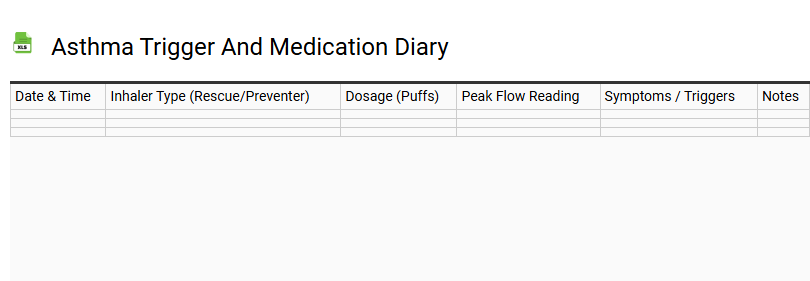
💾 Asthma Trigger and Medication Diary .xls
An effective asthma trigger and medication diary serves as a vital diagnostic tool for monitoring respiratory health and lung function. By systematically recording daily symptoms like wheezing, coughing, and chest tightness, patients can pinpoint specific environmental allergens or physical stressors that compromise airway stability.
- Medication Tracking: Log dosages of long-term controller therapy and the frequency of rescue inhaler usage.
- Symptom Monitoring: Document nocturnal awakenings and peak flow meter readings to assess bronchial constriction.
- Trigger Identification: Note exposure to pollen, dust mites, exercise, or cold air.
Maintaining this clinical log facilitates data-driven adjustments to your asthma management plan, reducing the risk of severe flare-ups. This proactive approach ensures better control over chronic inflammation and improves overall quality of life through precise pharmacological alignment and environmental avoidance strategies.
Nocturnal Asthma Inhaler Tracker
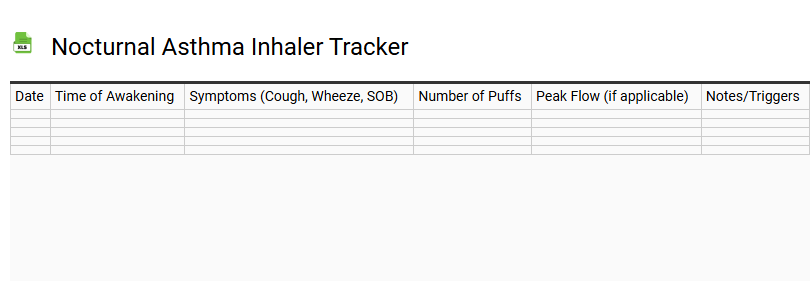
💾 Nocturnal Asthma Inhaler Tracker .xls
This nocturnal asthma inhaler tracker serves as a vital tool for monitoring night-time respiratory health and medication efficacy. By consistently logging rescue inhaler usage, such as albuterol, alongside daily maintenance therapy, patients can identify critical patterns in airway inflammation.
The template prioritizes symptom tracking for wheezing, chest tightness, and shortness of breath that disrupts sleep quality. Documenting nocturnal awakenings and peak flow readings provides essential data for your asthma action plan, helping healthcare providers adjust dosages to prevent exacerbations.
Optimizing asthma control requires precise dosage frequency records and trigger identification. Utilizing this structured symptom log enhances pulmonary function management and ensures better medication adherence, ultimately reducing the frequency of night-time asthma episodes and improving overall disease management for better long-term outcomes.
Childhood Asthma Inhaler Log
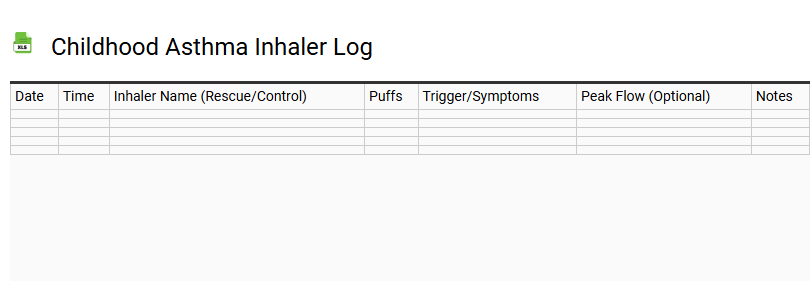
💾 Childhood Asthma Inhaler Log .xls
A childhood asthma inhaler log is an essential instrument for managing pediatric respiratory health effectively. This structured template allows parents and caregivers to maintain a precise dosage tracking record of both maintenance medications and rescue inhaler use. By documenting daily symptoms, such as wheezing, chest tightness, or persistent coughing, you can identify specific environmental triggers and monitor lung function over time.
- Record peak flow meter readings to assess airway constriction.
- Track the frequency of albuterol administration during flare-ups.
- Note the efficacy of nebulizer treatments or spacer usage.
- Sync data with a formal asthma action plan for medical reviews.
Consistent logging provides healthcare providers with the data necessary to adjust treatment protocols, ensuring the child achieves better control over shortness of breath and avoids emergency interventions.
Emergency Inhaler Dose Counter
💾 Emergency Inhaler Dose Counter .xls
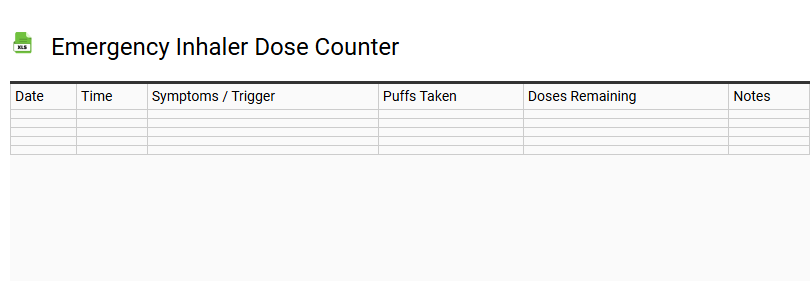
An emergency inhaler dose counter is a vital component for proactive asthma management and acute respiratory care. This integrated tracking mechanism monitors each puff released from a metered-dose inhaler (MDI), providing real-time visibility into the remaining medication levels. During sudden respiratory distress, an accurate canister display eliminates the dangerous uncertainty of an empty inhaler. By utilizing a dosage tracker on the actuator, patients can ensure their life-saving medicine is ready for immediate use. This bronchodilator monitoring tool facilitates timely refill reminders, ensuring relief medication is never depleted. Implementing a structured dose tracking template enhances pulmonary health and treatment adherence, offering peace of mind that your rescue inhaler contains the necessary metered doses to alleviate symptoms effectively during a crisis.
Asthma Management Action Plan Log
💾 Asthma Management Action Plan Log .xls
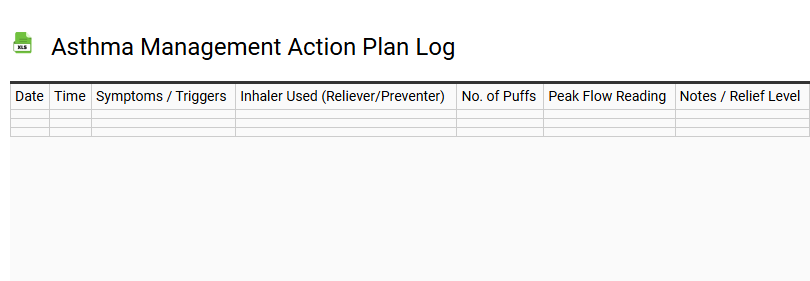
An effective asthma management action plan log serves as a critical tool for maintaining optimal respiratory health. By consistently tracking daily symptoms and peak flow meter readings, patients can identify specific asthma triggers and monitor pulmonary function. This structured record facilitates the transition between the green, yellow, and red zones, ensuring timely use of maintenance medications or a rescue inhaler during acute flare-ups.
Utilizing a detailed log assists in chronic condition management by highlighting patterns in shortness of breath, wheezing, or chest tightness. Sharing these insights with a healthcare provider optimizes medication adherence and refines treatment protocols, significantly reducing the risk of emergency room visits and improving overall quality of life for those living with bronchial sensitivity.
Efficiently managing respiratory health requires consistent medication adherence. An asthma inhaler tracker serves as a vital asthma management tool, allowing users to log rescue inhaler usage, maintenance dosages, and symptom triggers accurately. By utilizing a puff counter and digital log, patients can identify patterns and share precise data with healthcare providers.
Download this tracking template to streamline your pulmonary care. Maintaining a detailed respiratory log ensures better control over your condition and improved long-term wellness.