
Muscle Girth Measurement Log Template for Bodybuilding Progress Tracking
Achieving significant hypertrophy requires more than just lifting; it demands precise measurement tracking. Utilizing a professional bodybuilding muscle girth log allows you to monitor incremental changes in muscle size and bicep circumference using a standard tape measure. By documenting your physical transformation through consistent fitness data, you can validate your progressive overload strategy and refine your body composition goals. Tracking these metrics ensures every workout contributes to your peak physique. Please explore our diverse selection of ready-to-use template variations below.
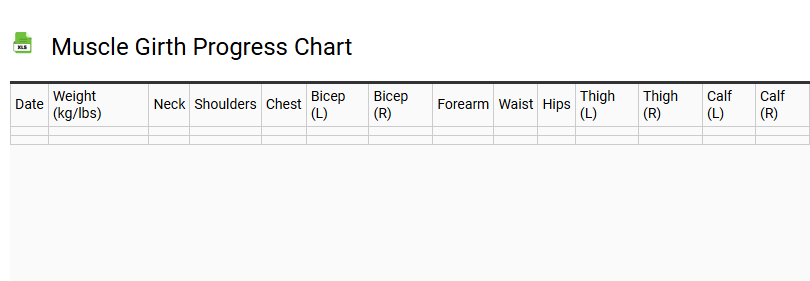
Muscle Girth Progress Chart
💾 Muscle Girth Progress Chart .xls
A muscle girth progress chart is an essential tool for tracking hypertrophy and monitoring body composition changes over time. By documenting anthropometric data, fitness enthusiasts can visualize their physical transformation beyond simple scale weight. This template facilitates the precise recording of bicep circumference, chest expansion, and thigh size using a flexible tape measure.
Consistent progress tracking across key muscle groups ensures muscular symmetry and helps identify lagging areas in your physique. Integrating these fitness metrics into your routine allows for data-driven adjustments to training and nutrition. Key benefits include:
- Monitoring lean mass gains and muscle growth.
- Validating the effectiveness of hypertrophy-based programming.
- Analyzing limb dimensions for balanced development.
Utilizing this structured format provides the objective feedback necessary for long-term bodybuilding success and optimized athletic performance.
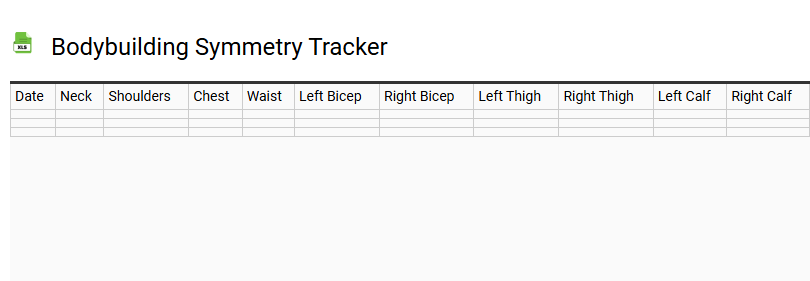
Bodybuilding Symmetry Tracker
💾 Bodybuilding Symmetry Tracker .xls
A bodybuilding symmetry tracker is an essential tool for achieving aesthetic balance and identifying muscle imbalances. By utilizing precise anthropometric measurements, athletes can monitor hypertrophy across specific muscle groups, ensuring proportional development. This template facilitates a comprehensive physique assessment, focusing on the ratio between the upper and lower body to maintain structural integrity.
- Track unilateral training progress to correct bilateral deficits.
- Log circumference measurements for arms, thighs, and calves using a tape measure.
- Evaluate muscle belly fullness and skeletal muscle distribution.
- Monitor body fat percentage via calipers for localized definition.
Consistent data entry allows for targeted adjustments in hypertrophy programming, fostering a symmetrical X-frame. Integrating this tracking method into your fitness regime optimizes muscle recruitment and enhances overall physique aesthetics through objective quantitative analysis of your musculoskeletal system.
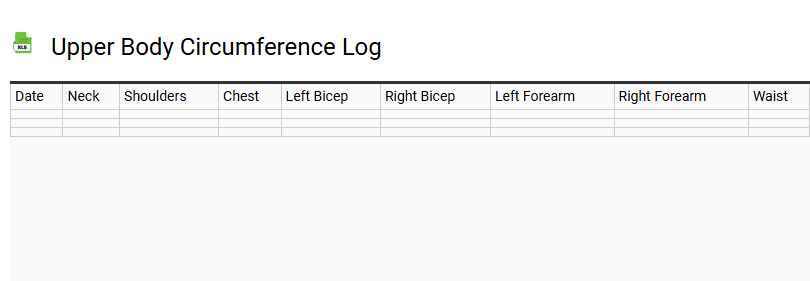
Upper Body Circumference Log
💾 Upper Body Circumference Log .xls
Utilizing a structured upper body circumference log is essential for precise fitness tracking and monitoring your physique transformation. This template facilitates the systematic recording of anthropometric data, allowing users to track muscle hypertrophy and body composition changes over time. By consistently measuring key areas such as the chest, shoulders, and biceps with a flexible tape measure, individuals gain objective insights into their physical progress.
- Chest Circumference: Monitors pectoral and latissimus dorsi development.
- Shoulder Width: Tracks deltoid growth and upper frame breadth.
- Arm Girth: Evaluates bicep and tricep volume.
Maintaining a detailed measurement log supports data-driven adjustments to strength training routines and nutritional programming. Documenting these body metrics ensures a comprehensive view of fat loss and lean mass gains, effectively surpassing the limited feedback of a standard scale during your fitness journey.
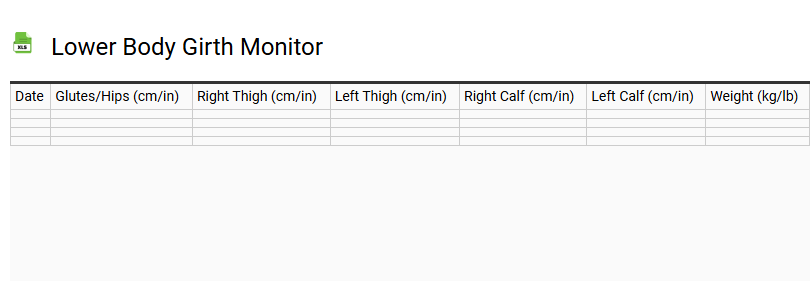
Lower Body Girth Monitor
💾 Lower Body Girth Monitor .xls
The Lower Body Girth Monitor template provides a systematic framework for tracking anthropometric measurements and circumference metrics. This specialized fitness assessment tool enables users to log longitudinal data regarding the waist, hips, thighs, and calves to visualize physique transformation. By documenting biometric data through precise tape measure readings, individuals can monitor localized fat loss and muscle hypertrophy progress effectively. This template acts as a central progress log for analyzing body composition trends and body fat distribution across the lower extremities. Utilizing these circumference measurements offers a more nuanced perspective on health than scale weight alone, facilitating data-driven adjustments to training and nutrition regimens. Integrating this tracking spreadsheet into a wellness routine ensures accurate monitoring of lower body development and the achievement of long-term fitness goals through empirical evidence.
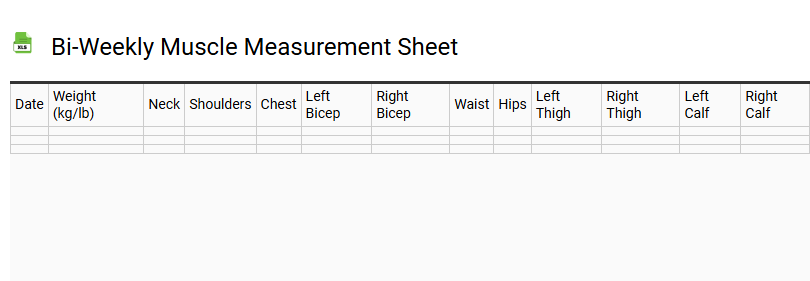
Bi-Weekly Muscle Measurement Sheet
💾 Bi-Weekly Muscle Measurement Sheet .xls
A bi-weekly muscle measurement sheet serves as a vital instrument for monitoring hypertrophy and body composition changes. By documenting anthropometric data every fourteen days, athletes can precisely track skeletal muscle growth and physical transformation. This structured fitness log focuses on consistent girth measurements using a flexible tape measure to ensure accuracy.
- Track lean mass development across key areas like the chest, biceps, and quadriceps.
- Monitor body fat percentage trends and waist-to-hip ratios for health optimization.
- Evaluate the efficacy of strength training protocols and caloric intake.
Utilizing this template ensures progressive overload is reflected in tangible bicep circumference and limb dimensions. Maintaining a regular progress tracking schedule allows for data-driven adjustments to your bodybuilding regimen, ensuring long-term success in muscular development and aesthetic symmetry.
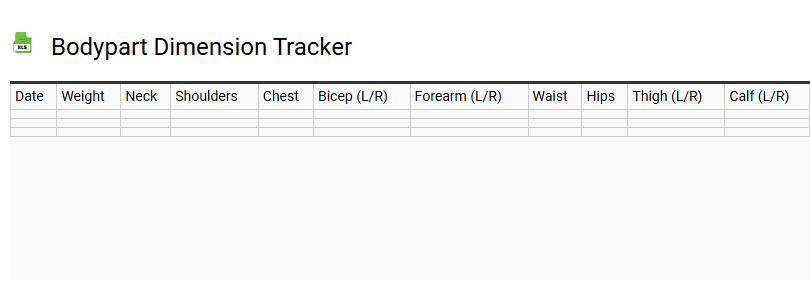
Bodypart Dimension Tracker
💾 Bodypart Dimension Tracker .xls
This bodypart dimension tracker serves as a comprehensive utility for monitoring physical progress and body composition changes. By systematically recording specific anatomical metrics-such as chest circumference, waist girth, and limb diameter-users can visualize muscle hypertrophy and fat loss trends that a standard scale might overlook. This fitness logging system utilizes precise data to evaluate body symmetry and aesthetic development effectively.
Consistent updates to your measurement log facilitate data-driven adjustments to nutrition and strength training protocols. Whether focusing on bodybuilding milestones or a weight loss journey, tracking these dimensions provides essential feedback on metabolic health and structural transformation. Use this template to archive vital anatomical data, ensuring meticulous monitoring of your fitness evolution, girth measurements, and long-term wellness milestones through organized, longitudinal tracking of your physical transformation and body proportions.
Hypertrophy Measurement Log
💾 Hypertrophy Measurement Log .xls
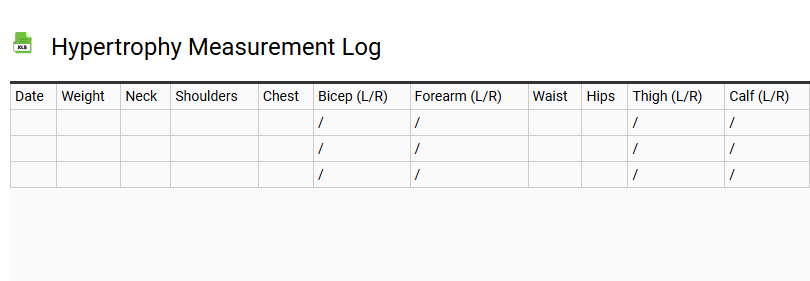
A hypertrophy measurement log serves as a vital instrument for tracking muscle mass accrual and body composition shifts over time. By systematically recording anthropometric data, such as limb circumference and torso dimensions, lifters can validate the effectiveness of their progressive overload strategies.
This log captures essential metrics including chest, bicep, and thigh measurements, ensuring that skeletal muscle hypertrophy is accurately monitored. Integrating these figures with body fat percentage and weight trends allows for a data-driven approach to hypertrophy training.
Consistent documentation helps identify muscular imbalances and confirms if current training volumes are yielding physical adaptations. Utilizing a structured template ensures precision in fitness tracking, providing the objective feedback necessary to refine nutritional intake and exercise selection for optimal aesthetic development and functional strength gains.
Anatomical Girth Comparison Tool
💾 Anatomical Girth Comparison Tool .xls
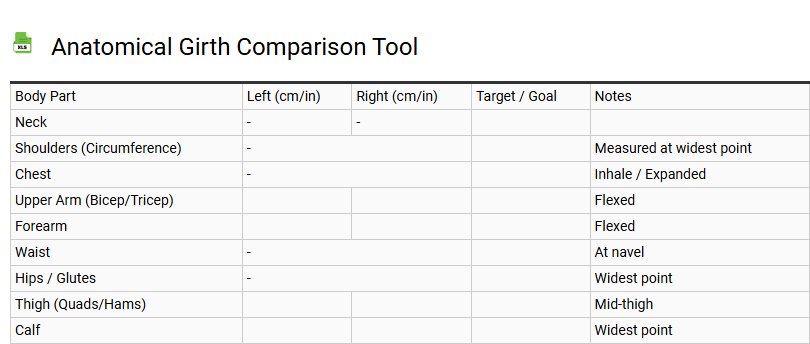
This interface facilitates the precise recording and analysis of body dimensions across multiple anatomical regions. Users can input specific circumference measurements for areas such as the neck, chest, waist, hips, and limbs to establish a baseline for physical assessment. By utilizing these data points, the tool enables a clear comparison between different time intervals or against established physiological benchmarks.
- Track fluctuations in muscle volume and body composition.
- Monitor progress for fitness goals and health interventions.
- Visualize longitudinal changes through organized data presentation.
- Ensure accuracy in tailoring apparel or medical support garments.
Designed for both personal health tracking and professional fitness evaluation, this template streamlines the process of capturing physical metrics. It provides a structured framework for observing body transformations, supporting informed decisions regarding nutrition, exercise routines, and overall wellness strategies.
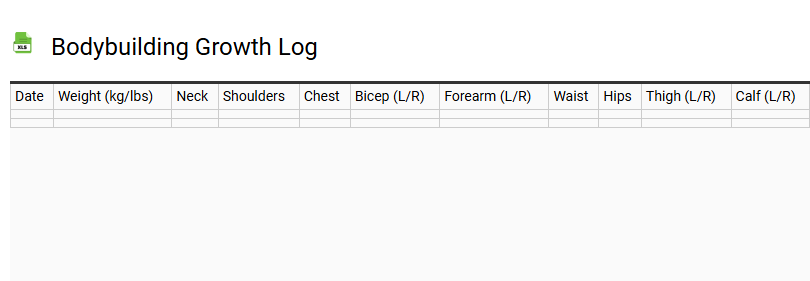
Bodybuilding Growth Log
💾 Bodybuilding Growth Log .xls
A comprehensive bodybuilding growth log serves as a vital tool for tracking muscle hypertrophy and ensuring progressive overload. By meticulously documenting every training session, athletes can monitor strength gains and recalibrate set volume or intensity levels. This template prioritizes key performance indicators, including specific rep ranges, resistance loads, and recovery intervals.
Beyond weightroom metrics, the log integrates essential data points for protein synthesis and metabolic health. Users can track daily macronutrient ratios, caloric intake, and sleep quality to maintain an optimal anabolic state. Consistent recording of body measurements and weight fluctuations provides a clear roadmap for physical transformation. Utilizing this structured approach prevents training plateaus, facilitates superior muscle fiber recruitment, and ensures long-term aesthetic development through data-driven adjustments to your fitness regimen.
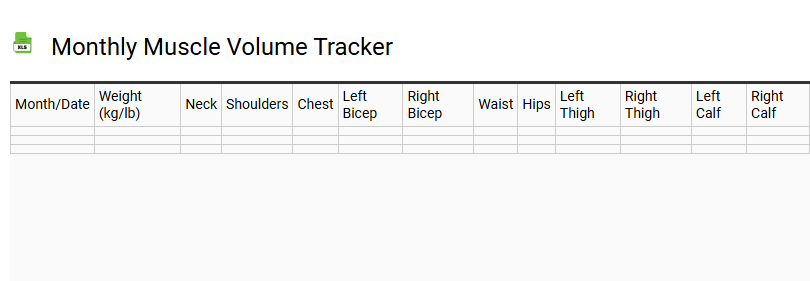
Monthly Muscle Volume Tracker
💾 Monthly Muscle Volume Tracker .xls
A Monthly Muscle Volume Tracker is an essential tool for athletes prioritizing hypertrophy and progressive overload. By meticulously logging total sets, repetitions, and resistance levels across specific muscle groups, this template enables precise monitoring of workload capacity. Structured tracking facilitates strength training optimization by organizing weekly volume metrics into a clear monthly overview, allowing for data-driven adjustments to intensity and frequency.
Utilizing this framework helps prevent plateaus and ensures adequate recovery between sessions. By analyzing total tonnage and volume accumulation, lifters can identify lagging body parts and refine their bodybuilding strategy. Whether using a digital spreadsheet or a physical log, consistent record-keeping transforms a basic workout routine into a sophisticated fitness tracking system. This evidence-based approach maximizes muscular adaptation, ensuring long-term physical transformation through disciplined performance data analysis and strategic exercise programming.
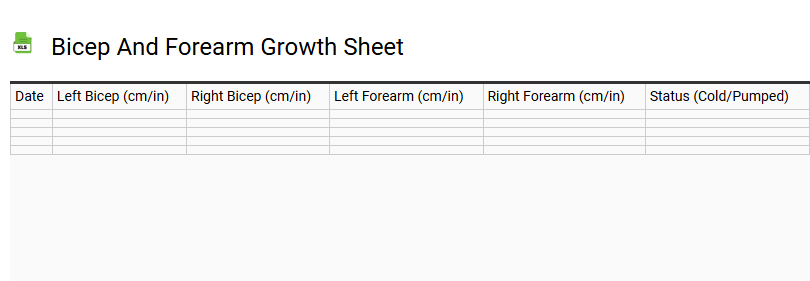
Bicep and Forearm Growth Sheet
💾 Bicep and Forearm Growth Sheet .xls
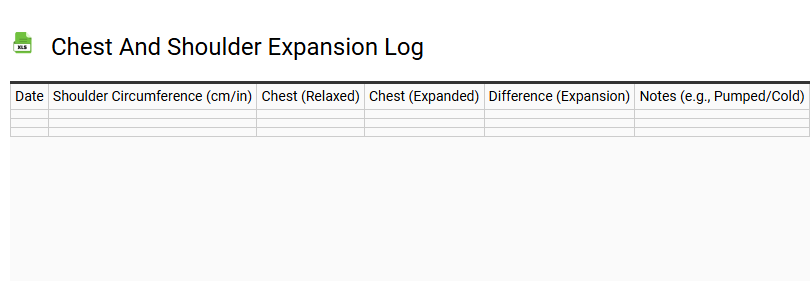
Chest and Shoulder Expansion Log
💾 Chest and Shoulder Expansion Log .xls
Utilizing a Chest and Shoulder Expansion Log is vital for athletes prioritizing thoracic mobility and posture correction. This specialized tracking template focuses on pectoral stretching, deltoid activation, and increasing the range of motion within the upper kinetic chain. By consistently recording rib cage flexibility drills and corrective exercise routines, users can significantly enhance their breathing capacity and skeletal alignment.
Detailed fitness tracking through a structured workout diary ensures progressive overload during strength training sessions. Monitoring scapular stability and thoracic opening movements aids in preventing shoulder impingements while promoting muscle hypertrophy. This data-driven approach to upper body symmetry helps identify plateaus in flexibility and functional strength, making it an indispensable tool for achieving a balanced, expansive physique and optimal respiratory health.
Leg and Calf Girth Tracker
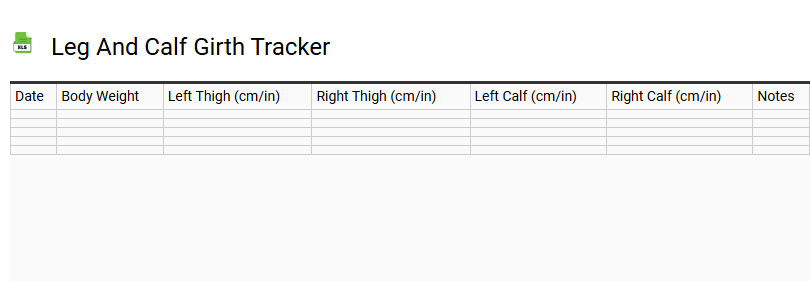
💾 Leg and Calf Girth Tracker .xls
A comprehensive leg and calf girth tracker is an essential tool for monitoring lower body hypertrophy and shifts in body composition. By recording precise circumference measurements of the quadriceps, hamstrings, and gastrocnemius muscles, fitness enthusiasts can effectively quantify muscle growth and fat loss progress. Utilizing a flexible tape measure ensures data accuracy when logging metrics for both left and right limbs to evaluate bilateral symmetry.
Consistent thigh and calf tracking provides tangible feedback beyond the scale, highlighting physical transformations and muscle definition. This structured fitness log empowers athletes to optimize training volume and nutritional strategies based on real-time anthropometric data. Monitoring lower extremity dimensions regularly is a vital practice for bodybuilding, rehabilitation, and achieving specific aesthetic goals through disciplined progress monitoring and body measurement protocols.
Waist and Midsection Control Log
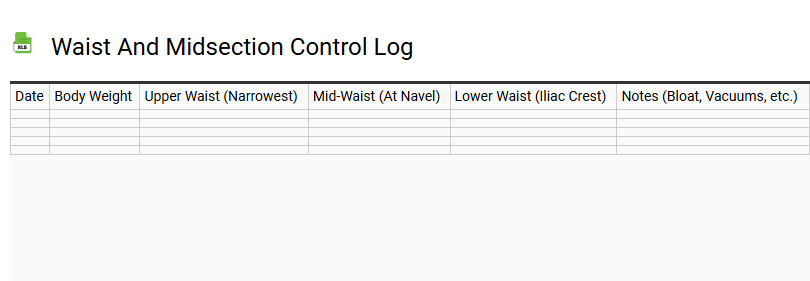
💾 Waist and Midsection Control Log .xls
This tracking resource is designed to help you monitor specific changes in your abdominal region and core stability. By documenting consistent measurements, you can visualize physical progress and stay aligned with your fitness objectives. This log provides a clear history of your journey, making it easier to identify which lifestyle adjustments yield the best results for your midsection.
Essential components to record include:
- Date and time of measurement for maximum consistency.
- Natural waist circumference at the narrowest point.
- Lower abdominal measurements near the navel area.
- Notes on daily activity levels or nutritional intake.
Regular updates ensure a reliable data set, allowing for informed decisions regarding your health routine and long-term physical transformations. Use this tool to maintain accountability and celebrate incremental improvements in your body composition.
Muscle Definition and Size Tracker
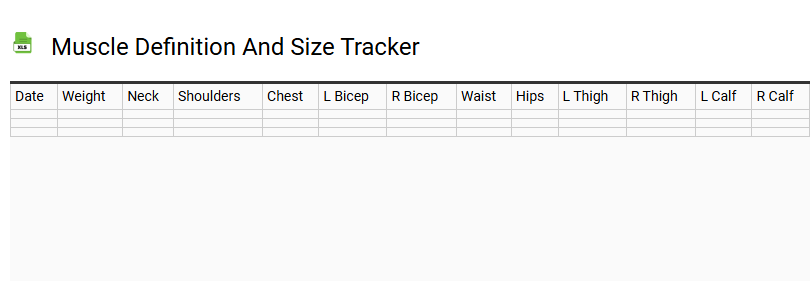
💾 Muscle Definition and Size Tracker .xls
Achieving peak physique progress requires precise monitoring of body composition and hypertrophy. This professional tracking template facilitates the systematic logging of anthropometric measurements, allowing athletes to quantify lean mass gains and muscle symmetry over time. By documenting chest circumference, limb girth, and bicep peak, you can visualize muscle definition and align your training with specific aesthetic goals.
Integrating metrics for body fat percentage and vascularity ensures a comprehensive overview of muscle maturity. This data-driven approach supports progressive overload strategies by correlating physical changes with training intensity. Whether focusing on bulking cycles or striated definition, these tracking tools provide essential feedback via caliper readings and tape measurements, ensuring every microcycle contributes to a more sculpted, powerful frame and improved muscle-to-fat ratios.
Total Body Girth Dashboard
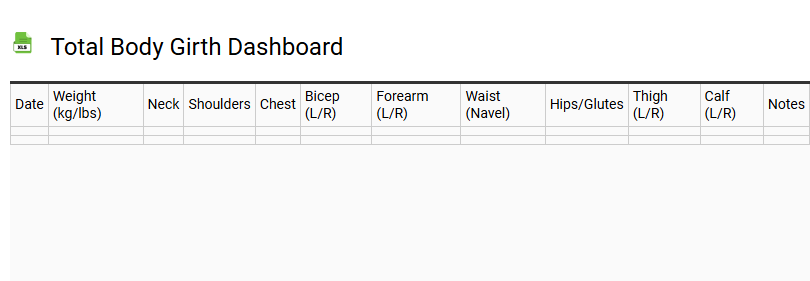
💾 Total Body Girth Dashboard .xls
This Total Body Girth Dashboard serves as a comprehensive tool for monitoring body measurements and circumference changes. By centralizing anthropometric data, this template allows users to track physique transformation with precision, moving beyond simple scale weight. The interface facilitates the logging of critical fitness metrics, including waist-to-hip ratio, chest breadth, and limb symmetry, providing a clear picture of body composition and muscle growth.
Utilizing data visualization through integrated progress charts, the measurement log highlights trends in fat loss and morphological changes. This tracking sheet is optimized for fitness progress analysis, offering automated calculations for body fat percentage estimations. Whether for professional coaching or personal use, the dashboard ensures accurate girth tracking and data-driven insights, making it an essential component for any fitness journey or weight management program.
Lean Mass Circumference Calculator
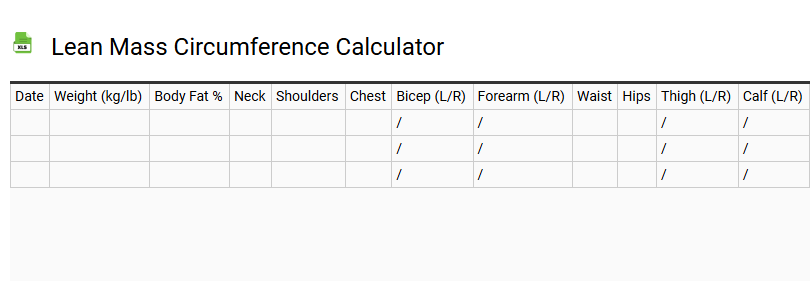
💾 Lean Mass Circumference Calculator .xls
This lean mass circumference calculator serves as a precise tool for evaluating body composition through anthropometric data. By utilizing a tape measure to record specific measurements-such as waist circumference, neck girth, and limb size-users can accurately estimate their lean body mass (LBM) and skeletal muscle volume. Unlike basic weight scales, this method accounts for body fat percentage, providing a clearer picture of muscle gain and physical transformation. Integrating these body dimensions into your fitness tracking routine allows for better monitoring of hypertrophy and metabolic health. Whether you are focused on strength training or weight management, quantifying fat-free mass ensures your nutritional and exercise protocols effectively support a lean, muscular physique while optimizing your overall body proportions.
Weekly Hypertrophy Tracker
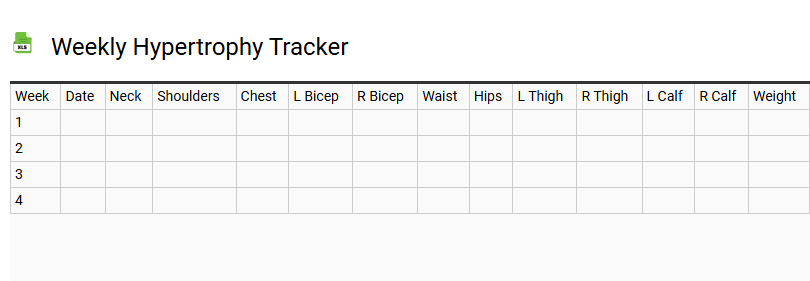
💾 Weekly Hypertrophy Tracker .xls
This weekly hypertrophy tracker serves as a sophisticated tool for monitoring muscle growth and ensuring consistent progressive overload. By meticulously documenting resistance training sessions, athletes can analyze total training volume, exercise selection, and intensity levels crucial for stimulating muscle protein synthesis.
Utilizing structured training logs allows for precise tracking of sets, repetitions, and weight load across targeted muscle groups. This systematic approach facilitates data-driven adjustments to training frequency and recovery periods, optimizing the hypertrophic response for maximum cellular adaptation.
Whether focusing on compound movements or isolation exercises, maintaining a detailed record helps identify plateaus and supports long-term strength gains. Consistent use of this template ensures every workout contributes to improved body composition, providing a clear roadmap for achieving specific aesthetic and performance goals within a periodized lifting program.
Bodybuilding Proportions Log
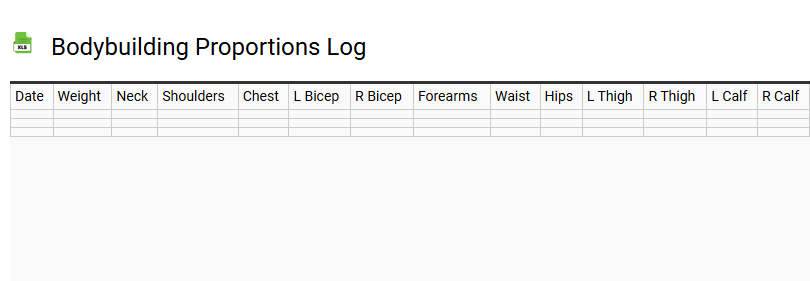
💾 Bodybuilding Proportions Log .xls
Achieving an aesthetic physique requires precise tracking of muscle symmetry and anatomical proportions. This Bodybuilding Proportions Log is designed to monitor anthropometric measurements, helping athletes reach the Golden Ratio of physical development. By documenting your shoulder-to-waist ratio and limb circumference, you can ensure hypertrophic balance across all muscle groups.
Use this template to record muscle mass gains and fluctuations in body fat percentage to refine your physique assessment. Focusing on the V-taper and bilateral uniformity allows for targeted muscle definition and structural harmony. Consistent data entry supports bodybuilding standards, highlighting lagging body parts for specialized training focus. Whether aiming for classic physique aesthetics or maximum muscle volume, maintaining a detailed log is essential for evaluating muscularity and long-term physical evolution.
Anatomic Measurement Comparison Sheet
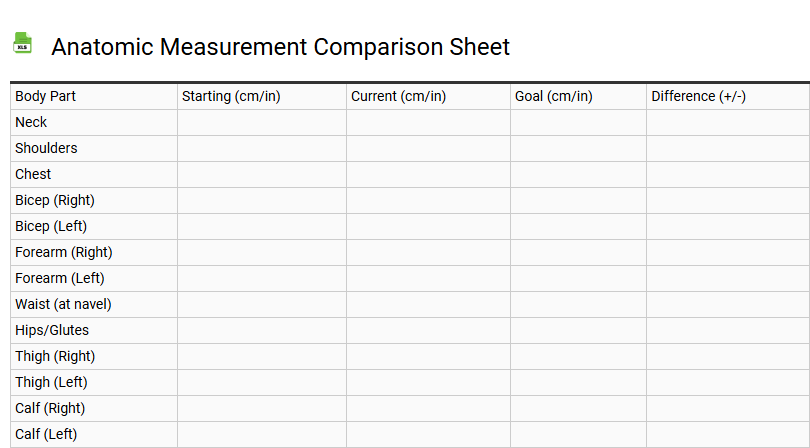
💾 Anatomic Measurement Comparison Sheet .xls
An anatomic measurement comparison sheet serves as a fundamental instrument for anthropometry and clinical documentation. This template facilitates precise morphometric analysis by recording specific anatomical landmarks and skeletal data across multiple timeframes. Healthcare professionals utilize this structured format to establish baseline metrics and monitor physiological variations during a comprehensive physical assessment.
By standardizing biometric data collection, the document ensures accuracy in orthopedic evaluations and the longitudinal tracking of patient progress. The layout allows for a side-by-side review of limb circumference, joint range of motion, and structural symmetry. This comparative framework enhances diagnostic precision, supporting evidence-based rehabilitation protocols and surgical planning. Integrating such systematic data entry into medical workflows optimizes data integrity and improves the visualization of therapeutic outcomes, ensuring all morphological changes are documented with clinical rigor.
Utilizing a bodybuilding muscle girth log is essential for tracking hypertrophy progress and physical transformation. This template facilitates recording precise tape measurements, capturing vital anthropometric data across key muscle groups. By maintaining a consistent fitness journal, athletes can perform accurate symmetry assessments and monitor muscle mass distribution. Streamline your body composition tracking to optimize training results. Implementing this structured log ensures every inch of growth is documented, providing the insights needed to achieve an elite, balanced physique.