
Bodyweight Calisthenics Journal Template for Progress Tracking
Embarking on a bodyweight calisthenics journey requires more than just sweat; it demands meticulous fitness tracking. A structured workout log helps you monitor progressive overload across essential movements like pull-ups, dips, and core holds. By utilizing a dedicated calisthenics journal template, you can easily record sets, reps, and rest intervals to ensure consistent muscle building and skill mastery. Tracking these performance metrics is vital for long-term strength training success. Please check the already made variation of templates below.
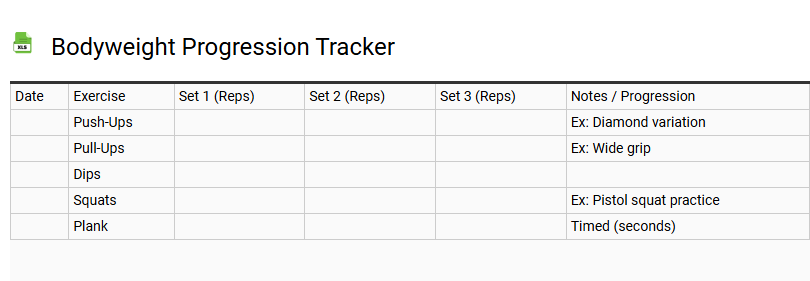
Bodyweight Progression Tracker
💾 Bodyweight Progression Tracker .xls
This bodyweight progression tracker is a specialized tool designed for calisthenics enthusiasts and functional fitness practitioners. By systematically documenting repetition counts, set volume, and rest intervals, users can effectively implement progressive overload without external resistance. The template prioritizes skill acquisition, allowing you to monitor transitions from foundational movements to advanced static holds and explosive variations. Integrating this workout log into your routine facilitates muscle hypertrophy and neuromuscular adaptation through detailed performance metrics. Focus on exercise tempo and form refinement to ensure consistent strength gains and avoid plateaus. Whether your goal is endurance or explosive power, this structured layout helps visualize your fitness journey. Tracking perceived exertion and recovery data ensures a balanced training regimen, optimizing athletic development and body composition outcomes through precise, data-driven bodyweight training adjustments.
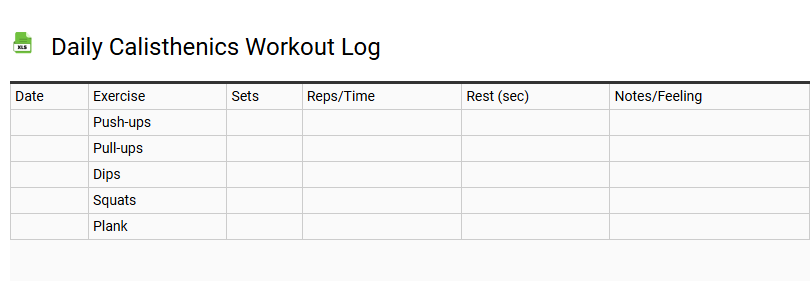
Daily Calisthenics Workout Log
💾 Daily Calisthenics Workout Log .xls
Implementing a daily calisthenics workout log is essential for anyone committed to mastering bodyweight exercises. This structured training template allows athletes to monitor progressive overload by meticulously recording rep counts, set volume, and rest durations. By documenting movements such as pull-ups, push-ups, and dips, you can visualize strength gains and improve physical performance over time. A dedicated fitness journal highlights patterns in your exercise routine, making it easier to identify plateaus or recovery needs. Tracking isometric holds and mobility work ensures a balanced approach to functional fitness. This data-driven workout diary facilitates form mastery and hypertrophy, providing the necessary insights to refine your calisthenics programming. Whether focusing on skills training or endurance, a consistent logging habit transforms raw effort into measurable athletic progression and long-term bodyweight strength success.
Skill Mastery Roadmap
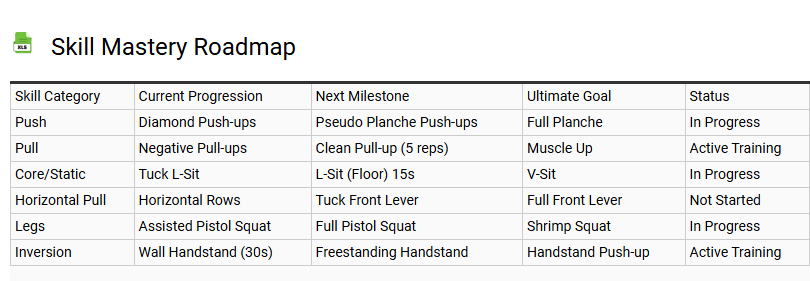
A Skill Mastery Roadmap serves as a strategic blueprint for transforming a novice into a proficient expert. This structured framework breaks down complex learning objectives into logical, sequential phases that facilitate steady progress. By defining specific milestones, the template helps individuals maintain focus on high-impact areas while identifying the necessary resources required for growth.
An effective roadmap typically integrates the following elements:
- Foundational Principles: Establishing core concepts and essential terminology.
- Practical Application: Implementing theoretical knowledge through hands-on exercises and real-world projects.
- Iterative Assessment: Measuring competency through regular feedback loops and performance evaluations.
- Advanced Specialization: Refining expertise in niche areas to achieve total fluency.
This organized approach ensures that professional development is both measurable and sustainable, providing a clear path toward excellence and long-term retention.
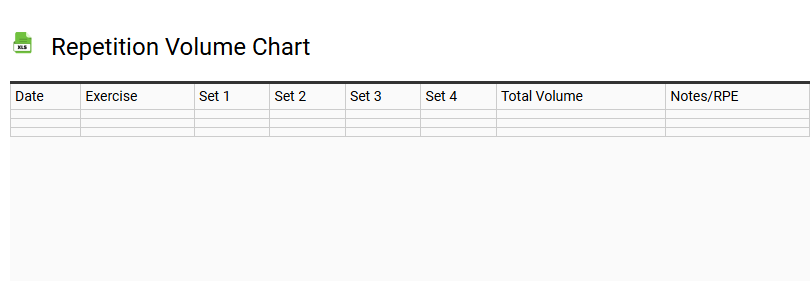
Repetition Volume Chart
💾 Repetition Volume Chart .xls
A Repetition Volume Chart serves as a strategic framework for monitoring training load and facilitating progressive overload. This template tracks specific set and rep schemes across various intensity levels, allowing athletes to calculate total tonnage and analyze workout density. By integrating these lifting metrics into a structured exercise log, users can optimize their workout programming for hypertrophy, muscle growth, or strength training objectives.
This data-driven approach utilizes fitness analytics to ensure that volume tracking aligns with specific physiological adaptations, such as endurance or peak power. Implementing this visualization helps identify performance plateaus and manage systemic fatigue. By refining periodization through precise volume-load calculations, this chart ensures every training session contributes to long-term athletic development and peak physical conditioning through systematic data management.
Isometric Hold Timer Log
💾 Isometric Hold Timer Log .xls
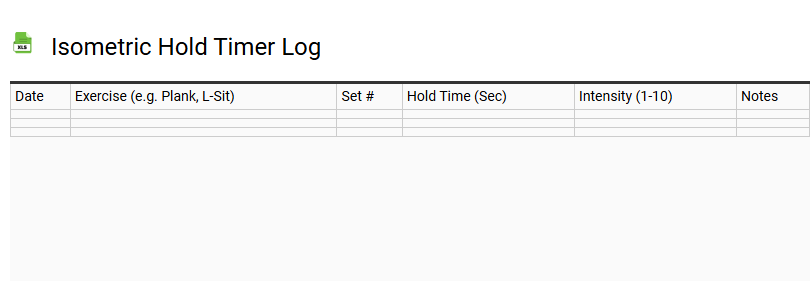
An isometric hold timer log is a specialized performance tracking tool designed to quantify static contraction durations and time under tension (TUT). By utilizing this template, athletes can meticulously document progressive overload within various positions of maximal effort, such as planks, pauses, or wall sits. Tracking these intervals is essential for overcoming strength plateaus and fostering neurological adaptation.
This log captures data for both yielding isometrics, where muscles resist a load, and overcoming isometrics, which involve pushing against immovable objects. Key metrics include:
- Muscle fiber recruitment levels for enhanced explosive power.
- Improvements in functional stability and joint integrity.
- Incremental gains in muscle endurance and peak force output.
Integrating a precise timer log into your fitness journal ensures data-driven adjustments to training volume, optimizing recovery and long-term strength gains.
Weekly Circuit Training Planner
💾 Weekly Circuit Training Planner .xls
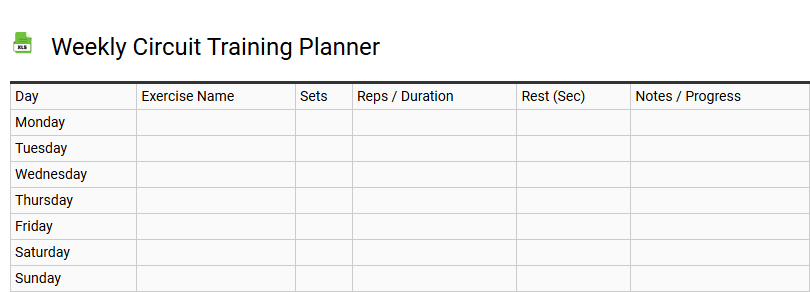
A Weekly Circuit Training Planner serves as a strategic framework for organizing high-intensity metabolic conditioning and resistance training sessions. This structured template optimizes your fitness schedule by balancing full-body workouts with essential recovery periods. By detailing specific exercise stations, repetition ranges, and set durations, the planner ensures a systematic approach to progressive overload.
Utilizing this layout helps track various training modalities, such as:
- HIIT intervals for cardiovascular endurance.
- Strength exercises targeting major muscle groups.
- Active recovery phases to maintain mobility.
- Timed circuits to improve caloric expenditure.
This digital fitness log streamlines workout programming, allowing athletes to monitor heart rate zones and performance metrics. By diversifying movement patterns across a seven-day split, you prevent training plateaus and ensure consistent physiological adaptation for peak physical conditioning.
Set and Rep Progression Spreadsheet
💾 Set and Rep Progression Spreadsheet .xls
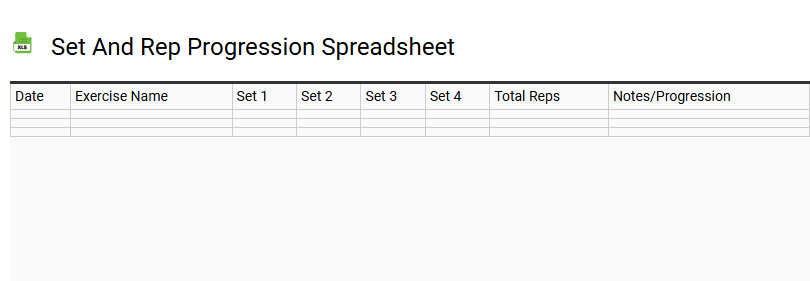
A set and rep progression spreadsheet serves as a foundational tool for implementing progressive overload within any strength training regimen. This digital weightlifting log allows athletes to meticulously track training volume, intensity, and frequency to ensure consistent exercise performance gains. By utilizing structured data fields, users can monitor linear progression, manage hypertrophy phases, and implement complex periodization strategies.
- Automated one-rep max (1RM) estimations for performance tracking.
- Calculations for total tonnage and volume load per session.
- Integration of RPE (Rate of Perceived Exertion) to manage training intensity.
Using a standardized workout template facilitates data-driven decisions, helping lifters avoid plateaus and optimize systemic recovery. Whether focusing on powerlifting or general fitness, these spreadsheets transform raw workout data into actionable insights for long-term athletic development and muscle growth.
Calisthenics PR Dashboard
💾 Calisthenics PR Dashboard .xls
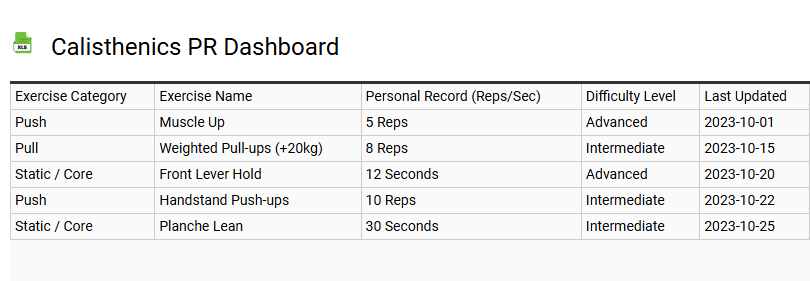
This calisthenics PR dashboard serves as a centralized bodyweight training hub designed to monitor strength metrics and skill acquisition. By integrating a comprehensive workout log, athletes can visualize personal records for foundational movements and advanced static holds. The template prioritizes performance analytics, allowing you to track training volume and intensity across specific muscle groups.
Whether you are mastering the muscle-up, planche, or front lever, this fitness data tool identifies plateaus and celebrates rep max improvements. Optimized for progressive overload, the interface ensures every bodyweight exercise contributes to long-term functional fitness goals. Leverage this tracking system to transform raw training data into actionable insights, ensuring consistent hypertrophy and explosive power gains through a streamlined digital environment tailored for elite gymnastics strength progression.
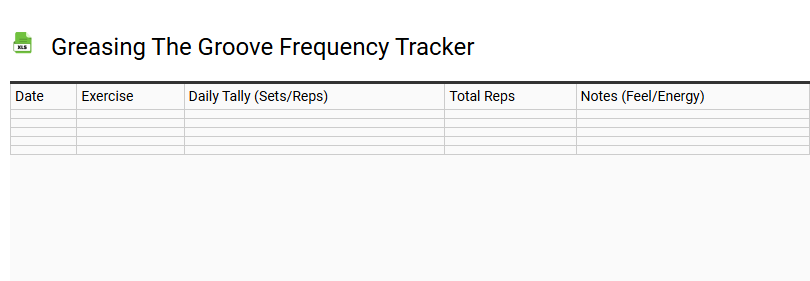
Greasing the Groove Frequency Tracker
💾 Greasing the Groove Frequency Tracker .xls
Optimizing neurological efficiency requires a systematic approach to strength as a skill. This Greasing the Groove (GTG) frequency tracker is designed to monitor submaximal repetitions throughout your daily routine, promoting synaptic facilitation without inducing muscular failure. By recording every set of calisthenics-such as pull-ups or kettlebell drills-you can visualize volume accumulation and manage Central Nervous System (CNS) fatigue effectively.
Consistent use of this template ensures motor unit recruitment remains high while avoiding overtraining. Focus on perfect form and high-frequency practice to strengthen the mind-muscle connection. This digital log acts as a consistency monitor, helping you bridge the gap between skill acquisition and raw power. Utilize these data points to refine your recovery protocols and achieve steady neuromuscular adaptation across your primary movement patterns.
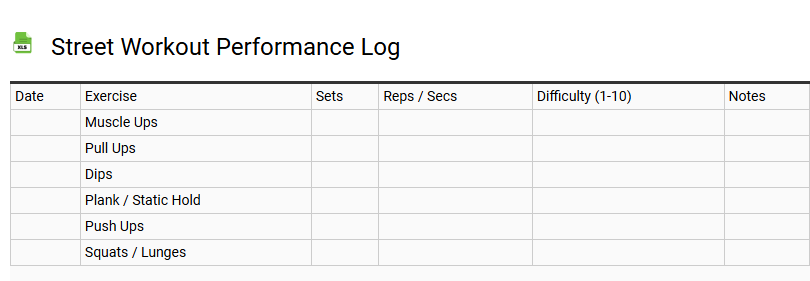
Street Workout Performance Log
💾 Street Workout Performance Log .xls
A Street Workout Performance Log serves as a dedicated framework for tracking bodyweight strength progression and skill mastery. By documenting specific metrics, athletes can effectively monitor their journey toward advanced static holds and explosive movements.
- Exercise Variation: Record the specific progression level, such as tucked or full levers, to ensure accurate growth tracking.
- Volume and Intensity: Track total repetitions, set counts, and isometric hold times measured in seconds.
- Recovery Metrics: Log rest intervals and perceived exertion levels to optimize neurological adaptation and prevent overtraining.
- Technical Notes: Document form cues or environmental factors, such as bar grip or weather conditions during outdoor sessions.
Consistency in data entry provides a clear visual of progressive overload, allowing for precise adjustments to training volume. This structured approach facilitates consistent gains in functional strength and calisthenics proficiency over time.
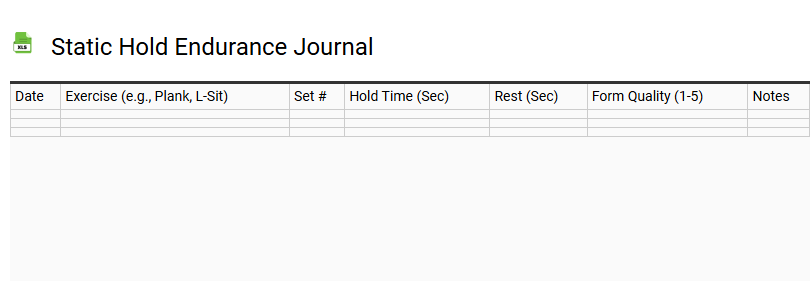
Static Hold Endurance Journal
💾 Static Hold Endurance Journal .xls
A static hold endurance journal serves as a specialized framework for documenting isometric training progress and time under tension. By meticulously recording isometric holds-such as planks, wall sits, and hollow body positions-athletes can effectively monitor muscular endurance and core stability. This structured workout log facilitates progressive overload by tracking hold durations, sets, and rest intervals. Integrating performance tracking for grip strength and postural alignment ensures balanced physiological development. Utilizing a standardized fitness template helps identify plateaus and refine isometric exercise protocols. Consistent data entry regarding contraction intensity and perceived exertion optimizes functional strength adaptations, transforming raw effort into measurable athletic performance milestones. Maintaining this training diary is essential for anyone prioritizing stamina and bodyweight resistance within a comprehensive strength and conditioning regimen.
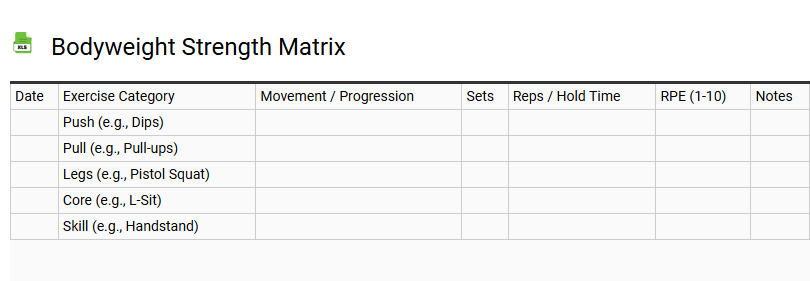
Bodyweight Strength Matrix
💾 Bodyweight Strength Matrix .xls
The Bodyweight Strength Matrix serves as a comprehensive framework for mastering calisthenics and functional movement. By leveraging progressive overload, this template categorizes compound exercises into specific movement patterns-push, pull, squat, and hinge-to ensure structural balance. Athletes can track relative strength gains through various intensities, transitioning from basic mechanics to advanced isometric holds and plyometrics. This systematic approach optimizes muscle hypertrophy and core stability without external resistance. By focusing on the kinetic chain, the matrix enhances neuromuscular coordination and joint mobility. Whether aiming for muscular endurance or explosive power, this structured protocol facilitates consistent physiological adaptation and metabolic conditioning, providing a scalable roadmap for long-term physical development and peak athletic performance through refined bodyweight training variables and resistance progressions.
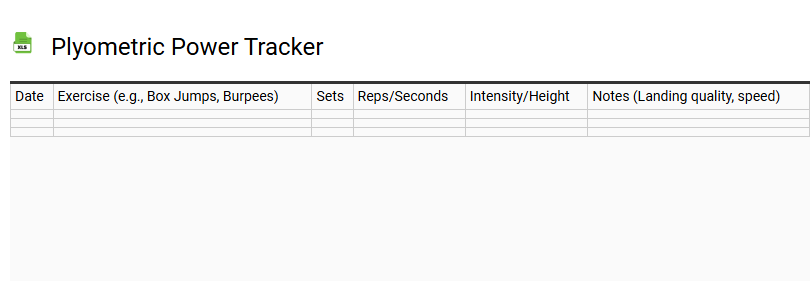
Plyometric Power Tracker
💾 Plyometric Power Tracker .xls
A plyometric power tracker serves as a sophisticated instrument for quantifying explosive strength and neurological adaptation. By leveraging this template, athletes can monitor the efficiency of the stretch-shortening cycle (SSC) through precise metrics like vertical jump height, ground contact time, and the reactive strength index (RSI). These data points are crucial for evaluating the rate of force development (RFD) during high-intensity drills such as depth jumps, bounding, and box jumps.
Tracking peak power output ensures that velocity-based training remains within optimal ranges to prevent CNS fatigue. This structured log facilitates longitudinal athletic performance monitoring, allowing users to visualize progress in reactive power and explosive movement patterns. By documenting every pogo hop and medicine ball throw, the system provides a comprehensive overview of anaerobic capacity and biomechanical efficiency for peak physical peaking.
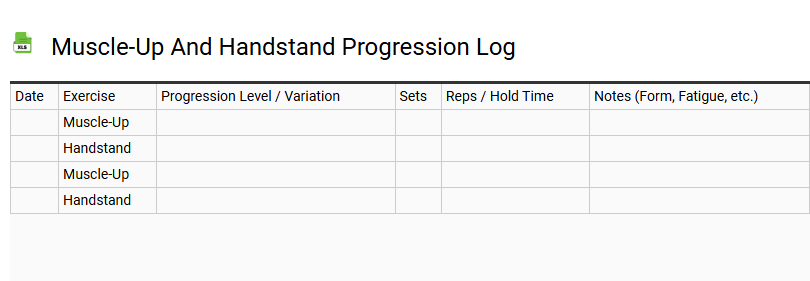
Muscle-Up and Handstand Progression Log
💾 Muscle-Up and Handstand Progression Log .xls
This comprehensive calisthenics progression log is engineered to accelerate bodyweight strength gains through meticulous data tracking. By focusing on explosive pulling power and overhead stability, users can systematically bridge the gap between basic movements and elite gymnastic skills.
- Monitor false grip endurance and scapular retraction for efficient muscle-up transitions.
- Record freestanding balance duration and hollow body alignment to refine handstand mechanics.
- Analyze repetition ranges and set intensity on both gymnastic rings and straight bars.
This template emphasizes technical precision and proprioception, ensuring neurological adaptations keep pace with physical exertion. Use these skill acquisition metrics to identify plateaus and optimize pushing strength for consistent calisthenics mastery.
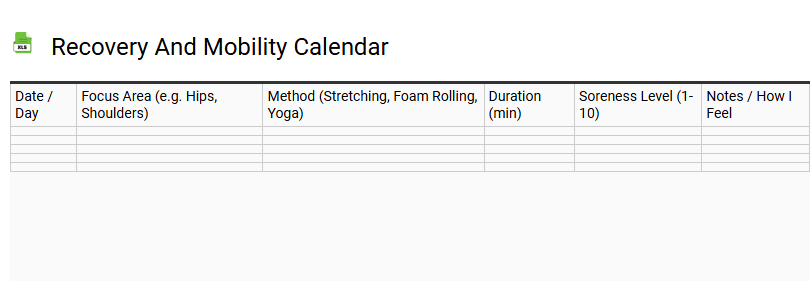
Recovery and Mobility Calendar
💾 Recovery and Mobility Calendar .xls
A recovery and mobility calendar serves as a strategic roadmap for enhancing athletic performance and ensuring long-term fitness longevity. By integrating a structured active recovery template, individuals prioritize muscle tissue repair and injury prevention through targeted restorative exercises. This systematic approach emphasizes joint health by scheduling dedicated sessions for foam rolling, myofascial release, and dynamic stretching to improve overall range of motion.
Utilizing a digital or printable mobility routine allows for consistent tracking of therapeutic movements and static stretching protocols. These sessions are crucial for reducing delayed onset muscle soreness (DOMS) and correcting postural imbalances. By balancing high-intensity training with restorative movement, the calendar fosters optimal physical rehabilitation and functional flexibility. Implementing this wellness planning tool ensures every muscle group receives the necessary attention for metabolic recovery and peak neuromuscular efficiency.
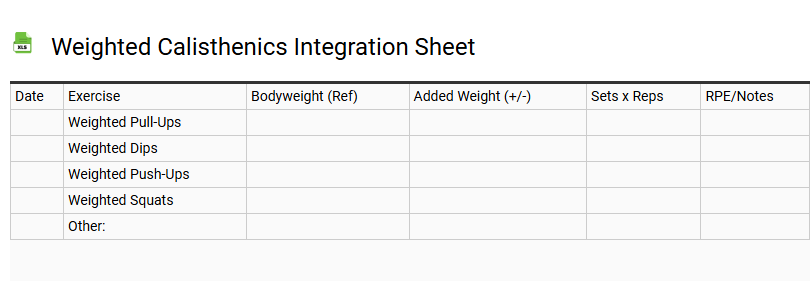
Weighted Calisthenics Integration Sheet
💾 Weighted Calisthenics Integration Sheet .xls
This Weighted Calisthenics Integration Sheet serves as a data-driven blueprint for mastering progressive overload. Designed for athletes transitioning from bodyweight mastery to elite strength, this template facilitates precise tracking of external loads applied to fundamental compound movements such as dips, pull-ups, and chin-ups. By documenting specific rep ranges, sets, and intensity levels, users can optimize mechanical tension and metabolic stress-the primary drivers of muscle hypertrophy.
The layout emphasizes load management and volume tracking, allowing for granular adjustments in resistance to prevent performance plateaus. Integrating strength training principles with calisthenics requires rigorous data entry to monitor recovery and fatigue. Utilize this sheet to bridge the gap between gymnastic strength and traditional resistance training, ensuring a systematic increase in total work capacity while refining bodyweight mechanics and functional power output.
Total Weekly Volume Calculator
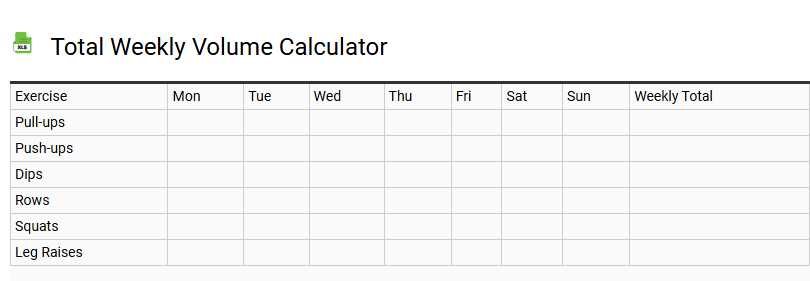
💾 Total Weekly Volume Calculator .xls
The Total Weekly Volume Calculator is an essential tool for optimizing hypertrophy and ensuring consistent muscle growth. By quantifying your cumulative training load-calculated as sets multiplied by reps and weight-athletes can precisely monitor workout intensity across specific muscle groups. Utilizing this metric facilitates strategic progressive overload, helping to prevent plateaus while managing systemic fatigue and recovery periods. Whether you are prioritizing compound movements or isolation exercises, tracking training frequency and total exercise volume is vital for balancing muscular endurance with strength gains. This data-driven approach to strength training allows you to fine-tune rep ranges and tonnage, ensuring your fitness regimen aligns with your body composition goals and long-term athletic performance milestones. Monitoring work capacity through a structured training log ensures every session contributes to your fitness evolution.
Bodyweight Exercise Library Spreadsheet
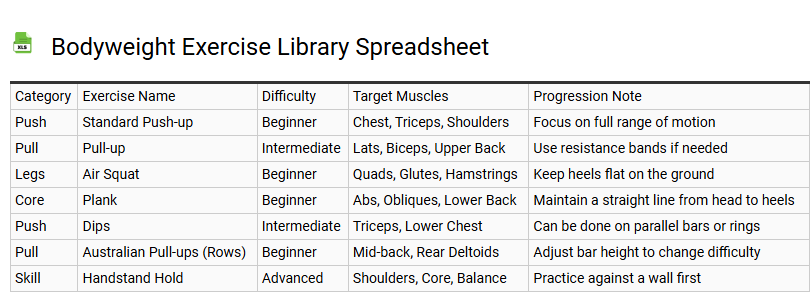
💾 Bodyweight Exercise Library Spreadsheet .xls
A bodyweight exercise library spreadsheet serves as a comprehensive fitness tracker for athletes prioritizing calisthenics and functional strength. This digital exercise database organizes diverse movement patterns, enabling users to filter by muscle groups, difficulty tiers, and equipment needs. By utilizing a structured workout log, individuals can effectively implement progressive overload, tracking vital metrics such as reps, sets, and rest intervals to ensure consistent muscle hypertrophy.
- Systematic Progressions: Simplifies bodyweight progressions from basic movements to advanced skills.
- Data-Driven Training: Optimized for Google Sheets or Excel to facilitate long-term performance tracking.
- Customizable Routines: Ideal for building a workout routine that evolves with your functional fitness level.
Integrating this strength training template into your regime provides a clear roadmap for at-home workouts, ensuring accountability and measurable physical development.
Form and Technique Checklist
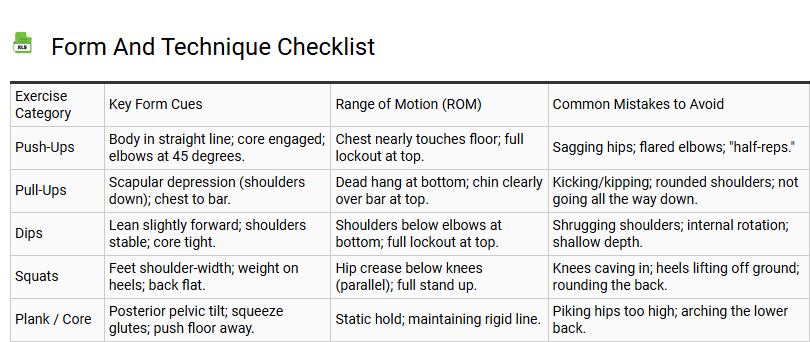
💾 Form and Technique Checklist .xls
A form and technique checklist serves as a vital instrument for performance optimization and injury prevention. By establishing clear execution standards, athletes and practitioners can monitor bio-mechanics and ensure proper alignment across diverse movement patterns. This structured approach focuses on kinetic chain integration, promoting repetition consistency through objective physical assessment.
Utilizing a standardized template facilitates immediate corrective feedback, which is essential for skill mastery and refining complex motor tasks. These training protocols emphasize postural integrity and efficient energy transfer, ensuring that each movement meets established safety criteria. By documenting specific movement markers, users can identify mechanical compensations early, fostering long-term athletic development and functional longevity. Implementing this systematic evaluation ensures that technical proficiency remains the primary focus during high-intensity training or rehabilitation cycles.
Monthly Goal Setting Dashboard
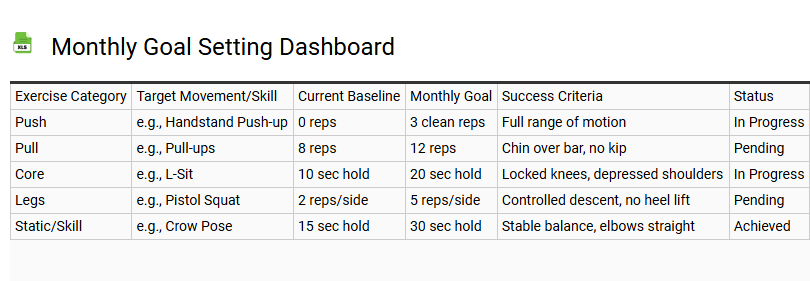
💾 Monthly Goal Setting Dashboard .xls
A Monthly Goal Setting Dashboard serves as a centralized workspace for defining core objectives and monitoring progress throughout a thirty-day cycle. This structured environment translates broad ambitions into actionable steps, ensuring consistent momentum toward significant milestones. By organizing priorities within a single interface, users can maintain a high-level overview of their trajectory while managing daily requirements.
- Clarity: Organizes personal and professional targets into visible, manageable categories.
- Tracking: Utilizes visual indicators to highlight achievements and identify areas needing immediate focus.
- Accountability: Encourages regular reviews to maintain alignment with long-term aspirations.
Consolidating high-priority tasks and performance metrics provides a clear roadmap for success. This framework allows for strategic adjustments as priorities evolve, fostering a habit of intentional growth and turning abstract intentions into measurable results.
This bodyweight calisthenics journal template serves as a vital tool for tracking progressive overload and mastering fundamental movements. By meticulously recording sets, repetitions, and rest intervals, athletes can effectively monitor strength gains and skill transitions. A structured training log ensures consistency across every workout routine, highlighting performance trends over time.
Utilizing this streamlined layout simplifies fitness tracking, enabling data-driven adjustments to your street workout regimen. Ultimately, documenting each session fosters accountability, driving you toward peak physical conditioning and functional strength mastery.