
Caregiver Burnout Emotional Tracker Template
Navigating the demands of long-term care often leads to compassion fatigue and physical exhaustion. Utilizing a Caregiver Burnout Emotional Tracker is an essential step toward preserving your mental well-being and practicing proactive self-care. By consistently monitoring your daily moods and energy levels, you can identify stress triggers and prioritize necessary respite. This tracking tool empowers you to manage the emotional toll of your caregiving journey effectively. Please explore the professionally designed variations of these templates provided below to find the perfect fit for your needs.
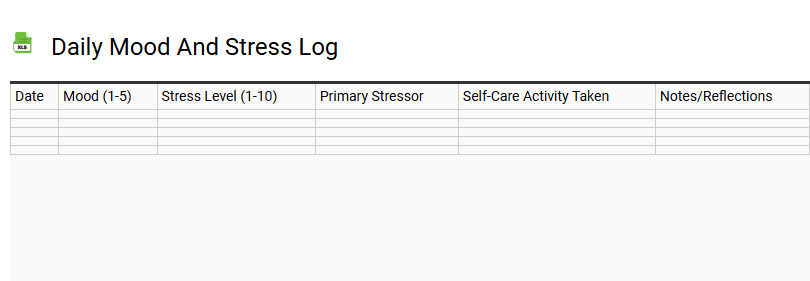
Daily Mood and Stress Log
💾 Daily Mood and Stress Log .xls
Implementing a Daily Mood and Stress Log is an essential practice for effective mental health tracking. This structured template helps individuals identify emotional patterns and anxiety triggers through consistent symptom monitoring. By documenting mood fluctuations alongside daily stressors, users gain profound insights into their psychological well-being and emotional regulation capabilities.
This wellness journal functions as a versatile tool for cognitive behavioral therapy (CBT), allowing for precise stress management and habit tracking. Integrating this log into a daily self-care routine fosters mindfulness and proactive self-awareness.
- Monitor stress levels and emotional intensity.
- Identify specific environmental stressors.
- Track sleep quality and its impact on affective states.
- Evaluate the effectiveness of various coping mechanisms.
Consistent data entry enhances emotional intelligence and supports long-term mental wellness through data-driven self-reflection.
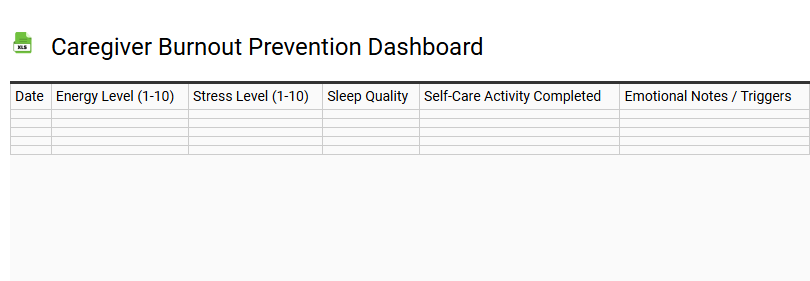
Caregiver Burnout Prevention Dashboard
💾 Caregiver Burnout Prevention Dashboard .xls
A Caregiver Burnout Prevention Dashboard serves as a sophisticated monitoring tool designed to mitigate compassion fatigue and emotional exhaustion. By leveraging wellness tracking analytics, this interface provides real-time insights into caregiver burden, allowing for proactive stress management. Users can monitor vital health indicators and psychological well-being through automated mental health assessments.
This centralized platform streamlines access to essential support resources, ensuring that self-care routines remain a priority. Key functionalities typically include:
- Respite care scheduling and availability alerts.
- Predictive analytics to identify early signs of chronic caregiving stress.
- Daily wellness assessments and mindfulness integration.
- Resource libraries for coping strategies and peer support.
Utilizing a data-driven approach to health monitoring empowers families and healthcare professionals to maintain caregiving sustainability, ultimately improving the quality of life for both the provider and the care recipient.
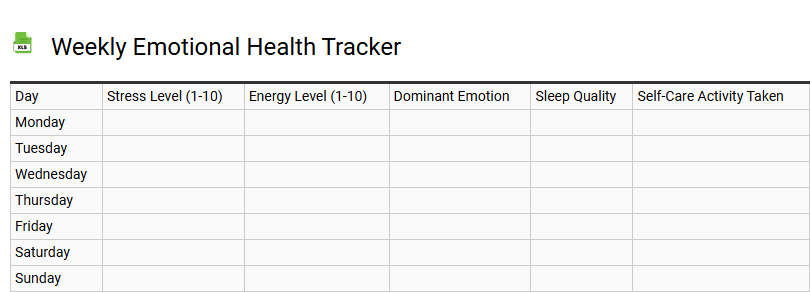
Weekly Emotional Health Tracker
💾 Weekly Emotional Health Tracker .xls
A weekly emotional health tracker serves as a vital instrument for maintaining mental well-being and self-awareness. By utilizing this structured template, individuals can document daily mood fluctuations, identify psychological triggers, and monitor overall stress levels. This holistic approach to emotional regulation encourages mindfulness and consistent self-reflection. Users can log sleep quality, energy levels, and social interactions to uncover correlations between behavioral habits and mental health outcomes. This data-driven tool facilitates proactive stress management and supports anxiety reduction strategies. Incorporating these insights into a routine promotes improved resilience and psychological balance. Whether tracking gratitude or identifying negative thought patterns, a digital or printable mood log empowers proactive care for your psychological state. This systematic evaluation of emotional patterns fosters long-term mental stability and enhanced self-discovery, making it an essential component of a comprehensive wellness journey.
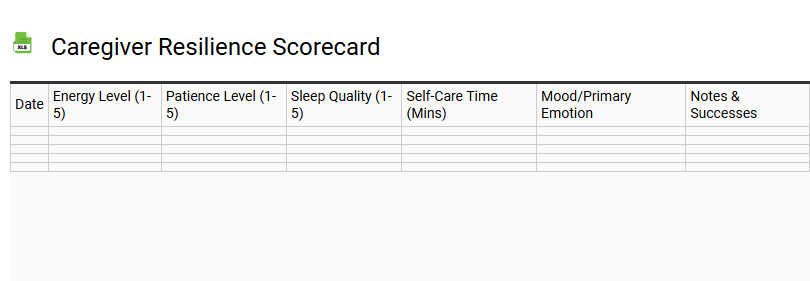
Caregiver Resilience Scorecard
💾 Caregiver Resilience Scorecard .xls
A Caregiver Resilience Scorecard serves as a vital diagnostic instrument to monitor emotional well-being and mitigate the risks of caregiver burnout. By utilizing this structured template, healthcare professionals and family providers can objectively measure coping mechanisms, stress management capabilities, and signs of compassion fatigue. The assessment focuses on key psychosocial indicators, including access to respite care, mental health support, and work-life balance.
Implementing this evaluation tool facilitates early intervention strategies to prevent chronic exhaustion. Essential metrics tracked within the scorecard include:
- Emotional regulation and empathy fatigue levels.
- Effectiveness of current support systems.
- Frequency of self-care activities.
- Perceived quality of care delivery.
Consistent use of these metrics ensures better health outcomes for both the patient and the provider through proactive resource allocation and targeted peer support.
Stress Level and Mood Correlation Chart
💾 Stress Level and Mood Correlation Chart .xls
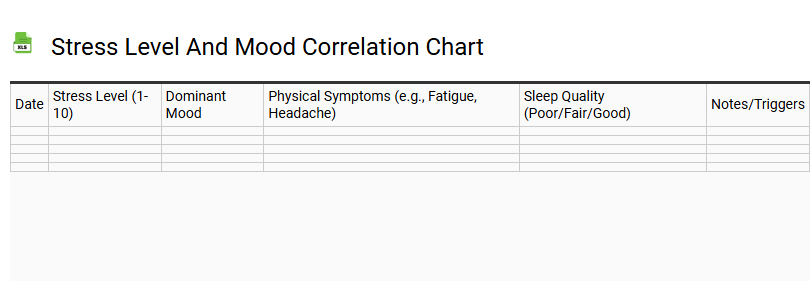
A stress level and mood correlation chart serves as a vital diagnostic instrument for mapping the intricate relationship between cortisol-driven pressure and emotional stability. By utilizing this structured template, individuals can record daily fluctuations in their psychological state, identifying how specific stress triggers impact their overall mental well-being.
This data visualization tool integrates biometric feedback with qualitative mood tracking, allowing for the identification of psychosomatic patterns. Consistent logging of affective states alongside perceived tension levels reveals critical correlations that often go unnoticed. Users can pinpoint high-pressure intervals and their subsequent effect on temperament and cognitive clarity. Ultimately, leveraging this analytical framework fosters enhanced emotional regulation, providing actionable data-driven insights to optimize lifestyle interventions and bolster psychological resilience through proactive self-monitoring.
Caregiver Self-Care and Mood Journal
💾 Caregiver Self-Care and Mood Journal .xls
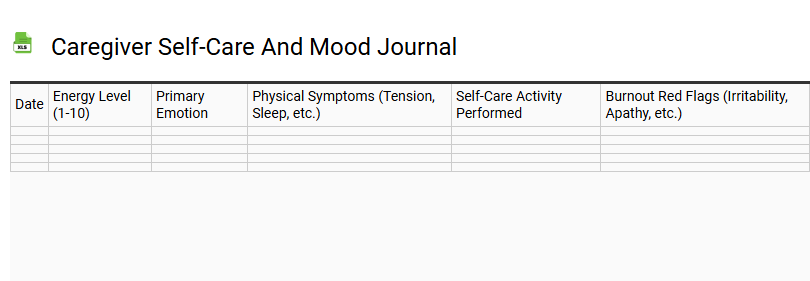
A caregiver self-care and mood journal serves as a vital wellness tracker for individuals managing the complexities of patient care. By utilizing a structured daily log, caregivers can effectively monitor emotional well-being and identify early signs of caregiver burnout or empathy fatigue. This template facilitates consistent self-reflection, allowing for the integration of mindfulness practices and proactive stress management techniques into a demanding schedule.
- Track mood fluctuations and triggers to maintain mental clarity.
- Prioritize respite care and personal health alongside caregiving duties.
- Develop coping strategies to enhance long-term emotional resilience.
Integrating this support tool into your routine ensures that mental health remains a priority, fostering a sustainable balance between selfless service and essential personal recovery. Consistent mood monitoring empowers caregivers to recognize when to seek assistance, ensuring the continued delivery of high-quality, compassionate care.
Compassion Fatigue Monitoring Sheet
💾 Compassion Fatigue Monitoring Sheet .xls
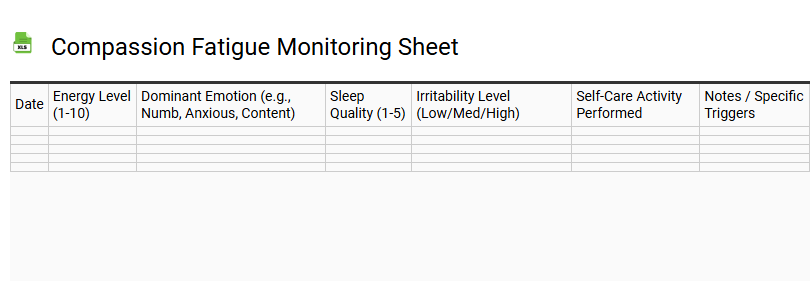
A compassion fatigue monitoring sheet serves as a vital clinical tool for healthcare professionals and caregivers to track secondary traumatic stress and emotional residue. By utilizing a structured template, individuals can perform a self-care assessment to identify symptoms of empathy exhaustion and vicarious trauma before they escalate into burnout.
This systematic approach emphasizes psychological resilience and maintains a high professional quality of life (ProQOL). Regular symptom tracking focuses on key indicators such as emotional withdrawal, reduced productivity, and chronic fatigue. Integrating this monitoring process into a daily routine fosters mental health wellness and prevents caregiver stress. By evaluating the impact of work-related trauma, practitioners can implement targeted interventions, ensuring long-term career sustainability and emotional equilibrium while maintaining their capacity for empathetic care within demanding environments.
Daily Energy and Emotional State Log
💾 Daily Energy and Emotional State Log .xls
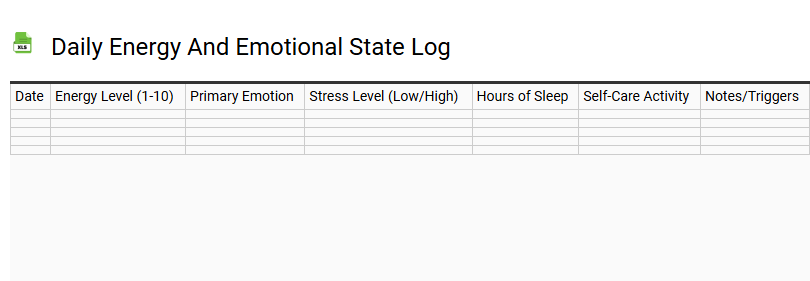
Implementing a daily energy and emotional state log is a transformative practice for enhancing self-awareness and personal productivity. This structured mood tracker allows individuals to identify critical correlations between physical vitality and psychological well-being. By documenting fluctuations in energy alongside emotional triggers, you gain data-driven insights into your circadian rhythm and mental health patterns. Utilizing a wellness journal helps pinpoint peak performance windows while highlighting potential burnout risks. Consistent emotional auditing fosters improved self-regulation and stress management, empowering more informed lifestyle choices. Tracking these vitality markers transforms subjective feelings into actionable behavioral insights, supporting long-term habit formation and holistic health. Whether monitoring mood swings or cognitive focus, this log serves as an essential tool for achieving sustainable work-life balance and peak emotional intelligence through diligent self-monitoring and reflection.
Caregiver Mental Wellness Tracker
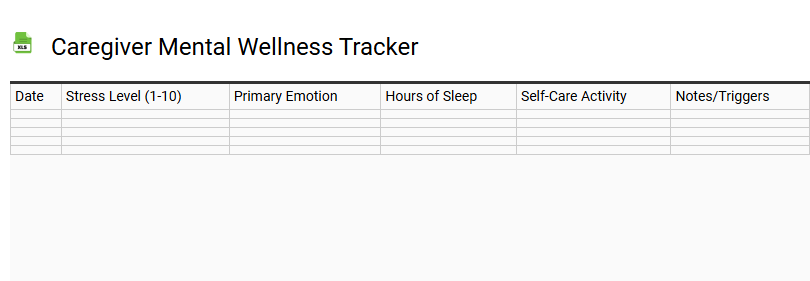
💾 Caregiver Mental Wellness Tracker .xls
Maintaining a caregiver mental wellness tracker is essential for preventing compassion fatigue and managing the daily pressures of caregiving. This comprehensive tool enables individuals to monitor their emotional well-being, track mood fluctuations, and identify early warning signs of caregiver burnout. By documenting sleep quality, stress levels, and physical symptoms, users can develop proactive stress management strategies and foster long-term psychological resilience.
Integrating a wellness template into a daily routine encourages consistent self-care and mindfulness. Key features often include:
- Daily mood logs to observe emotional trends.
- Gratitude journaling to enhance positive outlooks.
- Symptom tracking for anxiety and exhaustion.
- Reminders for respite care and social support.
Utilizing these structured insights helps caregivers balance their demanding responsibilities with holistic health, ensuring they remain mentally fit to provide high-quality care while prioritizing their own mental health.
Burnout Symptom Severity Log
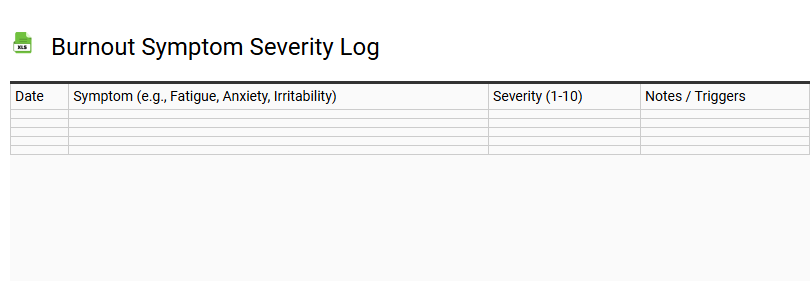
💾 Burnout Symptom Severity Log .xls
A burnout symptom severity log serves as a vital self-assessment tool for monitoring occupational stress and emotional exhaustion. By utilizing this structured template, individuals can track daily fluctuations in their psychological wellbeing, identifying early warning signs of chronic fatigue and depersonalization. Consistent data collection facilitates a deeper understanding of workplace stressors and their direct impact on mental health.
This proactive approach encourages the implementation of targeted coping mechanisms and stress management strategies. Monitoring physical manifestations, such as sleep disturbances or cognitive fog, helps evaluate the efficacy of preventative care interventions. Whether used for personal reflection or professional clinical consultation, this tracking instrument promotes resilience by quantifying subjective experiences of exhaustion and reduced professional efficacy. Integrating this log into a wellness routine empowers users to mitigate the risks of long-term burnout through data-driven self-awareness.
Caregiver Coping Mechanism Tracker
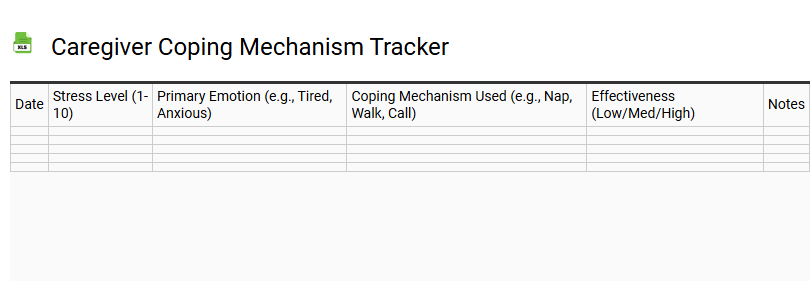
💾 Caregiver Coping Mechanism Tracker .xls
Optimizing caregiver burnout prevention starts with a structured Caregiver Coping Mechanism Tracker. This essential tool facilitates proactive stress management by documenting daily emotional triggers and the efficacy of various self-care monitoring strategies. By maintaining consistent daily logs, individuals can evaluate the impact of therapeutic interventions and identify early signs of compassion fatigue.
- Enhance mental health through systematic wellness tracking and data-driven insights.
- Strengthen emotional resilience by analyzing the effectiveness of different support systems.
- Reduce caregiving stress with targeted behavioral health adjustments and restorative practices.
Integrating this template into a daily routine ensures that personal health remains a priority, fostering a sustainable environment for high-quality care delivery while safeguarding the provider's long-term psychological well-being.
Monthly Mood and Well-being Summary
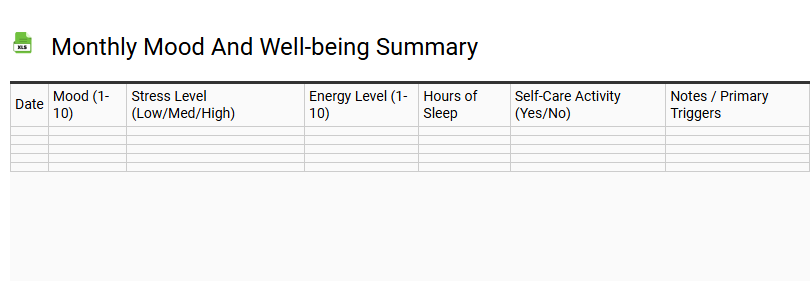
💾 Monthly Mood and Well-being Summary .xls
A monthly mood and well-being summary template serves as a robust framework for tracking emotional regulation and psychological awareness. By maintaining a consistent self-reflection log, individuals can visualize recurring patterns in their mental state and identify external triggers impacting their daily life.
- Mental Health Tracking: Monitor emotional fluctuations and psychological health indicators over a thirty-day cycle.
- Behavioral Insights: Analyze the correlation between sleep hygiene, physical activity, and overall mood stability.
- Holistic Wellness: Integrate gratitude journaling and stress management techniques into a cohesive, data-driven report.
- Habit Assessment: Evaluate how routine adjustments influence long-term mental clarity and emotional intelligence.
Utilizing this structured assessment fosters proactive self-care, enabling more informed conversations with healthcare professionals and promoting sustained personal growth through diligent emotional monitoring and wellness documentation.
Caregiver Overload and Mood Heat Map
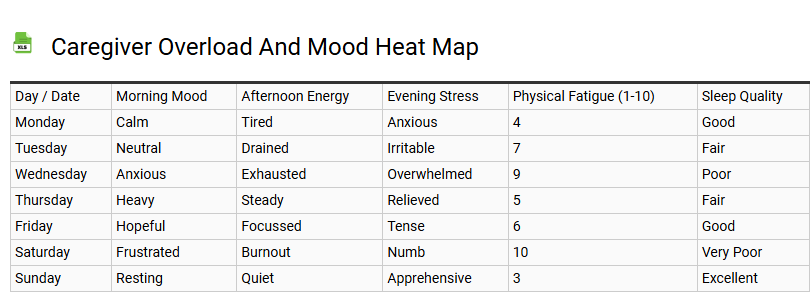
💾 Caregiver Overload and Mood Heat Map .xls
This visual tracking tool provides a structured method for monitoring daily emotional well-being and stress levels. By documenting fluctuations in energy and temperament, individuals can identify specific timeframes where responsibilities become disproportionately heavy. The layout utilizes a color-coded grid to highlight peak tension hours, making it easier to recognize recurring patterns of exhaustion.
By consistently recording these shifts, users gain clarity on which tasks contribute most to feelings of depletion. This insight allows for better planning of rest periods and more effective distribution of support. Maintaining this record serves as an early warning system, helping to prevent burnout and ensure a sustainable balance between personal health and the demands of providing long-term assistance to others.
Holistic Caregiver Health Tracker
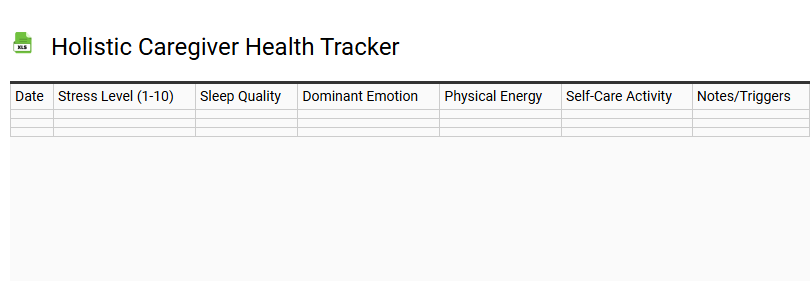
💾 Holistic Caregiver Health Tracker .xls
A Holistic Caregiver Health Tracker serves as a vital instrument for burnout prevention and wellness management. This template facilitates comprehensive health monitoring, allowing users to document vital signs, sleep quality, and nutritional patterns. By prioritizing a holistic approach, the tracker integrates mental health assessments with physical activity logs to ensure emotional resilience.
Caregivers can utilize daily self-care routines, stress management techniques, and hydration tracking to maintain long-term well-being. Incorporating respite care scheduling and mindfulness exercises helps mitigate the physical demands of caregiving. This digital health tool optimizes lifestyle balance, providing actionable insights into fatigue levels and mood fluctuations. Ultimately, tracking these biometric data points and behavioral habits empowers caregivers to sustain their caregiving capacity while safeguarding their personal longevity and psychological health.
Caregiver Anxiety and Mood Trend Log
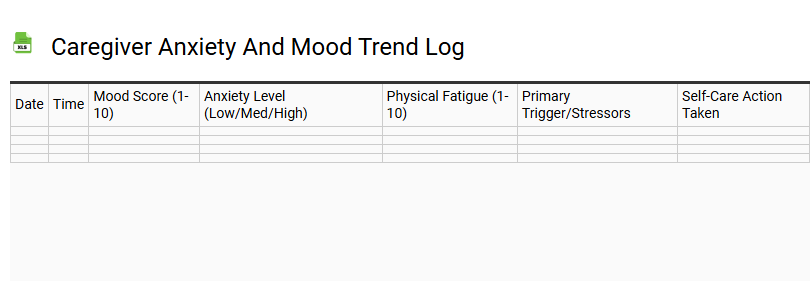
💾 Caregiver Anxiety and Mood Trend Log .xls
Utilizing a Caregiver Anxiety and Mood Trend Log is an essential strategy for managing the emotional wellness and mental health challenges associated with long-term caregiving. This symptom tracking tool helps identify anxiety triggers and monitor mood fluctuations caused by chronic stress and the heavy mental load of caregiver burnout. By documenting daily emotional states and psychological well-being, users can visualize patterns in their stress management journey.
This systematic approach assists in recognizing when respite care or additional support systems are necessary. Integrating self-care routines into the log ensures a holistic view of health monitoring. Ultimately, these data-driven insights empower caregivers to communicate more effectively with healthcare professionals, fostering better coping mechanisms and overall resilience in demanding environments. Regular assessment through this template promotes sustainable caregiving practices and prevents compassion fatigue.
Managing the emotional toll of long-term caregiving requires proactive monitoring to prevent compassion fatigue. This Caregiver Burnout Emotional Tracker template provides a structured self-care assessment to identify early signs of chronic stress and exhaustion.
By utilizing this mood journal, caregivers can implement effective stress management strategies and prioritize their mental health. Consistent wellness tracking fosters resilience, ensuring sustainable support for loved ones while practicing essential burnout prevention to maintain overall emotional well-being and life balance.