
CBT Thought Record Template: A Guide and Worksheet for Cognitive Restructuring
Utilizing a structured template for Cognitive Behavioral Therapy (CBT) serves as a vital psychological tool for documenting intrusive automatic thoughts. By implementing a comprehensive thought record, individuals can effectively identify cognitive distortions and engage in evidence-based cognitive restructuring. This mental health practice promotes emotional regulation by analyzing the intricate connections between environmental triggers, underlying beliefs, and behavioral consequences. Mastering this therapeutic technique facilitates a balanced perspective, empowering users to challenge maladaptive patterns. Please explore our diverse range of professionally designed template variations below.
Standard Seven Column Thought Record
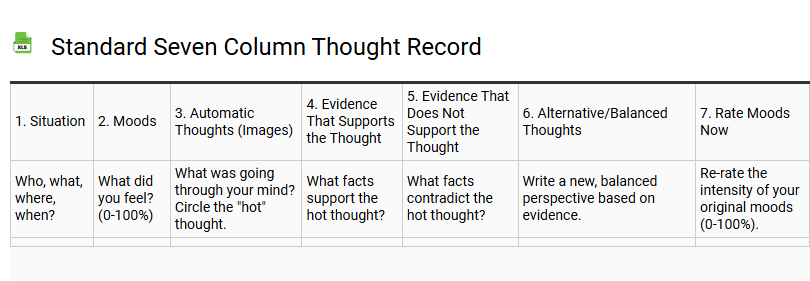
💾 Standard Seven Column Thought Record .xls
The Standard Seven Column Thought Record serves as a fundamental instrument in Cognitive Behavioral Therapy (CBT) for systematic cognitive restructuring. This structured template empowers individuals to identify and deconstruct negative automatic thoughts by documenting specific situational triggers and emotional intensity. By isolating a primary "hot thought," users evaluate objective evidence for and against their initial perceptions, effectively uncovering cognitive distortions. This analytical process facilitates the development of an alternative balanced perspective, which aims to reduce psychological distress and modify maladaptive belief systems. As a core mental health tool, the seven-step framework promotes emotional regulation and psychological resilience. Consistent application of this evidence-based exercise encourages more adaptive cognitive patterns, allowing for a measurable shift in mood and physiological responses through disciplined, self-reflective inquiry and behavioral intervention.
ABC Model Worksheet
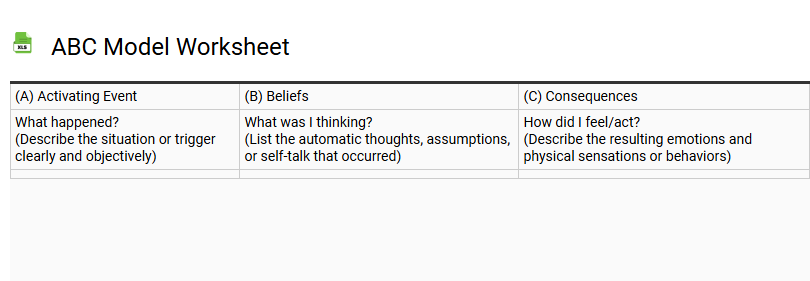
The ABC Model Worksheet serves as a foundational cognitive behavioral therapy (CBT) tool designed for emotional regulation and cognitive restructuring. Developed by Albert Ellis within the Rational Emotive Behavior Therapy (REBT) framework, this template helps individuals dissect the connection between external triggers and internal responses.
Utilizing this psychological tool involves documenting three core components:
- Activating Event: The specific stressor or objective situation encountered.
- Beliefs: The immediate thoughts, evaluations, or irrational beliefs regarding the event.
- Consequences: The resulting emotional states and behavioral outcomes.
By mapping these elements, users can uncover maladaptive thought patterns and cognitive distortions. This systematic approach facilitates mindfulness and empowers practitioners to challenge negative self-talk, fostering greater psychological resilience and improved mental wellbeing through structured self-reflection and behavioral change.
Daily Negative Automatic Thought Log
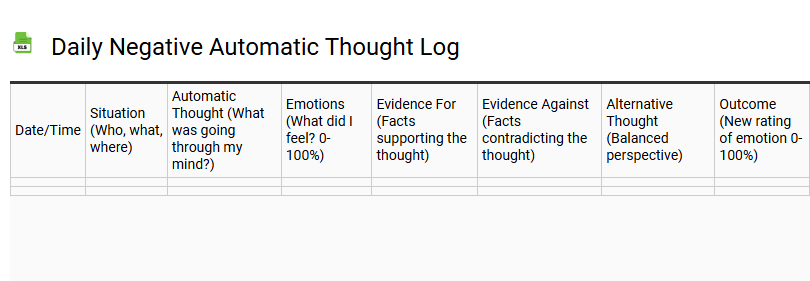
💾 Daily Negative Automatic Thought Log .xls
A Daily Negative Automatic Thought Log is a fundamental tool in Cognitive Behavioral Therapy (CBT) designed to identify and challenge cognitive distortions. This structured thought record helps individuals track the triggering event, the resulting emotional response, and the specific automatic thoughts that occur spontaneously. By documenting these patterns, users engage in cognitive restructuring-systematically evaluating the evidence for and against their internal narrative.
Consistent use of this template facilitates a more balanced perspective, reducing the intensity of maladaptive thinking. Key components of an effective log include:
- Identifying the objective situation.
- Labeling the intensity of emotions.
- Isolating the negative belief.
- Formulating a rational alternative response.
This process promotes self-reflection and emotional regulation, significantly improving overall mental health and psychological resilience.
Cognitive Distortion Identification Tracker
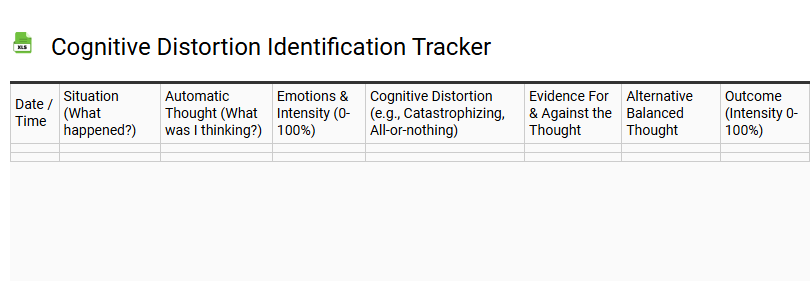
💾 Cognitive Distortion Identification Tracker .xls
A Cognitive Distortion Identification Tracker serves as a vital instrument for enhancing self-awareness and mental clarity. By utilizing this structured template, individuals can systematically document negative automatic thoughts and categorize them into specific patterns such as catastrophizing, overgeneralization, or emotional reasoning. Rooted in evidence-based Cognitive Behavioral Therapy (CBT), this digital log facilitates the objective analysis of subjective experiences.
Monitoring these irrational beliefs helps users recognize the triggers behind anxiety or fluctuating moods. By identifying recurring cognitive biases and mental filters, you can actively practice reframing techniques to foster healthier perspectives and improved emotional regulation. This systematic approach to mindfulness encourages long-term behavioral change, transforming distorted perceptions into balanced, realistic insights for enhanced psychological well-being and personal growth.
Evidence For and Against Analysis Sheet
💾 Evidence For and Against Analysis Sheet .xls
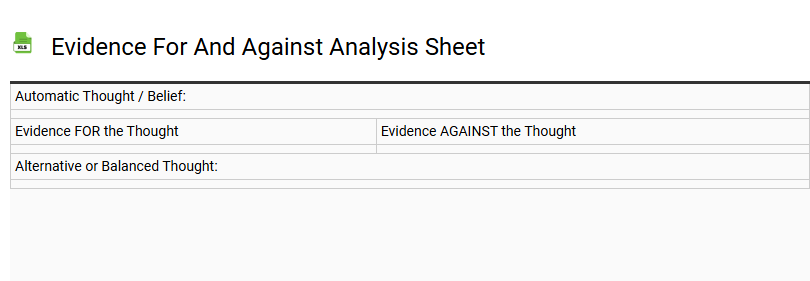
An Evidence For and Against Analysis Sheet serves as a critical cognitive restructuring tool designed to challenge entrenched cognitive distortions. By utilizing this structured template, individuals can bypass confirmation bias to perform a systematic evaluation of their core beliefs. The process involves documenting objective facts that support a specific thought while simultaneously gathering contradictory evidence that refutes it.
- Reduces emotional reasoning by focusing on verifiable data.
- Encourages a balanced perspective through the exploration of alternative explanations.
- Enhances emotional regulation by deconstructing rigid mental schemas.
This DBT-informed technique facilitates rigorous validity testing of automatic thoughts. By weighing the totality of information, users can move toward more adaptive conclusions, ensuring that their perceptions align with reality rather than subjective distress or maladaptive patterns.
Alternative Balanced Thought Generator

💾 Alternative Balanced Thought Generator .xls
The Alternative Balanced Thought Generator serves as a precise framework for cognitive restructuring and emotional regulation. By identifying automatic negative thoughts, individuals can systematically challenge cognitive distortions and ingrained core beliefs that fuel distress. This evidence-based template facilitates perspective-shifting through structured journaling, allowing users to evaluate objective evidence versus internal biases.
Utilizing this tool enhances psychological flexibility and promotes mindfulness by dismantling harmful thought patterns. The process focuses on reframing initial reactions into a more balanced perspective, fostering improved mental health and resilience. As a core component of cognitive behavioral strategies, this generator empowers users to achieve emotional equilibrium by replacing maladaptive perceptions with rational, grounded insights. Integrating these reframing exercises into daily routines supports long-term stress management and healthier cognitive habits.
Mood and Thought Correlation Diary
💾 Mood and Thought Correlation Diary .xls
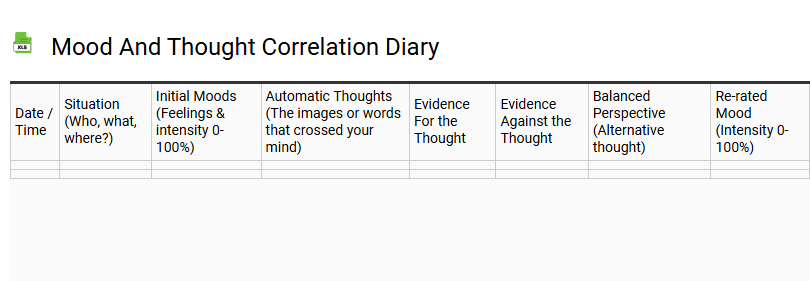
A Mood and Thought Correlation Diary serves as a sophisticated cognitive behavioral tool designed to illuminate the intricate link between affective states and internal dialogues. By implementing this structured template, individuals engage in consistent mood tracking to pinpoint specific psychological triggers and recognize pervasive cognitive distortions.
This systematic approach to self-reflection facilitates enhanced emotional regulation by documenting the relationship between subjective experiences and environmental stressors. Utilizing this diary for daily mental health journaling promotes mindfulness and aids in cognitive restructuring. Through the longitudinal observation of emotional patterns, users can develop personalized coping strategies, fostering greater resilience and overall mental well-being. This behavioral therapy resource transforms abstract feelings into actionable data, empowering proactive psychological growth and improved self-awareness.
Situation Emotion Thought Action Tool
💾 Situation Emotion Thought Action Tool .xls
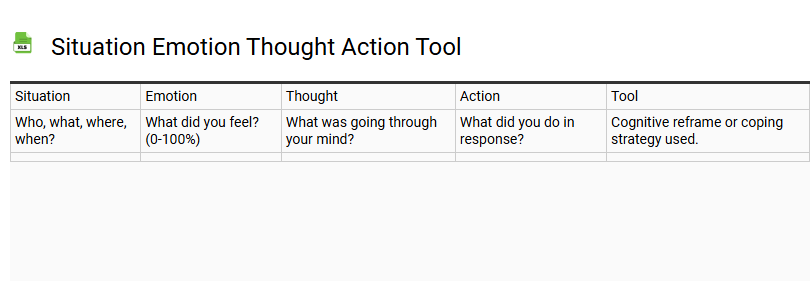
The Situation Emotion Thought Action framework provides a structured approach for analyzing behavioral patterns. By documenting specific events, you gain clarity on how external triggers influence internal states and subsequent behaviors.
- Situation: Define the objective facts of the event.
- Emotion: Identify the immediate feelings and their physical intensity.
- Thought: Capture the automatic interpretations and mental dialogue triggered by the occurrence.
- Action: Record the resulting behavior or the specific response taken.
Utilizing this template facilitates deeper self-awareness and supports the development of more intentional responses to challenging circumstances. It serves as a practical resource for mapping the connection between mental processing and physical reactions, allowing for the targeted adjustment of habitual cycles and improved emotional regulation.
Weekly Cognitive Behavioral Reflection Log
💾 Weekly Cognitive Behavioral Reflection Log .xls
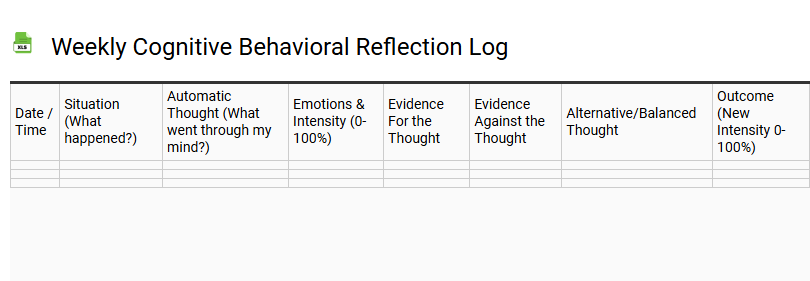
Utilizing a Weekly Cognitive Behavioral Reflection Log facilitates systematic self-monitoring to enhance emotional regulation. This evidence-based thought record empowers users to identify automatic thoughts and deconstruct cognitive distortions that impact daily functioning. By documenting specific triggers and subsequent behavioral responses, individuals gain metacognitive awareness into their unique psychological patterns.
This structured mental health tracking tool integrates core principles of Cognitive Behavioral Therapy (CBT), encouraging the evaluation of evidence for and against maladaptive beliefs. Through consistent journaling, users can implement behavioral activation strategies and refine coping mechanisms. Analyzing these weekly entries fosters neuroplasticity and promotes healthier cognitive restructuring. Integrating this reflective practice into your routine serves as a proactive approach to wellness management, ensuring long-term emotional resilience and sustained therapeutic progress.
Challenging Irrational Beliefs Worksheet
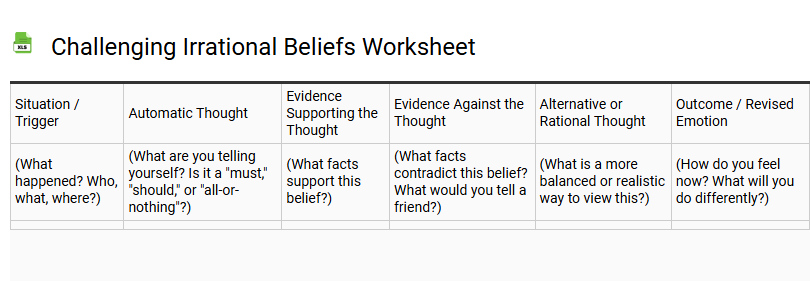
💾 Challenging Irrational Beliefs Worksheet .xls
This Challenging Irrational Beliefs Worksheet serves as a structured REBT and CBT technique designed to dismantle harmful cognitive distortions. By utilizing the ABC model, individuals identify specific activating events and the underlying maladaptive patterns that trigger emotional distress.
This evidence-based mental health tool focuses on disputing thoughts through rigorous self-reflection. Users systematically evaluate automatic negative thoughts by seeking objective evidence, fostering greater psychological flexibility and improved emotional regulation.
The template facilitates cognitive restructuring by replacing rigid "musts" and "shoulds" with rational alternatives. Key components of this therapeutic process include:
- Identifying irrational beliefs and internal biases.
- Analyzing the consequences of dysfunctional thinking.
- Developing balanced, rational thinking patterns to enhance long-term resilience and mental clarity.
Physical Sensation and Thought Mapper
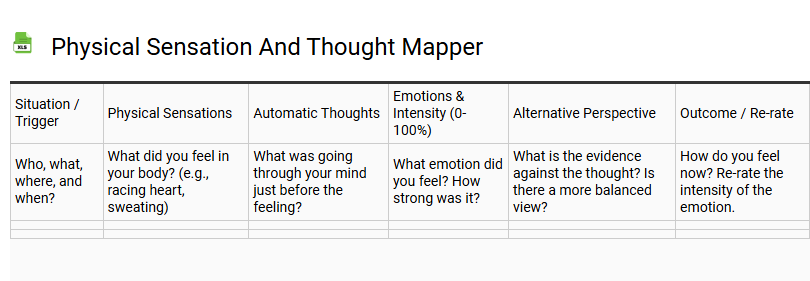
💾 Physical Sensation and Thought Mapper .xls
The Physical Sensation and Thought Mapper serves as a robust framework for enhancing interoception and cognitive awareness. By documenting somatic markers-such as localized muscle tension, visceral discomfort, or shifts in heart rate-users can effectively bridge the gap between physiological states and specific mental triggers. This systematic approach to mind-body tracking facilitates the identification of subconscious patterns and intrusive belief systems that often drive emotional dysregulation.
Integrating this template into a daily mindfulness practice promotes metacognition and supports neuroplasticity through consistent self-monitoring. By analyzing the interplay between visceral responses and reactive thoughts, individuals can employ targeted grounding techniques to interrupt the stress response. This mapping tool transforms abstract feelings into actionable data, fostering improved self-regulation, psychological resilience, and a deeper understanding of the psychosomatic connection inherent in cognitive behavioral processing.
Core Belief Discovery Template
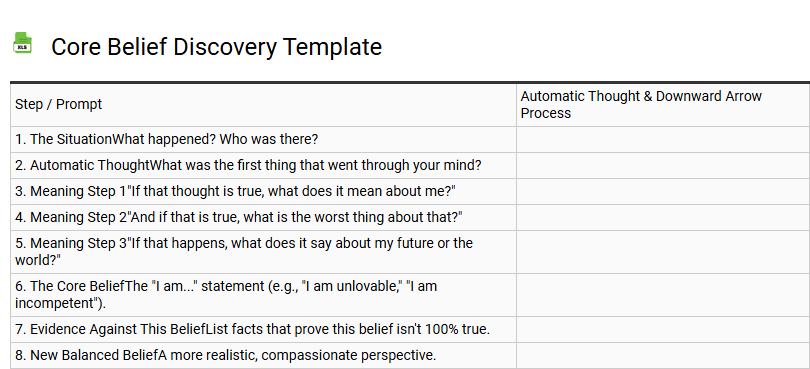
💾 Core Belief Discovery Template .xls
A Core Belief Discovery Template serves as a structured framework for uncovering the fundamental assumptions that shape an individual's perception of themselves and the world. By utilizing the downward arrow technique, this tool guides users through a series of probing questions to move beyond surface-level reactions and reach the root of recurring emotional patterns.
- Identification: Pinpoint specific automatic thoughts triggered by challenging situations.
- Exploration: Analyze the underlying meaning of these thoughts to reveal deep-seated personal truths.
- Transformation: Challenge long-standing narratives to foster healthier perspectives and adaptive behaviors.
This systematic approach helps bridge the gap between conscious reactions and subconscious drivers, enabling more effective cognitive restructuring. Using this resource allows for the building of profound self-awareness, helping to replace limiting internal scripts with empowering, evidence-based beliefs that support long-term mental well-being and personal growth.
Dysfunctional Thought Record
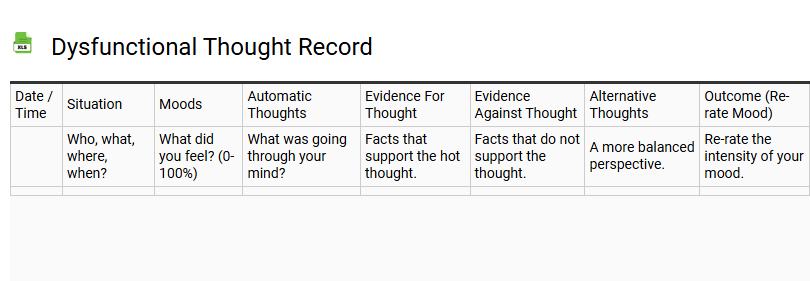
💾 Dysfunctional Thought Record .xls
A Dysfunctional Thought Record (DTR) serves as a fundamental Cognitive Behavioral Therapy (CBT) template designed to systematically identify and challenge maladaptive thought patterns. By documenting specific triggers, users can track automatic thoughts and the resulting emotional response intensity. This structured approach facilitates cognitive restructuring by encouraging individuals to evaluate the evidence for and against their internal narratives.
Utilizing this mental health tool helps uncover common cognitive distortions, such as overgeneralization or emotional reasoning. Key components of the record include:
- Identification of the distressing situation and immediate belief.
- Analysis of the physiological and behavioral impact.
- Development of a balanced perspective through objective appraisal.
Regular use of this therapeutic intervention promotes emotional regulation, allowing practitioners to replace irrational biases with functional, reality-based alternatives for improved psychological well-being.
Anxiety Trigger and Response Log
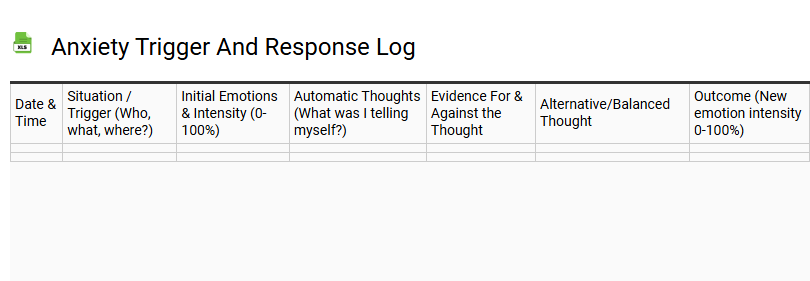
💾 Anxiety Trigger and Response Log .xls
An anxiety trigger and response log is a vital mental health tool rooted in cognitive behavioral therapy (CBT). By systematically recording external stressors and internal cues, individuals gain profound insight into their emotional regulation and recurring behavioral patterns. This structured template tracks specific environmental triggers, physiological symptoms-such as palpitations or shortness of breath-and immediate cognitive reactions.
Documenting these episodes fosters mindfulness and identifies maladaptive thought patterns that contribute to panic attacks or chronic stress. Utilizing a log facilitates superior stress management and enhances psychological wellbeing by bridging the gap between stimulus and reaction. Users can evaluate the efficacy of various coping mechanisms, including grounding techniques and deep breathing. Over time, this self-monitoring data provides clinical insights, empowering proactive interventions and reducing the intensity of symptoms through improved self-awareness and intentional emotional processing.
Socratic Questioning Workbook Page
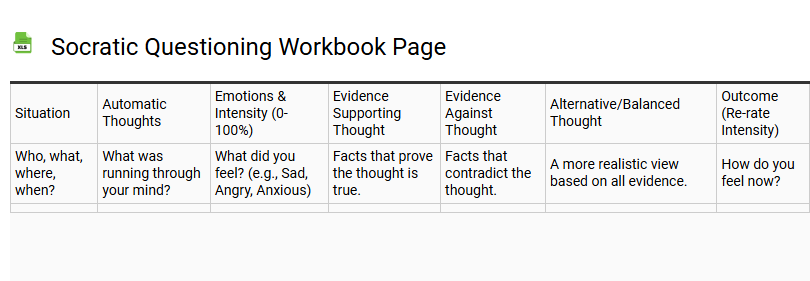
💾 Socratic Questioning Workbook Page .xls
This Socratic questioning workbook page serves as a structured framework for cognitive restructuring and deep self-reflection. By employing systematic inquiry, users can effectively challenge automatic thoughts and dismantle persistent cognitive distortions through rigorous rational analysis.
The template encourages metacognition by prompting individuals to evaluate empirical evidence for and against their internal beliefs. Key features include:
- Identification of core assumptions and logical fallacies.
- Exploration of alternative perspectives and balanced viewpoints.
- Assessment of potential consequences and behavioral outcomes.
Integrating this dialectic method into a daily routine enhances critical thinking and emotional regulation. This tool is essential for those utilizing Cognitive Behavioral Therapy (CBT) techniques, providing a clear pathway from reflexive emotional reactions to reasoned, objective insights. Documenting these internal dialogues fosters long-term psychological resilience and clarity regarding complex mental patterns.
A Cognitive Behavioral Therapy (CBT) thought record serves as a vital instrument for cognitive restructuring. By utilizing this structured template, individuals can systematically challenge negative thought patterns and identify common cognitive distortions.
This process involves examining evidence for and against specific beliefs to achieve better emotional regulation. Integrating this mental health tool into daily routines fosters a more balanced perspective, empowering users to dismantle maladaptive cycles and improve long-term psychological resilience through consistent, evidence-based self-reflection.