
CrossFit Athlete Measurement Journal Template: Performance and Progress Tracking
Optimizing your fitness journey requires a structured CrossFit athlete measurement journal to monitor performance metrics and body composition accurately. By documenting strength gains, benchmark WODs, and personal records, athletes can visualize their athletic development and metabolic conditioning progress. Utilizing a professional workout log ensures precise tracking of biometric data and training volume, which is vital for refining your functional fitness programming and reaching peak performance. Check the already made variation of templates below.
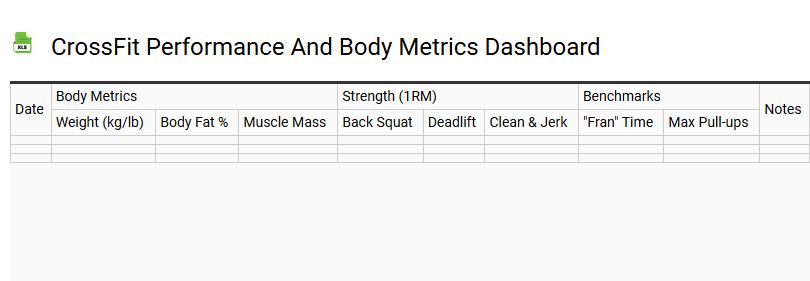
CrossFit Performance and Body Metrics Dashboard
💾 CrossFit Performance and Body Metrics Dashboard .xls
This comprehensive CrossFit performance and body metrics dashboard template centralizes athletic data for peak optimization. Track daily WOD results, benchmark workouts, and Hero WOD progress using integrated data visualization tools. This digital logbook excels at monitoring 1RM strength gains across Olympic lifting movements like the snatch and clean and jerk.
Beyond metabolic conditioning, the interface captures vital body composition statistics, including:
- Muscle mass and skeletal weight.
- Body fat percentage and BMI.
- Recovery metrics and Heart Rate Variability (HRV).
Whether logging an AMRAP or EMOM, this analytics suite provides a holistic view of functional fitness. Automated charts visualize performance trends, ensuring consistent improvement in aerobic capacity and explosive power. Designed for competitive athletes, this dashboard transforms fitness tracking into an actionable summary of your physical evolution and training volume.
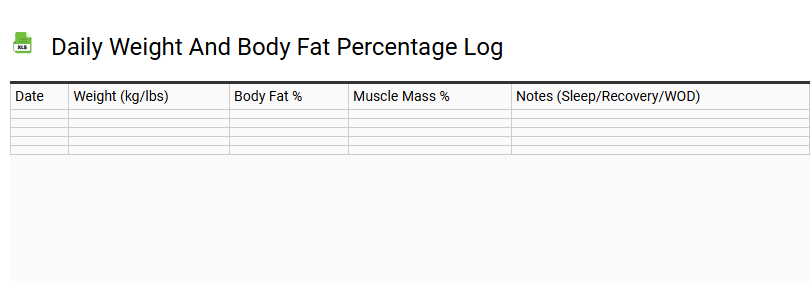
Daily Weight and Body Fat Percentage Log
💾 Daily Weight and Body Fat Percentage Log .xls
Maintaining a daily weight and body fat percentage log is a fundamental strategy for anyone committed to tracking their fitness journey. This structured template allows for precise data collection, helping individuals distinguish between lean muscle mass gains and shifts in adipose tissue. By recording consistent biometric markers, you can perform a detailed trend analysis that accounts for natural weight fluctuations caused by hydration levels or metabolic changes.
Focusing on body composition rather than just a single number on the scale provides a clearer picture of your metabolic health. Using this tracking tool, you can monitor your body mass index (BMI) and physical transformation over time. This data-driven approach empowers you to refine your caloric intake and exercise regimen based on objective evidence, ensuring long-term health optimization and sustainable weight management.
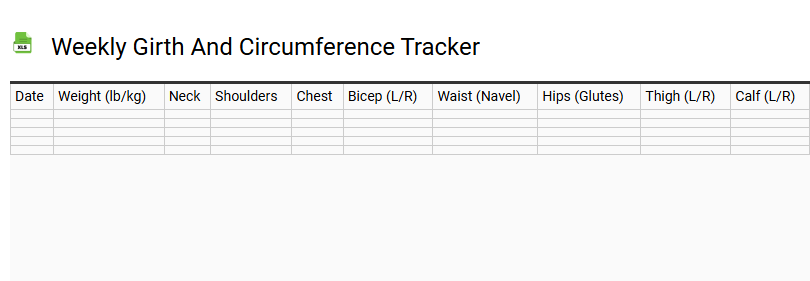
Weekly Girth and Circumference Tracker
💾 Weekly Girth and Circumference Tracker .xls
This weekly girth and circumference tracker template simplifies monitoring body composition changes during your fitness journey. By recording precise dimensions across key anatomical landmarks-such as the waist, chest, thighs, and biceps-users can objectively evaluate muscle hypertrophy or fat loss progress. Unlike scale weight, which fluctuates due to hydration, biometric data from a soft tape measure provides a reliable indicator of physical transformation. Utilizing this progress log ensures consistent tracking of body metrics, helping athletes and health enthusiasts visualize their evolution. This streamlined monitoring tool captures subtle shifts in physique that traditional metrics might overlook, offering a comprehensive view of your health data and body shape modifications over time. Regular assessment of these somatic measurements is essential for tailoring nutrition and training protocols to achieve specific aesthetic or performance goals.
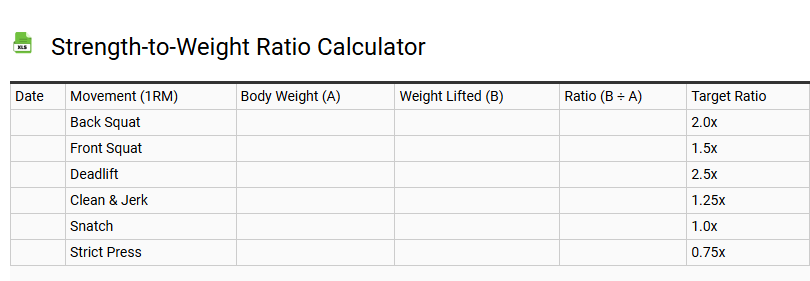
Strength-to-Weight Ratio Calculator
💾 Strength-to-Weight Ratio Calculator .xls
A Strength-to-Weight Ratio Calculator is a vital tool for evaluating material performance and structural integrity. Often referred to as specific strength, this metric quantifies a material's efficiency by dividing its tensile strength or yield point by its total mass or density. In fields like aerospace engineering, automotive design, and civil construction, achieving a high ratio is essential for maximizing load-bearing capacity while minimizing dead weight.
By analyzing mechanical properties, this calculator helps professionals compare diverse materials-from carbon fiber to high-grade steel-ensuring engineering optimization and durability. Utilizing this data allows for:
- Enhanced power-to-weight dynamics in performance vehicles.
- Selection of lightweight materials for fuel efficiency.
- Improved safety margins in structural components.
Whether calculating ultimate strength or assessing stiffness-to-weight, this tool streamlines the material selection process for robust, efficient design outcomes.
Benchmark WOD and Body Composition Synchronizer
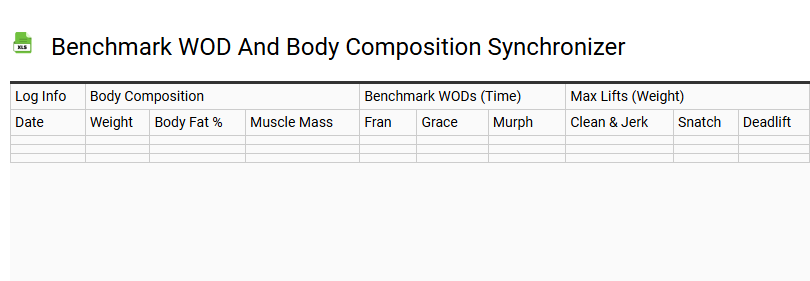
💾 Benchmark WOD and Body Composition Synchronizer .xls
The Benchmark WOD and Body Composition Synchronizer provides a sophisticated framework for correlating athletic performance with physiological evolution. By integrating metabolic conditioning results alongside body composition metrics, users can monitor the direct impact of high-intensity functional movements on lean muscle mass and body fat percentage. This template facilitates seamless data synchronization, ensuring that every Hero WOD or Girls benchmark is analyzed in the context of total body weight, basal metabolic rate, and body water distribution.
Utilizing this performance tracking tool allows for a granular view of strength-to-weight ratios and cardiovascular endurance progression. Athletes can enhance their fitness analytics by mapping training volume against biometric data, providing a comprehensive overview of physical transformation, nutritional efficacy, and athletic longevity within a unified digital ecosystem.
One-Rep Max Progress and Muscle Mass Log
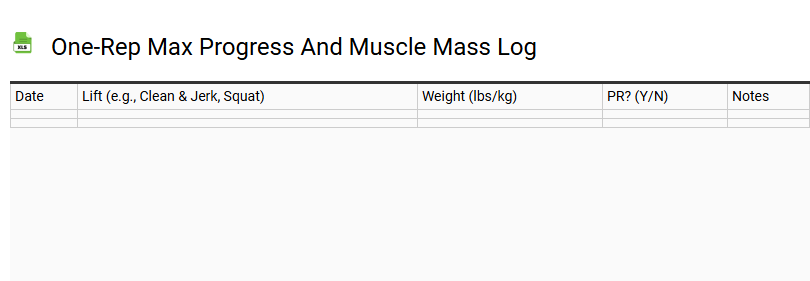
💾 One-Rep Max Progress and Muscle Mass Log .xls
Tracking peak performance through a dedicated one-rep max (1RM) and muscle mass log is essential for systematic strength gains. This template facilitates structured monitoring of resistance training output, ensuring consistent progressive overload across compound lifts. By documenting calculated 1RM fluctuations alongside lean body mass metrics, athletes correlate strength increments with skeletal muscle hypertrophy. Recording personal records (PRs) provides a quantitative roadmap for periodization, optimizing volume and intensity for peak gym performance. Consistent logging of body composition and strength-to-weight ratios allows for data-driven adjustments to training frequency and nutrition. Utilize this centralized repository to visualize long-term trends in muscular endurance and absolute strength, fostering a holistic approach to physical development. Analyzing biometric data alongside lifting plateaus helps refine strategies for sustained muscle growth, power output, and superior athletic results within every hypertrophy cycle.
Recovery Heart Rate and Measurement Journal
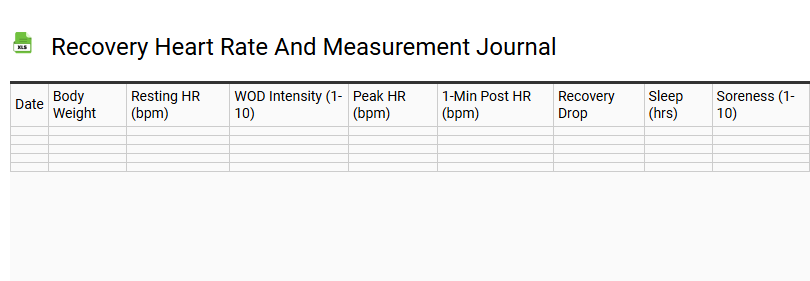
💾 Recovery Heart Rate and Measurement Journal .xls
A recovery heart rate and measurement journal is an essential tool for tracking cardiovascular efficiency and physical endurance. By documenting your pulse immediately after peak exertion and again following a one-minute cooldown phase, you can quantify how effectively your autonomic nervous system stabilizes. This template captures vital health metrics, focusing on the beats-per-minute (BPM) differential to assess aerobic capacity.
Consistently logging these physiological data points helps in:
- Monitoring heart rate variability (HRV) trends.
- Identifying signs of overtraining or fatigue.
- Evaluating workout intensity and metabolic recovery.
- Tracking long-term cardiovascular fitness improvements.
Using this structured log ensures a data-driven approach to athletic conditioning. By analyzing the rate of decline in your heart rate, you gain actionable insights into your physical recovery speed and overall circulatory health, fostering better performance outcomes and long-term wellness.
Macronutrient Intake and Transformation Tracker
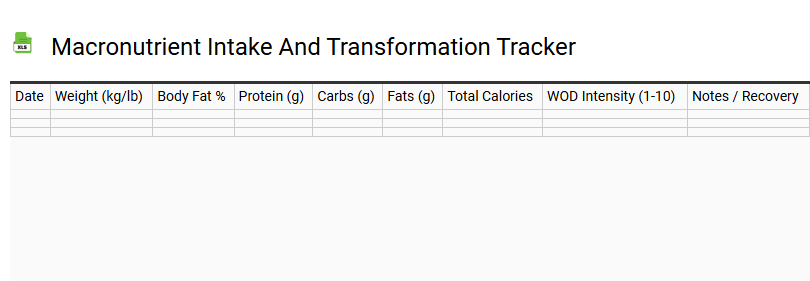
💾 Macronutrient Intake and Transformation Tracker .xls
This comprehensive tracking tool provides a structured framework for monitoring daily protein, carbohydrate, and fat consumption. By documenting nutritional data alongside physical measurements, you gain clear insights into how specific dietary adjustments influence your overall body composition and energy levels.
The system facilitates precise management of your caloric balance and nutrient distribution, allowing for data-driven decisions throughout your fitness journey. Key features include:
- Visualizing the direct relationship between fuel intake and metabolic response.
- Maintaining consistency in reaching essential fiber and protein targets.
- Mapping weight fluctuations against specific nutritional trends over time.
Utilize this resource to bridge the gap between abstract health goals and measurable results, ensuring every meal aligns with your long-term physique transformation objectives.
Mobility and Range of Motion Assessment Log
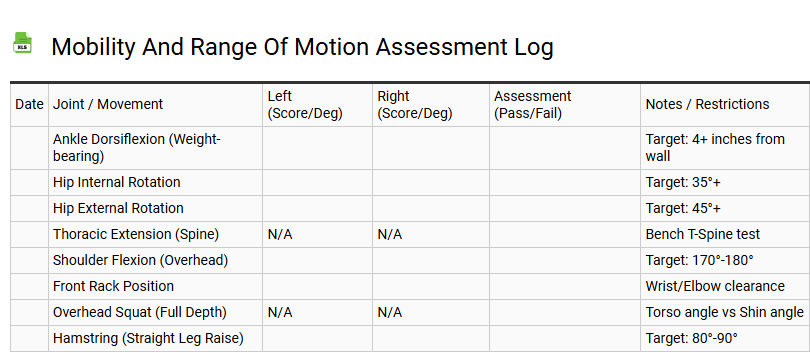
💾 Mobility and Range of Motion Assessment Log .xls
A comprehensive Mobility and Range of Motion Assessment Log serves as a vital clinical tool for tracking musculoskeletal health and functional progression. This standardized template facilitates the precise documentation of joint flexibility across various anatomical planes, recording both active (AROM) and passive range of motion (PROM) metrics. Utilizing this log allows practitioners to monitor improvements in functional movement patterns, identify biomechanical restrictions, and adjust rehabilitation protocols accordingly.
- Goniometric Measurements: Captures precise degrees of joint rotation and extension.
- Symmetry Analysis: Compares bilateral movement to identify imbalances.
- Pain Scale Integration: Correlates flexibility gains with comfort levels during exertion.
By maintaining a consistent record of orthopedic assessments, healthcare providers can optimize physical therapy outcomes, improve joint stability, and enhance overall athletic performance through data-driven stretching regimens and corrective exercises.
Athlete Body Volume and Density Calculator
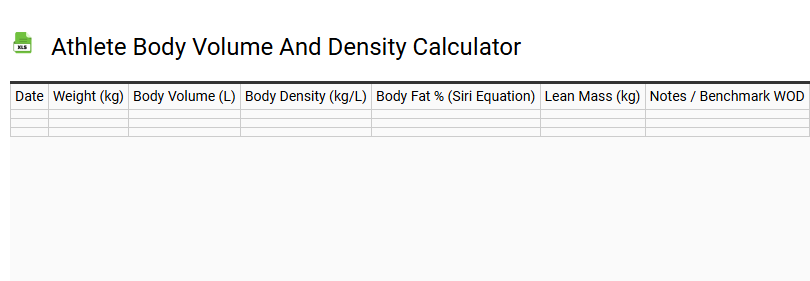
💾 Athlete Body Volume and Density Calculator .xls
This Athlete Body Volume and Density Calculator utilizes precise anthropometric measurements to evaluate physical composition beyond traditional metrics. By determining the ratio of total body mass to volume, users can derive accurate body density values, which are foundational for estimating body fat percentage using the Siri or Brozek equations.
Tailored for high-performance individuals, this tool accounts for dense lean muscle mass and skeletal weight, providing a more granular view than standard BMI. Incorporating principles of hydrostatic weighing and air displacement plethysmography, the calculator assesses specific gravity and densitometry. Understanding these variables allows athletes to optimize their power-to-weight ratio, track subcutaneous fat levels, and monitor changes in lean tissue. Frequent assessment supports periodized training and metabolic health, ensuring peak physiological readiness through data-driven body composition analysis.
CrossFit Games Season Measurement Log
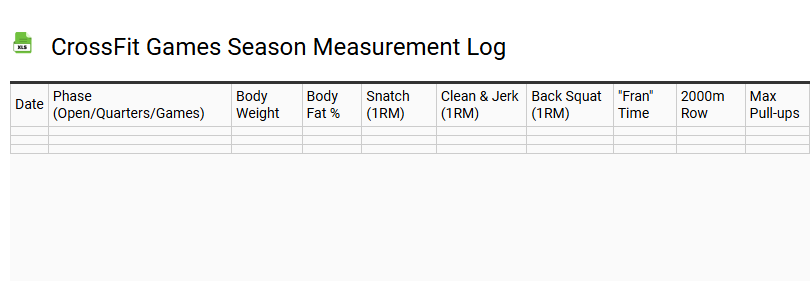
💾 CrossFit Games Season Measurement Log .xls
This CrossFit Games season measurement log serves as a comprehensive performance tracking tool for competitive athletes aiming for the Open and Quarterfinals. By systematically recording workout results and Olympic lifting totals, individuals can monitor their year-over-year progression and functional fitness capacity.
- Strength Metrics: Document 1RM benchmarks for snatch, clean and jerk, and back squats to quantify absolute power.
- Metabolic Conditioning: Log aerobic threshold data and benchmark WOD times to gauge engine efficiency and pacing strategies.
- Gymnastics Volume: Track unbroken rep counts for high-skill movements like muscle-ups and handstand walks.
- Leaderboard Analytics: Evaluate percentile rankings and peak power output to adjust training intensity.
Utilizing this template ensures precision in athletic programming, highlighting deficiencies in strength-to-weight ratios or recovery. Precise data entry facilitates peaked performance during the competitive season, ensuring you meet the rigorous standards of the worldwide leaderboard.
Hydration Level and Girth Consistency Tracker
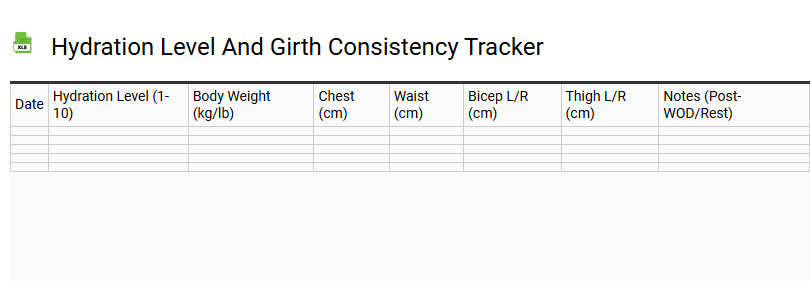
💾 Hydration Level and Girth Consistency Tracker .xls
Monthly Progress Photo and Metric Comparison
💾 Monthly Progress Photo and Metric Comparison .xls
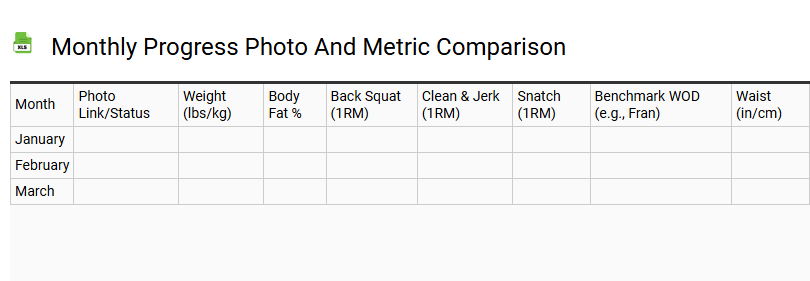
Tracking physical changes effectively requires both visual evidence and precise data points. A Monthly Progress Photo and Metric Comparison template organizes these elements to provide a clear overview of a fitness transformation. By capturing side-by-side images every thirty days, individuals can observe subtle body composition shifts that are often missed during daily self-reflection.
Complementing these visuals with specific measurements-such as body weight, waist circumference, and body fat percentage-offers a comprehensive look at physiological health. This dual-layered approach ensures that even if the scale remains stationary, physical improvements are documented and validated. To achieve high-quality data:
- Use consistent lighting and poses for all photography sessions.
- Record measurements at the same time of day to minimize natural fluctuations.
- Review data monthly to adjust training or nutrition protocols.
Maintaining this structured log fosters long-term accountability and highlights the evolution of health and performance.
Training Volume vs Lean Body Mass Analyzer
💾 Training Volume vs Lean Body Mass Analyzer .xls
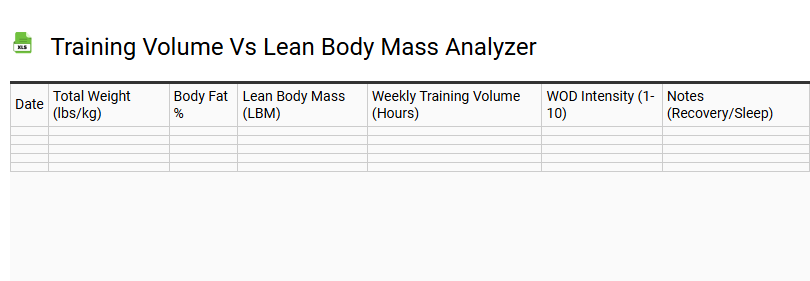
This Training Volume vs. Lean Body Mass Analyzer provides a sophisticated framework for optimizing muscle hypertrophy and body composition. By correlating total volume load-the product of sets, repetitions, and resistance-with fluctuations in skeletal muscle mass, athletes can identify their Minimum Effective Volume (MEV). This template facilitates progressive overload tracking while monitoring recovery markers to mitigate overtraining risks. Users can analyze how metabolic stress and mechanical tension influence Lean Body Mass (LBM) gains across specific periodization blocks. Integrating body composition metrics alongside workload data allows for a granular view of physiological adaptations, ensuring that incremental increases in resistance training density translate into functional tissue growth. Use this data-driven tool to fine-tune your Maximum Recoverable Volume (MRV) and maintain a peak anabolic state for superior athletic performance.
Workout Intensity and Body Stress Log
💾 Workout Intensity and Body Stress Log .xls
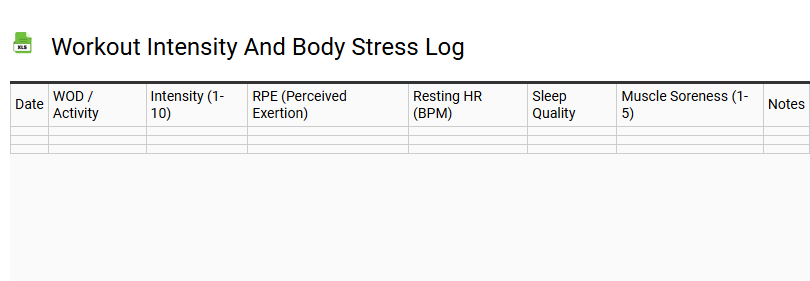
This Workout Intensity and Body Stress Log serves as a vital monitoring tool to balance physical demand with essential recovery. By systematically tracking RPE (Rate of Perceived Exertion) and measuring daily body stress indicators, athletes can optimize their overall training load.
Documenting variables such as muscular soreness, sleep quality, and heart rate variability helps identify early signs of CNS fatigue. Utilizing this template allows for a granular analysis of the correlation between lifting volume and physiological response, ensuring peak performance while effectively preventing overtraining syndrome.
Precise data entry regarding exertion levels and recovery metrics enables informed adjustments to any fitness regimen. Consistent documentation of these performance metrics facilitates long-term progress and injury mitigation by highlighting precisely when to implement a deload phase or escalate intensity for maximum gains.
This CrossFit Athlete Measurement Journal template streamlines your performance tracking by documenting daily WOD results and strength metrics. Utilizing a structured workout diary ensures you monitor fitness benchmarks and body composition changes effectively. By logging athletic progress and recovery data, athletes gain valuable insights into their metabolic conditioning. Consistency in recording these training logs is vital for long-term success. Download our comprehensive guide today to optimize your programming and surpass your personal bests.