
CrossFit WOD Performance Log Template
Optimizing your athletic journey requires precision and consistency. A robust template for a CrossFit WOD Performance Log allows you to capture vital training metrics, from strength gains to metabolic conditioning times. By documenting every benchmark WOD and AMRAP, you create a data-driven path toward functional fitness goals. Tracking your volume and intensity ensures measurable progress while identifying specific areas for improvement. Whether using a digital logbook or a physical journal, detailed recording is the key to peak performance. Please check our professionally crafted variations of templates below.
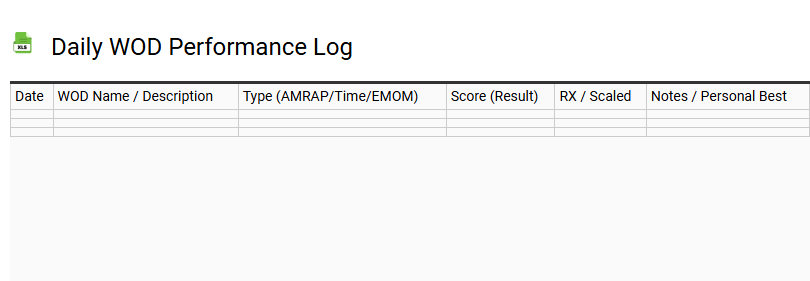
Daily WOD Performance Log
💾 Daily WOD Performance Log .xls
Optimizing your fitness journey requires a structured Daily WOD Performance Log to capture vital training data. This comprehensive tracking tool allows athletes to record Workout of the Day specifics, including Metcon results, AMRAP counts, and EMOM intervals. By documenting repetitions, prescribed weights (Rx), and scaling adjustments, you gain actionable insights into your metabolic conditioning and strength training progression.
Key metrics to monitor within your log include:
- Load and Volume: Track specific weight lifted and total tonnage for hypertrophy.
- Intensity: Log "For Time" durations and perceived exertion levels.
- Progressive Overload: Monitor Personal Records (PRs) and mobility improvements.
Consistent use of a performance journal facilitates data-driven recovery and CrossFit programming adjustments. Analyzing exercise physiology trends helps break plateaus and enhances overall athletic performance through precise fitness tracking.
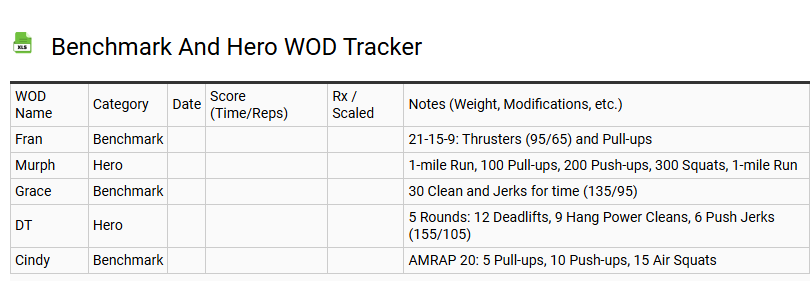
Benchmark and Hero WOD Tracker
💾 Benchmark and Hero WOD Tracker .xls
Optimize your functional fitness journey with a comprehensive Benchmark and Hero WOD tracker designed for data-driven athletes. This specialized template enables precise logging of personal records (PRs) for iconic benchmarks like Fran, Murph, and Cindy. By maintaining a detailed workout history, you can visualize performance metrics such as total completion time, rounds, and weight lifted. The digital logbook facilitates monitoring fitness progress through historical data, allowing for strategic scaling options and intensity adjustments.
Whether you are honoring fallen service members with tribute workouts or testing your work capacity in the box, this performance dashboard captures every rep. Seamlessly track your CrossFit journey, compare results against previous efforts, and achieve consistent growth. This training log is the ultimate tool for organizing WOD scores and maximizing athletic longevity through structured feedback and objective analysis of your strengths and weaknesses.
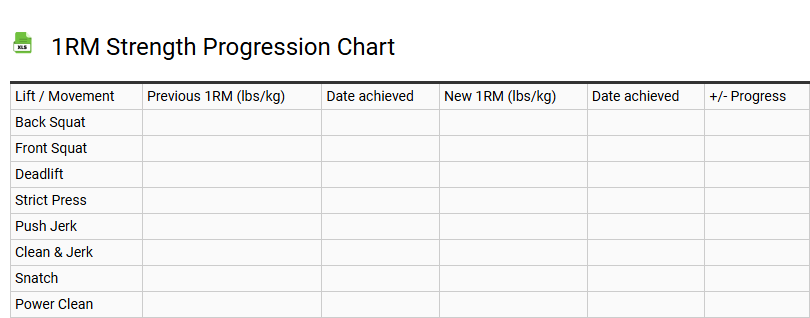
1RM Strength Progression Chart
💾 1RM Strength Progression Chart .xls
This 1RM strength progression chart template serves as a vital tool for tracking athletic performance and implementing progressive overload. By documenting your one-rep max across core compound lifts like the squat, bench press, and deadlift, you can accurately calculate training percentages for periodized programming. Utilizing this systematic approach to load management ensures consistent strength gains while minimizing overtraining risks.
The template allows lifters to visualize their trajectory, adjusting intensity and volume to stimulate muscle hypertrophy and neurological adaptations. Whether focused on powerlifting or general fitness, monitoring lifting benchmarks through a structured rep max calculator facilitates data-driven decisions. By analyzing historical performance data, athletes can optimize their strength training cycles, refine technique, and reach peak physical potential with precision-focused tracking and objective metrics.
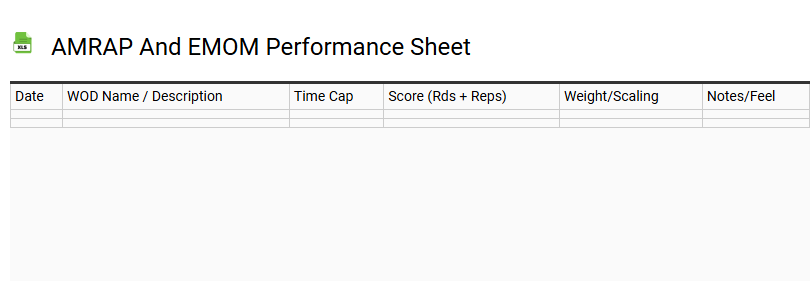
AMRAP and EMOM Performance Sheet
💾 AMRAP and EMOM Performance Sheet .xls
This performance sheet provides a structured framework for tracking AMRAP (As Many Rounds As Possible) and EMOM (Every Minute on the Minute) training sessions. It is designed to capture precise metrics that reflect an athlete's work capacity, metabolic conditioning, and recovery efficiency.
For AMRAP entries, the focus is on total volume. Users should record the final round count and any additional repetitions completed before the time cap expires. This data serves as a benchmark for high-intensity endurance.
The EMOM section prioritizes consistency and technical proficiency under fatigue. Key tracking elements include:
- Interval Completion: Documentation of successful rounds versus failed attempts.
- Load Progression: Tracking weight increases across specific time intervals.
- Pacing Strategy: Notes on rest periods and movement transition speed.
Utilizing this template ensures objective monitoring of progressive overload and helps identify specific performance plateaus over time.
CrossFit PR History Log
💾 CrossFit PR History Log .xls
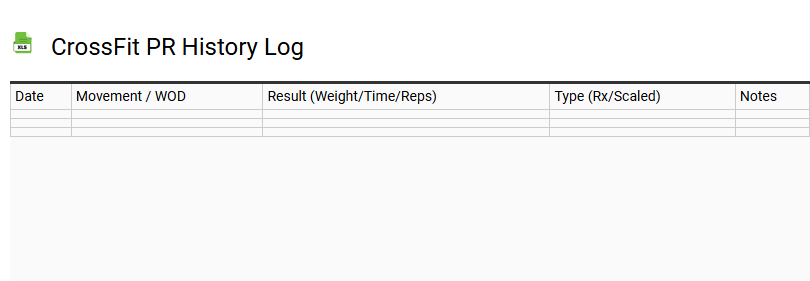
A comprehensive CrossFit PR History Log serves as a vital tool for tracking athletic performance and strength gains. By documenting one-rep max (1RM) attempts in foundational lifts like the snatch, clean and jerk, and back squat, athletes can visualize their fitness progression over time. This workout journal should include dedicated sections for benchmark WODs, such as "Fran" or "Murph," alongside metabolic conditioning metrics.
- Movement Data: Record specific exercises, training volume, and rep maxes.
- Performance Tracking: Monitor improvements in AMRAP scores and EMOM consistency.
- Contextual Notes: Log scaling options, RPE levels, and recovery status to refine future programming.
Utilizing a structured training log ensures progressive overload and helps athletes identify peak performance trends within their functional fitness journey.
Weightlifting Percentage Calculator
💾 Weightlifting Percentage Calculator .xls
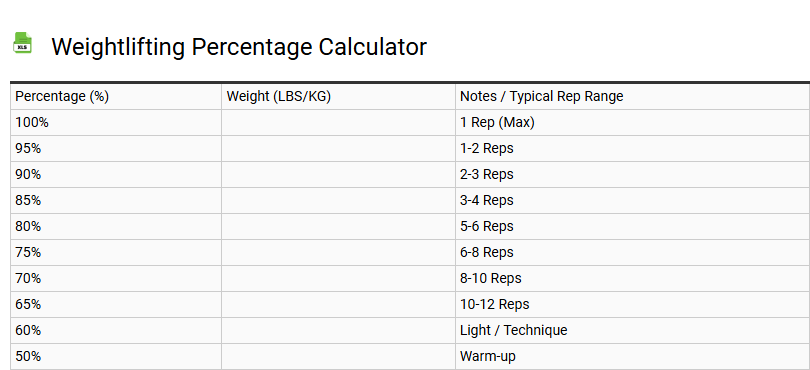
This weightlifting percentage calculator serves as an essential strength training tool for optimizing barbell movements and programmed intensity. By inputting your one-rep max (1RM), athletes can instantly derive precise loading for compound lifts like the back squat, deadlift, and overhead press. Utilizing these calculated percentages is crucial for executing progressive overload and managing training volume within structured strength programming cycles. Whether you are focusing on hypertrophy, absolute strength, or Olympic weightlifting movements like the snatch and clean and jerk, this utility ensures accurate intensity zones. Integrating these metrics helps prevent overtraining while adhering to Prilepin's Chart guidelines or specific RPE-based protocols. Streamline your workout tracking and ensure every rep max contributes to long-term athletic development through data-driven resistance training adjustments and systematic periodization.
Gymnastics Skill Progression Tracker
💾 Gymnastics Skill Progression Tracker .xls
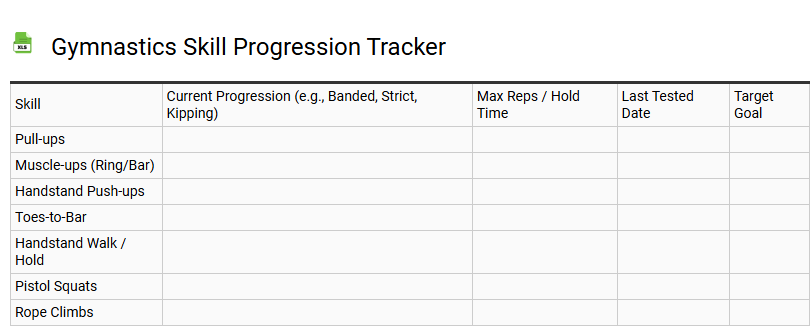
A gymnastics skill progression tracker serves as an essential tool for monitoring athletic development across various apparatus. By documenting mastery levels in disciplines like vault, uneven bars, balance beam, and floor exercise, athletes can visualize their technical proficiency and milestone achievements. This template facilitates structured skill acquisition, allowing gymnasts to record performance metrics and specific strength and conditioning goals. Utilizing a systematic training log helps identify areas for improvement through consistent coach feedback and data-driven insights. From foundational motor skills to advanced aerial maneuvers, tracking ensures a safe, progressive path toward competitive gymnastics levels. This organized approach streamlines the journey from novice drills to elite execution, fostering accountability and long-term success in the sport.
CrossFit Open Scoreboard Template
💾 CrossFit Open Scoreboard Template .xls
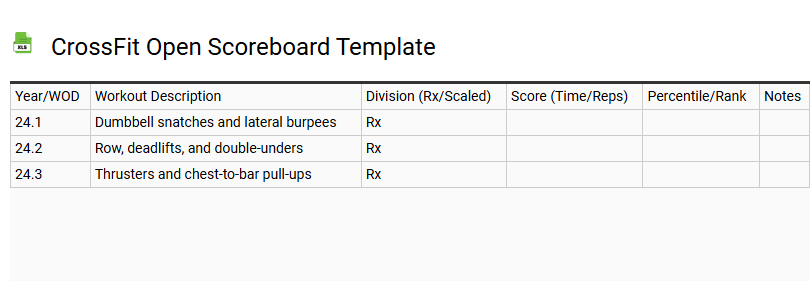
This CrossFit Open Scoreboard Template provides a professional framework for tracking athlete performance during the competitive fitness season. Designed for affiliate owners, this digital leaderboard simplifies results submission for every weekly WOD. Whether participants compete in the RX, Scaled, or Foundations divisions, the template captures essential metrics including total repetitions, completion time, and weight loads.
Utilizing a dynamic ranking system, this tool fosters community engagement and transparency within the gym. These layouts are optimized for functional movements, ensuring accurate workout scoring for official CrossFit Games tests. By organizing heat sheets and historical data, the spreadsheet integration enhances the atmosphere of the worldwide open. Streamline your affiliate management with these high-intensity tracking tools to visualize progress, validate scores, and celebrate fitness milestones across your membership base during the annual CrossFit Open challenge.
Monthly Athlete Dashboard
💾 Monthly Athlete Dashboard .xls
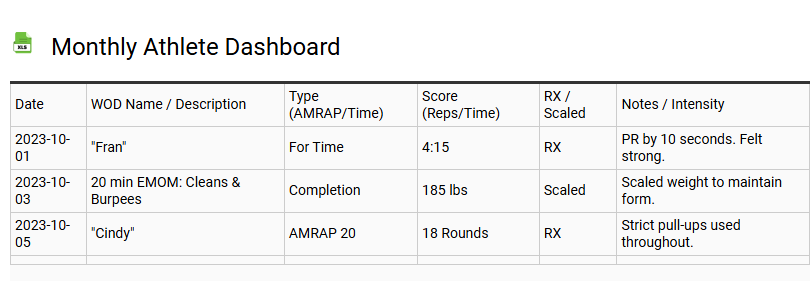
This comprehensive Monthly Athlete Dashboard serves as a centralized hub for monitoring elite performance metrics and longitudinal progress. By integrating key data points such as training load, recovery status, and daily biometric trends, coaches and athletes can effectively optimize physical conditioning and athletic performance.
The template prioritizes data visualization to track essential variables including:
- Workout volume and intensity distribution.
- Heart rate variability (HRV) and resting heart rate.
- Sleep quality and readiness scores for injury prevention.
- Nutritional intake and hydration consistency.
This data-driven approach facilitates informed goal setting and strategic adjustments to periodized training cycles. Utilizing these insights ensures that progress tracking remains precise, allowing for real-time adaptations to recovery protocols while minimizing overtraining risks and maximizing peak competitive output.
Metcon Intensity Journal
💾 Metcon Intensity Journal .xls
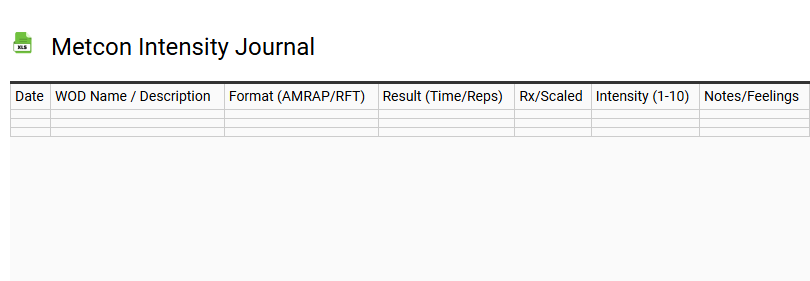
A Metcon Intensity Journal serves as a critical diagnostic tool for athletes prioritizing metabolic conditioning. By systematically logging every high-intensity interval training (HIIT) session, you can track physiological adaptations across various energy systems. This template focuses on capturing the Workout of the Day (WOD) specifics, including time domains, work-to-rest ratios, and total volume.
To optimize aerobic capacity and anaerobic power, athletes should document the following metrics:
- Rate of Perceived Exertion (RPE): Quantifying subjective intensity.
- Heart Rate Recovery: Monitoring cardiovascular efficiency post-exertion.
- Scaling Options: Recording modifications to preserve the intended stimulus.
- Performance Thresholds: Identifying peaks in functional fitness output.
Consistent performance tracking via an intensity-focused log ensures balanced programming, prevents overtraining, and refines pacing strategies for superior metabolic conditioning results.
Mobility and Recovery Log
💾 Mobility and Recovery Log .xls
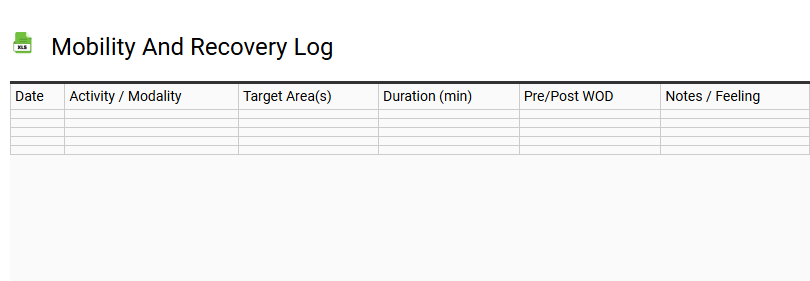
A comprehensive mobility and recovery log serves as a vital tool for tracking range of motion (ROM), joint health, and athletic performance. By documenting daily corrective exercises, foam rolling sessions, and dynamic stretching routines, athletes can systematically identify muscular imbalances and mechanical inefficiencies.
- Tissue quality and perceived muscle soreness levels.
- Static stretching durations and myofascial release techniques.
- Active recovery protocols and sleep hygiene metrics.
- Progressions in flexibility and functional movement patterns.
Consistent data entry facilitates injury prevention and optimizes muscle repair cycles. Integrating this template into a training regimen ensures that restoration and physical therapy modalities are prioritized. Tracking these variables promotes long-term physical longevity and enhances neuromuscular coordination, keeping the body resilient against the physiological demands of high-intensity training.
Volume and Tonnage Calculator
💾 Volume and Tonnage Calculator .xls
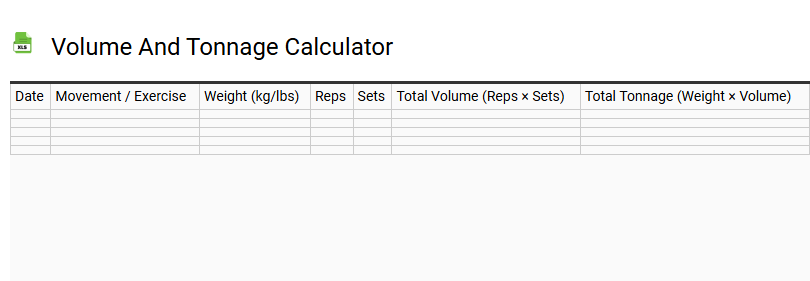
This Volume and Tonnage Calculator is an essential digital tool for precise material estimation in construction, logistics, and industrial applications. By processing specific dimensions-length, width, and depth-it instantly calculates cubic volume in units such as cubic meters or yards. To determine material weight, the tool integrates bulk density factors, translating spatial measurements into accurate tonnage outputs.
Optimizing resource planning requires reliable load calculations for aggregates, soil, or freight. This measurement tool streamlines density conversions, ensuring that mass and volume displacement are accurately captured for transport logistics. Whether managing cargo weight or site material procurement, this interface eliminates manual errors. It provides a robust framework for logistics planning and bulk material management, making it an indispensable asset for engineering accuracy and supply chain efficiency.
Body Composition Tracker
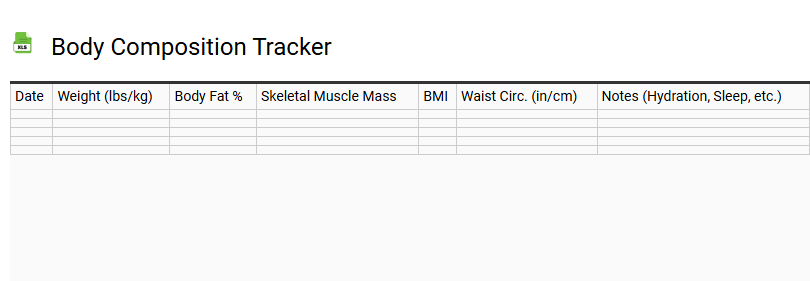
💾 Body Composition Tracker .xls
A Body Composition Tracker serves as a comprehensive tool for monitoring physiological changes beyond basic body weight. This template facilitates the systematic documentation of granular health data, allowing users to differentiate between fat loss and muscle gain. By analyzing specific metrics, individuals can gain deeper insights into their metabolic health and physical progress.
Key data points typically recorded in this tracker include:
- Body Fat Percentage: The ratio of fat to total body mass.
- Skeletal Muscle Mass: The weight of muscles used for movement and strength.
- Basal Metabolic Rate (BMR): The number of calories required at rest.
- Visceral Fat Level: The measurement of fat stored around internal organs.
Utilizing this structured approach ensures that fitness adjustments are based on empirical evidence rather than subjective observation, promoting long-term wellness and optimized physical performance.
WOD Consistency Calendar
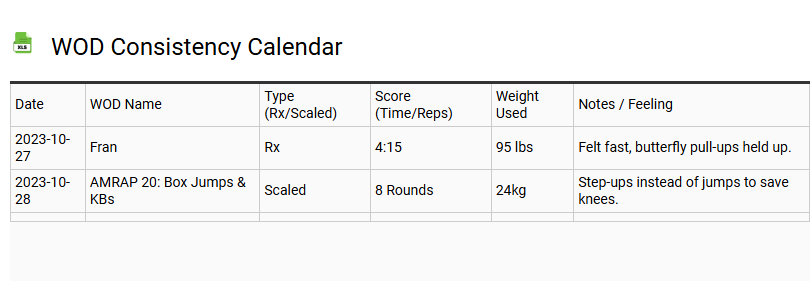
💾 WOD Consistency Calendar .xls
A WOD consistency calendar serves as a high-performance accountability tool for athletes dedicated to functional fitness. By utilizing a structured training log, participants can visualize their workout streaks, ensuring steady exercise adherence across monthly cycles. This template focuses on tracking metabolic conditioning, strength sessions, and active recovery days to prevent burnout while maximizing performance benchmarks.
Integrating a habit tracker into your daily CrossFit routine simplifies monitoring volume and intensity. Key benefits of maintaining this visual record include:
- Enhanced fitness progression through data-driven insights.
- Improved scalability awareness for complex movements.
- Stronger psychological commitment to long-term training goals.
Utilizing this WOD tracker ensures you remain disciplined, turning sporadic efforts into a sustainable, results-driven fitness lifestyle focused on peak physical output.
Utilizing a dedicated CrossFit WOD performance log is essential for tracking metabolic conditioning and strength gains. This template simplifies recording daily AMRAP scores, EMOM intervals, and benchmark workouts. By consistently monitoring key fitness metrics, athletes can visualize progress and optimize recovery strategies. Effective workout tracking ensures data-driven adjustments to your training programming. Start documenting your fitness journey today to achieve peak athletic performance and maintain long-term accountability in the box.