
Ectomorph Mass Building Tracker Template
Achieving significant muscle hypertrophy as a traditional hardgainer requires a meticulous, data-driven approach. Utilizing a specialized ectomorph mass building tracker allows you to monitor your caloric surplus, macronutrient ratios, and progressive overload milestones with precision. By documenting strength training volume and body composition changes, you can optimize nutrient timing for maximum gains. This systematic log ensures consistent physiological adaptation and long-term success. Please review the professionally designed template variations provided below to find your perfect fit.
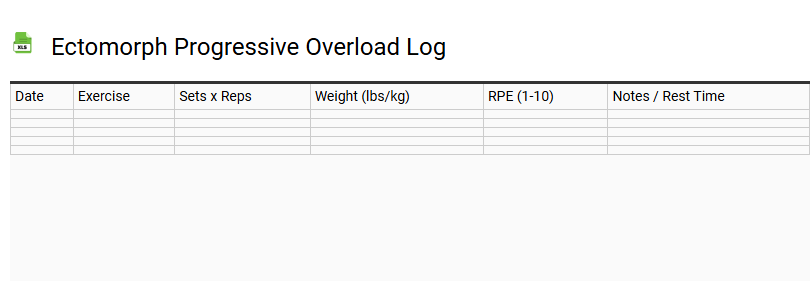
Ectomorph Progressive Overload Log
💾 Ectomorph Progressive Overload Log .xls
This specialized template serves as a critical tracking tool for ectomorphs aiming to overcome "hardgainer" genetics through structured muscle hypertrophy. By utilizing a progressive overload log, individuals with a high metabolic rate can systematically increase mechanical tension on muscle fibers.
Focusing on compound lifts, this log ensures consistent increments in resistance, repetitions, or sets to stimulate lean mass growth. Effective tracking prioritizes incremental strength gains while monitoring recovery periods and nutritional density within a caloric surplus.
By documenting training volume and intensity, the user can bypass plateaus, ensuring the physiological adaptation necessary for physique transformation. Maintaining this data-driven approach allows for precise adjustments to workout frequency, optimizing the anabolic response required for sustained skeletal muscle development and improved metabolic efficiency during intense resistance training cycles.
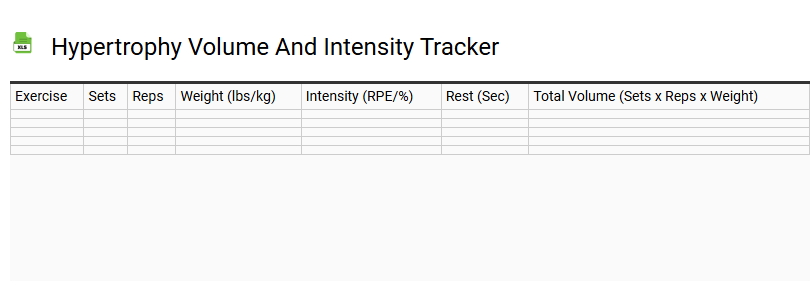
Hypertrophy Volume and Intensity Tracker
💾 Hypertrophy Volume and Intensity Tracker .xls
Achieving consistent muscle growth requires a data-driven approach to monitoring progressive overload. This hypertrophy volume and intensity tracker provides a structured framework to log total sets, reps, and workload tonnage across various muscle groups. By tracking these metrics, athletes can ensure they are generating sufficient mechanical tension and metabolic stress to trigger protein synthesis.
The template integrates RPE (Rate of Perceived Exertion) and RIR (Reps in Reserve) scales to precisely measure training intensity and manage systemic fatigue. Monitoring these variables is essential for effective periodization, allowing lifters to adjust frequency and recovery phases. Using this systematic log helps prevent plateaus, optimizes hypertrophy outcomes, and ensures that every resistance training session contributes to long-term strength and muscle mass accrual through accurate work capacity analysis.
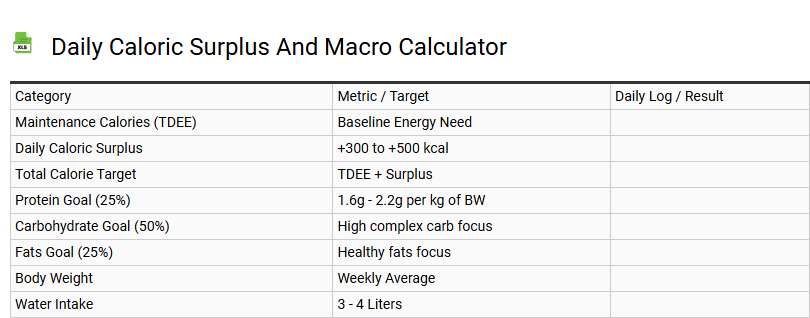
Daily Caloric Surplus and Macro Calculator
💾 Daily Caloric Surplus and Macro Calculator .xls
This Daily Caloric Surplus and Macro Calculator is designed to streamline your bulking phase by identifying the precise energy intake needed for hypertrophy. By calculating your Total Daily Energy Expenditure (TDEE) and Basal Metabolic Rate (BMR), the tool establishes a sustainable caloric surplus to fuel muscle protein synthesis without excessive fat gain.
Optimizing your macronutrient ratio is essential for an anabolic state. The template partitions your total energy balance into essential lean protein for repair, complex carbohydrates for glycogen replenishment, and healthy fats for hormonal health. Accurate calorie tracking and nutrient timing are vital for any weight gain journey. Use this nutritional strategy to transform your metabolic rate data into a structured meal plan, ensuring your body composition goals are met through evidence-based bodybuilding nutrition and consistent strength training support.
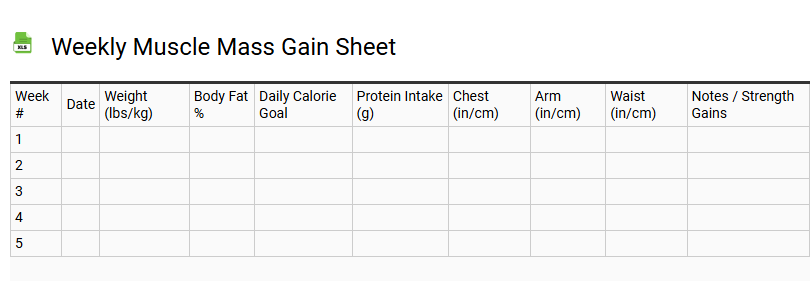
Weekly Muscle Mass Gain Sheet
💾 Weekly Muscle Mass Gain Sheet .xls
A weekly muscle mass gain sheet serves as a vital tool for achieving consistent hypertrophy through meticulous data tracking. By documenting progressive overload and strength training volume, athletes can effectively monitor lean body mass fluctuations and body composition changes. This template facilitates the precise logging of caloric surplus requirements and macronutrient distribution, ensuring optimal fuel for muscle protein synthesis.
Utilizing a structured log allows for:
- Tracking resistance training frequency, sets, and rep ranges.
- Monitoring recovery cycles and sleep quality to prevent overtraining.
- Analyzing biometric data for informed dietary adjustments.
Implementing this systematic approach ensures that anabolic progress is measurable, providing the metabolic insights necessary to refine fitness programming and maximize muscular development over time.
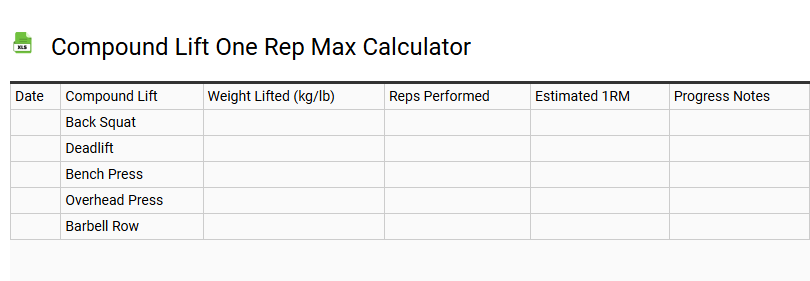
Compound Lift One Rep Max Calculator
💾 Compound Lift One Rep Max Calculator .xls
This Compound Lift One Rep Max Calculator is a vital utility for athletes aiming to quantify peak strength without the risk of physical failure. By analyzing current repetition maximum data, the tool utilizes established Epley and Brzycki formulas to estimate your theoretical lifting capacity. This data serves as a benchmark for progressive overload and is essential for calculating training intensity percentages during strength training blocks.
Accurate 1RM estimations help optimize barbell exercises such as the squat, deadlift, and bench press. Integrating these metrics into your powerlifting or bodybuilding program ensures precise volume management and neuromuscular adaptation. Use these results to structure resistance training cycles, ensuring each mesocycle aligns with your specific hypertrophy and power goals for consistent athletic development and performance tracking.
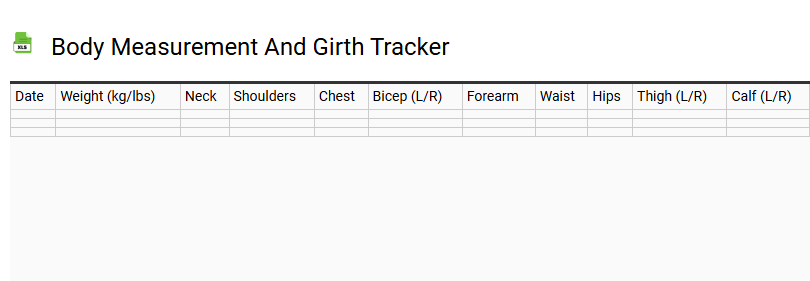
Body Measurement and Girth Tracker
💾 Body Measurement and Girth Tracker .xls
A body measurement and girth tracker is an essential tool for monitoring your fitness progress and physical transformation accurately. Unlike a standard scale, this template focuses on body composition, allowing you to record precise dimensions of the chest, waist, hips, and limbs. Utilizing a flexible measuring tape, users can document changes in centimeters or inches to visualize muscle gain and fat loss over time.
- Track waist circumference to monitor metabolic health and visceral fat.
- Calculate waist-to-hip ratio for comprehensive fitness insights.
- Log bicep, thigh, and calf girth to measure hypertrophy and toning.
Consistent data entry into a progress log provides a clear roadmap of your fitness journey. By capturing health metrics and body shape fluctuations, this tracker ensures you stay motivated by highlighting subtle improvements in your physical anatomy and overall wellness goals that weight alone might overlook.
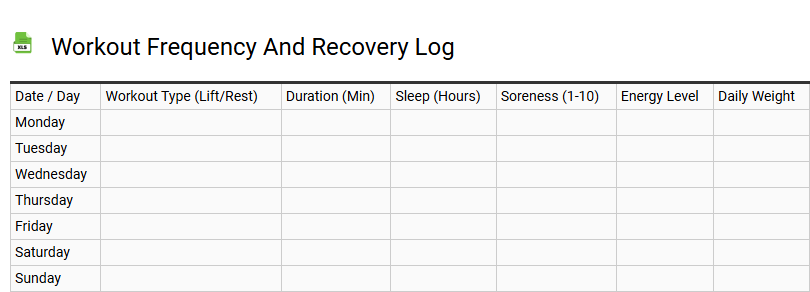
Workout Frequency and Recovery Log
💾 Workout Frequency and Recovery Log .xls
Optimizing workout frequency requires a systematic approach to balancing training volume with essential physiological recovery. Utilizing a structured recovery log allows athletes to monitor muscle soreness, sleep quality, and central nervous system (CNS) fatigue to effectively prevent overtraining syndrome.
- Track daily physical exertion levels to determine rest day necessity.
- Monitor heart rate variability (HRV) for data-driven periodization.
- Document hypertrophic progress and strength gains alongside nutritional intake.
By recording these metrics, you ensure muscle protein synthesis is prioritized, facilitating consistent performance tracking. Implementing this template fosters metabolic adaptation and fitness longevity, ensuring every resistance training session aligns with your body composition goals while minimizing injury risks and stagnation. Accurate load management is the cornerstone of sustainable athletic development and peak physical readiness.
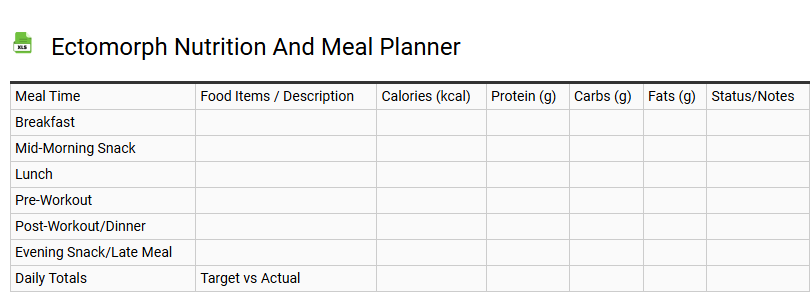
Ectomorph Nutrition and Meal Planner
💾 Ectomorph Nutrition and Meal Planner .xls
Optimizing an ectomorph nutrition strategy requires a consistent caloric surplus to overcome a naturally fast metabolic rate. This meal planner focuses on nutrient density and high-quality macronutrients to support muscle hypertrophy and counteract "hardgainer" genetics.
A successful dietary approach for lean body types emphasizes:
- Complex carbohydrates like oats and quinoa for sustained energy and glycogen storage.
- Lean proteins such as chicken, fish, and legumes to facilitate protein synthesis.
- Healthy fats from avocados and nuts to efficiently increase total caloric intake.
By increasing meal frequency and focusing on strength training recovery, this template helps individuals build sustainable muscle mass. Prioritizing whole foods ensures every meal supports weight gain goals while maintaining optimal metabolic health and physical performance.
Strength to Weight Ratio Chart
💾 Strength to Weight Ratio Chart .xls
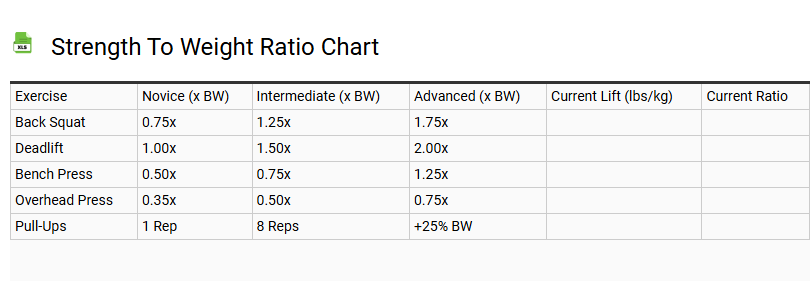
A strength-to-weight ratio chart serves as a critical analytical tool for evaluating structural efficiency and material performance. This template systematically tracks specific strength, allowing engineers to compare the tensile strength of various substances relative to their density. By utilizing this performance metric, designers can prioritize lightweight design without compromising load-bearing capacity or durability.
Key components included in this engineering benchmark documentation are:
- Material density measurements and mass distribution.
- Ultimate tensile strength and yield points.
- Calculated specific modulus for rigidity assessments.
- Power-to-weight variables for mechanical applications.
Ideal for aerospace engineering, automotive manufacturing, and material science, this template simplifies material selection. It optimizes the balance between mass reduction and structural integrity, ensuring superior mechanical efficiency across diverse technical specifications.
Exercise Volume Heat Map
💾 Exercise Volume Heat Map .xls
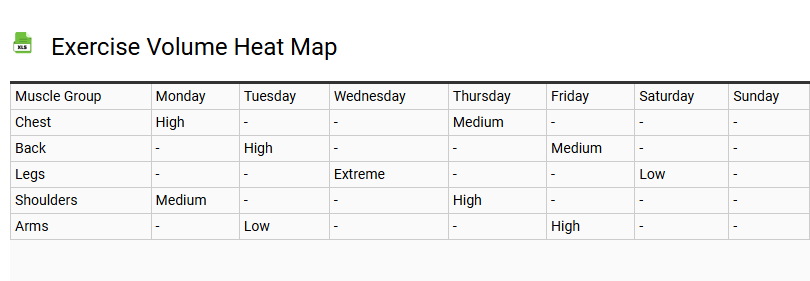
An exercise volume heat map serves as a sophisticated data visualization tool designed to track training frequency and muscle group distribution across your weekly routine. By quantifying total sets, reps, and load, this template highlights intensity patterns, ensuring you achieve progressive overload without risking overtraining or injury.
Utilizing this fitness tracking method allows athletes to identify lagging body parts and optimize recovery periods. Key benefits of a volume-based heatmap include:
- Visualizing hypertrophy stimulus across specific anatomical regions.
- Balancing push-pull-legs ratios for structural integrity.
- Monitoring periodization phases to maximize strength gains.
This workout log integration provides a clear overview of cumulative fatigue, making it an essential resource for bodybuilding and powerlifting enthusiasts seeking evidence-based programming adjustments through intuitive performance analytics.
Rest Interval and Set Timer Log
💾 Rest Interval and Set Timer Log .xls
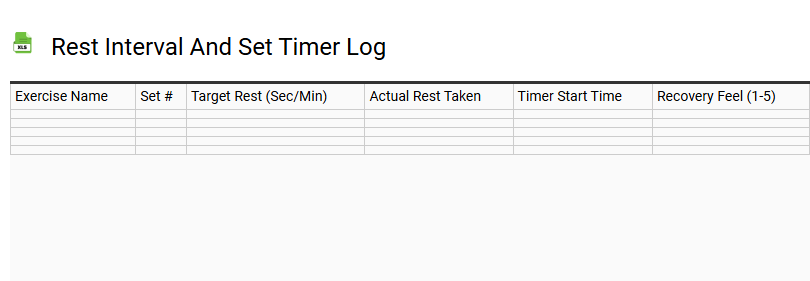
This professional Rest Interval and Set Timer Log is designed to optimize strength training efficiency and muscle hypertrophy. By meticulously tracking recovery periods between sets, athletes can manage metabolic stress and ensure consistent intensity across every exercise routine.
The integrated countdown timer functionality allows for precise performance monitoring, helping you adhere to strict periodization goals. Utilizing a structured workout tracker facilitates progressive overload by documenting the exact timing intervals required for heart rate recovery.
Whether focusing on bodybuilding or endurance conditioning, this log provides the data-driven framework necessary to balance lifting volume with optimal downtime. Streamline your fitness regimen by recording set counts and recovery efficiency to achieve peak physiological adaptation and improved athletic output.
Physique Transformation Progress Photo Sheet
💾 Physique Transformation Progress Photo Sheet .xls
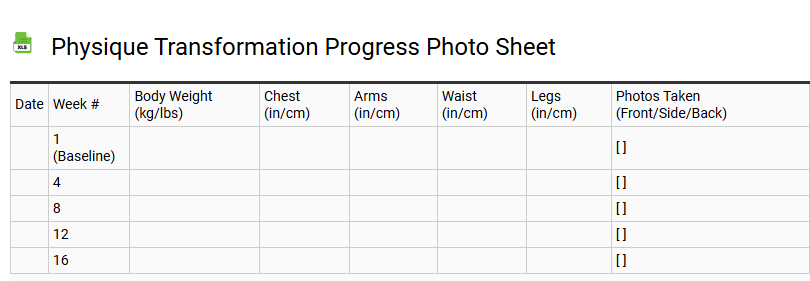
A physique transformation progress photo sheet serves as a vital tool for documenting body recomposition and aesthetic milestones. Unlike a scale, visual tracking captures muscle hypertrophy and adipose tissue reduction with precision. Utilizing a standardized template ensures consistent lighting, posture, and framing across front, profile, and posterior views. This systematic approach to your fitness journey provides objective data to evaluate the efficacy of your training program and nutrition plan. By conducting regular monthly check-ins, you maintain high levels of accountability and motivation. High-resolution snapshots offer a comprehensive overview of your physiological changes, allowing for informed adjustments to caloric intake or resistance training intensity. Ultimately, these photos document your body composition evolution, turning abstract goals into tangible, visible results.
Supplement and Protein Intake Tracker
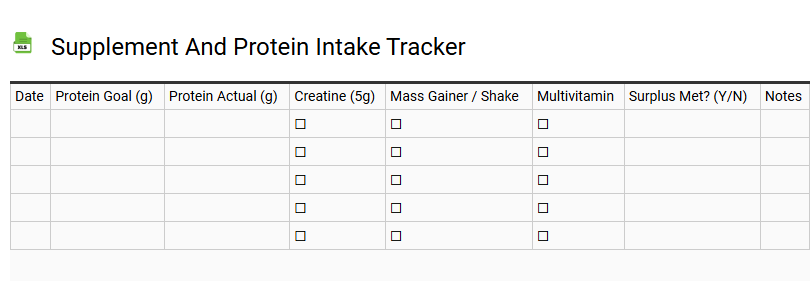
💾 Supplement and Protein Intake Tracker .xls
Utilizing a dedicated nutritional logging framework is essential for managing your dietary supplements and achieving specific macronutrient goals. This template facilitates precise health monitoring, allowing users to record daily dosage for whey protein, creatine, and micronutrients. By focusing on nutrient timing and the anabolic window, you can accelerate muscle recovery and optimize fitness progress.
Designed for sports nutrition enthusiasts and bodybuilding professionals alike, this tracker streamlines wellness optimization. Documenting your amino acid intake and protein synthesis requirements ensures you stay within your caloric surplus or deficit targets. This systematic approach to performance tracking enhances accountability, ensuring your body receives the vital fuel necessary for peak physical condition and long-term vitality.
Total Weekly Tonnage Calculator
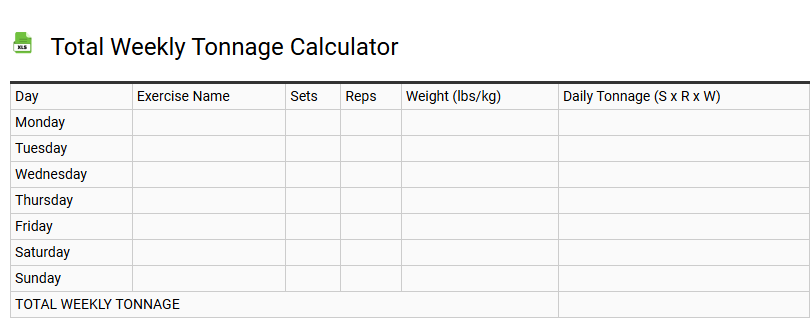
💾 Total Weekly Tonnage Calculator .xls
This Total Weekly Tonnage Calculator is an essential tool for athletes tracking volume load to optimize strength training outcomes. By calculating the product of weight lifted, sets, and repetitions, this template quantifies the cumulative weight moved throughout your microcycle. Monitoring this resistance training metric is vital for implementing progressive overload, which drives muscle growth and hypertrophy.
Whether your focus is powerlifting or bodybuilding, analyzing weekly volume ensures you maintain the necessary intensity for physiological adaptation. This data-driven approach to fitness tracking allows you to identify plateaus and adjust training frequency or load accordingly. Use this structured workout log to balance mechanical tension and recovery, ensuring your programming aligns with long-term athletic performance goals and consistent strength gains across all compound movements.
Body Fat Percentage and Lean Mass Tracker
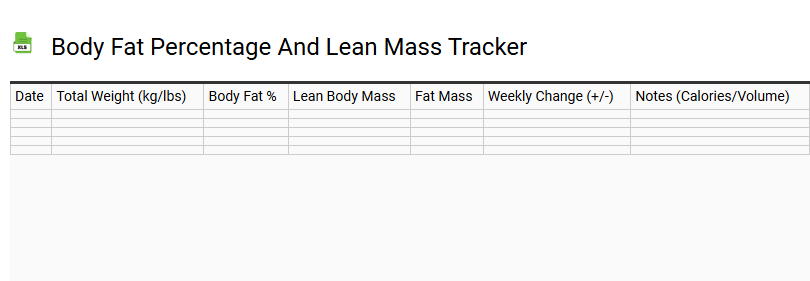
💾 Body Fat Percentage and Lean Mass Tracker .xls
Achieving a peak physique requires precise monitoring of body composition rather than just total weight. This tracking template allows you to log critical biometric data, distinguishing between lean muscle mass and adipose tissue. By analyzing metrics like fat-free mass and subcutaneous fat, you can ensure your nutrition and training cycles-whether in a caloric deficit or surplus-prioritize hypertrophy and metabolic health.
Incorporate data from skinfold calipers, BIA scales, or DEXA scans to visualize your body recomposition journey. Monitoring the ratio of visceral fat to muscle provides deep insights into your physical well-being. This structured log facilitates progressive overload adjustments, helping you fine-tune macronutrient intake to maintain lean mass while optimizing fat loss for long-term health and performance.
The Ectomorph Mass Building Tracker template provides a strategic roadmap for hardgainers targeting muscle hypertrophy. By systematically logging a caloric surplus and specific macronutrient ratios, users can effectively manage a fast metabolic rate. This fitness journal emphasizes progressive overload during strength training sessions to stimulate lean mass growth. Utilizing this bodybuilding log ensures accurate monitoring of body composition changes. Implement this data-driven tool to streamline your weight gain journey and achieve measurable, long-term physique transformation through disciplined performance tracking.