
Garage Gym Session Log Template for Progress Tracking
Optimizing your home fitness journey begins with maintaining a detailed garage gym session log. By capturing precise training data, including sets, reps, and resistance levels, you can effectively monitor your exercise performance and accelerate progress toward your strength goals. This structured approach to a lifting diary ensures every workout contributes to long-term routine optimization. Consistent tracking turns raw effort into measurable results, providing the insights needed to refine your programming. Check already made variation of templates below.
Daily Workout Log
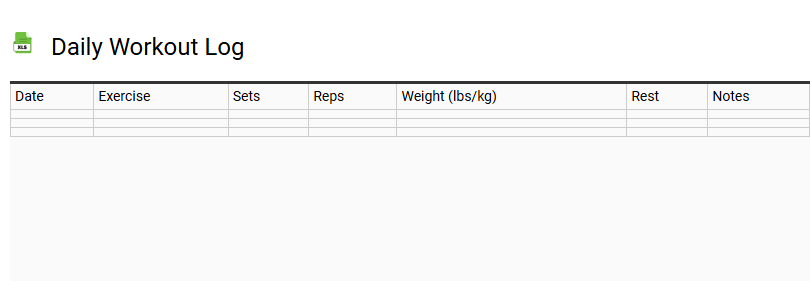
A daily workout log serves as a vital blueprint for achieving peak physical conditioning. By utilizing a structured fitness tracking template, athletes can meticulously record strength training variables, including sets, repetitions, and resistance levels. This systematic approach facilitates progressive overload, ensuring consistent gains in muscle hypertrophy and endurance.
A comprehensive gym journal should document several key performance metrics:
- Exercise selection targeting specific muscle groups.
- Cardiovascular activity duration and intensity levels.
- Rest intervals and recovery periods between movements.
- Subjective data like Rate of Perceived Exertion (RPE).
Consistent data logging empowers individuals to analyze trends, adjust training volume, and remain accountable to their long-term fitness goals. Whether tracking weightlifting personal records or metabolic conditioning, a well-maintained log is the foundation of an effective exercise routine.
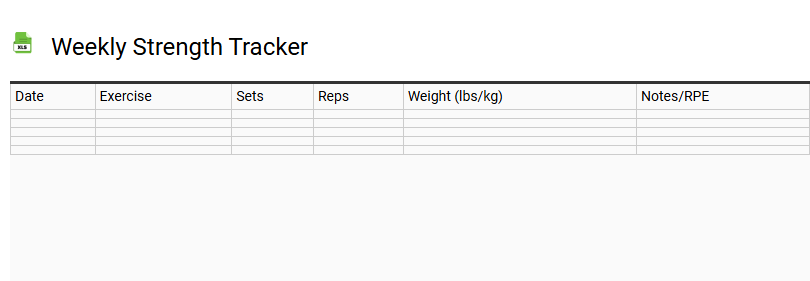
Weekly Strength Tracker
💾 Weekly Strength Tracker .xls
Utilizing a weekly strength tracker is essential for implementing progressive overload and ensuring consistent muscle growth. This structured template allows athletes to log critical resistance training variables, including set counts, rep ranges, and total workout volume. By maintaining detailed weightlifting logs, you can monitor performance metrics across compound movements and isolation exercises.
To optimize your fitness goals, this tracker focuses on:
- Exercise selection for targeted hypertrophy or powerlifting.
- Tracking one-rep max percentages and RPE levels.
- Monitoring workout consistency to prevent strength plateaus.
- Analyzing recovery periods between high-intensity sessions.
Whether you are focused on bodybuilding or general functional fitness, documenting your physical progress ensures data-driven adjustments to your training cycles, leading to superior long-term results and enhanced athletic performance.
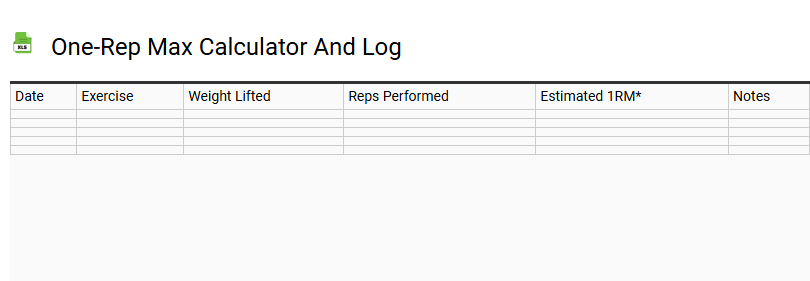
One-Rep Max Calculator and Log
💾 One-Rep Max Calculator and Log .xls
This one-rep max (1RM) calculator serves as a vital tool for strength training enthusiasts aiming to quantify their peak lifting capacity. By utilizing mathematical models such as the Epley formula or Brzycki equation, users can accurately estimate maximal strength on core compound lifts like the bench press, deadlift, and squat.
Integrating these insights into a digital training log facilitates progressive overload and long-term strength assessment. Precise 1RM data is essential for designing percentage-based programming, optimizing muscle hypertrophy, and tailoring training intensity to individual recovery needs. Whether you are a powerlifting athlete or a recreational lifter, tracking your repetition maximum ensures data-driven progress while reducing injury risks. Use this fitness tracking template to refine your resistance training cycles and achieve measurable performance gains through systematic weightlifting analytics.
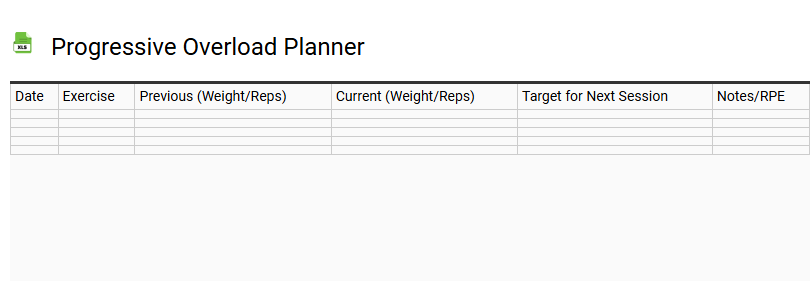
Progressive Overload Planner
💾 Progressive Overload Planner .xls
Utilizing a progressive overload planner is essential for optimizing muscle hypertrophy and maximizing strength gains. This structured template allows athletes to meticulously track training volume, rep ranges, and weight intensity across various resistance training cycles. By documenting compound movements and isolation exercises, you ensure consistent mechanical tension is applied to muscle fibers, effectively preventing performance plateaus.
Effective workout tracking facilitates periodization and micro-loading, allowing for incremental adjustments in training frequency and recovery protocols. This digital log focuses on several critical metrics:
- Volume load management per muscle group.
- Tracking RPE (Rate of Perceived Exertion) for intensity control.
- Monitoring rest intervals to manage metabolic stress.
- Evaluating exercise selection for targeted body recomposition.
Implementing this fitness log ensures systematic stimulus application, fostering long-term physiological adaptations and peak athletic performance.
Compound Lift Performance Log
💾 Compound Lift Performance Log .xls
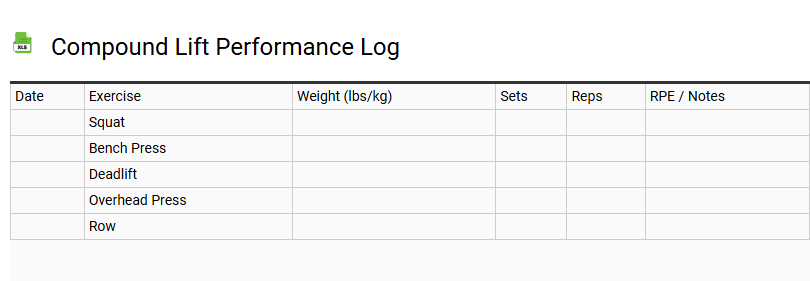
Optimizing compound lift performance requires a structured data approach to track progressive overload effectively. A robust strength training log captures critical variables such as weight load, repetition ranges, and total volume across primary movements like squats, deadlifts, and bench presses.
- Exercise Selection: Prioritize multi-joint movements to maximize neuromuscular adaptation.
- Intensity Metrics: Document RPE (Rate of Perceived Exertion) and 1RM percentages to monitor CNS fatigue.
- Temporal Data: Record rest intervals and mechanical tension to ensure consistency across mesocycles.
Utilizing a digital or physical performance template facilitates the identification of strength plateaus while promoting hypertrophy. Detailed logging enables precision in microcycle planning, ensuring long-term athletic development and functional strength gains through strategic periodization and data-driven adjustments to your lifting routine.
Hypertrophy Training Journal
💾 Hypertrophy Training Journal .xls
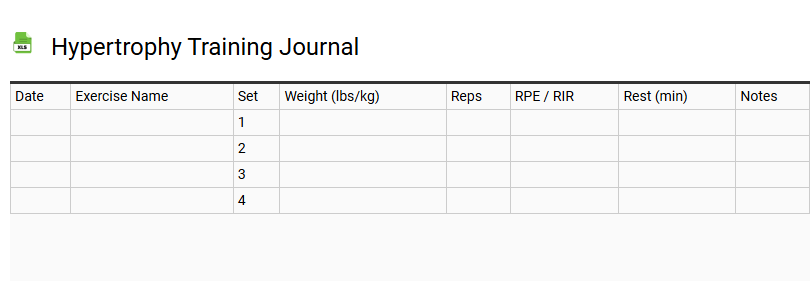
Utilizing a dedicated hypertrophy training journal is essential for maximizing muscle growth through structured resistance training. This template emphasizes progressive overload, allowing athletes to meticulously track training volume, intensity, and specific rep ranges to stimulate muscle protein synthesis effectively.
By documenting each workout, you can monitor key physiological drivers such as:
- Mechanical tension applied during compound movements.
- Metabolic stress accumulated through strategic rest periods and high-repetition sets.
- Consistent frequency and recovery metrics to manage systemic fatigue.
Logging your data facilitates precise periodization, ensuring that every strength training session contributes to hypertrophic adaptations. Tracking time under tension and weight increments provides the empirical evidence needed to refine your bodybuilding routine, optimize muscle fiber recruitment, and achieve long-term physique goals through data-driven volume tracking.
Powerlifting Meet Prep Template
💾 Powerlifting Meet Prep Template .xls
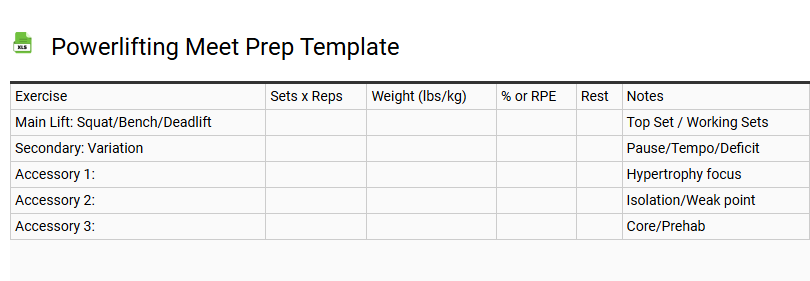
A professional powerlifting meet prep template serves as a strategic roadmap for athletes aiming to peak their strength on the platform. This structured training block focuses on the "Big Three"-squat, bench press, and deadlift-utilizing calculated periodization to transition from high-volume hypertrophy to high-intensity neural drive. By tracking RPE (Rate of Perceived Exertion) and percentage-based loading, lifters can effectively manage fatigue and optimize CNS recovery before competition day.
- Peaking Phase: Gradually increasing intensity while tapering volume to manifest 1RM strength.
- Specificity: Mastering competition commands, technical standards, and equipment like singlets and wraps.
- Deload Week: A crucial reduction in workload to dissipate accumulated stress before the meet.
- Attempt Selection: Data-driven planning for openers and subsequent attempts to maximize the total.
Utilizing a standardized template ensures consistency, allowing lifters to fine-tune their tapering and arrive at the platform primed for new personal records.
Bodyweight Exercise Tracker
💾 Bodyweight Exercise Tracker .xls
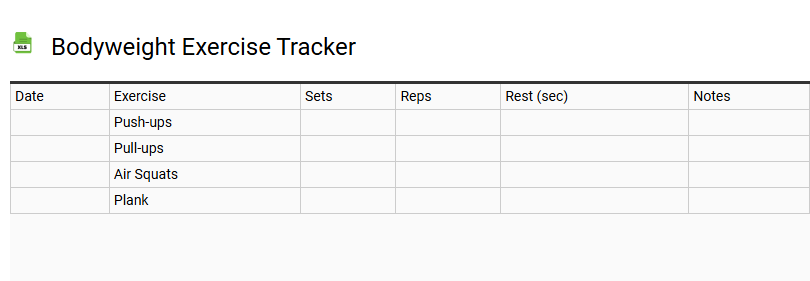
A comprehensive bodyweight exercise tracker is essential for optimizing calisthenics performance and achieving long-term fitness goals. This structured workout log allows users to monitor sets, reps, and total volume for movements like push-ups, pull-ups, and squats. By maintaining a detailed fitness journal, athletes can implement progressive overload effectively, ensuring consistent muscle building and strength training gains. This resistance training template facilitates performance monitoring through precise data logging, helping you visualize training volume trends over time. Whether focusing on hypertrophy or endurance, utilizing a digital exercise diary streamlines your home workout routine and enhances accountability. Track your bodyweight movements systematically to transform your physical conditioning and master advanced gymnastic skills through disciplined progress tracking.
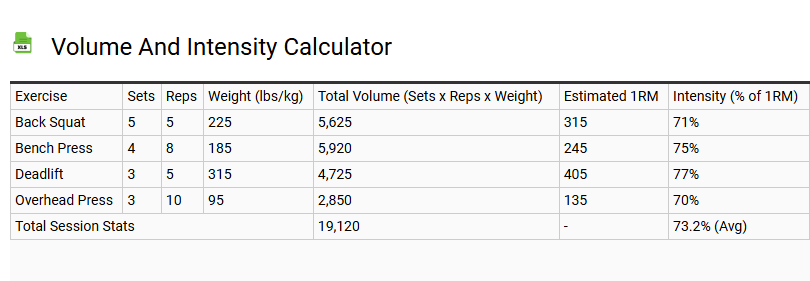
Volume and Intensity Calculator
💾 Volume and Intensity Calculator .xls
This Volume and Intensity Calculator serves as a comprehensive tool for athletes and coaches seeking to master progressive overload. By inputting specific lifting metrics, such as total sets, repetition ranges, and training load, the template automatically calculates total tonnage and training stimulus. Balancing these variables is crucial for driving hypertrophy and maximizing strength gains.
The interface integrates RPE (Rate of Perceived Exertion) and one-rep max (1RM) percentages to ensure precise intensity calibration. Utilizing this data-driven approach to workout programming allows for better recovery optimization and prevents overtraining. Whether you are focused on muscle growth or power development, tracking your exertion levels through this template provides the necessary insights for consistent performance. Refine your fitness tracking by analyzing the relationship between workload and physiological adaptation for superior results.
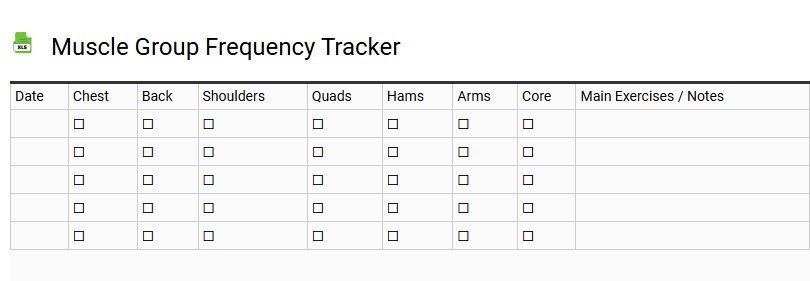
Muscle Group Frequency Tracker
💾 Muscle Group Frequency Tracker .xls
A Muscle Group Frequency Tracker is an essential tool for optimizing hypertrophy and managing recovery time. By documenting how often specific anatomical regions-such as the quadriceps, pectorals, or latissimus dorsi-are stimulated within a microcycle, athletes can ensure they hit the ideal training volume for strength gains.
This template tracks workout logs to align with muscle protein synthesis windows, typically lasting 24 to 48 hours. Monitoring frequency helps maintain anatomical balance, preventing overtraining while facilitating progressive overload. Whether utilizing a push-pull-legs split or full-body routine, tracking your intensity and fatigue management is crucial. This data-driven approach to periodization ensures consistent physiological adaptations, allowing for precise adjustments to volume load to maximize muscle fiber recruitment and long-term athletic performance.
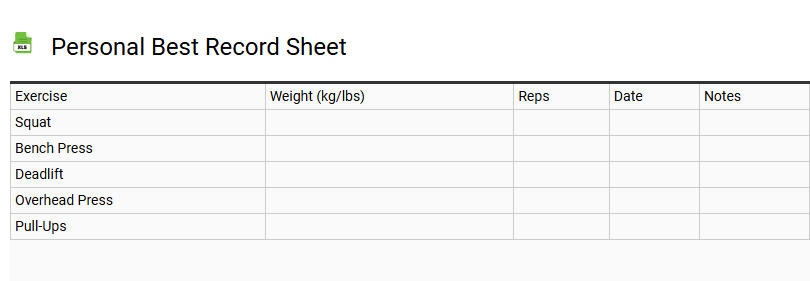
Personal Best Record Sheet
💾 Personal Best Record Sheet .xls
A Personal Best Record Sheet serves as a vital instrument for fitness tracking and athletic performance optimization. This specialized template functions as a comprehensive workout log, allowing individuals to systematically document individual achievements across various disciplines, such as strength training and cardiovascular milestones.
By establishing clear performance benchmarks, users can engage in effective goal setting and long-term progress monitoring. Utilizing this structured data visualization tool helps identify physical conditioning trends and areas for improvement.
- Accurate milestone documentation for motivation.
- Enhanced training cycle planning based on historical data.
- Streamlined record-keeping for competitive or personal growth.
Ultimately, maintaining a dedicated personal record log ensures that every breakthrough is captured, fostering a disciplined approach to surpassing previous limits and achieving peak fitness success.
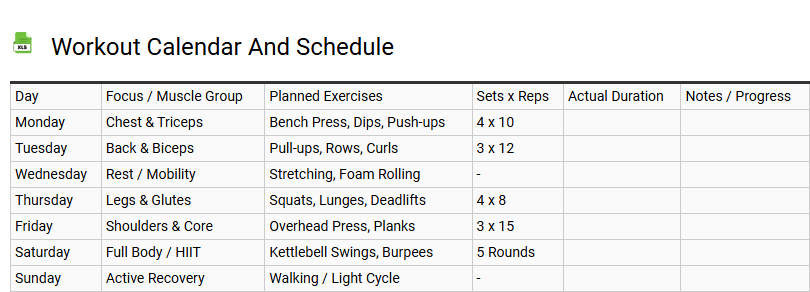
Workout Calendar and Schedule
💾 Workout Calendar and Schedule .xls
Utilizing a structured workout calendar is essential for maintaining consistency and achieving long-term fitness goals. This comprehensive training schedule template serves as a visual fitness planner, allowing you to organize exercise routines, strength training blocks, and cardio sessions with precision. By mapping out specific muscle groups and incorporating progressive overload, you ensure peak performance and muscle hypertrophy.
The customizable layout prioritizes habit formation and progress tracking, helping you monitor physical activity intensity. Strategic placement of rest days and recovery periods within your weekly agenda prevents overtraining while supporting periodization strategies. Whether focusing on weight loss or athletic performance, this digital template streamlines your wellness journey, providing a clear roadmap for body transformation and disciplined time management.
Exercise Library and Form Notes
💾 Exercise Library and Form Notes .xls
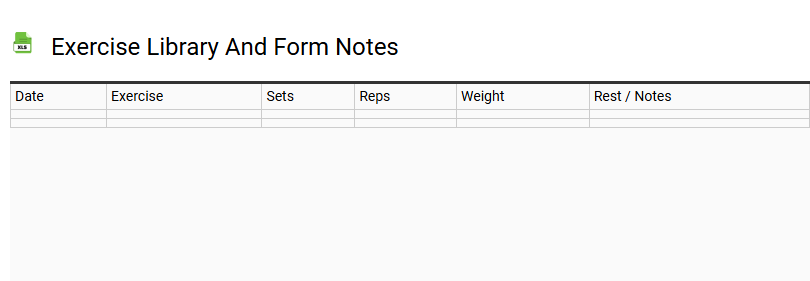
A comprehensive exercise library serves as a vital movement database for strength training and hypertrophy. By organizing a digital fitness catalog, users can categorize specific movement patterns and muscle groups to streamline workout programming. Each entry features detailed form notes that prioritize biomechanics and proper technique, which are essential for injury prevention and optimal muscle engagement.
These coaching cues provide actionable insights into exercise execution, ensuring consistent performance across every training log entry. By documenting progression tracking, sets and reps, and specific execution tips, athletes can refine their workout routine with precision. Integrating high-quality video demonstrations and performance metrics into your strength database transforms a simple list into a professional-grade coaching resource for sustainable athletic development and technical mastery.
Plate Loading Calculator
💾 Plate Loading Calculator .xls
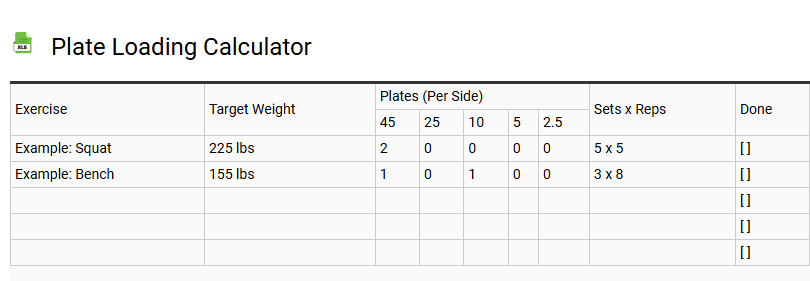
This plate loading calculator template streamlines strength training by providing a precise visual breakdown for your barbell setup. Whether performing a squat, deadlift, or bench press, achieving exact weight totals is critical for progressive overload. Users can input target loads and specify the mass of the Olympic bar, typically 45lb or 20kg, to determine the necessary combination of iron plates or bumper plates.
The interface calculates the specific increments required for each side of the sleeve, including standard 45, 35, 25, 10, 5, and 2.5 lb units. By eliminating mental math during high-intensity sessions, this tool ensures balanced weight distribution and safety. Optimized for powerlifting and bodybuilding, this calculator supports both imperial and metric systems, allowing athletes to maintain focus on form while ensuring accurate resistance training measurements for peak gym performance.
Warm-up and Mobility Routine Log
💾 Warm-up and Mobility Routine Log .xls
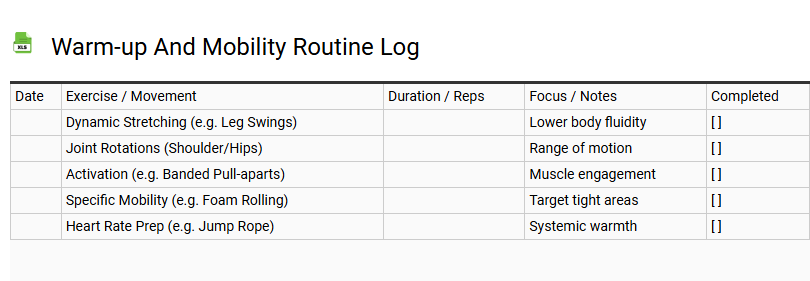
This structured log serves as a dedicated tool for tracking physical preparation and joint health movements. By documenting dynamic stretches, activation drills, and range-of-motion exercises, you can ensure your body is adequately prepared for peak performance.
- Exercise Description: Identify the specific movement or muscle group being targeted.
- Volume and Duration: Record the number of repetitions completed or the time spent in each position.
- Body Awareness: Note any areas of persistent tightness, discomfort, or significant improvements in flexibility.
- Readiness Score: Rate your overall physical state after completing the sequence.
Maintaining a consistent record of these routines allows for better monitoring of long-term progress. This data helps refine your preparation strategy, ensuring your body remains resilient and functional for every training session.
CrossFit WOD Log
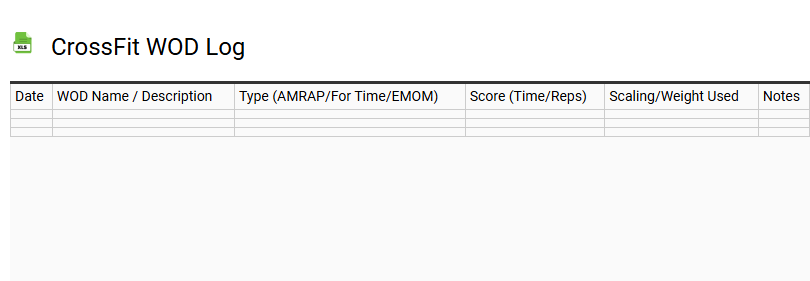
Streamline your fitness journey using a comprehensive CrossFit WOD Log template designed for high-intensity functional training. Efficiently record daily Workouts of the Day, including AMRAP, EMOM, and Tabata intervals. This digital training diary allows athletes to monitor performance metrics such as RX versus scaled movements, total reps, and completion times for benchmark workouts like "Fran" or "Murph."
Maximize your gains by tracking these essential data points:
- Strength Gains: Log 1RM percentages for Olympic lifting and powerlifting sets.
- Metcon Stats: Document heart rate zones and metabolic conditioning volume.
- Gymnastics Progress: Note skill acquisitions and unbroken rep counts.
- Personal Records: Visualize your PR history to ensure progressive overload.
By analyzing your training volume and intensity within a structured log, you can identify plateaus and optimize recovery for peak functional fitness results.
Rest and Recovery Log
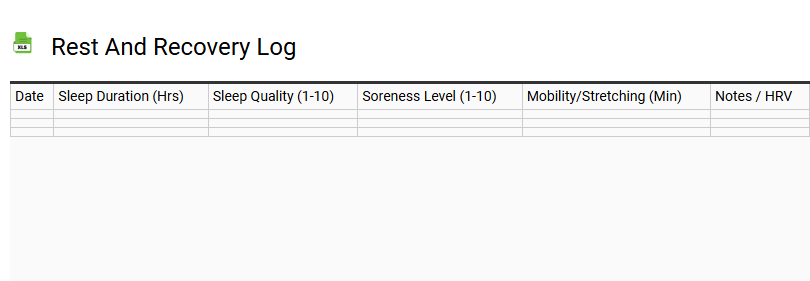
A comprehensive Rest and Recovery Log serves as an essential instrument for performance optimization and overtraining prevention. By meticulously documenting daily sleep quality, heart rate variability (HRV), and muscle soreness, individuals can effectively calibrate their training volume and intensity. This data-driven approach to wellness tracking monitors both physical fatigue and psychological stress.
- Active Recovery: Record low-intensity activities like mobility work or steady-state walking that promote blood flow.
- Nutritional Support: Log macronutrient intake and hydration levels to facilitate cellular repair.
- Injury Prevention: Spot early indicators of systemic inflammation or persistent joint discomfort before they escalate.
Implementing a structured template ensures consistent metabolic recovery and central nervous system restoration. Balancing perceived exertion with deliberate downtime fosters long-term athletic longevity and maintains peak physiological readiness.
Strength Standards Comparison Chart
💾 Strength Standards Comparison Chart .xls
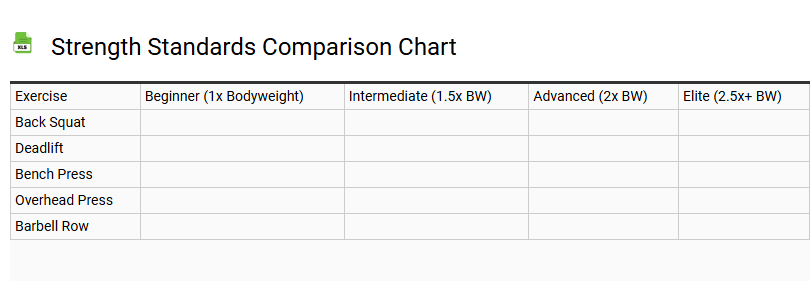
A strength standards comparison chart serves as a definitive framework for evaluating physical performance across diverse demographics. By utilizing standardized metrics such as one-rep max (1RM) and bodyweight ratios, athletes can accurately categorize their progress through novice, intermediate, advanced, and elite tiers. This template facilitates an objective analysis of compound movements, specifically the squat, bench press, and deadlift, which are fundamental to resistance training.
By integrating powerlifting metrics and performance benchmarks, lifters can track relative strength adjusted for age, gender, and weight class. These data-driven tools are essential for athletic progression and effective periodization, allowing for precise goal setting. Utilizing a comparison framework empowers individuals to identify muscular imbalances, optimize hypertrophy, and align training intensity with established physiological benchmarks for peak force production and functional fitness excellence.
Equipment Maintenance and Inventory Log
💾 Equipment Maintenance and Inventory Log .xls
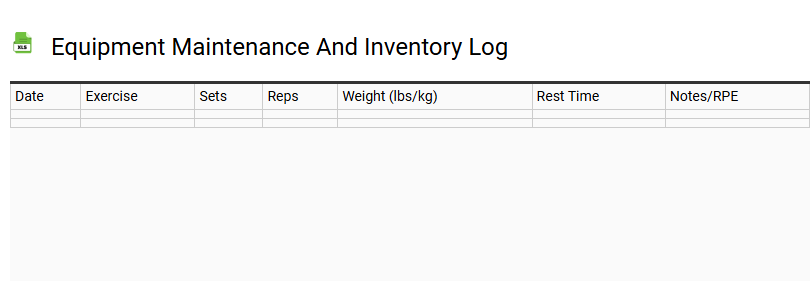
An Equipment Maintenance and Inventory Log serves as a central repository for tracking physical assets and their operational health. This structured framework ensures that every piece of machinery is accounted for while streamlining the scheduling of routine inspections. By documenting unique identification numbers, current locations, and usage history, organizations prevent unexpected downtime and extend asset lifespans.
Effective logs focus on several critical data points:
- Precise asset descriptions and serial numbers for identification.
- Comprehensive records of previous repairs and service dates.
- Schedules for upcoming preventative maintenance tasks.
- Current availability status to assist in operational planning.
Utilizing this template minimizes administrative errors and promotes safety compliance. It provides clear visibility into inventory levels, identifies equipment requiring replacement, and optimizes resource allocation to maintain functional excellence across all departments.
Garage Gym Monthly Overview
💾 Garage Gym Monthly Overview .xls
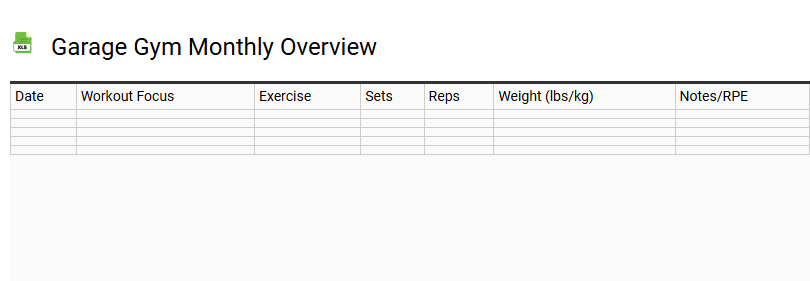
A structured garage gym session log template is vital for monitoring strength training and tracking fitness progress. By recording your exercise routine, sets, and reps, you ensure progressive overload and consistent gains. This systematic approach captures essential performance data, allowing you to hit lifting milestones within your home gym. Utilizing a dedicated workout tracker simplifies your regimen while maintaining accountability. Download our customizable log to optimize your training volume and achieve peak athletic results today.