
Half Marathon Countdown Calendar Template
Embarking on a 13.1-mile journey requires disciplined training and meticulous race day preparation. Utilizing a half marathon countdown calendar template provides an essential visual tracker to monitor your running plan and daily progress. By mapping out aerobic base building, weekly mileage, and the vital taper phase, you ensure peak performance for your upcoming event. This structured tool maintains motivation and accountability throughout your entire training schedule. Please check out the various pre-made template variations provided below.
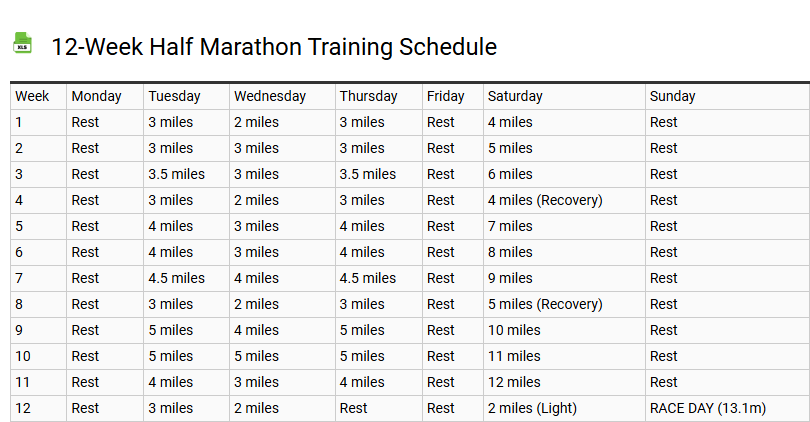
12-Week Half Marathon Training Schedule
💾 12-Week Half Marathon Training Schedule .xls
This 12-week half marathon training schedule provides a structured framework for runners aiming to master the 13.1-mile distance. By prioritizing progressive overload, the template balances aerobic base development with high-intensity interval workouts. Each microcycle incorporates essential recovery days and cross-training sessions to mitigate injury risks while enhancing cardiovascular fitness.
The program emphasizes the weekly long run to build physical endurance and mental resilience. As participants advance, the mileage volume increases to trigger physiological adaptation, followed by a strategic tapering phase to ensure peak performance on race day. Whether you are a novice or seeking a new pace strategy, this comprehensive plan optimizes oxygen utilization and muscle recovery. Following this roadmap ensures a disciplined approach to distance running, preparing the body for the unique demands of endurance events through consistent, periodized training blocks.
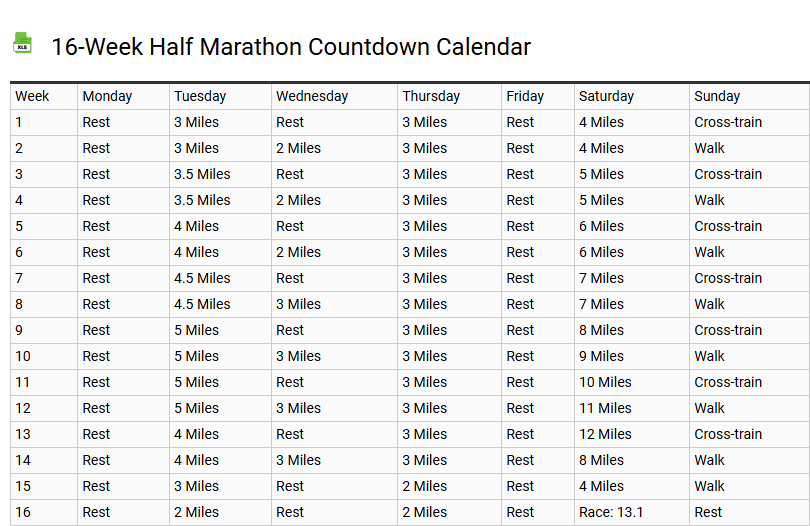
16-Week Half Marathon Countdown Calendar
💾 16-Week Half Marathon Countdown Calendar .xls
Utilizing a 16-week half marathon countdown calendar provides a comprehensive framework for endurance building and peak performance. This structured training plan emphasizes gradual mileage progression to foster physiological adaptation while minimizing injury risks. Early phases focus on establishing base fitness through consistent easy runs, eventually integrating interval training and tempo workouts to enhance aerobic capacity and cardiovascular efficiency.
The backbone of the regimen is the weekly long run, which is essential for developing mental stamina and refining your hydration strategy. Dedicated recovery days and cross-training sessions are strategically placed to prevent burnout and ensure balanced muscle development. As the race approaches, a calculated taper phase allows the body to repair and maximize glycogen stores. By following this disciplined running schedule, athletes can master their pacing and approach the starting line with total confidence.
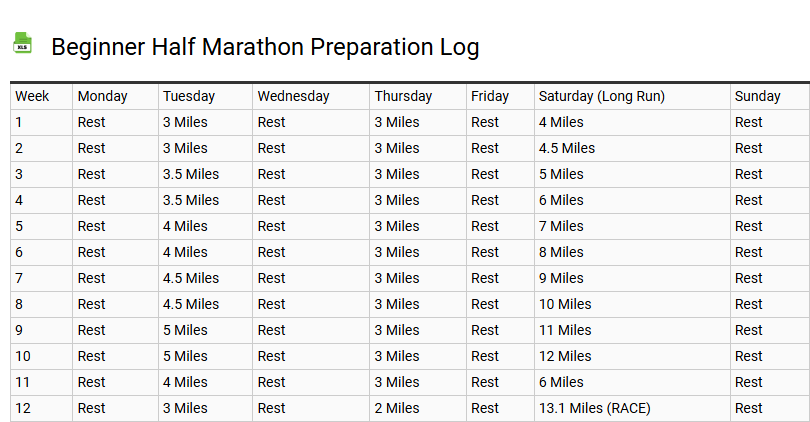
Beginner Half Marathon Preparation Log
💾 Beginner Half Marathon Preparation Log .xls
A beginner half marathon preparation log serves as an essential framework for tracking the transition from casual jogging to completing 13.1 miles. This structured document allows athletes to monitor their physical evolution and ensure consistent training patterns throughout a typical 12 to 16-week cycle.
- Daily Mileage: Tracks the gradual increase in distance to prevent overtraining and injury.
- Rest and Recovery: Documents sleep quality and active recovery days to optimize muscle repair.
- Performance Metrics: Records average pace, heart rate, and elevation changes across different terrains.
- Subjective Feedback: Notes on energy levels, weather conditions, and shoe wear to identify performance trends.
By maintaining a detailed record, runners can visualize their improvements, refine their nutrition strategies, and build the mental confidence necessary for race day. Using this template helps bridge the gap between initial fitness goals and crossing the finish line.
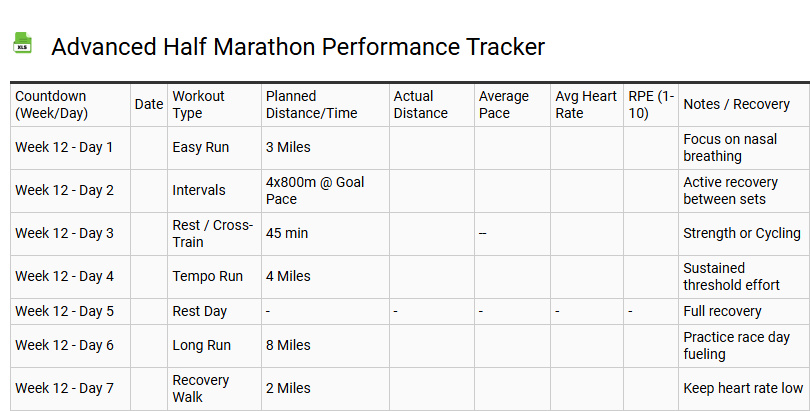
Advanced Half Marathon Performance Tracker
💾 Advanced Half Marathon Performance Tracker .xls
This advanced half marathon performance tracker serves as a comprehensive analytical dashboard for competitive runners aiming to optimize their 13.1-mile results. By meticulously logging split times and heart rate zones, athletes can monitor aerobic capacity and lactate threshold improvements with precision. The template features integrated modules for tracking weekly mileage progression, cadence, and vertical oscillation to refine overall running economy.
Designed for data-driven preparation, it evaluates tapering phase effectiveness and recovery metrics like HRV. Utilize this tool to analyze interval training consistency and the impact of elevation gain on your target race pace. By synthesizing biomechanical feedback with VO2 max estimations, this tracker empowers runners to make informed adjustments to their periodization schedule, ensuring peak physiological readiness and peak performance on race day.
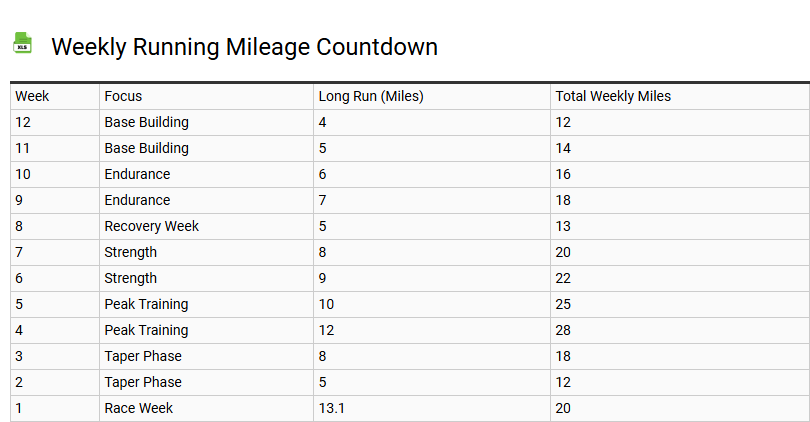
Weekly Running Mileage Countdown
💾 Weekly Running Mileage Countdown .xls
The Weekly Running Mileage Countdown is a specialized tracking tool designed to help athletes monitor their progress toward a specific distance goal. By focusing on the remaining balance rather than just the total accumulated, runners maintain a clear perspective on the effort required to finish their training cycle.
- Defined Targets: Establish a clear mileage objective for the seven-day period.
- Real-Time Updates: Log individual runs to automatically subtract from the weekly total.
- Visual Momentum: Observe the countdown decrease to stay motivated and avoid overtraining.
This layout provides a streamlined overview of physical output, making it easier to adjust daily intensity based on the remaining workload. Utilizing this structure ensures that every run serves a purpose, helping runners stay consistent while preparing for upcoming races or personal milestones.
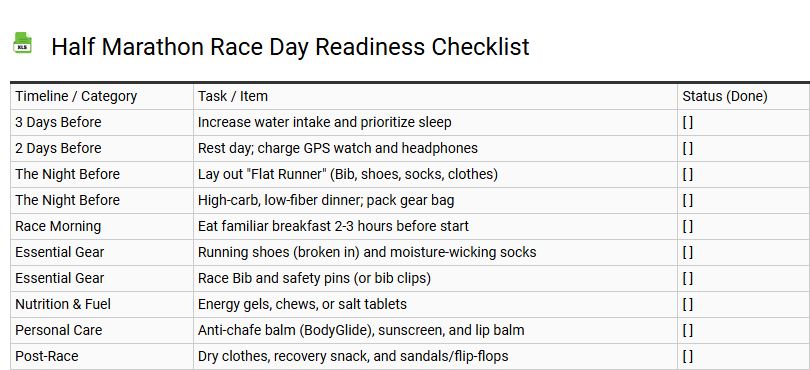
Half Marathon Race Day Readiness Checklist
💾 Half Marathon Race Day Readiness Checklist .xls
Achieving peak performance for a 13.1-mile journey requires a comprehensive half marathon race day readiness checklist. Prioritize essential running gear, such as moisture-wicking apparel and vetted footwear, to mitigate physical discomfort. Ensure your bib number and timing chip are securely fastened before heading to the starting corral.
A robust hydration strategy incorporating electrolytes and energy gels is critical for maintaining endurance. Map out your pacing strategy to avoid early burnout, and finalize your pre-race meal to optimize glycogen stores. Managing logistics, from marathon expo packet pickup to bag drop procedures, reduces cortisol levels. Finally, prepare a recovery plan featuring post-race nutrition and compression wear to accelerate muscle repair. By organizing these variables, runners ensure a seamless transition from the start line to the finish line, maximizing their potential for a personal best.
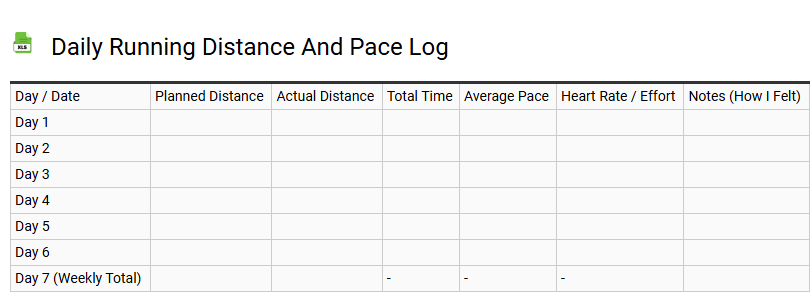
Daily Running Distance and Pace Log
💾 Daily Running Distance and Pace Log .xls
Utilizing a Daily Running Distance and Pace Log is a fundamental practice for athletes seeking to optimize their performance and monitor physical progression. This structured template allows runners to document critical training metrics, including total mileage, split times, and average velocity, ensuring a data-driven approach to their fitness journey.
By tracking aerobic base development and anaerobic threshold improvements, you can refine your training intensity across various heart rate zones. This log also facilitates monitoring running cadence, elevation gain, and recovery intervals, which are vital for marathon preparation and injury prevention. Maintaining a consistent record of weekly volume and shoe mileage helps identify peak performance patterns and informs necessary adjustments to your training cycle, ultimately fostering long-term athletic consistency and endurance gains.
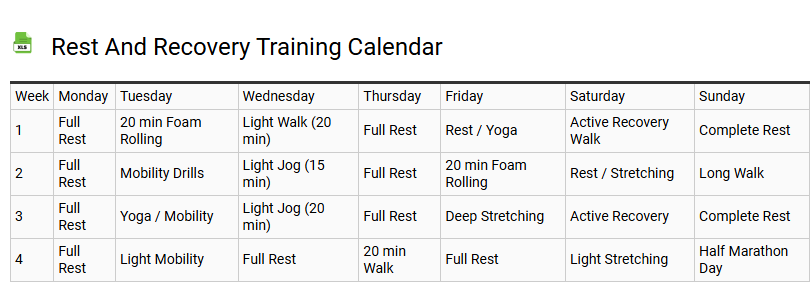
Rest and Recovery Training Calendar
💾 Rest and Recovery Training Calendar .xls
A structured rest and recovery training calendar is essential for balancing intense physical stimulus with physiological restoration. By utilizing strategic periodization, athletes can effectively manage their training load to ensure overtraining prevention and long-term performance optimization. This template prioritizes muscle repair and a nervous system reset through a combination of complete rest and active recovery sessions.
Key components include:
- Mobility drills and flexibility work to enhance joint health.
- Scheduled deload weeks to facilitate systemic recovery.
- Focus on sleep hygiene and hydration for metabolic efficiency.
- Restorative sessions to reduce cortisol and prevent injury.
Integrating these recovery protocols into your weekly routine ensures that every training cycle yields maximum cellular adaptation. A well-maintained calendar transforms raw effort into sustainable gains by honoring the biological necessity of downtime.
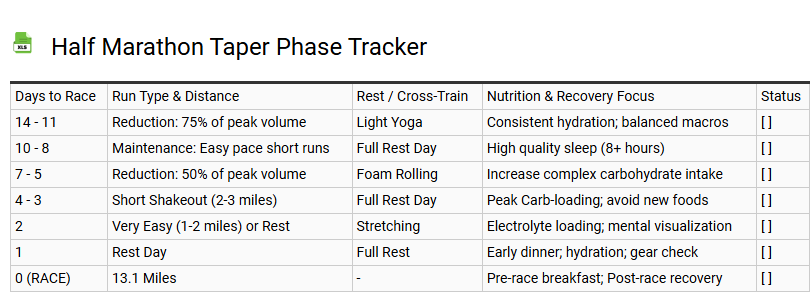
Half Marathon Taper Phase Tracker
💾 Half Marathon Taper Phase Tracker .xls
Efficiently managing your half marathon taper phase is crucial for achieving peak performance on race day. Utilizing a dedicated training log template allows runners to monitor the strategic reduction in mileage volume while maintaining the necessary intensity levels. This tracker ensures physiological recovery, facilitating muscle repair and the replenishment of glycogen stores essential for the 13.1-mile distance.
- Track weekly mileage decreases to prevent overtraining syndrome.
- Monitor recovery intervals and sleep quality metrics.
- Log tapering nutrition and optimal hydration strategies.
- Record perceived exertion during shorter, sharpening workouts.
By leveraging this performance tracking tool, athletes can navigate the tapering period with confidence, ensuring the central nervous system is fully rested. A well-executed taper transforms months of endurance training into a successful finish-line result, balancing active recovery with total physical readiness.
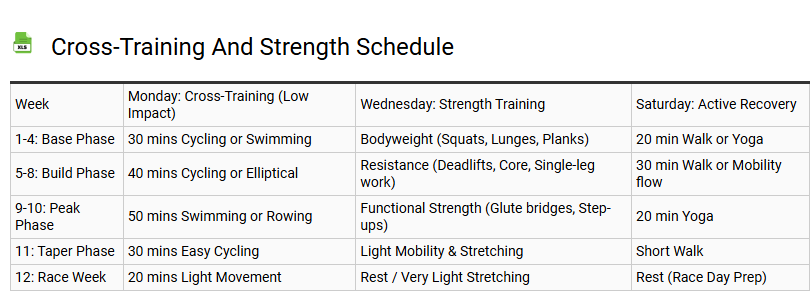
Cross-Training and Strength Schedule
💾 Cross-Training and Strength Schedule .xls
A comprehensive cross-training and strength schedule is essential for optimizing athletic performance and ensuring injury prevention. This structured fitness template integrates resistance training with cardiovascular conditioning to build functional strength and muscular endurance. By alternating high-intensity interval training (HIIT) with compound lifts, athletes enhance metabolic conditioning while avoiding burnout.
The ideal workout routine incorporates:
- Strength blocks targeting core stability and explosive power.
- Low-impact cross-training like cycling or swimming for aerobic capacity.
- Dedicated active recovery sessions to improve flexibility and joint mobility.
Utilizing a periodization approach within your exercise regimen prevents plateaus and promotes hypertrophy. This balanced training program ensures long-term wellness and peak physical readiness for any endurance sport or body composition goal.
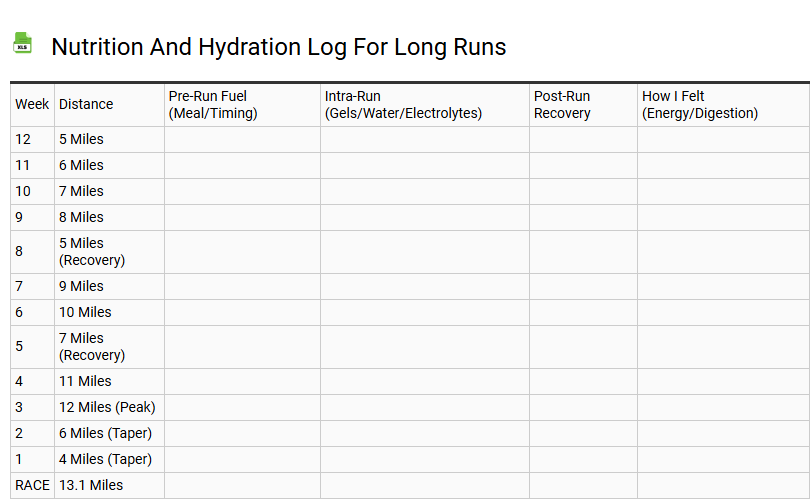
Nutrition and Hydration Log for Long Runs
💾 Nutrition and Hydration Log for Long Runs .xls
This nutrition and hydration log serves as a vital training diary to optimize your endurance performance. By meticulously tracking carbohydrate intake and electrolyte balance, runners can refine their fueling strategy to prevent gastrointestinal distress and premature fatigue. Monitoring fluid volume alongside sweat rate ensures optimal hydration status, which is critical for glycogen replenishment and muscle recovery.
Use this template to document specific energy gels, sports drinks, and salt tablets consumed during marathon preparation or ultramarathon training. Analyzing these variables helps identify the precise caloric requirements and sodium levels needed to maintain peak intensity. Consistent data entry allows you to correlate nutritional choices with perceived exertion and pace, turning every long run into a controlled experiment for race-day success. Mastering your metabolic efficiency through detailed record-keeping is the key to sustained stamina and avoiding the dreaded "bonk."
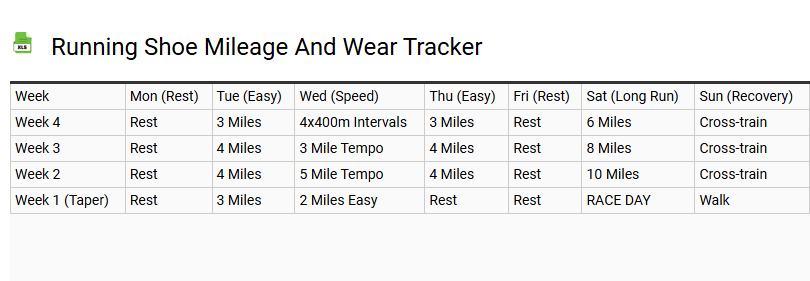
Running Shoe Mileage and Wear Tracker
💾 Running Shoe Mileage and Wear Tracker .xls
Efficiently managing your running shoe mileage is vital for long-term injury prevention and peak athletic performance. This comprehensive wear tracker serves as a digital odometer for your athletic footwear, meticulously monitoring accumulated distance to identify midsole compression and significant cushioning loss. By maintaining a detailed gear log, runners can observe outsole durability and subtle changes in biomechanics that occur as traction degrades. Utilizing this template facilitates a strategic shoe rotation, extending the lifespan of your sneakers while ensuring optimal running economy. Integrated replacement alerts notify you when a pair reaches the critical 300-500 mile threshold, safeguarding your joints from repetitive impact stress. Whether tracking trail shoes or road trainers, this tool provides the data-driven insights necessary to maintain a healthy gait cycle and superior comfort on every training surface.
Personal Best Goal Setting Template
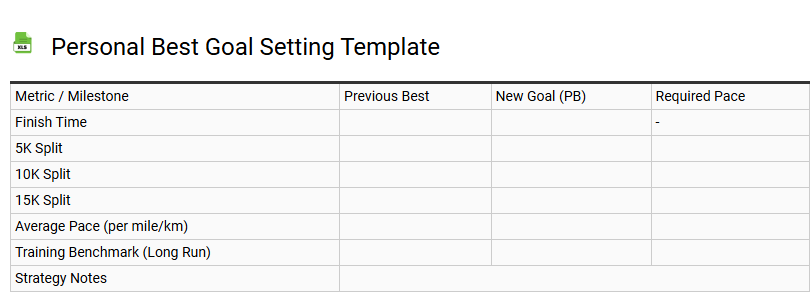
💾 Personal Best Goal Setting Template .xls
A personal best goal setting template serves as a strategic roadmap for individual growth and performance optimization. By utilizing this structured framework, users can define clear objectives tailored to their unique capabilities and aspirations. This tool emphasizes measurable outcomes and time-bound milestones, fostering a growth mindset through consistent self-reflection and performance tracking.
Key components of an effective template include a detailed action plan, resource identification, and specific habit formation strategies to ensure sustainable progress. By documenting success metrics and historical data, individuals can maintain high motivation levels and accountability. This systematic approach transforms vague intentions into attainable targets, allowing you to surpass previous limitations. Integrating these planning elements helps establish new benchmarks for excellence, ensuring that every self-improvement journey is backed by data-driven insights and focused execution.
Half Marathon Interval Training Planner
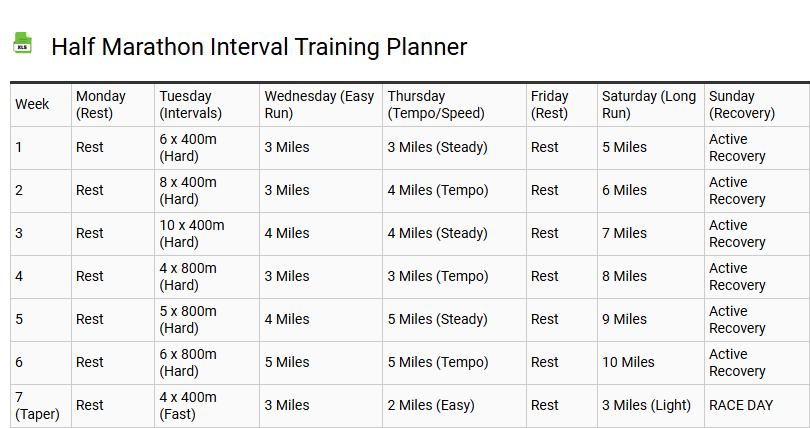
💾 Half Marathon Interval Training Planner .xls
A comprehensive half marathon interval training planner is essential for runners aiming to boost aerobic capacity and improve running economy. This structured template focuses on speed work, utilizing track repeats and tempo runs to elevate your anaerobic threshold. By strategically scheduling high-intensity intervals followed by calculated recovery periods, athletes can effectively increase VO2 max and overall stamina.
Key components of an optimized schedule include:
- Pacing strategies tailored to specific heart rate zones.
- Dedicated sessions for fartlek training and hill repeats.
- Integration of tapering phases to ensure peak athletic performance.
- Tracking metrics for weekly mileage and perceived exertion.
Optimizing marathon preparation through disciplined interval sessions ensures you meet finish time goals while minimizing overtraining injuries. Utilize this tool to transform your endurance base into competitive speed and race-day readiness.
Base Building Phase Countdown
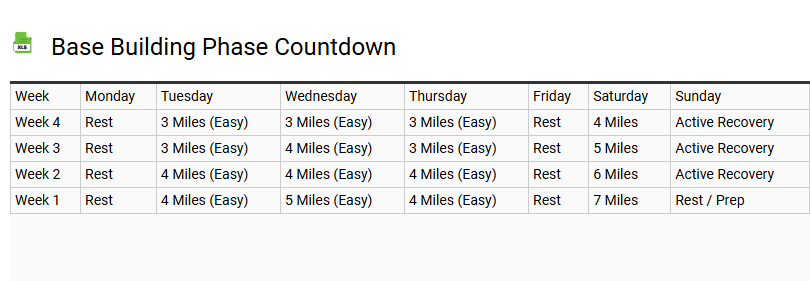
💾 Base Building Phase Countdown .xls
This base building phase countdown template serves as a strategic framework for athletes prioritizing aerobic foundation development. During this critical periodization stage, the focus shifts toward volume accumulation and metabolic efficiency. By tracking remaining days, participants can systematically manage low-intensity steady state (LISS) sessions and structural integrity drills.
Key components integrated into this countdown include:
- Cardiovascular development through consistent aerobic engine building.
- Musculoskeletal adaptation to prevent overuse injuries during peak intensity.
- Pre-season preparation metrics for monitoring resting heart rate and aerobic threshold.
Utilizing this template ensures a disciplined approach to endurance training, providing the necessary physiological scaffolding for future high-intensity intervals. Precise tracking throughout this training cycle optimizes physiological adaptations, ensuring you exit the base phase with a robust engine ready for specialized performance work.
Utilizing a half marathon countdown calendar is essential for a structured training schedule and consistent mileage tracking. This versatile template helps runners visualize their 13.1-mile journey, incorporating vital tapering periods and rest days to prevent injury. By monitoring your preparation timeline, you ensure peak physical condition for race day. Download this fitness tracking tool today to maintain running motivation and achieve your personal best. Mastering your cardio progression has never been more organized or accessible for dedicated athletes.