
Intermittent Fasting Grocery List Template: Essential Foods for Your Eating Window
Optimizing your intermittent fasting results requires strategic meal planning focused on your specific feeding window. Utilizing a dedicated grocery list template ensures you prioritize nutrient-dense whole foods, healthy fats, and high-satiety proteins that stabilize blood sugar. By organizing your shopping around metabolic health, you can effectively manage hunger signals during the fasting period and improve overall nutritional density. This streamlined approach eliminates decision fatigue and supports sustainable weight management. Please explore the various pre-made intermittent fasting window grocery list templates provided below.
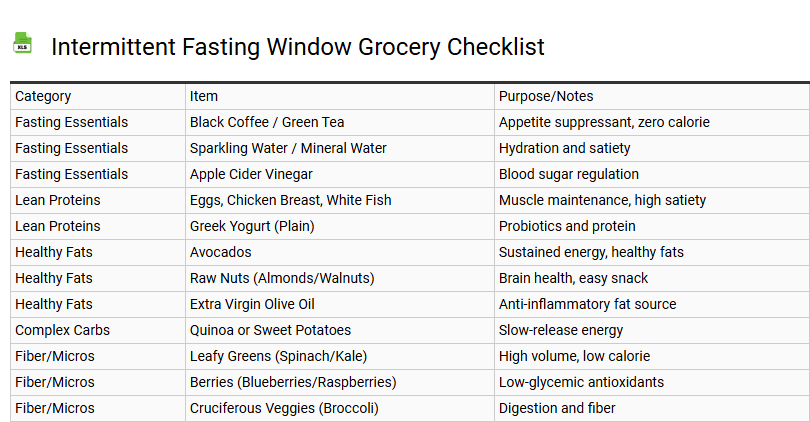
Intermittent Fasting Window Grocery Checklist
💾 Intermittent Fasting Window Grocery Checklist .xls
Streamlining your nutritional intake begins with a structured approach to the grocery store. This template prioritizes nutrient-dense whole foods that sustain energy and support metabolic health during your designated eating period. By focusing on items that promote satiety and replenish essential vitamins, you ensure each meal serves a specific physiological purpose.
- Proteins: Prioritize lean meats, eggs, or legumes to maintain muscle mass and stay full longer.
- Healthy Fats: Stock up on avocados, nuts, and olive oil to provide steady fuel and brain health support.
- Complex Carbohydrates: Choose high-fiber vegetables and ancient grains to stabilize blood sugar levels.
- Hydration: Include mineral water and herbal teas to manage hunger during fasting hours.
Using this checklist simplifies meal preparation, minimizes impulse purchases, and aligns your shopping habits with your time-restricted eating goals for better physical results.
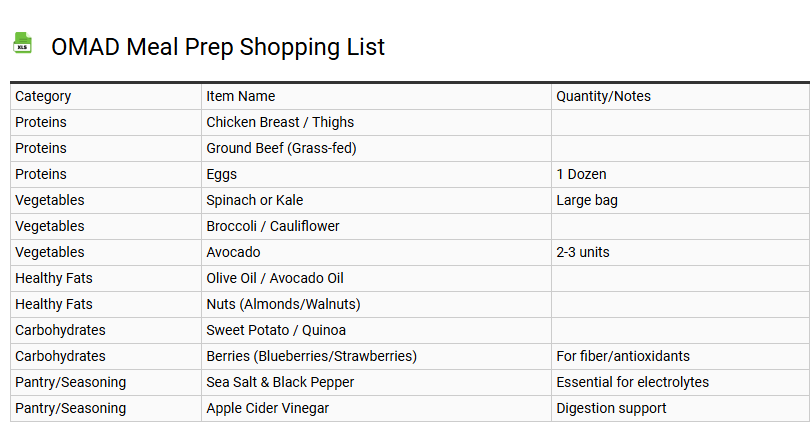
OMAD Meal Prep Shopping List
💾 OMAD Meal Prep Shopping List .xls
Creating an effective OMAD meal prep shopping list is essential for maintaining nutrient density during a one meal a day protocol. Since your entire caloric intake occurs within a single eating window, prioritizing satiety and metabolic health is paramount. A structured template ensures you meet daily macronutrient requirements while preventing nutrient deficiencies.
To optimize your intermittent fasting results, focus your grocery strategy on:
- High-quality proteins: Grass-fed beef, poultry, or wild-caught fish.
- Healthy fats: Avocados, nuts, and extra virgin olive oil for sustained energy.
- Fiber-rich vegetables: Leafy greens and cruciferous veggies to aid digestion.
- Complex carbohydrates: Sweet potatoes or quinoa for glycogen replenishment.
By bulk buying staples and utilizing portion control, you streamline your time-restricted eating lifestyle. This systematic approach to meal planning minimizes decision fatigue, ensuring your singular daily feast remains balanced, satisfying, and nutritionally complete.
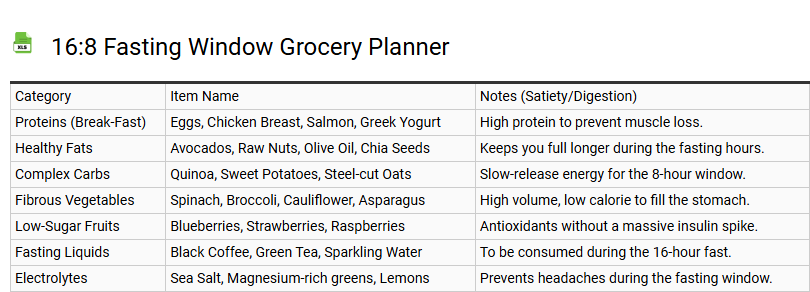
16:8 Fasting Window Grocery Planner
💾 16:8 Fasting Window Grocery Planner .xls
Optimizing your 16:8 intermittent fasting journey requires a strategic grocery planner to navigate your eight-hour eating window effectively. This template prioritizes nutrient density to ensure sustained energy during the sixteen-hour fasting period. By focusing on whole foods, such as lean proteins, healthy fats, and fiber-rich vegetables, you can support metabolic health and improve insulin sensitivity.
A well-organized meal prep list is essential for maintaining a calorie deficit and achieving sustainable weight loss. Including electrolytes and hydrating fluids helps manage the fasting window without fatigue. Aligning your grocery shopping with specific macronutrient goals ensures that every meal consumed within your restricted timeframe maximizes satiety and promotes cellular repair. This structured approach streamlines your nutrition strategy, helping you balance hunger hormones and stay consistent with your daily fasting schedule.
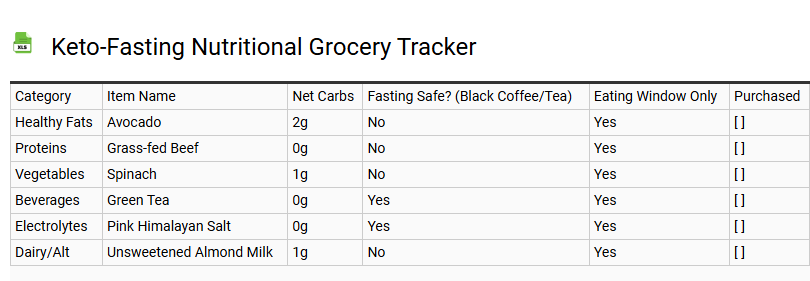
Keto-Fasting Nutritional Grocery Tracker
💾 Keto-Fasting Nutritional Grocery Tracker .xls
Optimize your metabolic health with this Keto-Fasting Nutritional Grocery Tracker, a comprehensive tool designed for maintaining ketosis and managing intermittent fasting windows. This template simplifies macro tracking by categorizing low-carb staples, healthy fats like MCT oil, and high-quality protein sources. By monitoring net carbs and macronutrient ratios, you can enhance metabolic flexibility and trigger autophagy effectively.
Ensure your shopping list prioritizes electrolyte balance and nutrient density to prevent the keto flu. Use the integrated food log to document caloric intake and feeding windows, ensuring alignment with your weight loss goals. Whether you are focused on insulin sensitivity or ketone levels, this digital pantry manager streamlines meal planning. Highlighting grass-fed meats, leafy greens, and healthy fats, this tracker is the ultimate resource for disciplined nutritional management and peak physiological performance.
Fast-Breaking Nutrient Dense Food List
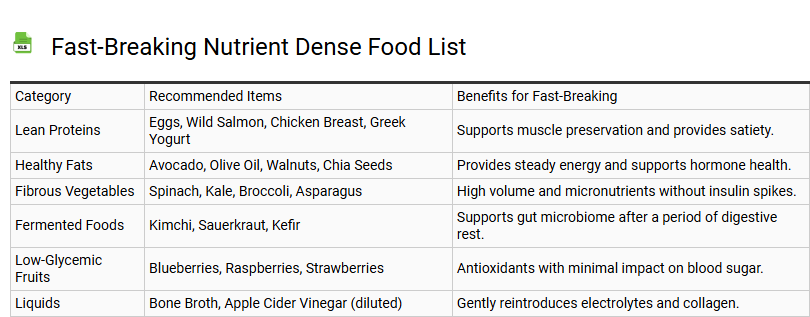
💾 Fast-Breaking Nutrient Dense Food List .xls
Breaking a prolonged fast necessitates a strategic approach to metabolic health and insulin sensitivity. Selecting nutrient-dense foods ensures the body transitions smoothly from a catabolic state to an anabolic one without triggering digestive distress. Prioritize bioavailable micronutrients and essential electrolytes to restore cellular balance and prevent refeeding syndrome.
- Bone Broth: Rich in collagen and amino acids to soothe the gut lining.
- Healthy Fats: Avocado and extra virgin olive oil provide sustained satiety and energy.
- Fermented Foods: Sauerkraut or kefir introduce beneficial probiotics for the gut microbiome.
- Lean Protein: Eggs or steamed fish offer high-quality protein for muscle preservation.
Focusing on low-glycemic options helps stabilize blood glucose levels and optimizes digestive enzyme activity. This template facilitates a controlled refeeding phase, maximizing the physiological benefits of your fasting protocol while ensuring peak nutritional absorption.
Electrolyte and Hydration Shopping Guide
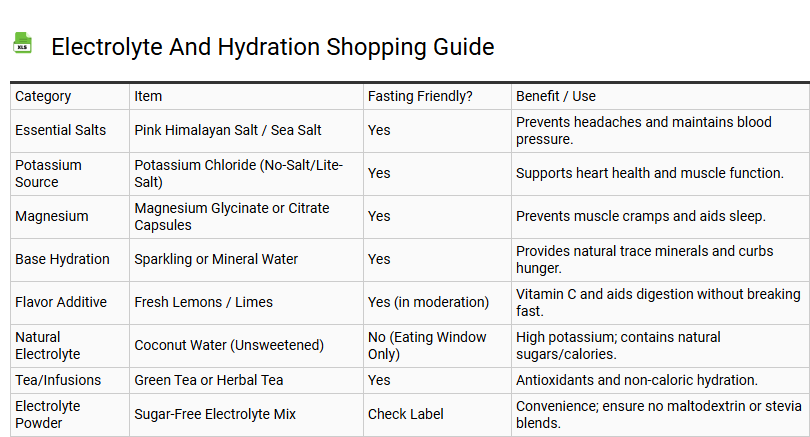
💾 Electrolyte and Hydration Shopping Guide .xls
Navigating the electrolyte supplementation market requires a focus on bioavailability and nutrient density. A comprehensive hydration shopping guide prioritizes essential minerals like magnesium, potassium, and sodium to maintain optimal fluid balance and prevent dehydration symptoms during high-intensity endurance activities or daily wellness routines.
- Ingredient Quality: Opt for sugar-free formulas containing trace minerals to support muscle recovery without unnecessary glucose spikes.
- Form Factors: Choose between portable effervescent tablets, cost-effective bulk powders, or ready-to-drink isotonic solutions based on your lifestyle.
- Dietary Needs: Verify vegan, keto-friendly, or paleo certifications to ensure compatibility with your nutritional goals.
Prioritizing clean labels and proper osmolality ensures efficient cellular absorption, significantly enhancing athletic performance and overall metabolic health.
Weekly Fasting Cycle Grocery Inventory
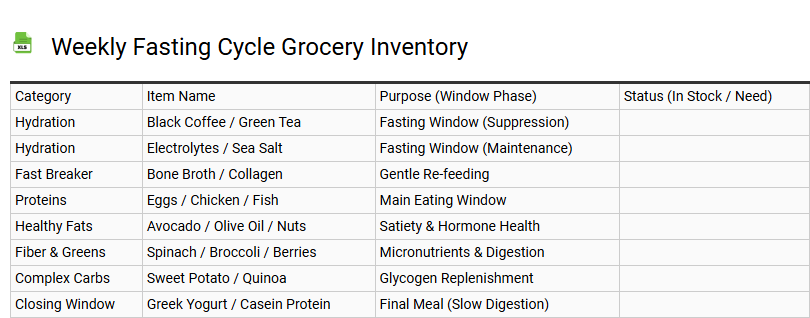
💾 Weekly Fasting Cycle Grocery Inventory .xls
Maintaining a weekly fasting cycle requires a strategic grocery inventory to optimize metabolic health and ensure a smooth transition between fasted and fed states. A well-organized template focuses on nutrient density and satiety, prioritizing pantry staples such as healthy fats, lean proteins, and complex carbohydrates. During the critical refeeding phase, tracking macronutrients helps prevent digestive discomfort while supporting a controlled caloric deficit.
Efficient meal prep involves auditing hydration essentials, including bone broth and electrolyte balance supplements, to maintain insulin sensitivity. By categorizing your grocery list into perishable and non-perishable whole foods, this food tracking system simplifies intermittent fasting. Utilizing an inventory ensures you have the necessary micronutrients on hand to break your fast safely, making your fasting protocol sustainable, organized, and biologically effective for long-term wellness goals.
High-Protein Fasting Window Shopping List
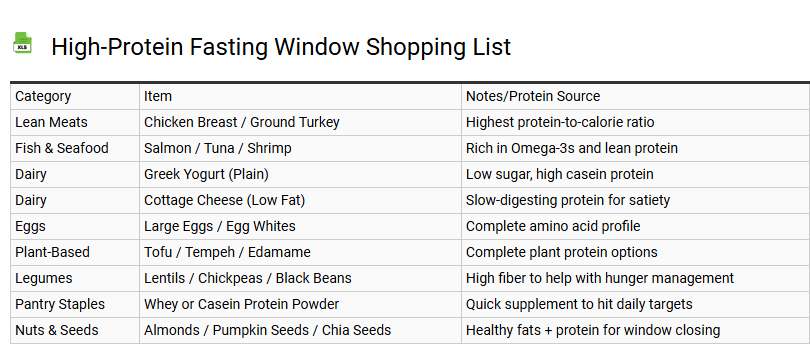
💾 High-Protein Fasting Window Shopping List .xls
Optimizing your intermittent fasting window requires a strategic grocery list centered on high-protein macronutrients. Prioritizing bioavailable amino acids is essential for stimulating muscle protein synthesis and maintaining prolonged satiety throughout your fasting duration. Focus on nutrient-dense staples that support metabolic health and lean muscle mass retention.
- Lean Animal Proteins: Chicken breast, wild-caught white fish, and turkey to provide essential amino acids.
- Dairy & Eggs: Greek yogurt, cottage cheese, and egg whites for slow-digesting casein and high biological value.
- Plant-Based Sources: Tempeh, edamame, and lentils for fiber-rich satiety and micronutrients.
- Healthy Supplements: Whey isolate or collagen peptides to hit daily protein targets efficiently.
Selecting these ketogenic-friendly ingredients helps stabilize blood glucose levels, improves insulin sensitivity, and prevents muscle catabolism during a caloric deficit. A well-curated shopping list ensures you break your fast with the nutritional density required for sustainable weight management.
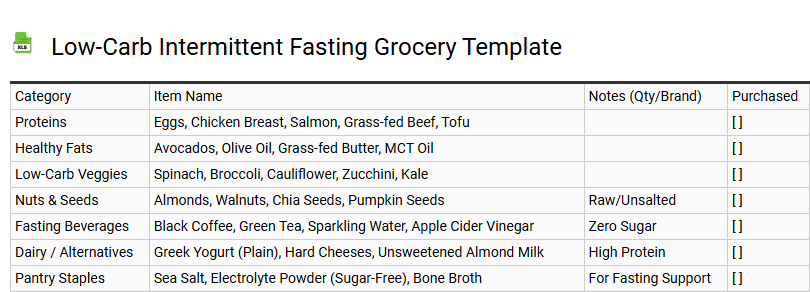
Low-Carb Intermittent Fasting Grocery Template
💾 Low-Carb Intermittent Fasting Grocery Template .xls
Mastering a low-carb intermittent fasting lifestyle requires a strategic grocery template designed to optimize metabolic flexibility and fat oxidation. Focus your shopping list on nutrient-dense whole foods that promote satiety and maintain stable blood sugar levels. Prioritize high-quality lean proteins, such as grass-fed beef and wild-caught salmon, to preserve muscle mass during your fasting window.
Incorporate healthy fats like avocados, MCT oil, and extra virgin olive oil to fuel ketosis and enhance insulin sensitivity. Your cart should feature fiber-rich cruciferous vegetables and leafy greens to provide essential micronutrients without spiking glucose. Don't overlook electrolytes-magnesium, potassium, and sodium-to ensure proper hydration throughout your feeding window. This keto-friendly template streamlines meal prep, helping you achieve sustainable weight management and peak energy levels through disciplined macro-tracking and clean eating habits.
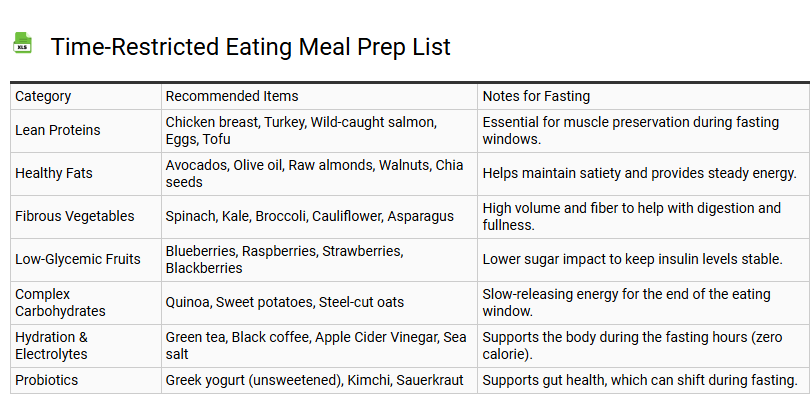
Time-Restricted Eating Meal Prep List
💾 Time-Restricted Eating Meal Prep List .xls
A structured time-restricted eating meal prep list is essential for aligning your nutritional intake with your body's circadian rhythm. By organizing nutrient-dense whole foods in advance, you ensure consistent metabolic health during your designated feeding window. Effective meal planning for intermittent fasting focuses on macronutrient balance to promote satiety and stabilize blood glucose levels throughout the fasting period.
- Prioritize lean proteins and healthy fats for sustained energy.
- Include fiber-rich vegetables to support digestive wellness.
- Prepare complex carbohydrates for glycogen replenishment.
- Monitor hydration and electrolyte balance during non-eating hours.
Utilizing a batch cooking strategy minimizes decision fatigue, preventing caloric overconsumption when the eating window opens. This systematic approach to portion control optimizes insulin sensitivity and supports long-term weight management goals through disciplined nutritional timing.
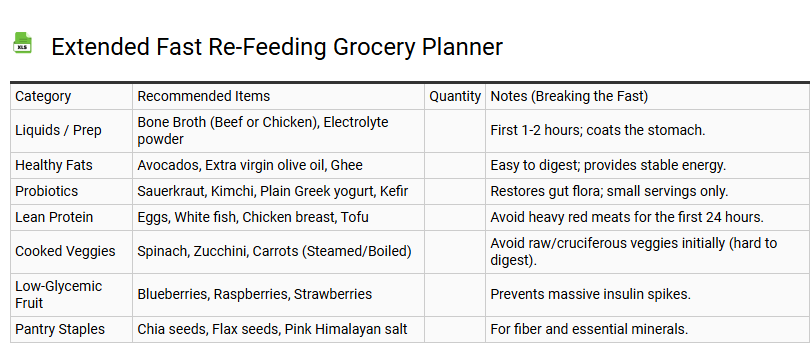
Extended Fast Re-Feeding Grocery Planner
💾 Extended Fast Re-Feeding Grocery Planner .xls
Optimize your metabolic transition with this Extended Fast Re-Feeding Grocery Planner. This systematic template is designed to restore nutrient density while maintaining insulin sensitivity. Prioritize digestive enzymes and probiotics to support the gut microbiome during the critical re-entry phase. Your shopping list should emphasize bone broth for collagen and electrolyte balance, specifically targeting potassium and magnesium to prevent refeeding syndrome.
Focus on lean proteins such as wild-caught fish and eggs, paired with healthy fats like avocado and medium-chain triglycerides (MCTs). Incorporate low-glycemic index vegetables to manage macronutrient ratios without triggering significant glucose spikes. By utilizing this structured approach, you ensure a safe transition from intermittent fasting or prolonged restriction, promoting cellular repair and sustained energy levels through high-quality, bioavailable whole foods.
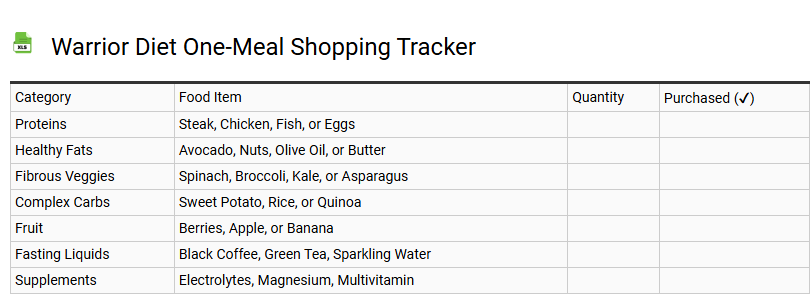
Warrior Diet One-Meal Shopping Tracker
💾 Warrior Diet One-Meal Shopping Tracker .xls
The Warrior Diet One-Meal Shopping Tracker is an essential tool for mastering the 20:4 intermittent fasting protocol. Designed for the specific needs of the overeating phase, this template ensures your nightly feast is nutrient-dense and balanced. Focus your grocery list on high-quality macronutrients, including lean proteins, healthy fats, and complex carbohydrates to maximize satiety and metabolic health. By tracking whole foods and fibrous vegetables, you can effectively manage caloric intake within your four-hour feeding window. This systematic approach to meal planning supports the transition from the undereating phase to recovery, providing the micronutrients and electrolytes necessary for cellular repair and energy. Utilize this tracker to streamline your shopping trips, eliminate decision fatigue, and ensure every ingredient aligns with your circadian rhythm and fitness goals for peak performance.
Circadian Rhythm Fasting Grocery Checklist
💾 Circadian Rhythm Fasting Grocery Checklist .xls
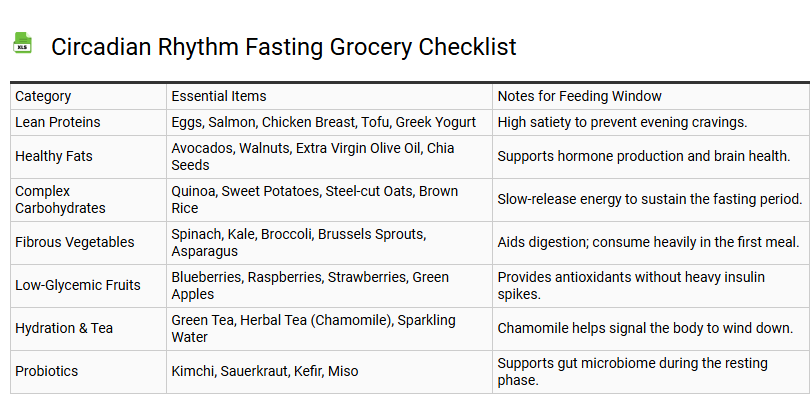
Optimizing your nutrition according to your internal biological clock enhances metabolic health and energy levels. A circadian rhythm fasting grocery checklist prioritizes consuming nutrient-dense whole foods during daylight hours to align with natural cortisol and insulin sensitivity peaks. Focus on high-quality proteins, healthy fats, and fiber-rich complex carbohydrates that support stable blood sugar.
Include magnesium-rich leafy greens and tryptophan-heavy poultry to aid evening melatonin production. When shopping, select seasonal produce and antioxidant-packed berries to combat oxidative stress. Avoid processed sugars and late-night stimulants that disrupt sleep cycles. By synchronizing your caloric intake with the sun's trajectory, you improve digestive efficiency and cellular repair. This strategic approach to time-restricted feeding ensures your pantry is stocked with ingredients that promote hormonal balance, weight management, and restorative rest, turning your kitchen into a vital tool for metabolic longevity and circadian alignment.
Protein-Sparing Modified Fast Shopping List
💾 Protein-Sparing Modified Fast Shopping List .xls
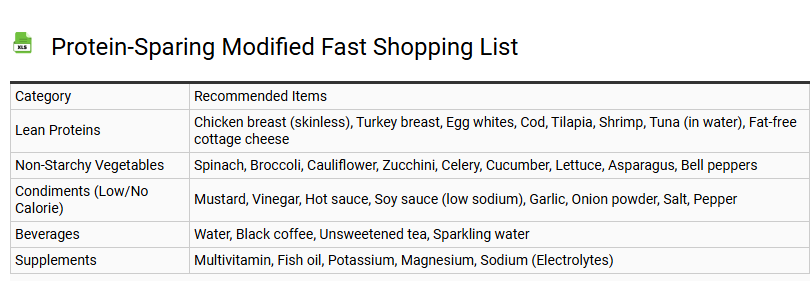
This shopping list template facilitates a successful Protein-Sparing Modified Fast (PSMF) by prioritizing high-quality lean protein sources while minimizing dietary fats and carbohydrates. To optimize metabolic health and preserve muscle mass, focus your grocery cart on bioavailable amino acids. Essential staples include skinless chicken breast, egg whites, white fish, and extra-lean ground turkey.
Incorporate non-starchy vegetables such as spinach, kale, and cucumbers to enhance nutrient density and promote satiety without exceeding caloric limits. It is crucial to include electrolytes-specifically sodium, potassium, and magnesium-to maintain fluid balance during this rapid weight loss phase. For supplemental support, select a whey protein isolate with minimal additives. This structured approach ensures a significant caloric deficit while providing the necessary micronutrients to support physiological function during a strict ketogenic protocol and professional meal planning.
Autophagy Support Grocery Inventory
💾 Autophagy Support Grocery Inventory .xls
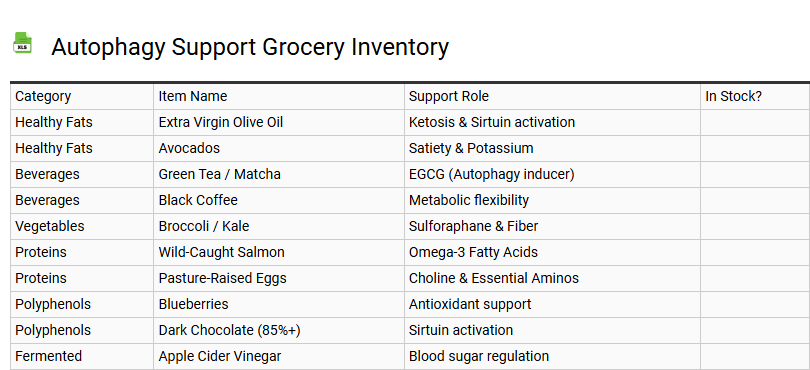
This grocery inventory is designed to prioritize nutrients that facilitate cellular renewal and efficient metabolic recycling. By organizing your pantry around specific functional foods, you can consistently provide the biological triggers necessary for internal cleansing and protein degradation processes.
- Healthy Lipids: Focus on extra virgin olive oil, avocados, and walnuts to provide clean energy without spiking insulin.
- Cruciferous Vegetables: Maintain a steady supply of broccoli, cauliflower, and Brussels sprouts to support detoxification pathways.
- Polyphenol Sources: Stock green tea, turmeric, and dark berries to assist in cellular repair and reduce oxidative stress.
- Fiber-Rich Legumes: Include lentils and beans to support gut health while maintaining stable glucose levels.
Utilizing this structured list ensures your kitchen remains stocked with essential items that encourage the body to identify and recycle damaged cellular components, promoting long-term vitality and systemic balance.
Optimizing your intermittent fasting grocery list template is essential for maintaining metabolic flexibility. Focus on nutrient-dense whole foods like lean proteins, healthy fats, and high-fiber vegetables to regulate blood sugar levels during your eating window. Prioritizing low-glycemic index ingredients and essential electrolytes helps prevent energy crashes and curb hunger pangs effectively.
A structured shopping plan simplifies meal prep, ensuring every calorie supports your wellness goals. Utilize this template to streamline nutrition, improve satiety, and achieve sustainable weight management results through disciplined, mindful consumption.