
Comprehensive Marathon Training Plan Spreadsheet Template
Preparing for a 26.2-mile challenge requires more than just grit; it demands a structured marathon preparation spreadsheet. Organizing your running schedule and mileage tracking within a single dashboard ensures you hit critical endurance building milestones. Use this digital tool to monitor your taper period, hydration strategy, and split times effectively. By documenting every recovery phase, you transform a daunting training plan into a manageable path toward your race day goals. Please check out our already made variation of templates below.
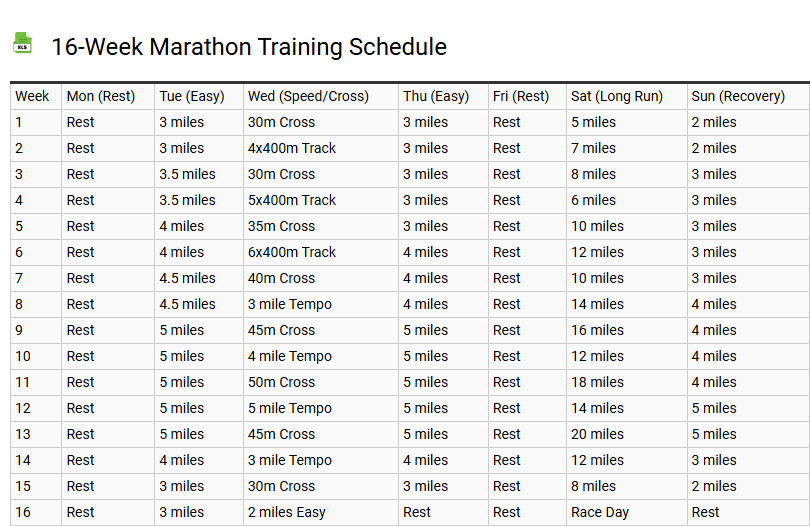
16-Week Marathon Training Schedule
💾 16-Week Marathon Training Schedule .xls
A comprehensive 16-week marathon training schedule leverages periodized programming to build peak endurance and cardiovascular efficiency. This timeframe allows for a gradual increase in weekly mileage, facilitating essential physiological adaptations while minimizing injury risk. The curriculum balances high-intensity interval training and tempo runs to improve lactate threshold with progressive long runs designed to enhance aerobic capacity. Integration of cross-training and scheduled recovery weeks ensures musculoskeletal strength and prevents burnout. As the event approaches, a strategic taper phase optimizes glycogen stores and muscle repair. This template emphasizes fueling strategies, hydration, and pacing, providing a blueprint for runners to transition from base building to race day readiness. By following this structured progression, athletes develop the stamina and mental fortitude required to successfully conquer the 26.2-mile distance.
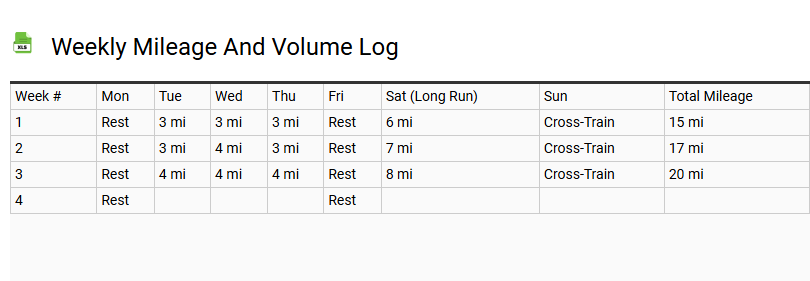
Weekly Mileage and Volume Log
💾 Weekly Mileage and Volume Log .xls
A weekly mileage and volume log serves as a foundational tool for athletes to monitor cumulative fatigue and optimize endurance training. By systematically tracking daily distance and workout duration, runners can visualize aerobic base development while ensuring proper periodization. This data-driven approach to monitoring training load helps balance intensity distribution, preventing overtraining syndrome and managing chronic workload effectively.
An optimized log captures essential running metrics, including:
- Total weekly volume and vertical elevation gain.
- Rest intervals and recovery cycles.
- Physiological adaptations to specific workout intensities.
- Taper phase adjustments for peak performance.
Utilizing a structured template facilitates injury prevention by highlighting sudden spikes in mechanical stress. Maintaining a detailed record of aerobic capacity ensures consistent progress toward long-term athletic goals and improved cardiovascular efficiency.
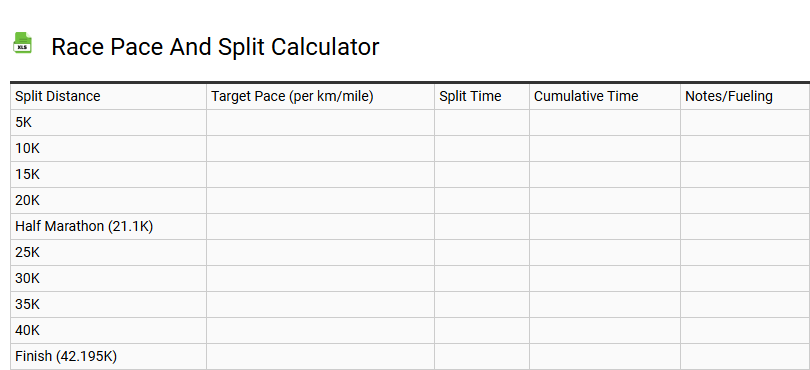
Race Pace and Split Calculator
💾 Race Pace and Split Calculator .xls
This race pace and split calculator serves as an essential tool for athletes aiming to optimize their running performance. By inputting your target finish time and total distance-whether for a 5k, marathon, or ultramarathon-the template generates precise mile splits and kilometer markers. Mastering your pacing strategy is vital for maintaining an ideal aerobic threshold and achieving negative splits during competition.
Designed for endurance training and track intervals, this utility provides accurate velocity data and time prediction metrics. Runners can adjust speed variables to visualize how different intensities impact their overall cardiovascular output. Utilizing this performance metric template ensures a data-driven approach to athletic conditioning and race-day execution, helping you stay on track for every timed interval throughout your training cycle.
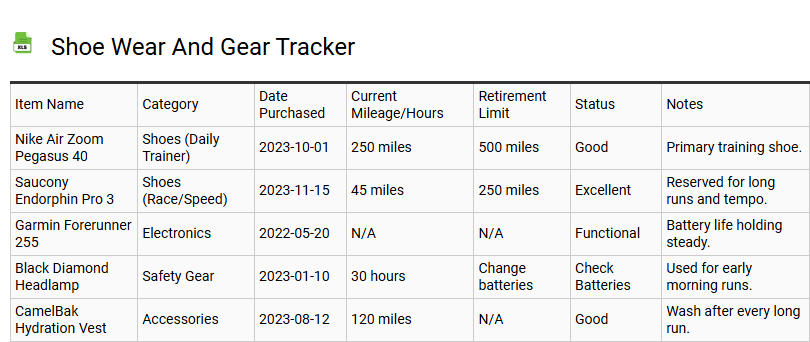
Shoe Wear and Gear Tracker
💾 Shoe Wear and Gear Tracker .xls
Optimize your athletic performance with this comprehensive Shoe Wear and Gear Tracker template. Designed for runners and fitness enthusiasts, this tool monitors mileage to prevent overuse injuries caused by midsole compression or outsole degradation. By logging every session, you can track the lifespan of various athletic footwear, from trail runners to road shoes, ensuring cushioning and structural integrity remain intact.
The template utilizes performance metrics to manage gear rotation and equipment durability. Users can set replacement alerts based on total distance or purchase date, maintaining optimal running economy. Seamlessly record surface type impacts and sync with GPS tracking data for precise equipment maintenance. This digital log serves as a vital fitness gear management system, promoting injury prevention through proactive footwear retirement and evidence-based gear tracking.
Daily Nutrition and Hydration Diary
💾 Daily Nutrition and Hydration Diary .xls
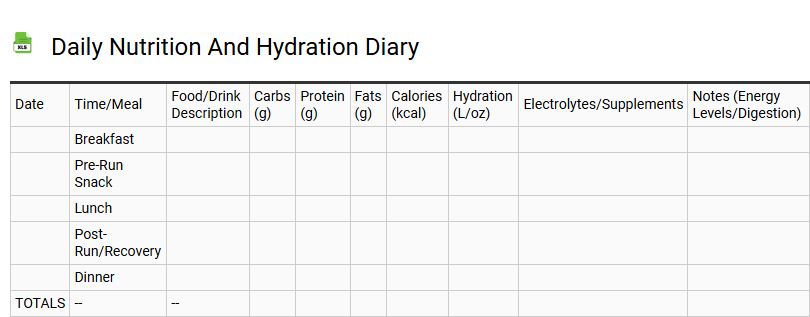
A daily nutrition and hydration diary serves as a comprehensive tool for monitoring dietary habits and fluid intake. By utilizing this template, users can systematically record their meal logging, caloric intake, and macronutrient balance. This food journal encourages mindful eating by tracking portion sizes and nutrient density.
Integrating a hydration tracker ensures optimal fluid consumption, which is vital for metabolic function and energy levels. Precise documentation of vitamins, minerals, and water intake helps identify nutritional gaps. This structured approach to wellness tracking facilitates long-term health goals through consistent data analysis. Whether you are focused on weight management or athletic performance, maintaining an accurate record of your daily nourishment and hydration levels provides the insights necessary for informed lifestyle adjustments and improved metabolic health.
Interval Training and Speed Work Log
💾 Interval Training and Speed Work Log .xls
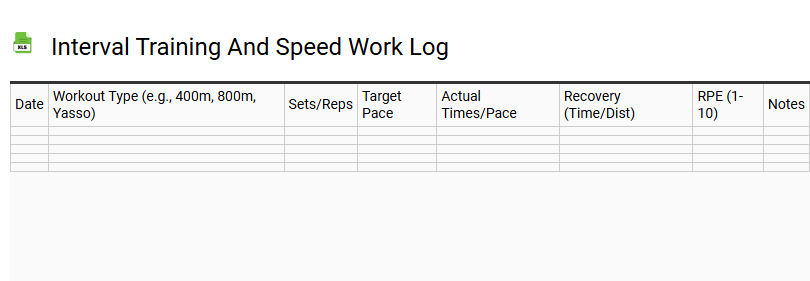
Optimizing athletic performance requires a structured approach to monitoring high-intensity intervals and anaerobic threshold sessions. This log serves as a comprehensive tool for tracking work-to-rest ratios, split times, and VO2 max development. By documenting each sprint repeat and recovery period, athletes can precisely measure improvements in cardiovascular endurance and explosive power.
The template prioritizes data-driven insights, allowing you to record key metrics such as:
- Heart rate fluctuations and peak intensity.
- Perceived exertion levels for fatigue management.
- Total training volume across sets and reps.
- Consistent pacing strategies for specific distances.
Consistent use of this speed work log ensures systematic progression, helping you refine running economy and boost aerobic capacity while preventing overtraining through detailed performance monitoring.
Heart Rate Zone Analysis Sheet
💾 Heart Rate Zone Analysis Sheet .xls
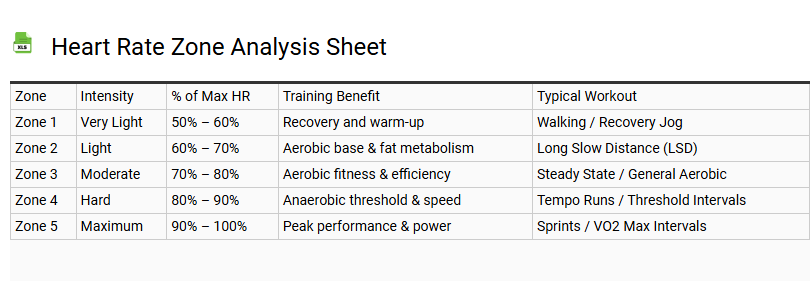
This Heart Rate Zone Analysis Sheet serves as a sophisticated framework for monitoring cardiovascular fitness and optimizing athletic performance. By integrating key metrics such as maximum heart rate (MHR) and resting heart rate (RHR), the template utilizes the Karvonen formula to establish precise intensity levels. Users can track physiological adaptations across five distinct zones, ranging from active recovery to anaerobic threshold training. This structured approach allows for the granular analysis of aerobic capacity, metabolic efficiency, and VO2 max progression. By logging training data within these targeted heart rate ranges, athletes can ensure their workouts effectively stimulate fat oxidation or peak power output. Utilizing this analytical tool helps prevent overtraining, manages training load, and enhances recovery intervals, ultimately fostering superior endurance and heart rate variability improvements through data-driven insights.
Cross-Training and Strength Workout Plan
💾 Cross-Training and Strength Workout Plan .xls
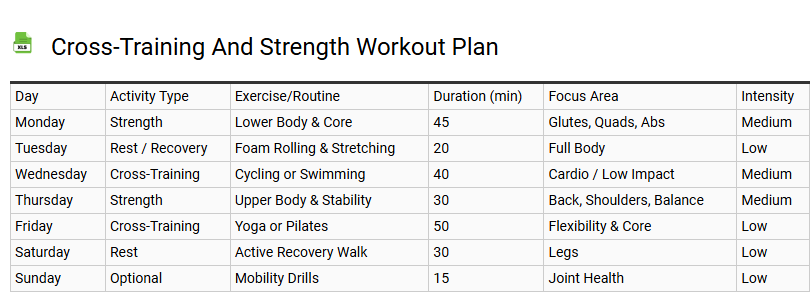
This comprehensive cross-training and strength workout plan integrates diverse modalities to enhance athletic performance and physical longevity. By blending high-intensity interval training (HIIT) with fundamental resistance exercises, the program targets muscle hypertrophy while simultaneously improving cardiovascular endurance.
Utilizing this structured template allows athletes to track progressive overload across compound movements-such as squats and deadlifts-interspersed with functional fitness drills that promote joint mobility and core stability. This holistic methodology prevents overtraining through strategic active recovery phases, ensuring consistent gains in power and stamina.
Whether focusing on metabolic conditioning or specific muscle group isolation, the framework adapts to various fitness levels. It balances unilateral patterns with plyometrics to mitigate injury risks and optimize body composition, challenging both the aerobic and anaerobic systems within a periodized schedule.
Race Day Logistics and Packing Checklist
💾 Race Day Logistics and Packing Checklist .xls
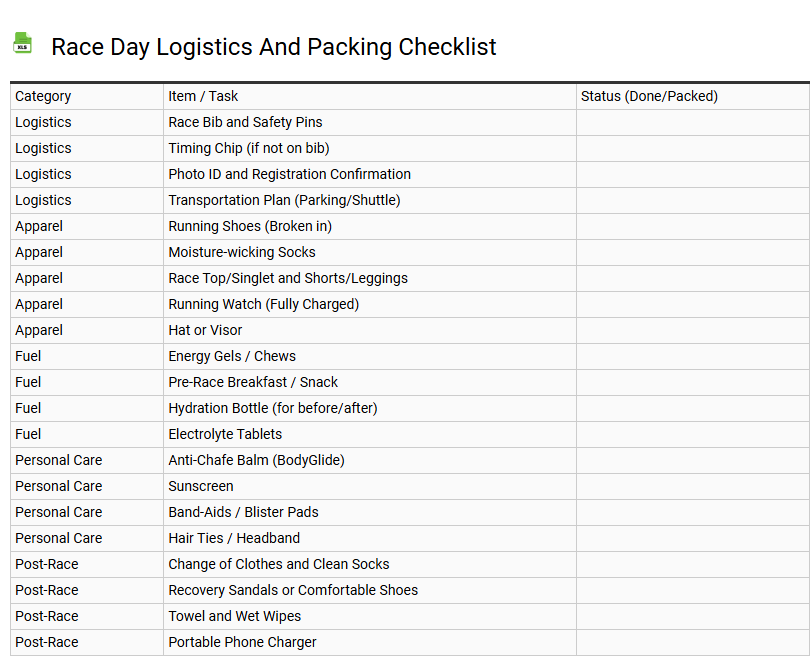
Success on the course begins with meticulous race day logistics and a comprehensive packing checklist. Streamlining your pre-race routine ensures you arrive at the starting corral focused and stress-free. Essential performance gear includes your registered bib number, timing chip, and moisture-wicking apparel tailored to the weather forecast.
To maintain peak energy levels, your kit must prioritize taper-week nutrition and on-course hydration strategies, such as energy gels, electrolytes, and salt tabs. Don't overlook technical items like a calibrated GPS watch and anti-chafe balm. Logistics should account for travel time, parking permits, and bag drop procedures.
- Pre-race: Warm-up layers, sun protection, and comfortable footwear.
- During: Fueling supplies and hydration flasks.
- Post-race: Recovery protein, dry clothes, and compression gear.
By auditing your equipment checklist 24 hours prior, you safeguard against forgotten essentials, allowing for a seamless transition from the athlete village to the finish line.
Body Metric and Weight Progress Chart
💾 Body Metric and Weight Progress Chart .xls
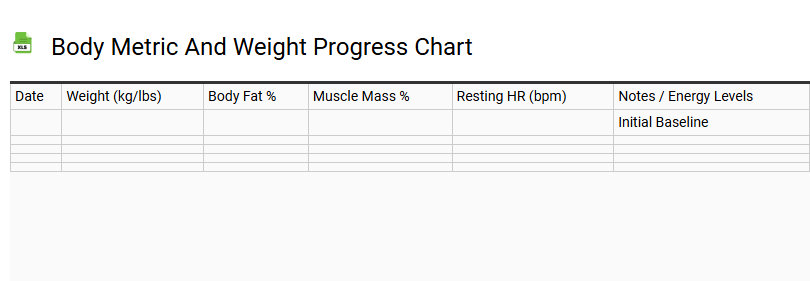
A Body Metric and Weight Progress Chart acts as a sophisticated analytical tool for individuals dedicated to fitness tracking and body composition optimization. By systematically recording anthropometric measurements-including waist, hip, and chest circumference-users can monitor biometric data trends that traditional scales often overlook. This template facilitates the calculation of Body Mass Index (BMI), lean muscle mass, and body fat percentage, providing a granular view of physical transformation. Integrating these health metrics into a data-driven dashboard supports effective goal setting and progress visualization. Whether focusing on weight management, hypertrophy, or overall wellness, this structured approach ensures precise monitoring of physiological changes, fostering long-term motivation and informed adjustments to nutrition and exercise protocols for a successful health journey.
Injury Prevention and Recovery Status Log
💾 Injury Prevention and Recovery Status Log .xls
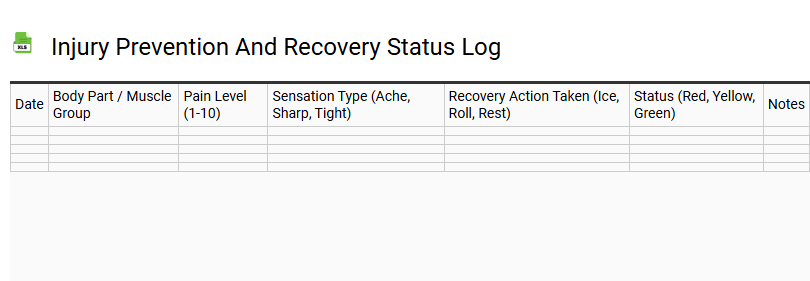
A comprehensive injury prevention and recovery status log serves as a vital documentation tool for optimizing athletic longevity. By consistently monitoring physical readiness and rehabilitation milestones, individuals can effectively mitigate risk factors associated with overtraining and repetitive strain. This template facilitates the precise tracking of daily pain levels, localized muscle soreness, and joint mobility to ensure peak biomechanical health.
Integrating subjective feedback regarding fatigue with objective metrics like range of motion allows for data-driven workload management. Whether navigating an acute healing phase or managing chronic tissue tension, detailed records support informed decision-making during the return-to-play process. Utilizing this log encourages proactive prehab routines and adherence to physical therapy protocols. Maintaining a longitudinal history of inflammatory responses and functional capacity ensures a structured transition from clinical recovery to high-performance training, fostering long-term resilience and physiological balance.
Training Intensity and RPE Tracker
💾 Training Intensity and RPE Tracker .xls
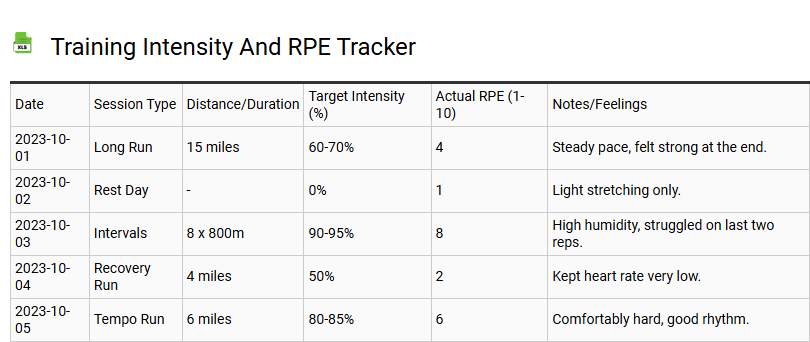
Optimizing your fitness performance requires precise monitoring of training intensity and exertion. This RPE (Rate of Perceived Exertion) tracker template utilizes autoregulation principles to help athletes balance progressive overload with essential recovery management. By documenting repetitions in reserve (RIR) alongside traditional lifting volume, you can adjust your strength training sessions based on daily physiological readiness.
- Monitor muscle hypertrophy stimulus through consistent data logging.
- Utilize the Borg scale to quantify subjective workload difficulty.
- Refine your workout log with qualitative intensity feedback.
- Minimize overtraining risks by analyzing exercise data trends.
Integrating this structured approach into your routine facilitates sustainable athletic development and long-term gains. By transforming raw effort into actionable performance metrics, lifters can ensure every set contributes effectively toward their body composition and strength goals without compromising central nervous system health.
Marathon Finish Time Predictor
💾 Marathon Finish Time Predictor .xls
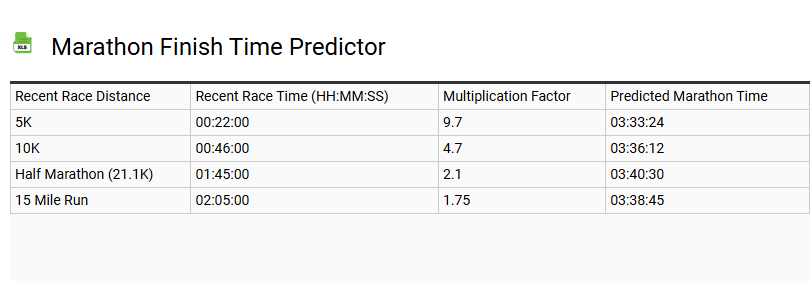
Utilize this marathon finish time predictor to accurately estimate your athletic performance across the iconic 26.2-mile distance. By inputting recent race results from shorter distances like a 5K or half-marathon, the tool leverages Riegel's formula and running economy metrics to forecast your potential race pace. This data-driven approach helps runners refine their endurance training and establish a realistic race strategy to avoid the dreaded fatigue of hitting the wall. Understanding your projected finish time is essential for managing aerobic capacity and setting precise target splits. Whether you are aiming for a personal best or completing your first event, these insights account for metabolic efficiency and cardiovascular load. Use this performance estimation tool to align your tapering phase and training volume, ensuring you reach the finish line with optimized running efficiency.
Annual Running Mileage Summary
💾 Annual Running Mileage Summary .xls
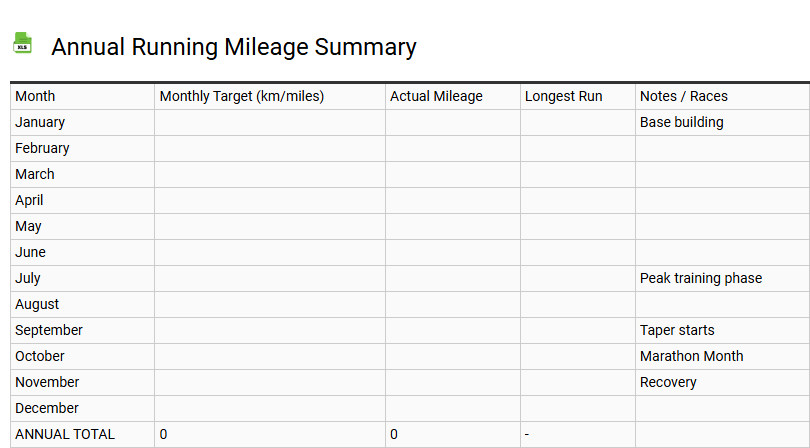
An effective Annual Running Mileage Summary serves as a comprehensive training log designed for athletes tracking long-term endurance progress. By documenting every workout session, runners can visualize their cumulative distance, weekly volume, and aerobic base development. This structured data visualization helps identify seasonal trends and optimize performance metrics for upcoming marathons or trail races.
Monitoring total mileage is crucial for preventing overtraining syndrome while ensuring consistent cardiovascular health improvements. Whether you are chasing personal records (PRs) or maintaining a run streak, this template provides the necessary statistical insights to analyze pacing data and recovery periods. Refine your fitness journey by documenting shoe turnover and elevation gain, creating a holistic overview of your athletic achievement and aerobic capacity throughout the calendar year to ensure peak physical conditioning.
Taper Period Activity Planner
💾 Taper Period Activity Planner .xls
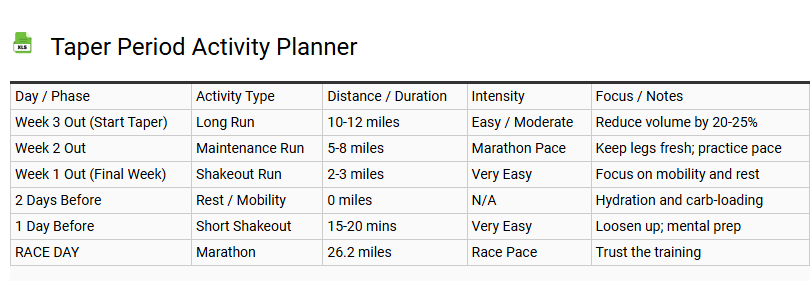
A taper period activity planner is a vital tool for athletes seeking peak performance through a systematic reduction in training volume. This structured tapering phase facilitates essential physiological repair and the replenishment of glycogen stores. By utilizing a specialized template, competitors can ensure race readiness through the principle of supercompensation, where the body rebounds from intense physical stress.
The planner emphasizes maintaining training intensity while significantly decreasing overall mileage or workload. This strategic deload period promotes metabolic recovery and neuromuscular efficiency, preventing overtraining syndrome. Incorporating active recovery sessions into your tapering schedule helps maintain aerobic capacity without inducing fatigue. Ultimately, this endurance sports strategy optimizes your physical state, ensuring you reach the starting line with maximum power, mental freshness, and metabolic efficiency for your goal event.
Fueling and Supplementation Schedule
💾 Fueling and Supplementation Schedule .xls
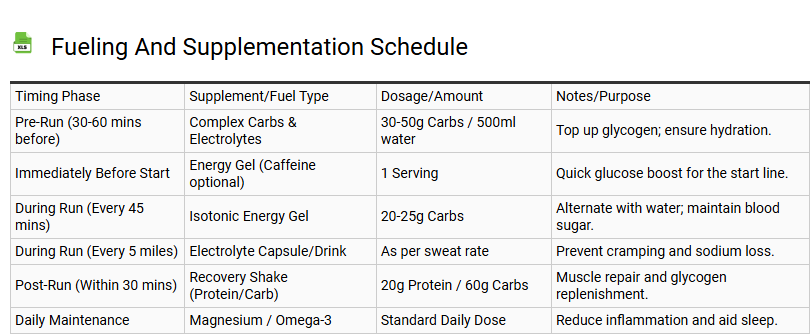
An optimized fueling and supplementation schedule serves as a strategic blueprint for enhancing metabolic efficiency and athletic performance. By synchronizing nutrient timing with training intensity, this template ensures peak glycogen replenishment and accelerated muscle protein synthesis. Precise windows for caloric intake and macronutrient distribution are essential to sustain high energy levels throughout endurance or hypertrophy cycles.
Integrating hydration protocols with critical electrolyte balance prevents premature fatigue, while targeted supplementation-including branched-chain amino acids and micronutrients-supports rapid cellular repair. This systematic approach focuses on bio-availability and digestive comfort, transforming standard dietary habits into a performance-driven regimen. By tracking pre-workout primers and post-workout recovery aids, athletes can maintain hormonal balance and achieve consistent physiological adaptations, ensuring every gram of nutrition serves a functional purpose in their fitness journey.
V02 Max and Fitness Level Tracker
💾 V02 Max and Fitness Level Tracker .xls
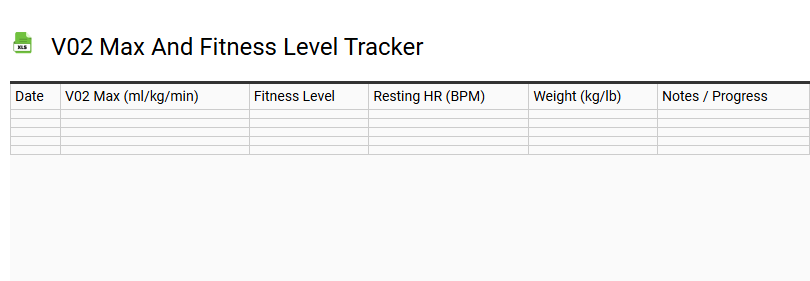
This VO2 Max and Fitness Level Tracker provides a sophisticated framework for monitoring cardiovascular health and aerobic capacity. By systematically logging peak oxygen consumption during high-intensity exertion, users can visualize their athletic progression and metabolic efficiency over time.
The template simplifies the documentation of heart rate zones and physiological milestones, enabling precise adjustments to training loads. Tracking these core metrics is essential for optimizing endurance performance and maintaining peak physical condition.
Whether you are an elite athlete or a fitness enthusiast, analyzing biometric data helps identify critical trends in your aerobic threshold and overall stamina. Use this structured tool to quantify improvements, establish realistic fitness benchmarks, and enhance your long-term wellness strategy through data-driven insights into your body's oxygen utilization and respiratory efficiency.
Elevation Gain and Route Profile Log
💾 Elevation Gain and Route Profile Log .xls
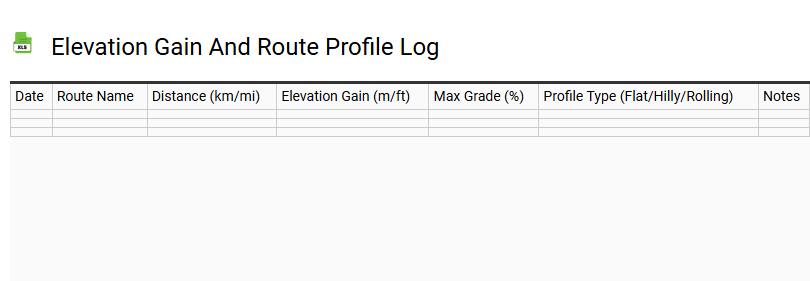
Streamline your outdoor adventures with a dedicated elevation gain and route profile log. This structural template allows athletes and explorers to meticulously record cumulative vertical ascent, altitude fluctuations, and specific incline gradients encountered along any trail. By integrating topographical data with distance tracking, users can visualize the terrain profile to assess trail difficulty and overall physical exertion.
Key features for comprehensive terrain analysis include:
- Precise vertical gain and loss metrics for performance reviews.
- Detailed topography mapping for improved backcountry navigation.
- High-resolution gradient charts to monitor climb intensity.
- GPS data synchronization for accurate altitude change tracking.
Whether training for a mountain peak or logging cycling performance, this log provides essential insights into total ascent, elevation loss, and the steepness of your journey.
Rest Day and Sleep Quality Monitor
💾 Rest Day and Sleep Quality Monitor .xls
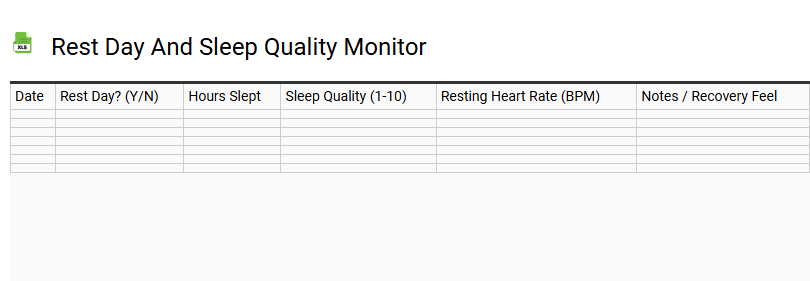
Optimizing physical recovery requires a systematic approach to tracking biometric data and sleep hygiene. This specialized monitoring template captures vital metrics such as heart rate variability (HRV) and REM cycle duration to align your circadian rhythm. By documenting restorative rest periods and daily exertion levels, users can mitigate overtraining risks while accelerating muscle repair.
Each entry evaluates sleep score trends and nocturnal disturbances, offering a holistic perspective on rejuvenation. Integrating inputs from wearables ensures precise measurement of deep sleep stages and slumber efficiency. This strategic documentation method transforms recovery statistics into actionable wellness insights, balancing high-intensity training with essential downtime. Utilize this log to refine nocturnal habits and enhance metabolic health through consistent, high-quality rest cycles and data-driven performance management.
Race Registration and Travel Budgeter
💾 Race Registration and Travel Budgeter .xls
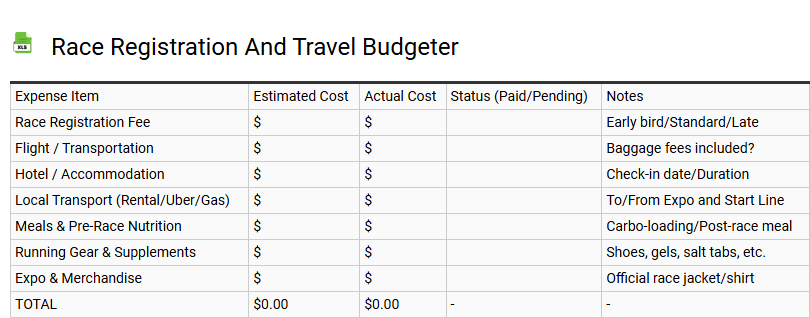
Managing an athletic event calendar requires precision beyond physical training. This race registration and travel budgeter serves as a comprehensive financial tracker for competitive runners, triathletes, and endurance athletes. By centralizing entry fees, lodging expenses, and airfare costs, competitors can accurately forecast their total investment for the upcoming season.
- Monitor early-bird registration discounts and bib transfer deadlines.
- Calculate transportation logistics, including fuel, car rentals, and shuttle fees.
- Account for pre-race nutrition, supplementation, and race-day gear requirements.
- Allocate funds for travel insurance and contingency expenses for destination races.
Utilizing a strategic budgeting tool ensures financial constraints never hinder peak performance. Streamlining itinerary planning and event logistics allows athletes to maintain focus on their training blocks while ensuring fiscal accountability for every marathon or regional championship on their schedule.
A robust marathon preparation spreadsheet serves as a vital digital organizer for endurance athletes. By integrating a structured training plan with a detailed mileage tracker and pace calculator, runners can effectively monitor peak performance. This template simplifies complex data, from tapering schedules to hydration logs, ensuring a comprehensive race day strategy. Prioritizing injury prevention through recovery monitoring, this tool empowers you to master the 26.2-mile distance. Streamline your journey toward a personal best with this essential data-driven resource.