
Mobility and Strength Tracking Template: Monitoring Performance and Progress
Achieve peak physical performance by utilizing a dedicated mobility and strength tracker. This professional template streamlines the process of monitoring functional range of motion alongside resistance training progression. By meticulously documenting flexibility milestones and muscle endurance gains, you can identify recovery needs and prevent injury through data-driven insights. Elevate your fitness journey with a structured approach to joint health, exercise consistency, and athletic longevity. Discover the ideal layout for your specific training goals and check already made variation of templates below.
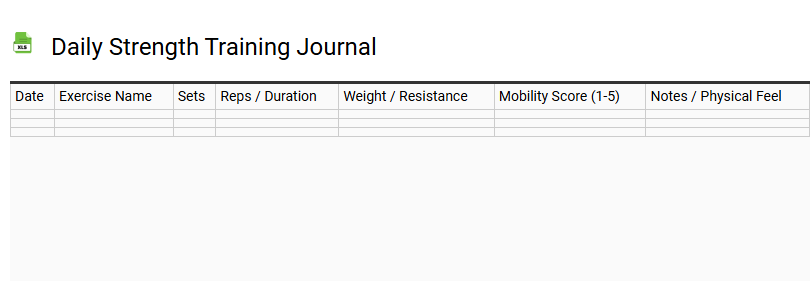
Daily Strength Training Journal
💾 Daily Strength Training Journal .xls
A daily strength training journal is a vital tool for athletes prioritizing progressive overload and consistent muscle hypertrophy. By utilizing a structured workout log, you can meticulously track exercise selection, total volume, and specific performance metrics. A high-quality template should record key data points including:
- Sets and Repetitions: Quantifying workload to ensure physiological stimulus.
- Weight Lifted: Monitoring incremental resistance increases over time.
- Rest Intervals: Standardizing recovery periods between active efforts.
- RPE (Rate of Perceived Exertion): Gauging subjective intensity to prevent overtraining.
Documenting these variables allows for precise adjustments in your fitness routine, whether your focus is bodybuilding or powerlifting. This data-driven approach helps overcome plateaus, enhances recovery management, and ensures every gym session aligns with your long-term fitness goals and peak physical conditioning.
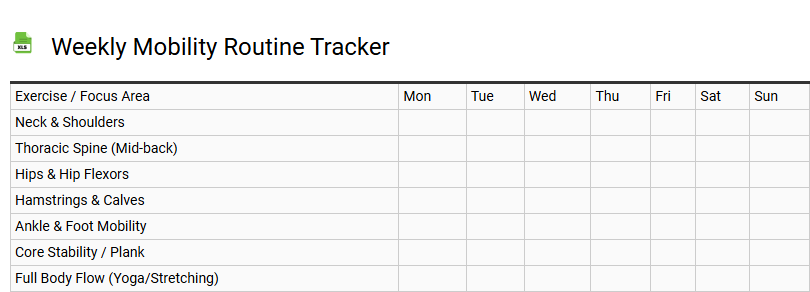
Weekly Mobility Routine Tracker
💾 Weekly Mobility Routine Tracker .xls
Implementing a structured Weekly Mobility Routine Tracker is vital for optimizing range of motion and ensuring long-term joint health. This template facilitates the systematic logging of dynamic stretching and active recovery protocols to enhance overall physical performance.
By monitoring daily movement patterns, users can effectively identify areas of stiffness and track progress in functional strength exercises. Key components of a high-performance mobility log include:
- Specific flexibility exercises targeting major muscle groups.
- Time-based metrics for recovery protocols and foam rolling.
- Subjective scales for joint lubricity and muscle tension levels.
Consistent use of this tracker promotes injury prevention and ensures movement longevity through disciplined habits. Integrating these corrective exercises into your fitness architecture fosters peak biomechanical efficiency and sustainable athletic development.
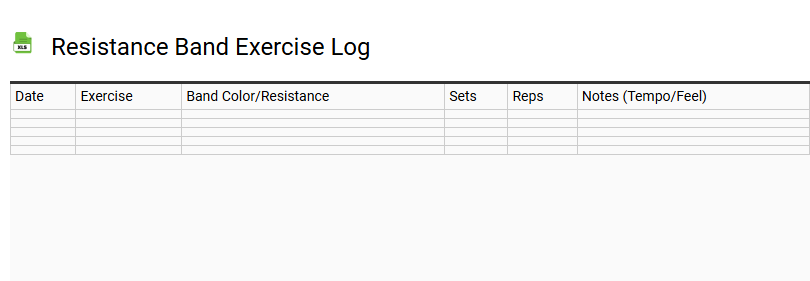
Resistance Band Exercise Log
💾 Resistance Band Exercise Log .xls
A Resistance Band Exercise Log serves as a vital instrument for monitoring strength training progression. This structured template enables users to meticulously document tension levels, sets, and repetitions across various elastic band movements. By consistently recording data, individuals can effectively implement progressive overload, a cornerstone for muscle hypertrophy and functional endurance.
Key components of an optimized workout tracker include:
- Band Color/Intensity: Categorizing resistance levels from light to heavy.
- Anchor Points: Noting high, medium, or low positioning for targeted muscle engagement.
- Repetition Counts: Tracking volume to ensure metabolic stress.
- Rest Intervals: Monitoring recovery periods to maintain training density.
Utilizing this fitness journal format for home workouts or gym-based routines ensures that every pull, press, and squat contributes to long-term physical transformation and improved athletic performance through precise data tracking.
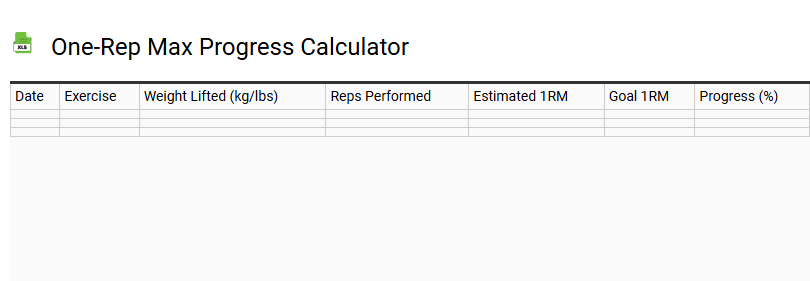
One-Rep Max Progress Calculator
💾 One-Rep Max Progress Calculator .xls
This One-Rep Max (1RM) Progress Calculator serves as a vital tool for athletes monitoring strength training milestones. By applying validated mathematical formulas, such as the Epley equation or Brzycki formula, lifters can accurately determine their lifting capacity using submaximal testing data. This fitness metric eliminates the injury risks of true failure sets while providing precise data for progressive overload. Integrating this template into your resistance training routine allows for optimized workout programming and muscle hypertrophy through percentage-based training. Track your personal records (PR) and visualize strength gains over time with predictive modeling. Whether focused on powerlifting or general weightlifting performance, this calculator transforms raw repetition maximum data into a comprehensive strength profile, ensuring every periodization cycle is backed by reliable performance tracking and data-driven insights.
Functional Range Conditioning Log
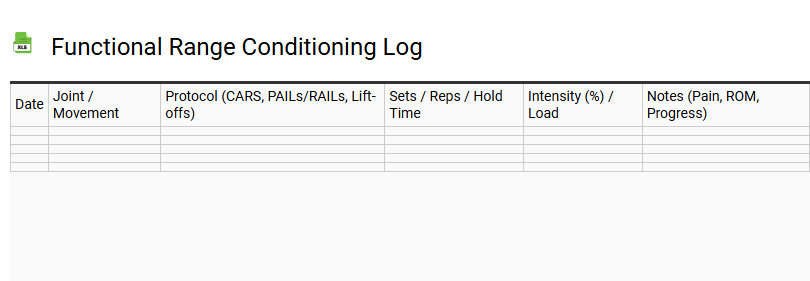
💾 Functional Range Conditioning Log .xls
Optimizing your Functional Range Conditioning (FRC) practice requires a structured log to track joint health and articular function. This template focuses on documenting daily Controlled Articular Rotations (CARs) to assess available workspace and maintain capsular integrity. By recording specific PAILs and RAILs (Progressive and Regressive Angular Isometric Loading) protocols, you can effectively measure improvements in range of motion and the strengthening of connective tissues at end-ranges.
- Monitor neuromuscular control and body control across various planes of motion.
- Track isometric loading intensity and duration to ensure progressive overload.
- Evaluate internal and external rotation capacities to mitigate injury risks.
A systematic FRC log transforms subjective mobility gains into objective data, fostering long-term joint longevity and enhanced physical performance through precise biofeedback and consistent strength training within newly acquired ranges.
Post-Workout Stretching Diary
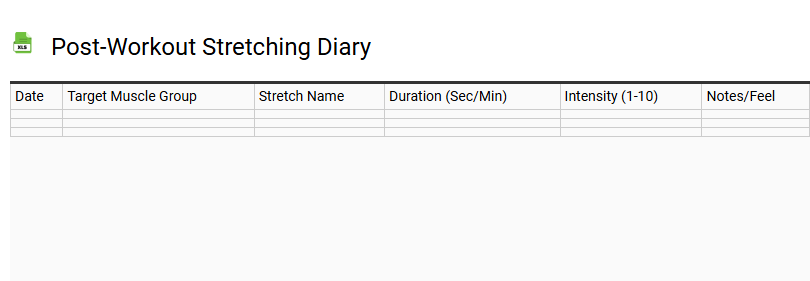
💾 Post-Workout Stretching Diary .xls
A post-workout stretching diary is an essential tool for optimizing muscle recovery and enhancing overall flexibility. By consistently logging your cool-down routine, you can track improvements in range of motion and effectively reduce delayed onset muscle soreness (DOMS). This template emphasizes static stretching, mobility drills, and functional movement patterns to ensure peak athletic performance.
- Injury prevention: Identify tight muscle groups through daily tracking.
- Myofascial release: Document foam rolling sessions for improved circulation.
- Consistency: Monitor your progress with yoga poses and targeted holds.
- Hydration and Nutrition: Note external factors influencing tissue elasticity.
Utilizing a structured log fosters discipline in your fitness journey, helping you transition from high-intensity training to a restorative state. Focus on deep breathing and long-duration holds to maximize joint health and long-term physical longevity.
Muscle Group Volume Tracker
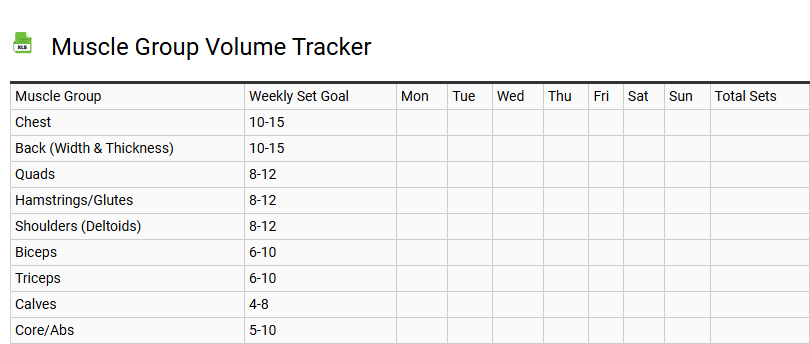
💾 Muscle Group Volume Tracker .xls
Optimize your hypertrophy training with a comprehensive Muscle Group Volume Tracker designed to monitor weekly sets and progressive overload. This template provides a structured framework for recording exercise selection, frequency, and intensity across specific muscle groups like the pectorals, deltoids, and hamstrings.
By analyzing training volume and total work capacity, athletes can ensure adequate recovery while managing systemic fatigue. Utilizing a training log facilitates data-driven adjustments to mechanical tension and metabolic stress, key drivers for muscle growth.
Whether you are refining a bodybuilding split or a powerbuilding routine, tracking workout data helps identify lagging body parts and ensures balanced physical development. Use these tracking metrics to visualize progress, improve lifting performance, and achieve long-term fitness goals through precise volume management.
Periodized Strength Program Template
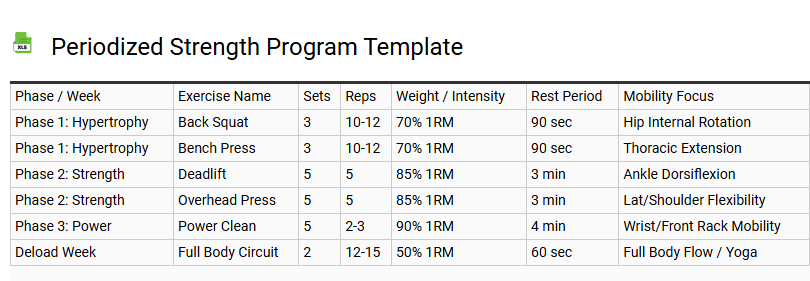
💾 Periodized Strength Program Template .xls
A periodized strength program template serves as a strategic framework designed to optimize athletic performance through systematic variations in training volume and intensity. By partitioning a long-term macrocycle into specific mesocycles and microcycles, lifters can ensure consistent progressive overload while mitigating the risk of overtraining. These templates typically transition through distinct strength blocks, including hypertrophy, basic strength, and peaking phases. Utilizing methodologies like linear periodization or daily undulating periodization (DUP), the program manages fatigue and recovery by manipulating repetition ranges and RPE (Rate of Perceived Exertion). This structured approach to resistance training enhances neuromuscular adaptation and muscle fiber recruitment, providing a data-driven roadmap for powerlifting, weightlifting, or bodybuilding goals. Effective load management within the template ensures sustained hypertrophic gains and maximal 1RM strength development over time.
Range of Motion Assessment Sheet
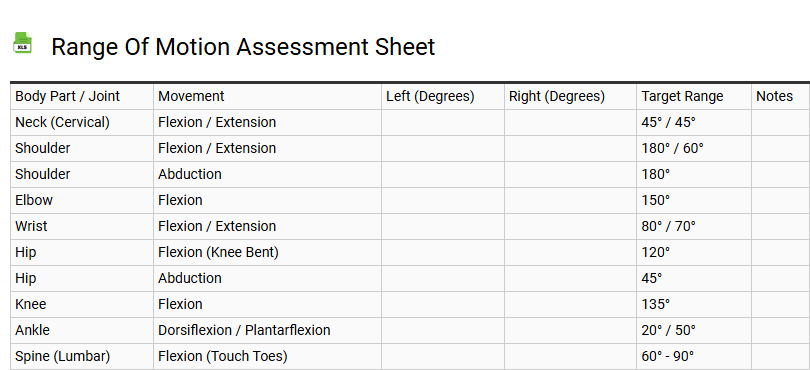
💾 Range of Motion Assessment Sheet .xls
A Range of Motion (ROM) assessment sheet is an essential clinical tool used in physiotherapy and orthopedic medicine to quantify joint flexibility and functional mobility. This structured template facilitates the precise recording of Active Range of Motion (AROM) and Passive Range of Motion (PROM) using standardized goniometry techniques. By documenting specific degrees of movement across various anatomical planes, healthcare providers can conduct a thorough musculoskeletal evaluation.
Utilizing a standardized form ensures consistent progress tracking and helps identify mechanical restrictions or soft tissue limitations. Key features of a professional assessment sheet include:
- Measurements for flexion, extension, and rotation.
- Comparison between bilateral joints to identify deficits.
- Sections for end-feel analysis and pain provocation.
This systematic approach to clinical documentation is vital for developing effective rehabilitation plans and justifying the necessity of ongoing physical therapy interventions.
Bodyweight Strength Progression Log
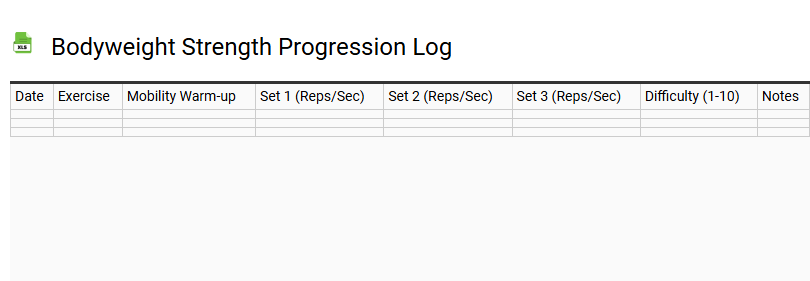
💾 Bodyweight Strength Progression Log .xls
A bodyweight strength progression log is essential for mastering calisthenics movements through systematic progressive overload. This tracking template monitors key performance indicators like rep volume, set intensity, and technical execution across various exercise progressions. By documenting specific variations-ranging from foundational push-ups to advanced gymnastic skills-practitioners can effectively manipulate mechanical advantage and leverage to ensure continuous hypertrophy and neurological adaptation.
Precise data entry regarding rest intervals and tempo facilitates consistent strength gains. Utilizing a structured training journal allows for the rapid identification of plateaus, enabling timely adjustments to exercise selection and workload. Whether focusing on static holds or dynamic repetitions, this log serves as a roadmap for functional fitness, ensuring every session contributes to long-term athletic development, muscle endurance, and peak physical performance in a bodyweight context.
Olympic Weightlifting Session Tracker
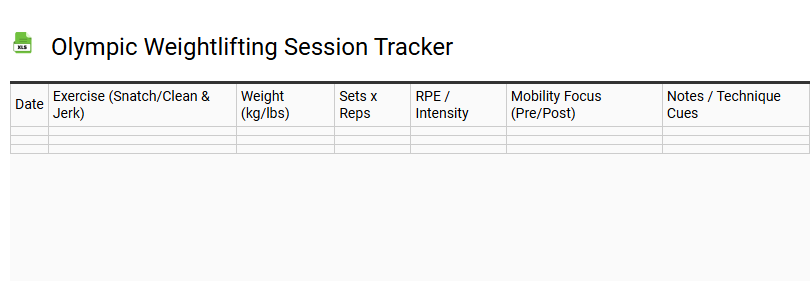
💾 Olympic Weightlifting Session Tracker .xls
This Olympic weightlifting session tracker provides a structured framework for athletes to document the snatch, clean and jerk, and essential strength training components. By recording barbell metrics such as sets, reps, and intensity percentages, lifters can accurately monitor volume and total tonnage over time. This template is designed to enhance athletic performance through progressive overload and periodization strategies.
- Log personal records (PRs) and 1RM calculations.
- Track accessory movements like pulls, squats, and overhead presses.
- Monitor RPE (Rate of Perceived Exertion) and fatigue management.
- Note technical cues for triple extension and bar path efficiency.
Utilizing a consistent workout log on the lifting platform ensures data-driven adjustments to loading protocols, fostering hypertrophy and explosive power while preventing overtraining during intense weightlifting sessions.
Yoga and Mobility Frequency Chart
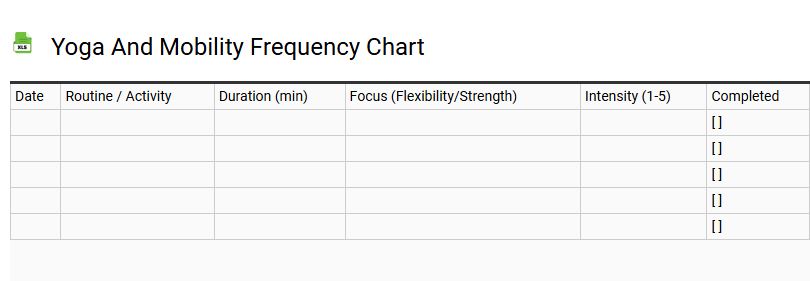
💾 Yoga and Mobility Frequency Chart .xls
This Yoga and Mobility Frequency Chart serves as a strategic visual tool for optimizing flexibility training and joint longevity. By tracking weekly range of motion exercises, practitioners can ensure a balanced approach to functional fitness and muscle recovery. This template monitors various modalities, including dynamic stretching, myofascial release, and restorative yoga sequences designed to mitigate chronic stiffness and enhance body awareness.
Implementing a structured mobility routine improves athletic performance while decreasing injury risks through consistent active recovery. Users can categorize sessions by intensity-ranging from daily maintenance to deep fascial stretching. Utilizing this data helps refine training volume to prevent overtraining. Ultimately, this framework fosters long-term structural integrity, ensuring your stretching routine aligns perfectly with personal wellness goals, connective tissue health, and peak physiological efficiency across all movement patterns.
Powerlifting Training Logbook
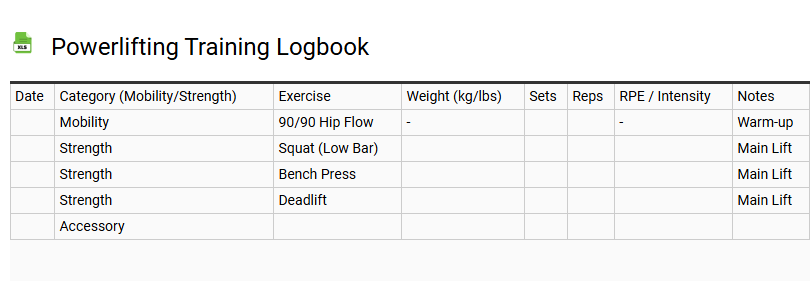
💾 Powerlifting Training Logbook .xls
A comprehensive powerlifting training logbook is the cornerstone of any structured strength program. By utilizing a dedicated template, athletes can meticulously track the "big three" lifts-squat, bench press, and deadlift-ensuring consistent progressive overload. Effective logs integrate RPE (Rate of Perceived Exertion) scales and percentage-based training to manage intensity and volume across various training cycles. Documenting every set, repetition, and one-rep max (1RM) allows for precise periodization and fatigue management. Beyond primary movements, tracking accessory exercises and supplementary lifts aids in identifying weak points. This data-driven approach facilitates optimal recovery and strategic adjustments, paving the way for a new personal record (PR). Whether focusing on hypertrophy or maximal strength, a well-organized logbook transforms raw data into a roadmap for elite athletic performance and long-term strength gains.
Rest and Recovery Monitoring Tool
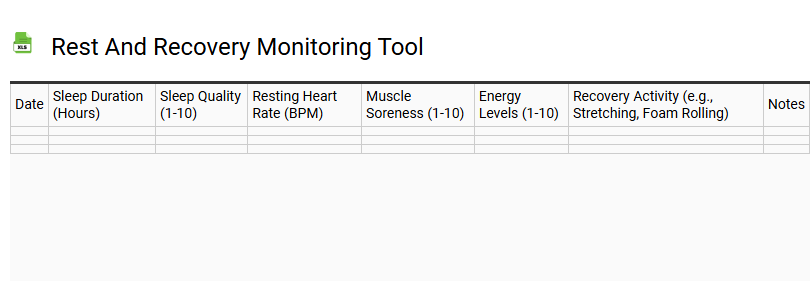
💾 Rest and Recovery Monitoring Tool .xls
A Rest and Recovery Monitoring Tool is essential for optimizing athlete performance and preventing overtraining syndrome. This template facilitates comprehensive wellness tracking by analyzing physiological strain and psychological fatigue levels. By monitoring critical metrics such as Heart Rate Variability (HRV), sleep quality, and perceived muscle soreness, practitioners can generate a precise readiness score.
Effective workload management relies on these data-driven insights to adjust training intensity and volume. Key features of this systematic approach include:
- Subjective Wellness Surveys: Tracking mood, stress, and hydration status.
- Physiological Markers: Evaluating resting heart rate and recovery kinetics.
- Injury Prevention: Identifying cumulative fatigue to mitigate burnout risks.
Integrating this tool into sports science workflows ensures evidence-based recovery protocols, enhancing long-term athletic longevity and ensuring peak physical condition during competition phases.
Joint Mobility Progress Journal
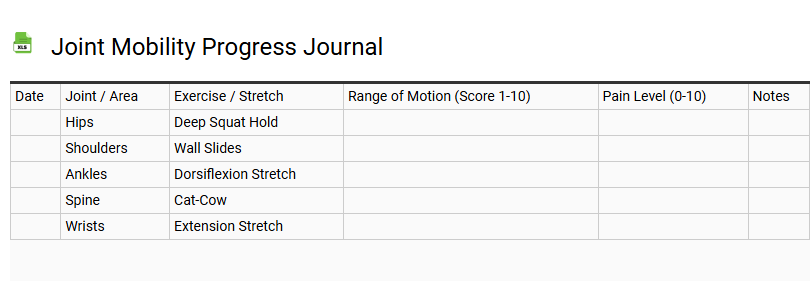
💾 Joint Mobility Progress Journal .xls
A Joint Mobility Progress Journal serves as a strategic tool for tracking range of motion (ROM) and enhancing functional movement quality. By documenting daily articulation exercises, users can monitor improvements in synovial fluid circulation and ligament health. This structured template facilitates active recovery, helping athletes and patients identify kinetic chain imbalances or persistent joint stiffness.
- Log active flexibility benchmarks and corrective exercise frequency.
- Monitor physical therapy milestones to improve proprioception.
- Assess movement patterns to optimize biomechanics and prevent injury.
Consistent data entry fosters greater body awareness, allowing for precise adjustments to dynamic stretching routines. Utilizing this journal ensures long-term musculoskeletal health by quantifying gains in structural integrity and flexibility, making it an indispensable resource for maintaining peak physical performance and joint longevity.
Hypertrophy Training Log
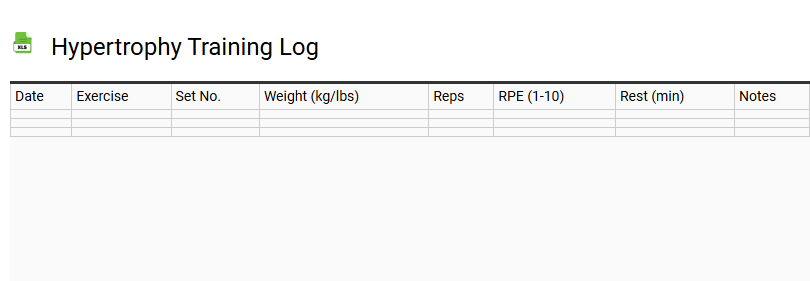
💾 Hypertrophy Training Log .xls
A professional hypertrophy training log serves as a vital blueprint for systematic muscle growth. By prioritizing progressive overload, this template allows lifters to meticulously track resistance training variables such as total volume, exercise selection, and specific sets and reps. Monitoring these metrics is crucial for stimulating muscle protein synthesis and achieving consistent strength gains.
Effective bodybuilding journals focus on key physiological drivers, including:
- Mechanical tension through increased load and intensity.
- Metabolic stress via controlled rest intervals and tempo.
- Recovery tracking to ensure optimal central nervous system readiness.
Integrating RPE (Rate of Perceived Exertion) into your workout journal ensures each session aligns with your current recovery capacity. This data-driven approach facilitates long-term muscle hypertrophy by providing a clear history of volume load and physiological adaptations, ensuring every session contributes to your aesthetic and performance goals.
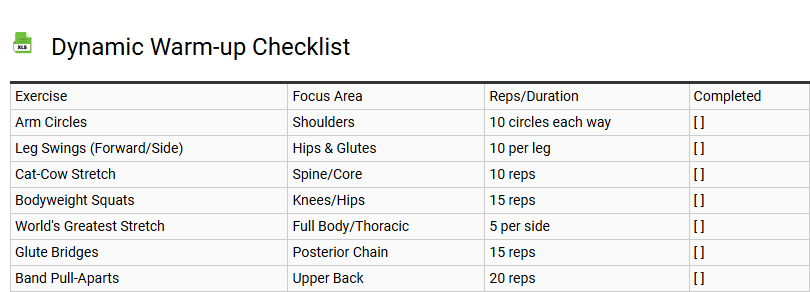
Dynamic Warm-up Checklist
💾 Dynamic Warm-up Checklist .xls
A comprehensive dynamic warm-up checklist is essential for optimizing athletic performance and ensuring effective injury prevention. Unlike static stretching, these rhythmic movements enhance blood flow, elevate core temperature, and increase joint range of motion. A professional template prioritizes mobility drills, muscle activation exercises, and neuromuscular coordination to prime the central nervous system.
Key components include functional movements that mimic sport-specific patterns, improving proprioception and tissue elasticity. By incorporating active stretching and metabolic preparation, athletes transition from a resting state to peak workout readiness. This structured approach stabilizes joints and sharpens motor skills, providing a vital bridge to high-intensity exertion. Utilizing a checklist ensures consistent physical readiness, reduces muscle spindle sensitivity, and maximizes power output during training or competition.
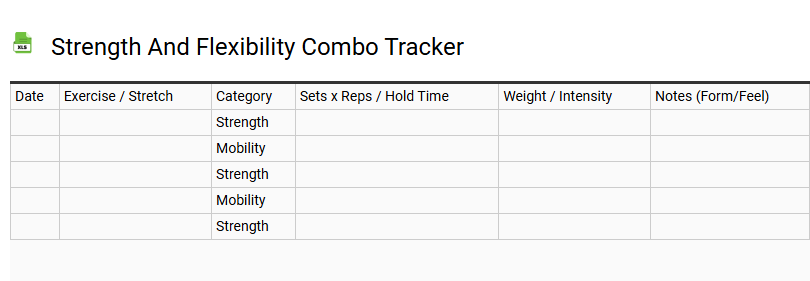
Strength and Flexibility Combo Tracker
💾 Strength and Flexibility Combo Tracker .xls
This Strength and Flexibility Combo Tracker serves as a comprehensive fitness log designed to balance high-intensity resistance training with essential mobility drills. By integrating muscle hypertrophy goals and range of motion (ROM) improvements into one cohesive template, athletes can monitor progressive overload while safeguarding joint health.
This dual-focus approach optimizes athletic performance by pairing heavy compound lifts with restorative stretching routines. Use this digital journal to track training volume, sets, and reps alongside functional movement assessments. Prioritizing both power and pliability facilitates faster muscle recovery and minimizes injury risks. Whether you are performing eccentric loading or dynamic yoga poses, this structural framework helps maintain a consistent record of your physical evolution, bridging the gap between raw power and fluid agility for long-term physiological wellness.
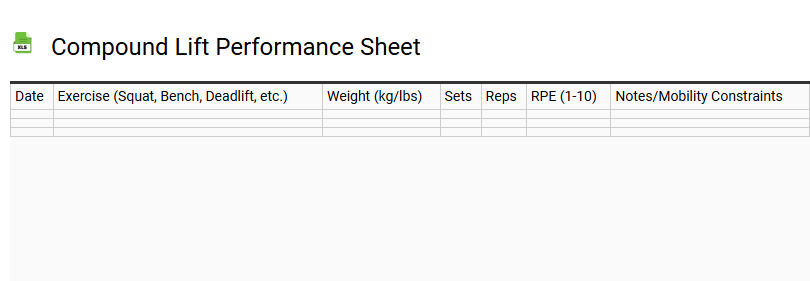
Compound Lift Performance Sheet
💾 Compound Lift Performance Sheet .xls
This Compound Lift Performance Sheet serves as a comprehensive framework for tracking progressive overload across fundamental multi-joint movements. By documenting specific metrics for the squat, deadlift, bench press, and overhead press, athletes can monitor strength training adaptations and muscle hypertrophy.
The template captures essential data including training volume, intensity percentages, and estimated 1RM (one-rep max) to facilitate effective periodization. Utilizing a structured workout log ensures precise monitoring of the kinetic chain, allowing lifters to identify plateaus and optimize neuromuscular adaptation. This systematic approach to resistance training enhances functional strength while providing a clear visual representation of fitness progression. Integrating these metrics into your routine promotes disciplined athletic development and informed recovery management for peak physical performance.
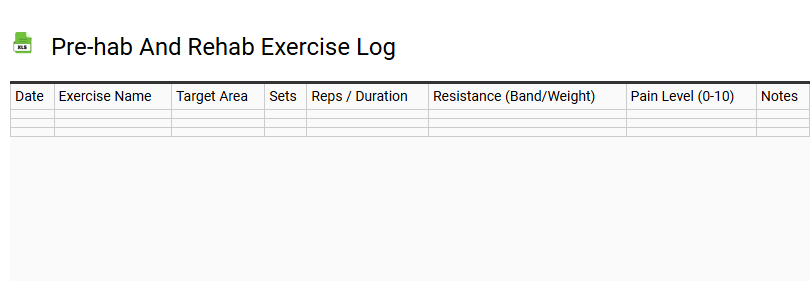
Pre-hab and Rehab Exercise Log
💾 Pre-hab and Rehab Exercise Log .xls
A comprehensive Pre-hab and Rehab Exercise Log serves as a vital blueprint for injury prevention and post-surgical recovery. Utilizing a structured template ensures consistent tracking of corrective exercises, joint mobility drills, and muscle activation routines. By documenting specific variables such as sets, repetitions, and perceived exertion (RPE), athletes and patients can monitor functional restoration and range of motion (ROM) improvements over time.
This data-driven approach facilitates progressive overload while minimizing the risk of re-injury. An effective log integrates pain scale monitoring and compliance tracking, allowing for real-time adjustments to a physical therapy protocol. Whether focusing on stability work or strength endurance, a dedicated log bridges the gap between clinical rehabilitation and peak performance, ensuring every corrective movement contributes to long-term orthopedic health and neuromuscular control.
This Mobility and Strength Tracker template bridges the gap between functional flexibility and raw power. By documenting range of motion alongside resistance metrics, athletes can identify musculoskeletal imbalances and enhance athletic longevity. Utilizing this structured log facilitates data-driven adjustments to your corrective exercise routine and functional fitness journey.
In conclusion, consistent progress monitoring is the cornerstone of sustainable physical performance. Download our optimized training sheet today to balance flexibility goals with progressive overload for peak functional health.