
Morning Grogginess Assessment Chart Template for Tracking Sleep Inertia.
Identifying the root cause of sleep inertia is essential for optimizing your daily energy. Using a morning grogginess assessment chart helps you track the transition from sleep to full alertness, measuring critical variables like cognitive clarity and physical fatigue levels. By monitoring these consistent patterns, you can better align your circadian rhythm and improve sleep hygiene for enhanced wakefulness. This systematic approach reveals how specific lifestyle factors influence your early-hour performance and long-term vitality. Please explore the various pre-made templates provided below.
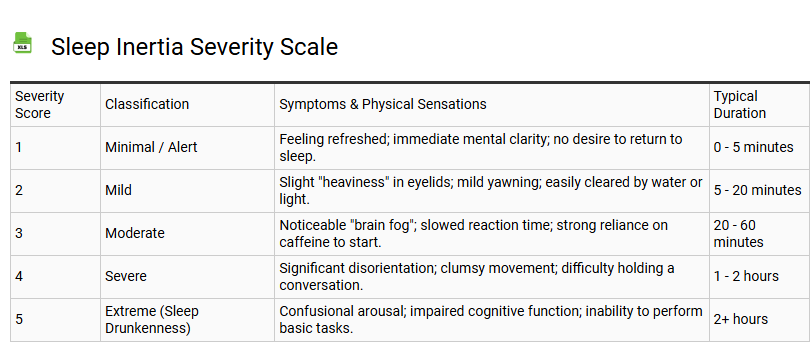
Sleep Inertia Severity Scale
💾 Sleep Inertia Severity Scale .xls
The Sleep Inertia Severity Scale (SISS) serves as a structured assessment tool designed to quantify the transition period between sleep and full wakefulness. This instrument focuses on measuring the intensity of grogginess, disorientation, and cognitive sluggishness experienced immediately after rising.
- Evaluates physical sensations of heaviness or lethargy upon waking.
- Measures the duration of mental fog and its impact on morning productivity.
- Assesses the frequency of impaired alertness across different sleep cycles.
By utilizing this scale, individuals can track the severity of their morning impairment over time. This data is essential for identifying disruptions in circadian rhythms or the presence of underlying sleep disorders. Implementing this template helps in establishing a baseline for alertness, allowing for more effective adjustments to sleep hygiene and environmental waking triggers.
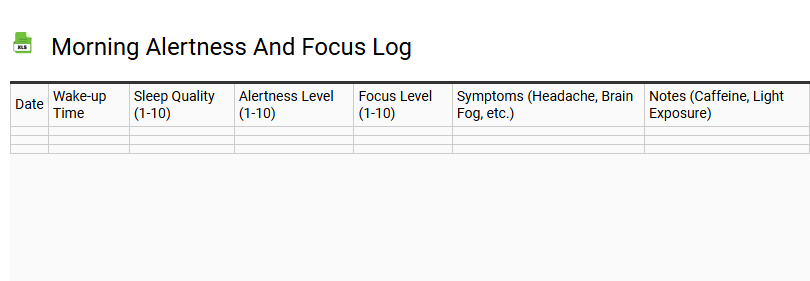
Morning Alertness and Focus Log
💾 Morning Alertness and Focus Log .xls
A Morning Alertness and Focus Log serves as a vital analytical tool for tracking cognitive performance and circadian rhythm synchronization. By documenting mental clarity and energy levels immediately upon waking, users can identify critical patterns in their physiological arousal and executive function.
This systematic approach to productivity tracking allows for the objective evaluation of sleep quality impact on daily concentration and task endurance. Integrating metrics such as subjective wakefulness, mood stability, and cognitive load capacity helps establish a baseline for a high-performance morning routine. Utilizing this longitudinal biometric data empowers individuals to optimize their sleep-wake cycles, mitigate sleep inertia, and ensure maximum mental acuity for sustained professional output throughout the day.
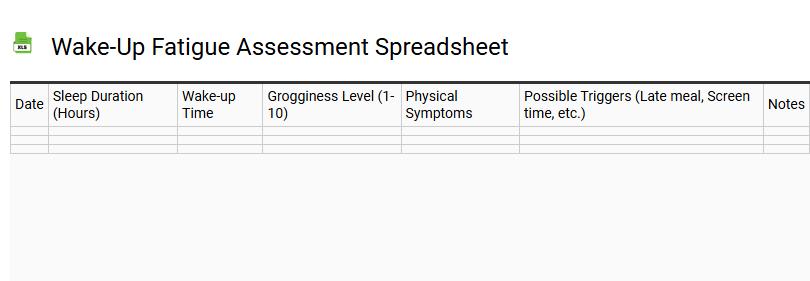
Wake-Up Fatigue Assessment Spreadsheet
💾 Wake-Up Fatigue Assessment Spreadsheet .xls
This Wake-Up Fatigue Assessment Spreadsheet serves as a specialized tool for monitoring sleep quality and identifying persistent morning grogginess. By utilizing this digital log, individuals can track their circadian rhythm alignment and measure the severity of sleep inertia over time. The template integrates essential recovery metrics and daily energy levels to help pinpoint potential triggers for chronic fatigue. Users can record observations on restiveness and sleep hygiene habits to correlate lifestyle behaviors with physiological trends. This structured health data facilitates a granular analysis of restorative rest, enabling users to optimize their sleep cycles and minimize lethargy upon waking. Consistent data entry into this assessment tool provides actionable insights for improving overall wellness, daytime alertness, and long-term vitality through evidence-based self-monitoring.
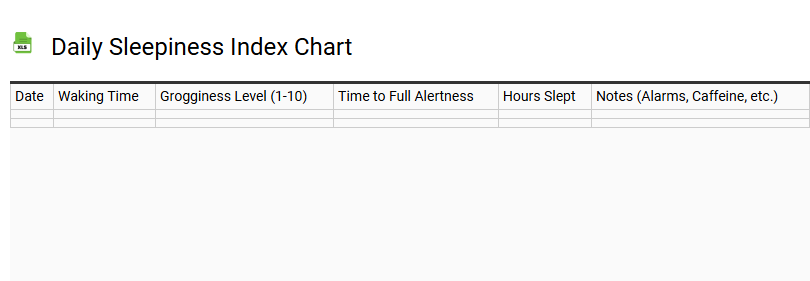
Daily Sleepiness Index Chart
💾 Daily Sleepiness Index Chart .xls
A Daily Sleepiness Index Chart serves as a critical diagnostic tool for monitoring sleep quality and identifying patterns of excessive daytime sleepiness (EDS). By utilizing this structured template, individuals can systematically track their alertness levels and peak drowsiness throughout the circadian rhythm. This fatigue assessment often incorporates metrics similar to the Epworth Sleepiness Scale (ESS) to quantify the likelihood of dozing during routine activities.
Consistent logging helps reveal chronic sleep deprivation and potential sleep disorders by analyzing the sleep-wake cycle. Integrating this data into a regular sleep hygiene routine allows users to visualize fluctuations in cognitive function and energy levels. Whether used for personal health tracking or clinical evaluation, a sleepiness index provides objective insights into restorative rest, facilitating better management of circadian health and overall well-being.
Post-Sleep Recovery Dashboard
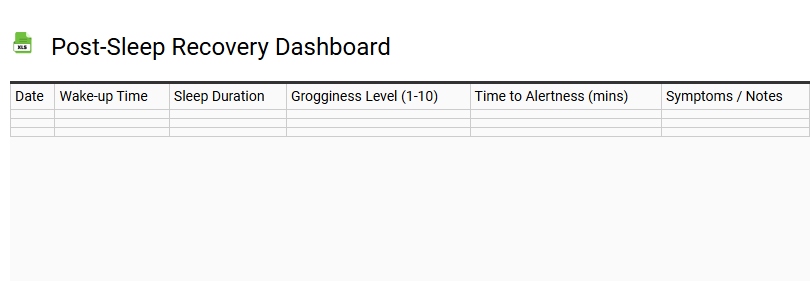
💾 Post-Sleep Recovery Dashboard .xls
The Post-Sleep Recovery Dashboard provides a comprehensive visualization of your circadian rhythm and nocturnal biometric data. By analyzing sleep architecture, including REM and deep sleep cycles, this template calculates a precise recovery score. Key performance indicators such as Heart Rate Variability (HRV) and resting heart rate are monitored to evaluate autonomic nervous system balance. Users can track sleep latency and efficiency to refine sleep hygiene practices and overall sleep health. This data-driven approach facilitates restorative rest, enhancing metabolic recovery and cognitive function. Through detailed sleep tracking analytics, the dashboard identifies trends in sleep quality, empowering individuals to optimize their daily energy levels and physiological readiness. Every metric contributes to a holistic understanding of how sleep duration impacts long-term wellness.
Sleep-to-Wake Transition Tracker
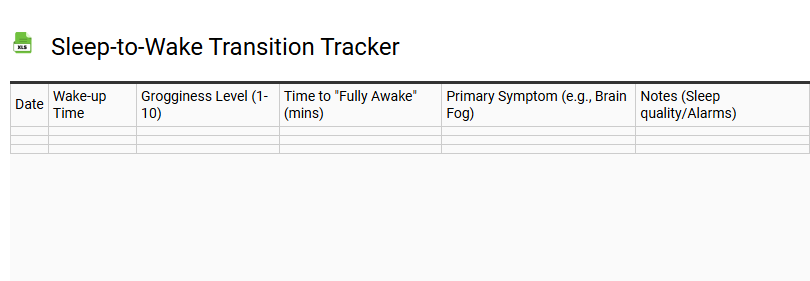
💾 Sleep-to-Wake Transition Tracker .xls
A Sleep-to-Wake Transition Tracker serves as a vital diagnostic tool for monitoring the physiological shift from REM cycles to peak morning alertness. This template allows users to document sleep inertia duration and the intensity of the arousal stage, providing deep insights into circadian rhythm alignment. By logging biometric data, such as resting heart rate and the cortisol awakening response, individuals can identify hidden patterns in sleep quality and nocturnal rest. Utilizing this digital log helps optimize sleep hygiene and minimize persistent grogginess. Monitoring these specific metrics enhances cognitive performance and daily productivity by identifying the ideal wakefulness window. This structured format facilitates a data-driven approach to mastering your internal clock, ensuring every restorative sleep session translates into a seamless, energized start to the day.
Morning Brain Fog Analysis Log
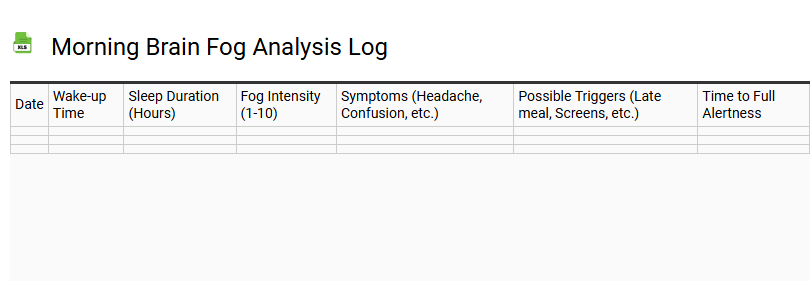
💾 Morning Brain Fog Analysis Log .xls
A Morning Brain Fog Analysis Log serves as a vital diagnostic tool to monitor cognitive clarity and track persistent mental fatigue. By documenting daily alertness levels immediately upon waking, users can identify underlying patterns linked to sleep quality and circadian rhythm disruptions. This structured record-keeping approach captures essential data points such as sleep duration, hydration levels, and dietary triggers that contribute to morning grogginess. Utilizing this template facilitates a deeper understanding of how lifestyle variables impact overall cognitive function and focus. Consistent tracking empowers individuals to implement targeted interventions-like optimizing sleep hygiene or adjusting morning routines-to eliminate persistent cloudiness and enhance daily productivity. Analyzing these longitudinal trends provides actionable insights into neurological performance and metabolic health, bridging the gap between subjective feelings and objective data for improved mental performance throughout the day.
Circadian Rhythm Alignment Scorecard
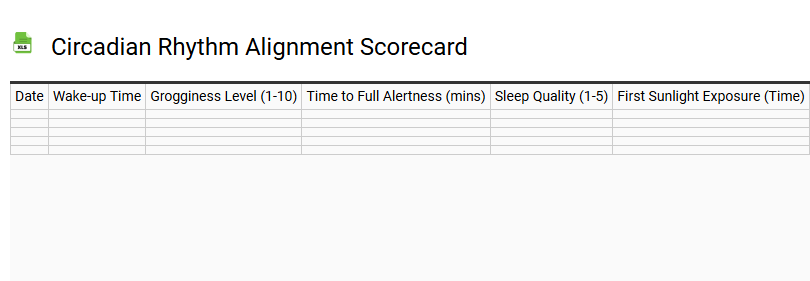
💾 Circadian Rhythm Alignment Scorecard .xls
A Circadian Rhythm Alignment Scorecard serves as a comprehensive diagnostic tool to evaluate the synchronization between your internal biological clock and environmental cues. This assessment tracks critical variables of chronobiology, focusing on the sleep-wake cycle, melatonin secretion, and cortisol fluctuations throughout a 24-hour period.
By monitoring specific metrics, users can optimize their suprachiasmatic nucleus (SCN) function through:
- Strategic morning light exposure to anchor the master clock.
- Minimizing evening blue light to protect sleep architecture.
- Consistent meal timing to support metabolic homeostasis.
- Evaluating sleep hygiene and wakeful alertness levels.
Utilizing this template facilitates improved metabolic health and hormonal balance, ensuring your physiological processes remain perfectly attuned to the natural solar cycle for peak cognitive and physical performance.
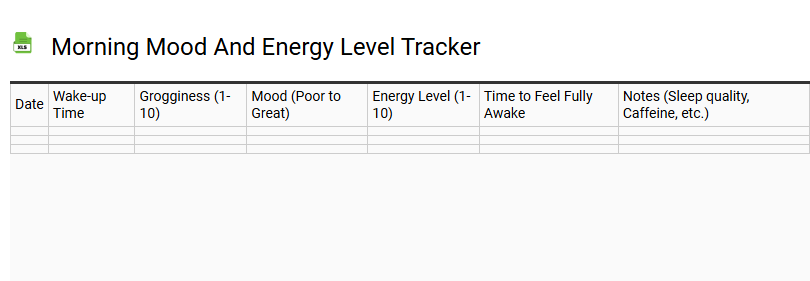
Morning Mood and Energy Level Tracker
💾 Morning Mood and Energy Level Tracker .xls
A morning mood and energy level tracker serves as a vital biofeedback tool for monitoring circadian rhythm alignment and emotional well-being. By documenting daily logs of waking vitality and mental clarity, users can identify direct correlations between sleep quality and daytime productivity patterns. This wellness assessment template facilitates self-awareness through structured habit tracking, allowing for the observation of subtle physiological trends over time.
Implementing this data-driven health strategy encourages mindfulness and supports routine optimization. By capturing subjective feelings alongside objective metrics, individuals are empowered to make informed lifestyle adjustments. Consistent utilization of this tracking system promotes enhanced stress management and superior cognitive performance, transforming simple morning observations into actionable insights for long-term holistic health and peak performance.
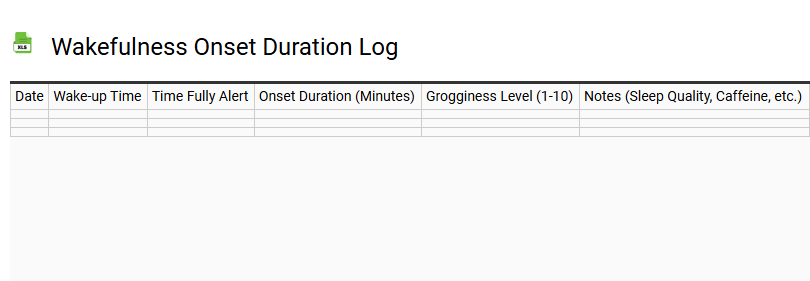
Wakefulness Onset Duration Log
💾 Wakefulness Onset Duration Log .xls
A Wakefulness Onset Duration Log serves as a critical diagnostic tool for monitoring sleep latency and the intricacies of the circadian rhythm. This template systematically tracks the transition from alertness to slumber, capturing essential data on sleep-wake cycles and nocturnal awakenings. By documenting Wake After Sleep Onset (WASO), users can evaluate sleep efficiency and identify symptoms of insomnia or hyperarousal.
- Analyzes sleep architecture and fragmented sleep patterns.
- Identifies chronotype variances and delayed sleep phase issues.
- Supports Cognitive Behavioral Therapy for Insomnia (CBT-I) protocols.
- Correlates sleep hygiene habits with restorative rest quality.
Utilizing this log facilitates precise clinical assessments, helping healthcare providers distinguish between non-refreshing sleep and underlying sleep disorders. Detailed entries regarding light exposure and daily drowsiness enhance the accuracy of personalized treatment plans for improved metabolic recovery.
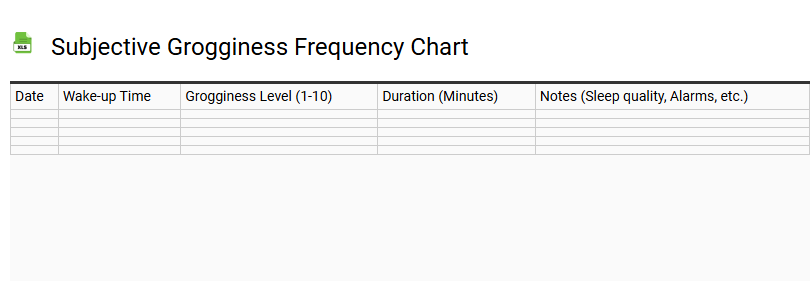
Subjective Grogginess Frequency Chart
💾 Subjective Grogginess Frequency Chart .xls
A Subjective Grogginess Frequency Chart serves as a vital self-reporting tool for monitoring sleep inertia and daily alertness levels. By utilizing this structured template, individuals can systematically record the intensity of morning drowsiness and the duration required to reach peak cognitive function. This tracking mechanism is essential for analyzing circadian rhythm alignments and identifying persistent disruptions in the sleep-wake cycle.
Integrating this data into a broader sleep diary allows for the evaluation of several key metrics:
- Waking state clarity and sensory responsiveness.
- Frequency and severity of daytime fatigue episodes.
- Correlation between sleep quality and perceived mental fog.
- The efficacy of sleep hygiene improvements.
Consistent longitudinal documentation helps isolate patterns of sleep deprivation, enabling evidence-based adjustments to recovery sleep protocols and lifestyle habits to enhance overall daytime vitality and restorative rest.
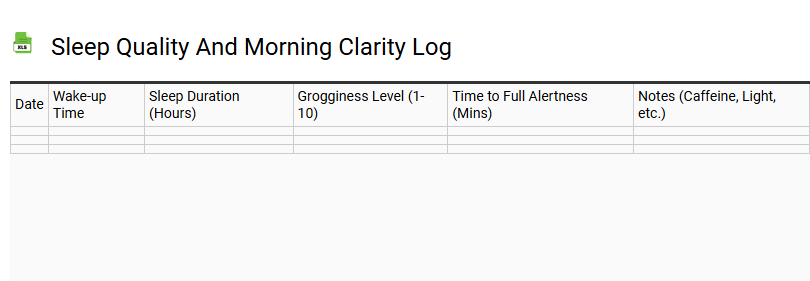
Sleep Quality and Morning Clarity Log
💾 Sleep Quality and Morning Clarity Log .xls
This Sleep Quality and Morning Clarity Log serves as a comprehensive sleep tracker designed to optimize your circadian rhythm. By monitoring nightly restorative sleep patterns and REM cycles, users can identify direct correlations between sleep hygiene and peak cognitive performance. This template tracks essential health metrics such as sleep latency, total rest duration, and nocturnal disturbances to evaluate overall sleep efficiency.
Documenting post-wakefulness states helps measure morning clarity and mental alertness, revealing how melatonin regulation and cortisol levels influence daily vitality. Consistent data entry fosters improved sleep architecture, effectively reducing brain fog while enhancing mood and productivity. Utilizing this log allows for refined bedtime routines, ensuring deep physical recovery through data-driven insights into your unique sleep-wake cycle and physiological recovery needs.
This morning grogginess assessment chart serves as a vital tool for tracking sleep inertia and daily alertness levels. The template helps individuals monitor their circadian rhythm by documenting post-wake fatigue and recovery speed. By analyzing these sleep quality metrics, users can identify patterns linked to poor sleep hygiene or fragmented rest. Implementing this diagnostic log facilitates personalized adjustments to nighttime routines, ensuring enhanced mental clarity and consistent wakefulness. Utilize this structured data to overcome chronic lethargy and optimize your body's natural arousal transitions.