
Nocturnal Dream Journal Template: Structured Layout for Theme Analysis
Unlock the secrets of your subconscious mind with a specialized nocturnal dream theme journal. Utilizing a structured template enhances dream recall, allowing you to document REM patterns, vivid imagery, and recurring symbols with ease. These celestial-inspired layouts provide the perfect framework for lucid dreaming enthusiasts and those seeking nighttime clarity through sleep tracking. By capturing your astral journeys and moonlit reflections, you transform fleeting visions into lasting personal wisdom. Please check our already made variation of templates below.
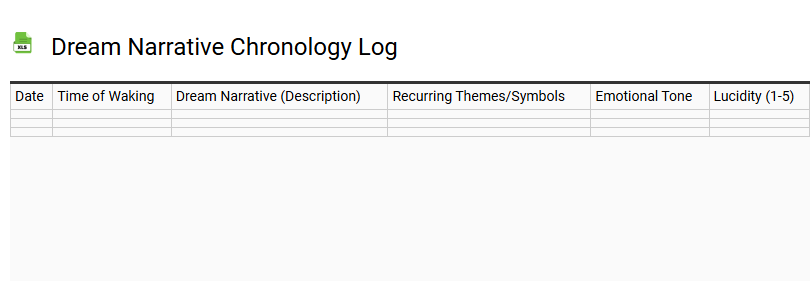
Dream Narrative Chronology Log
💾 Dream Narrative Chronology Log .xls
A Dream Narrative Chronology Log serves as a systematic framework for capturing subconscious data across various sleep cycles. By utilizing sequential timestamps, this template facilitates precise mnemonic recall of nocturnal episodes and REM sleep transitions. Users can document vivid imagery, sensory details, and recurring themes to identify deeper psychological insights and specific dream signs.
This structured documentation approach enhances metacognitive awareness, often serving as a vital precursor to achieving lucid dreaming. By mapping the linear progression of complex dreamscapes, individuals can effectively correlate emotional resonance with waking life stressors or inspirations. Integrating specific fields for hypnagogic sensations and sleep hygiene variables ensures a comprehensive oneirology record, optimizing the analysis of neurobiological patterns and symbolic archetypes within a professional-grade dream journal interface.
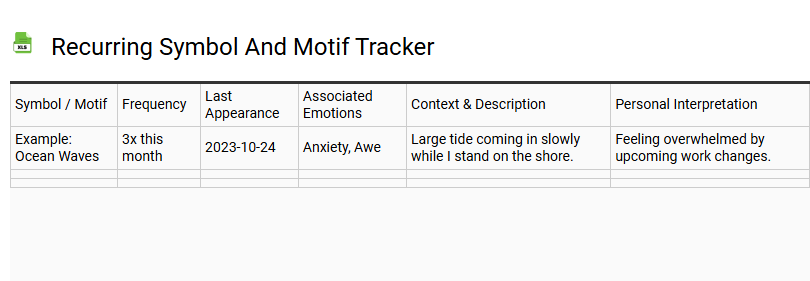
Recurring Symbol and Motif Tracker
💾 Recurring Symbol and Motif Tracker .xls
A Recurring Symbol and Motif Tracker is an essential instrument for deep literary analysis and narrative deconstruction. This specialized template enables readers and writers to identify consistent thematic anchors and visual imagery that reinforce a story's core message. By systematically documenting symbolic representation and recurring patterns, users can uncover the allegorical significance behind specific objects, phrases, or colors.
Utilizing this tracker facilitates better pattern recognition regarding character development and plot progression. It serves as a centralized hub for organizing textual evidence, allowing for a nuanced examination of how literary devices like foreshadowing and metaphors evolve across a timeline. Whether analyzing classic prose or building a complex world, this tool ensures the structural integrity and emotional resonance of the narrative remain cohesive and impactful for the audience.
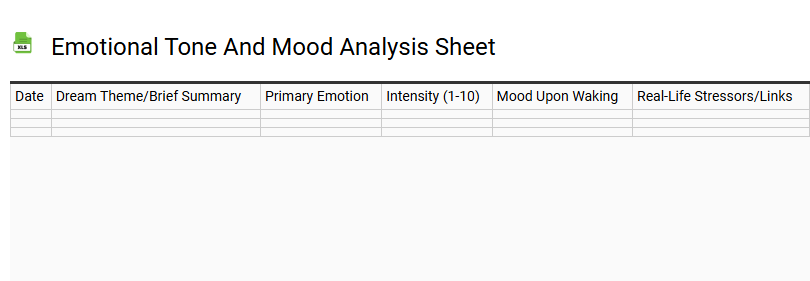
Emotional Tone and Mood Analysis Sheet
💾 Emotional Tone and Mood Analysis Sheet .xls
An Emotional Tone and Mood Analysis Sheet serves as a sophisticated framework for deconstructing narrative atmosphere and sentiment. By meticulously evaluating linguistic cues and specific diction, analysts can identify the underlying psychological subtext within any text. This systematic approach leverages sentiment analysis to map complex tonal shifts, effectively distinguishing between an author's inherent attitude and the atmospheric quality perceived by the audience.
Key components involve examining literary devices and word choice to gauge the affective state of a narrator. Implementing this template enhances emotional intelligence, fostering a deeper understanding of thematic resonance and stylistic choices. Whether applied to literary criticism or professional content strategy, this tool captures the nuanced interplay between expressive intent and reader response, ensuring a comprehensive assessment of a work's emotional landscape and subjective impact.
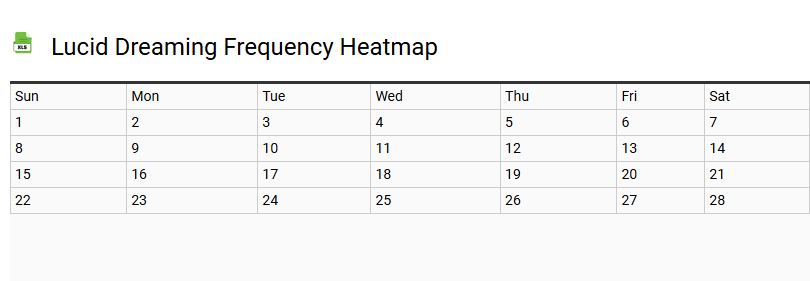
Lucid Dreaming Frequency Heatmap
💾 Lucid Dreaming Frequency Heatmap .xls
The Lucid Dreaming Frequency Heatmap serves as a powerful visual log for monitoring your progress in dream consciousness. This grid-based system uses varying color intensities to represent the number of times you achieve lucidity each day. By organizing your experiences into a chronological layout, you gain a clear overview of your success rates over weeks and months.
This data-driven approach allows you to:
- Identify specific patterns or cycles in your dream recall and awareness.
- Correlate successful nights with daytime habits or specific induction techniques.
- Maintain consistent motivation through a tangible representation of your growth.
By transforming individual journal entries into a comprehensive visual map, you can effectively pinpoint what influences your dream state. This bird's-eye view makes it easier to optimize your sleep schedule and refine your practice for more frequent conscious dreaming.
Dream Character and Relationship Inventory
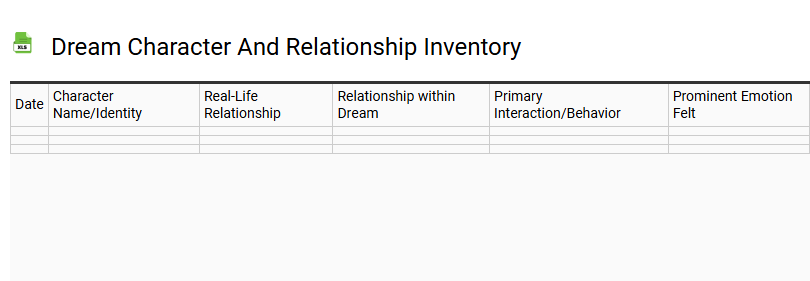
💾 Dream Character and Relationship Inventory .xls
The Dream Character and Relationship Inventory serves as a sophisticated analytical framework for mapping the subconscious manifestations encountered during REM sleep. This template enables practitioners to systematically document dream archetypes, recurring figures, and personified internal states. By evaluating social interactions and interpersonal dynamics within the dreamscape, users can uncover the symbolic representation of their waking-life connections.
Key components of this inventory include:
- Identification of character roles, such as the shadow, guide, or anima.
- Assessment of emotional resonance and perceived intent.
- Analysis of interpersonal behavior and verbal exchanges.
Integrating this inventory into a daily dream journaling routine enhances lucid dreaming frequency and cognitive awareness. This methodology bridges the gap between psychological profiling and narrative sleep experiences, revealing how the mind processes social hierarchies and internal conflicts through metaphorical projections and deep-seated cognitive patterns.
Setting and Environment Categorization Table
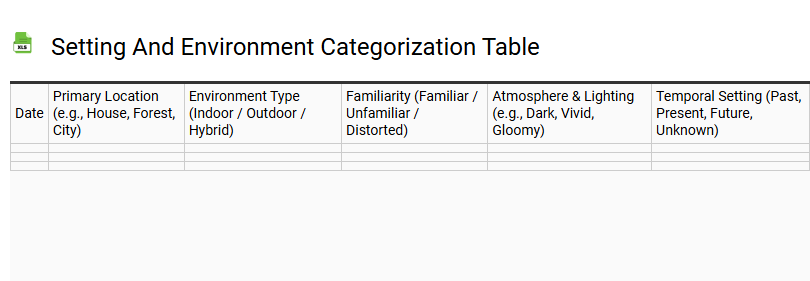
💾 Setting and Environment Categorization Table .xls
A Setting and Environment Categorization Table serves as a structured framework for defining the physical and social landscapes of a narrative. By organizing world-building elements into distinct classifications, creators maintain clarity and consistency across various scenes and plot points.
This organizational tool typically breaks down environments into several essential components:
- Physical Geography: Specific locations, terrain features, and architectural layouts.
- Temporal Context: The historical era, time of day, and seasonal cycles that influence the mood.
- Atmospheric Details: Sensory information including weather patterns, lighting, and ambient sounds.
- Societal Conditions: The prevailing cultural norms, political structures, and economic status of the area.
Utilizing this systematic approach ensures that every backdrop feels immersive and grounded. It helps identify descriptive gaps, allowing for a more vivid and coherent experience for the audience while streamlining the creative process.
Sleep Quality and Dream Intensity Correlation Matrix
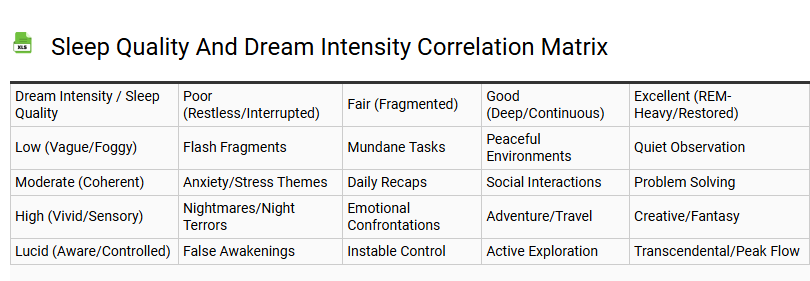
💾 Sleep Quality and Dream Intensity Correlation Matrix .xls
This layout provides a structured framework for analyzing the relationship between restorative rest and nocturnal cognitive activity. By plotting quantitative metrics like sleep duration and efficiency against qualitative dream markers-such as vividness, emotional depth, and recall frequency-users can identify underlying patterns in their circadian health.
The matrix functions as a visual data tool, categorizing variables to reveal how physiological recovery influences psychological experiences during REM cycles. Utilizing this format enables researchers and wellness trackers to distinguish between deep, dreamless slumber and lighter stages characterized by high-intensity imagery. Such insights are essential for understanding how external factors like stress or environment impact the subconscious mind, ultimately offering a clearer picture of overall nighttime wellness through a balanced data-driven approach.
Nightmare Trigger and Stress Factor Log
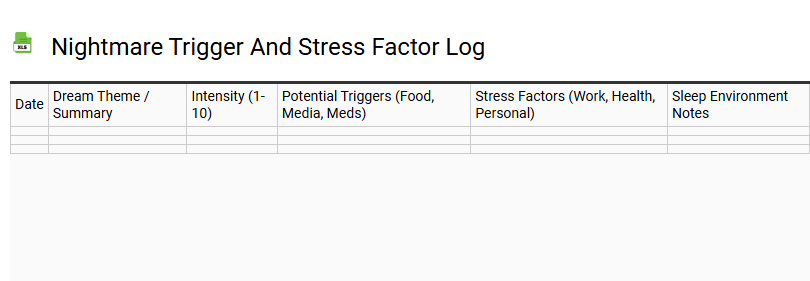
💾 Nightmare Trigger and Stress Factor Log .xls
This log functions as a specialized tool for mapping the relationship between daily psychological pressures and sleep quality. By documenting specific occurrences, users can identify recurring patterns that link daytime tension to nocturnal distress.
To utilize this template effectively, record the following details for each entry:
- Daily Stressors: Identify specific events, interactions, or recurring thoughts that caused significant anxiety during waking hours.
- Trigger Intensity: Rate the perceived emotional impact of each identified stressor on a scale of one to ten.
- Nightmare Characteristics: Describe the primary themes, sensory vividness, and the emotional residue remaining upon waking.
- Environmental Factors: Note external influences such as dietary habits, screen exposure, or room temperature.
Consistent monitoring allows for a clearer understanding of how external factors influence the subconscious, providing a foundation for implementing targeted relaxation strategies.
Pre-Sleep Activity Subject Matter Tracker
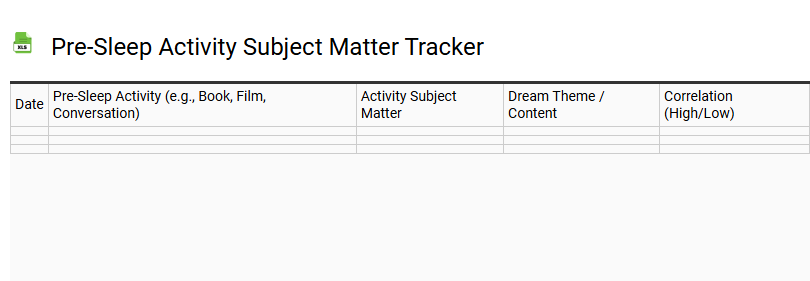
💾 Pre-Sleep Activity Subject Matter Tracker .xls
The Pre-Sleep Activity Subject Matter Tracker serves as a dedicated framework for documenting evening routines and their direct impact on rest. This tool allows users to log specific inputs-such as digital consumption, physical relaxation, or cognitive tasks-to identify how different subjects influence the transition into slumber.
By maintaining a consistent record, individuals can observe correlations between their nightly focus and the quality of their recovery. Key elements of this tracker often include:
- Activity Type: Categorizing the nature of the engagement.
- Intensity Level: Assessing the mental or emotional stimulation involved.
- Timing: Noting how close the activity occurred to bedtime.
Systematic tracking empowers users to refine their habits, helping to eliminate disruptive behaviors while reinforcing those that promote deep, restorative rest. This objective approach ensures a more structured path toward improved overnight health and daily vitality.
Archetypal Theme Checklist
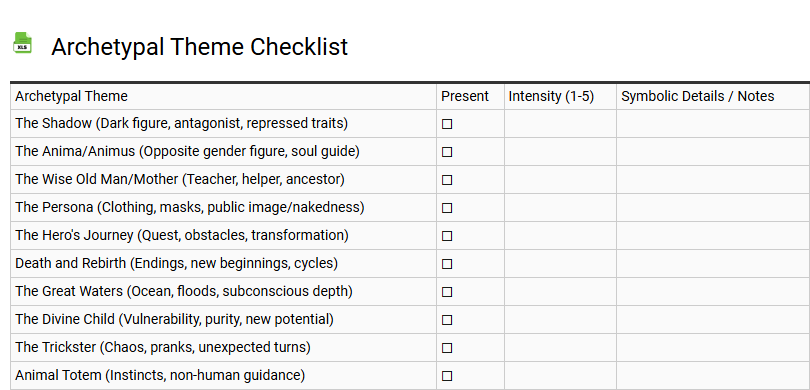
💾 Archetypal Theme Checklist .xls
An archetypal theme checklist serves as a vital analytical framework for authors and screenwriters aiming to leverage the collective unconscious. By systematically auditing universal narratives and symbolic motifs, creators can ensure their work achieves profound psychological resonance. This template evaluates narrative patterns, such as the monomyth or the classic hero's journey, to refine character arcs and enhance thematic depth.
Utilizing this structured tool facilitates the integration of cross-cultural tropes and recurring plot structures, ensuring the manuscript aligns with genre conventions while maintaining emotional authenticity. By identifying primordial images and elemental storytelling components, writers bridge the gap between specific plot points and the broader human experience. This process fosters a deeper audience connection through timeless motifs and structural integrity, transforming a simple story into a resonant piece of mythic storytelling.
Dream Sensory Detail and Color Log
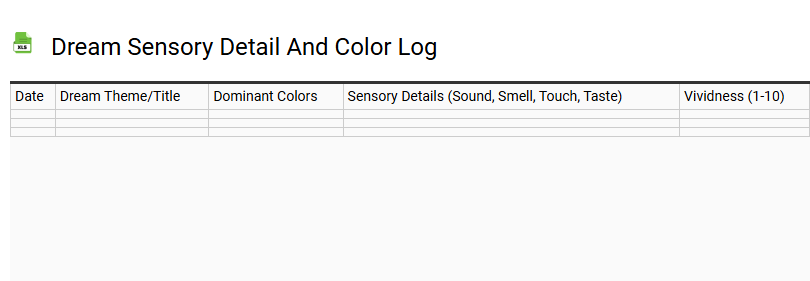
💾 Dream Sensory Detail and Color Log .xls
A Dream Sensory Detail and Color Log serves as a sophisticated instrument for subconscious exploration and REM sleep documentation. By recording specific chromatic palettes and vivid imagery, practitioners enhance their dream recall and lucid dreaming potential. This structured template prioritizes multisensory data, capturing auditory echoes, tactile textures, and olfactory signatures often lost upon waking. Tracking color saturation and tonal shifts reveals deep psychological symbolism and recurring archetypal patterns. Using a consistent dream journal format facilitates the identification of dream signs, bridging the gap between the waking mind and the nocturnal imagination. Documenting these perceptual nuances transforms fleeting nighttime visions into actionable metacognitive insights and improved memory consolidation.
Subconscious Conflict Resolution Journal
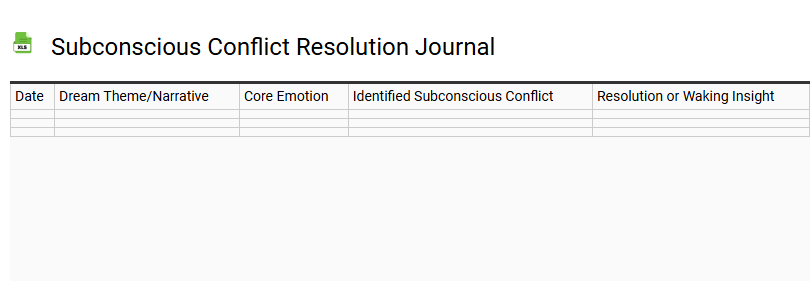
💾 Subconscious Conflict Resolution Journal .xls
Utilizing a Subconscious Conflict Resolution Journal facilitates deep psychological alignment by bridging the gap between conscious intent and hidden beliefs. This therapeutic tool employs structured writing prompts and shadow work to surface cognitive dissonance residing within the psyche. By engaging in consistent self-reflection, individuals can navigate emotional processing and identify the root causes of internal friction. This template serves as a guided framework for cognitive reframing, allowing for the transformation of limiting beliefs into empowered narratives.
Integrating these journaling practices fosters mental health and enhances emotional intelligence, promoting the rewiring of neural pathways for lasting healing. As a holistic approach to introspection, it encourages a trauma-informed exploration of the inner dialogue, leading to profound breakthroughs and improved psychological well-being. This methodical documentation of the subconscious mind ensures that fragmented thoughts coalesce into clarity, ultimately harmonizing one's internal landscape for authentic self-expression.
Moon Phase and Dream Vividness Graph
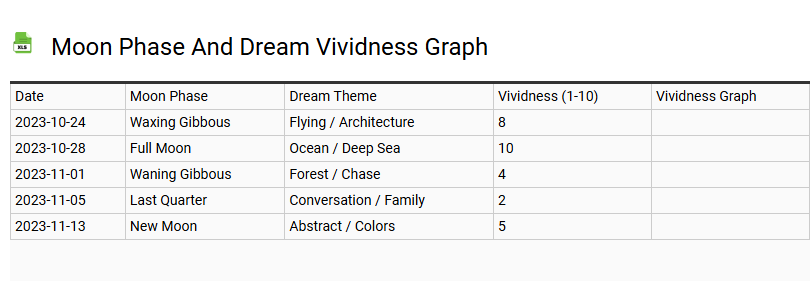
💾 Moon Phase and Dream Vividness Graph .xls
This Moon Phase and Dream Vividness Graph offers a sophisticated way to monitor the intersection of the lunar cycle and nocturnal experiences. By utilizing this data visualization tool, users can track how astronomical alignment impacts the subconscious and overall sleep architecture. Highlighting correlations between the full moon and REM sleep intensity, the template serves as a comprehensive log for dream recall and circadian rhythm fluctuations.
Integrating sleep tracking metrics with celestial influence allows for a deeper understanding of melatonin levels and nocturnal patterns. Whether analyzing the new moon or a waxing crescent, this graph maps emotional intensity against lunar luminosity. Enhance your dream journaling practice by identifying recurring trends influenced by the lunar calendar and optimizing your restorative sleep cycles through precise biometric data mapping.
Common Dialogue and Recurring Phrase Log
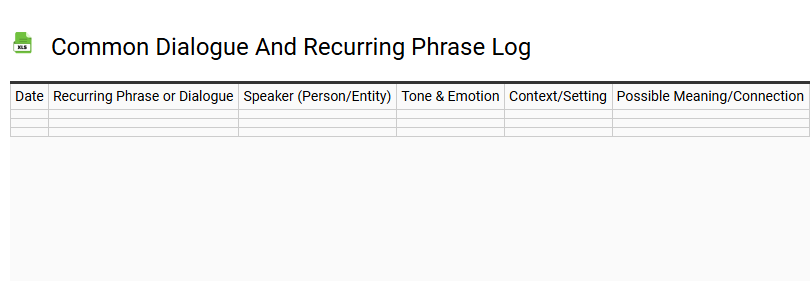
💾 Common Dialogue and Recurring Phrase Log .xls
A Common Dialogue and Recurring Phrase Log serves as a strategic framework for maintaining character consistency and narrative flow. By utilizing this template, writers can track specific linguistic patterns, verbal tics, and catchphrases that define a persona's unique lexicon. Documenting these speech markers and unique idioms ensures stylistic coherence across complex scripts or long-form fiction.
Key functions of this lexical database include:
- Refining conversational rhythm and individual tonal shifts.
- Enhancing world-building through specialized vocabulary and jargon.
- Auditing dialogue tags to eliminate redundant phrasing.
- Establishing verbal identifiers for distinct character recognition.
Integrating linguistic mapping into your scriptwriting workflow streamlines the revision process, fostering a cohesive narrative voice and an immersive experience through precise verbal characterization.
Dream Setting Geographical Map Tracker
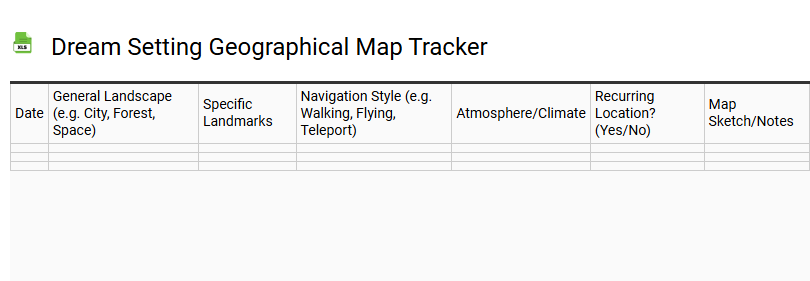
💾 Dream Setting Geographical Map Tracker .xls
This layout functions as a structured log for documenting the diverse landscapes encountered within the subconscious. By providing a clear framework for spatial data, it allows users to organize shifting terrains and recurring landmarks into a cohesive digital atlas. Every entry focuses on capturing the unique essence of a location, from its physical layout to its distinct atmosphere.
- Geographic Markers: Define the terrain, weather patterns, and architectural features of the dream site.
- Emotional Resonance: Note the specific feelings or visceral reactions triggered by the environment.
- Spatial Links: Identify portals or transitions that connect the current area to other known dream regions.
- Frequency Tracking: Record how often a location reappears and any changes observed over time.
This organized approach transforms abstract dream imagery into a detailed territory map, facilitating a deeper understanding of internal world-building.
This Nocturnal Dream Theme Journal template empowers users to monitor their sleep cycle and unlock subconscious insights. By documenting REM patterns and lucid dreaming occurrences, you bridge the gap between reality and the ethereal realm. Enhanced with celestial aesthetics and tracking for moon phases, this bedside companion promotes deep nighttime reflections.
Begin your journey of dream interpretation to achieve greater mindfulness. Preserve your fleeting visions and foster personal growth before the morning light fades.