
Olympic Weightlifting Technique Log Template: Tracking Snatch and Clean & Jerk Progress
Mastering the snatch and clean and jerk requires meticulous attention to detail and consistent tracking of barbell mechanics. An Olympic weightlifting technique log serves as a vital training journal for documenting technical cues, power output, and positional strength. By recording specific lift analysis and accessory movements, athletes can ensure progressive overload while refining their motor patterns. Utilizing a structured lifting diary helps identify biomechanical weaknesses and celebrate performance milestones. Check the already made variation of templates below.
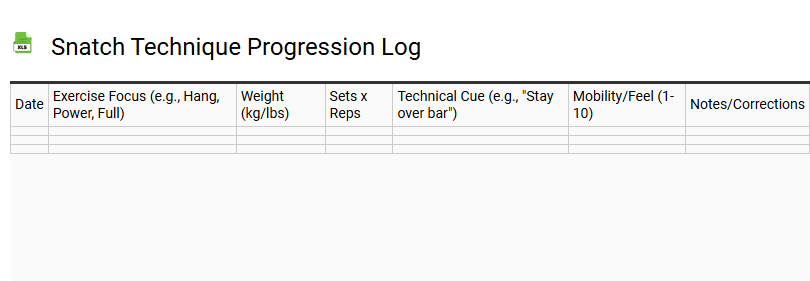
Snatch Technique Progression Log
💾 Snatch Technique Progression Log .xls
A structured approach to mastering the snatch requires meticulous documentation of specific movement patterns. This progression log categorizes the lift into critical phases, including the initial pull, explosive extension, and rapid descent under the bar. By focusing on technical accuracy over raw weight, athletes build the neurological pathways necessary for long-term success.
- Technical Precision: Document successes in bar path trajectory and overhead stability during each session.
- Volume Control: Monitor repetitions performed at specific percentages to manage fatigue and refine muscle memory.
- Movement Quality: Note improvements in ankle mobility, footwork timing, and catch depth to identify mechanical bottlenecks.
Utilizing this data allows for a safer, more efficient transition from positional drills to full snatch execution. Consistent tracking ensures that every lift contributes to a more powerful and stable overhead position.
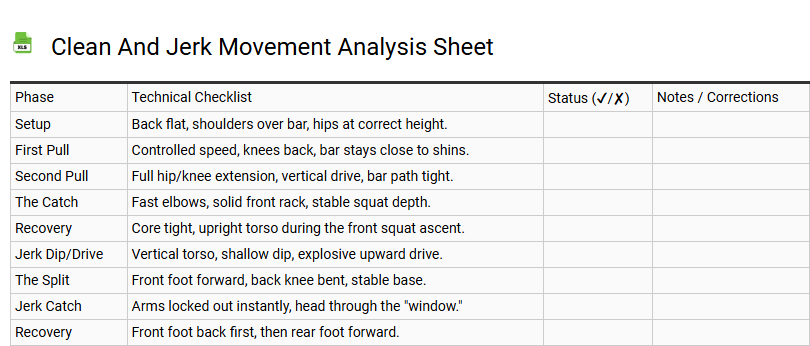
Clean and Jerk Movement Analysis Sheet
💾 Clean and Jerk Movement Analysis Sheet .xls
This Clean and Jerk Movement Analysis Sheet provides a structured framework for evaluating Olympic weightlifting technique and bio-mechanical efficiency. By breaking down the lift into distinct phases, coaches can identify technical flaws in the first pull, the explosive triple extension, and the transition into the power position.
- Barbell Trajectory: Tracking vertical displacement and proximity to the center of mass.
- Clean Phase: Analyzing elbow turnover speed and the stability of the front rack position.
- Jerk Mechanics: Evaluating the dip and drive phase, split jerk footwork, and overhead stabilization.
Focusing on force production and kinetic chain integration, this template helps refine motor patterns to maximize power output. Systematic movement analysis is essential for improving a one-rep max while ensuring athlete safety through precise technical mastery.
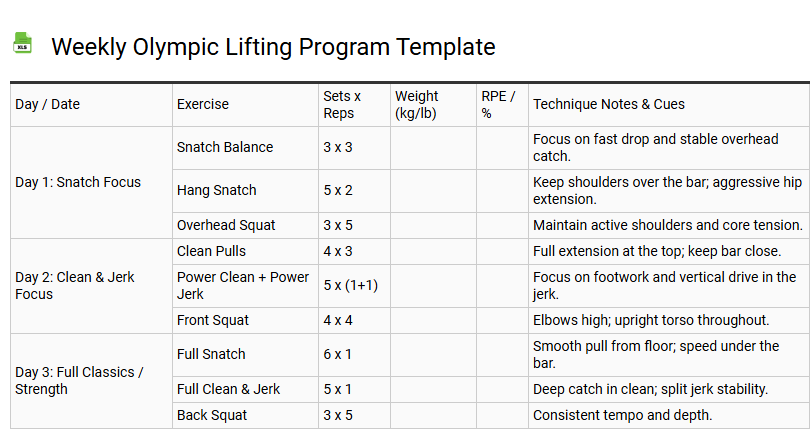
Weekly Olympic Lifting Program Template
💾 Weekly Olympic Lifting Program Template .xls
A comprehensive weekly Olympic lifting program template prioritizes technical proficiency in the snatch and clean and jerk. This structured microcycle balances high-intensity sessions with strategic recovery to maximize explosive power and neuromuscular adaptation. Each training block integrates foundational movements such as overhead squats, clean pulls, and front squats to build necessary positional strength and mobility.
Effective programming incorporates these critical elements:
- Dynamic warm-ups for joint longevity and priming the CNS.
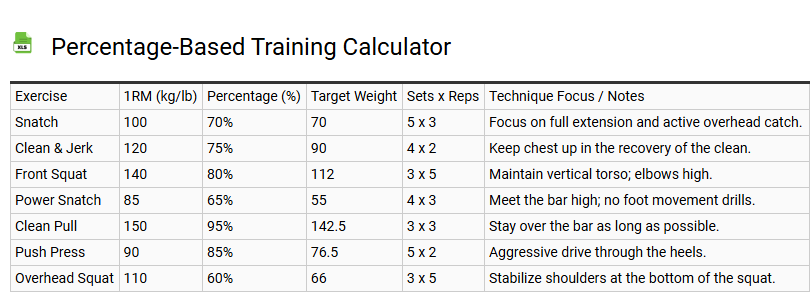
- Percentage-based loading to ensure consistent progressive overload.
- Accessory exercises targeting the posterior chain and core stability.
- Volume management to prevent overtraining while honing barbell speed.
By focusing on triple extension and catch mechanics, athletes can improve their total tonnage. This template provides a roadmap for weightlifting success, ensuring linear progression and peak performance throughout the competitive season.
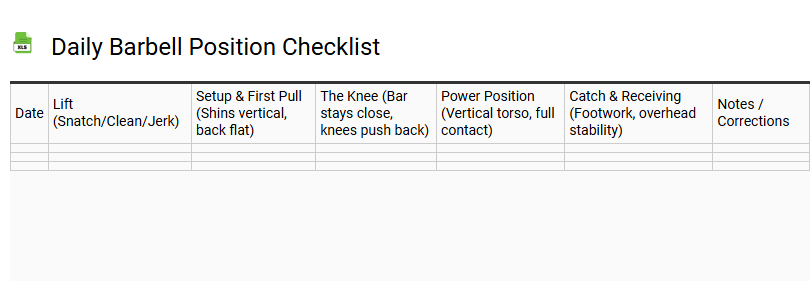
Daily Barbell Position Checklist
💾 Daily Barbell Position Checklist .xls
A Daily Barbell Position Checklist serves as a vital framework for optimizing strength training efficiency and ensuring long-term joint health. By systematically auditing the kinetic chain, athletes can master barbell mechanics to enhance overall athletic performance. This protocol prioritizes foot stability and core engagement, creating a rigid foundation for technical powerlifting or weightlifting movements. Evaluating joint alignment from the ankles to the shoulders ensures proper muscular tension and a linear bar path during every lift. Utilizing this structured approach minimizes injury risk while maximizing range of motion and biomechanical leverage. Consistent adherence to these setup protocols refines posterior chain activation, allowing for peak force production. Implementing this checklist transforms routine sessions into precision-driven drills, focusing on technical mastery and functional movement patterns essential for any comprehensive strength program.
Weightlifting Accessory Exercise Log
💾 Weightlifting Accessory Exercise Log .xls
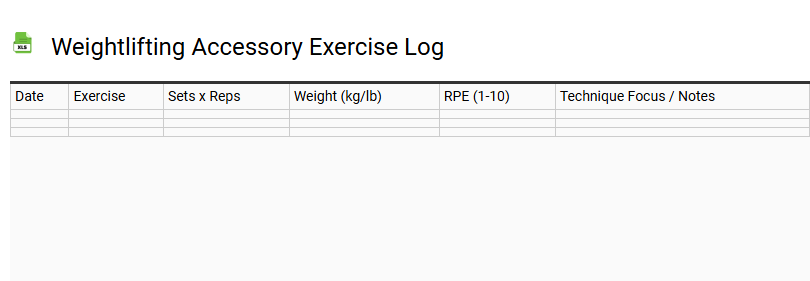
An effective weightlifting accessory exercise log serves as a vital tool for tracking hypertrophy and isolation movements that complement primary compound lifts. By systematically recording assistance work, athletes can identify and correct muscle imbalances while enhancing structural integrity. This template facilitates precise monitoring of training volume, including sets, reps, and load, to ensure consistent progressive overload. Integrating metrics such as RPE (Rate of Perceived Exertion) helps manage fatigue and optimize recovery within your training split. Whether focusing on muscular endurance or bodybuilding aesthetics, documenting every unilateral drill and auxiliary lift provides the data necessary to refine weak points. Utilizing this structured approach bridges the gap between raw strength training and functional symmetry, ensuring that supplemental volume tracking translates directly into improved performance and muscle growth.
Percentage-Based Training Calculator
💾 Percentage-Based Training Calculator .xls
Snatch and Clean Pull Volume Tracker
💾 Snatch and Clean Pull Volume Tracker .xls
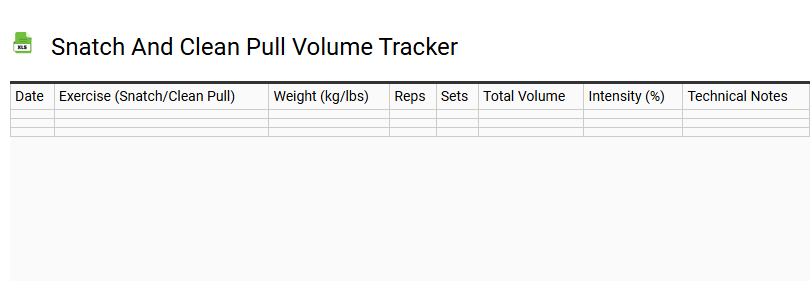
This Snatch and Clean Pull Volume Tracker is an essential tool for Olympic weightlifters aiming to monitor pulling strength and technical proficiency. By logging specific sets, reps, and tonnage, athletes can optimize their strength cycles and ensure consistent progress in the triple extension phase of the lifts.
This template focuses on tracking intensity percentages relative to 1RM, facilitating precise load management for essential accessory movements. Key metrics include:
- Monitoring barbell trajectory and peak power output.
- Analyzing total work capacity to prevent overtraining.
- Tracking hypertrophy trends and force production.
Whether you are refining movement mechanics or increasing explosive power, this digital lifting log provides the data needed to adjust training frequency and break through plateaus. Master your pull and achieve new personal records through systematic, data-driven volume tracking.
Footwork and Receiving Position Log
💾 Footwork and Receiving Position Log .xls
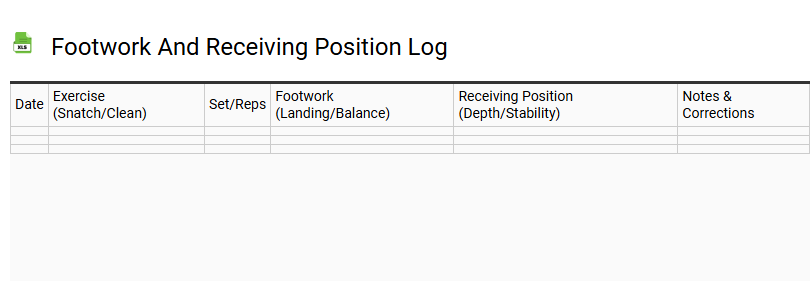
This Footwork and Receiving Position Log serves as a strategic tool for enhancing athletic performance and spatial awareness. By systematically documenting specific footwork patterns and base stance metrics, athletes can refine their functional balance and kinetic coordination. This template focuses on tracking lateral movement agility, body alignment during the first touch, and weight distribution transitions.
- Monitor response time and recovery speed to optimize defensive transitions.
- Analyze pivot mechanics and directional changes to build durable muscle memory.
- Evaluate body orientation relative to game stimuli for improved tactical positioning.
Utilizing this structured log facilitates data-driven skill development, allowing for precise adjustments in technical proficiency. Consistently recording these variables ensures peak mechanical efficiency and readiness during high-intensity play, effectively bridging the gap between isolated training drills and real-time competitive execution.
Technique Video Review Checklist
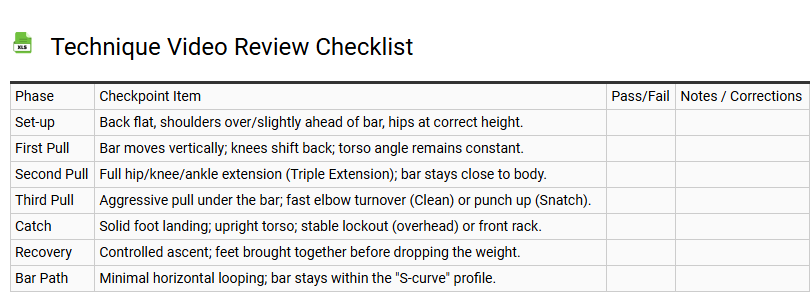
💾 Technique Video Review Checklist .xls
A technique video review checklist serves as a vital framework for objective performance analysis and skill acquisition. By utilizing structured evaluation templates, coaches and athletes can conduct a detailed biomechanical assessment through frame-by-frame scrutiny. This systematic approach leverages slow-motion playback and visual cues to identify subtle movement patterns and technical inefficiencies.
Key elements of a comprehensive review include:
- Body Positioning: Evaluating joint alignment and posture during critical execution phases.
- Biomechanical Feedback: Identifying deviations from optimal form to facilitate immediate correction.
- Comparative Analysis: Using video analysis tools to benchmark movements against elite standards.
- Actionable Drills: Translating visual data into specific corrective exercises for motor learning.
Integrating these checklists into regular training ensures consistent athletic assessment, fostering rapid improvement through precise motion capture data and data-driven feedback loops.
Olympic Lifting Personal Record Tracker
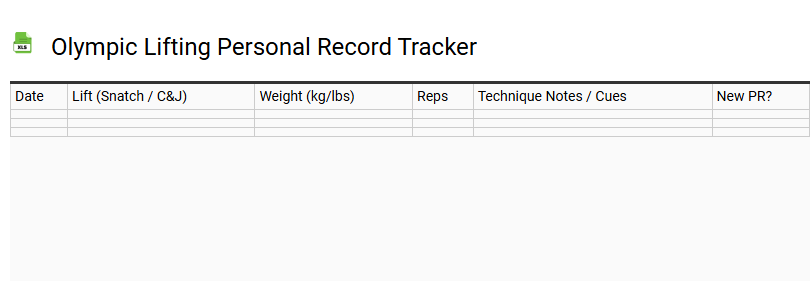
💾 Olympic Lifting Personal Record Tracker .xls
An Olympic Lifting Personal Record Tracker is a vital tool for athletes mastering the Snatch and Clean and Jerk. This structured template facilitates precise performance monitoring by logging one-rep max (1RM) attempts, barbell volume, and training intensity. By documenting specific weightlifting metrics, lifters can analyze strength progression and identify technical plateaus within their training cycles.
Effective tracking incorporates load management strategies to optimize hypertrophy and explosive power. Utilizing a dedicated log ensures that every personal best is recorded, providing the data necessary for peaking phases and tapering before competition. Whether executing power snatches or clean complexes, consistent data entry supports progressive overload, helping strength athletes visualize their journey toward elite-level athletic performance and enhanced physical conditioning through measurable lifting gains.
Barbell Path Velocity Log
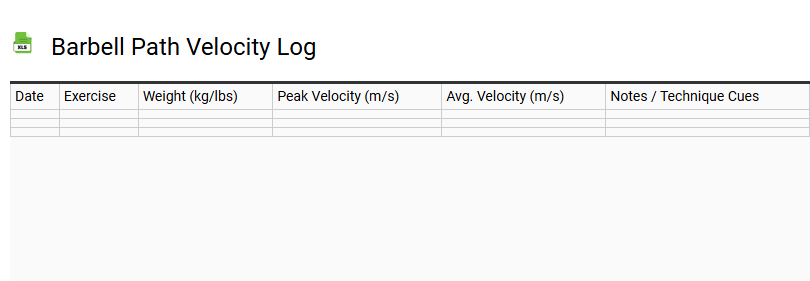
💾 Barbell Path Velocity Log .xls
A barbell path velocity log serves as a specialized tracking framework for athletes focusing on explosive power and technical precision. By recording the vertical and horizontal displacement of the bar alongside its speed in meters per second, lifters can objectively measure performance beyond simple load weight.
This structured data capture assists in several critical areas of strength development:
- Identifying specific sticking points during maximum effort repetitions.
- Monitoring neuromuscular fatigue through consistent velocity loss tracking.
- Ensuring repeatable bar trajectory across various intensity percentages.
- Adjusting daily training loads based on real-time speed feedback.
Utilizing this template allows for precise adjustments to training intensity. By transforming subjective physical effort into quantifiable metrics, you can maintain optimal power output and refine complex lifting mechanics for sustainable progress and injury prevention.
Warm-up and Mobility Sequence Sheet
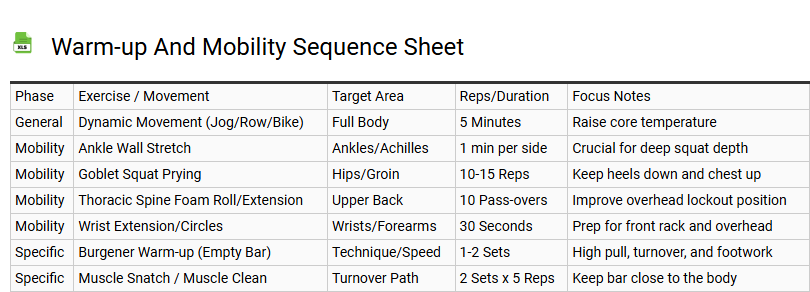
💾 Warm-up and Mobility Sequence Sheet .xls
This Warm-up and Mobility Sequence Sheet serves as a comprehensive blueprint for optimizing athletic performance and injury prevention. By prioritizing dynamic stretching and joint lubrication, the template effectively increases functional range of motion (ROM) and flexibility. Each routine is designed to facilitate muscle activation and neuromuscular efficiency, ensuring the body is primed for high-intensity movement patterns.
Incorporating myofascial release and corrective exercises, this resource addresses postural imbalances and enhances physical readiness. The structured flow targets connective tissue health and blood flow, bridging the gap between rest and peak exertion. Utilizing this systematic approach to pre-workout preparation fosters long-term musculoskeletal health and biomechanical efficiency, making it an essential tool for athletes and fitness enthusiasts dedicated to sustainable training progress and superior recovery outcomes.
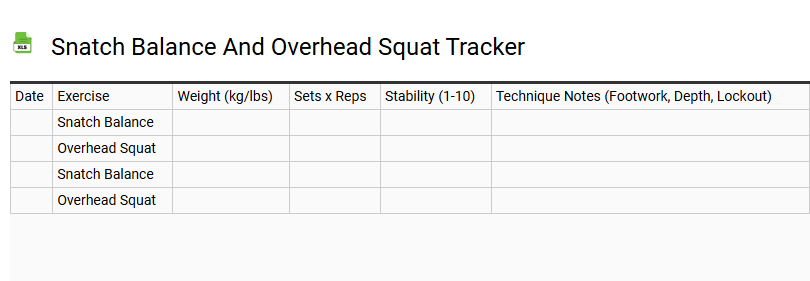
Snatch Balance and Overhead Squat Tracker
💾 Snatch Balance and Overhead Squat Tracker .xls
Optimize your Olympic weightlifting journey with this specialized Snatch Balance and Overhead Squat tracker. Designed for high-performance athletes, this template monitors critical metrics like 1RM, lockout strength, and squat depth to ensure maximum overhead stability.
By logging your barbell sessions, you can analyze:
- Technique proficiency in the snatch catch and bottom position.
- Core engagement and balance during heavy load phases.
- Progressive load progression for increased explosive power.
- Essential mobility benchmarks for improved athletic performance.
This training log acts as a vital snatch primer, helping you bridge the gap between pulling mechanics and receiving speed. Maintain a data-driven approach to your weightlifting progress, refining your technical execution to consistently hit new personal records while mastering the most challenging positional demands of the snatch.
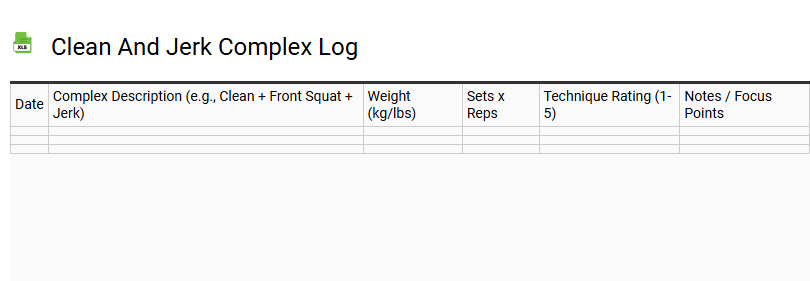
Clean and Jerk Complex Log
💾 Clean and Jerk Complex Log .xls
This Clean and Jerk complex log is a vital tool for Olympic weightlifting enthusiasts looking to track barbell performance. Designed for precision, this template captures essential strength training metrics such as sets, repetitions, and load intensity. By documenting movements like the power clean, squat clean, and split jerk, athletes can analyze their technical proficiency and explosive power.
Use the integrated fields to monitor progressive overload and Rate of Perceived Exertion (RPE), ensuring optimal recovery and volume management. Whether focusing on overhead stability or triple extension, this log facilitates detailed data entry for every lifting session. Optimized for neuromuscular adaptation, this structured format helps refine your weightlifting technique while tracking maximal effort and tonnage over time for consistent athletic progression and functional fitness gains.
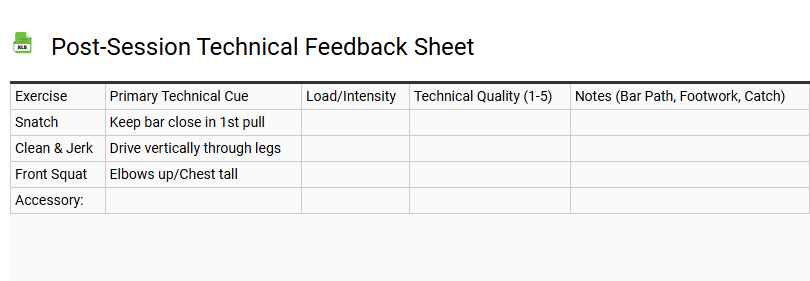
Post-Session Technical Feedback Sheet
💾 Post-Session Technical Feedback Sheet .xls
A Post-Session Technical Feedback Sheet serves as a critical diagnostic instrument for evaluating system performance and software stability following an IT implementation or training event. By gathering granular data on infrastructure reliability and user interface responsiveness, organizations can identify recurring bottlenecks or latency issues encountered during live operations.
Utilizing this template facilitates a structured feedback loop, capturing essential troubleshooting insights and hardware compatibility metrics. Key components typically include:
- Evaluation of bandwidth allocation and connectivity uptime.
- Assessment of software integration and functional interoperability.
- Documentation of error logs and technical anomaly resolution.
Implementing these quality assurance protocols ensures continuous service optimization and refines technical documentation for future deployments, ultimately enhancing the overall user experience and system architecture resilience.
This Olympic weightlifting technique log provides a structured framework for mastering the snatch and clean and jerk. By documenting barbell trajectory, mobility drills, and technical proficiency, athletes can effectively analyze movement patterns and refine their lifting performance.
Implementing a dedicated training diary ensures every session serves a purpose. Consistently recording coaching cues and accessory movements will transform your data into actionable insights, paving the way for consistent progress and new personal records.