
One Rep Max Percentage Calculator Template
Optimizing your strength training requires data-driven precision. A One Rep Max (1RM) percentage calculator template allows athletes to estimate their peak lifting capacity based on sub-maximal efforts. By integrating established algorithms like the Brzycki formula or Epley equation, this tool identifies specific training zones for powerlifting and bodybuilding. Tracking load intensity ensures consistent progressive overload while minimizing injury risk. Enhance your programming by calculating training volumes and barbell weights with accuracy. Check out the already made variation of templates below.
Standard 1RM Calculator
💾 Standard 1RM Calculator .xls
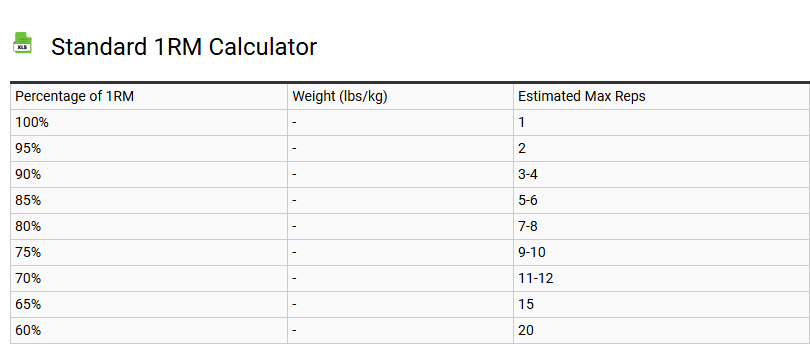
This Standard 1RM Calculator serves as a critical tool for athletes and coaches to estimate maximal strength without the physical strain of a true max attempt. By analyzing submaximal load and completed repetitions, the algorithm applies industry-standard equations, such as the Brzycki or Epley formula, to determine your theoretical lifting capacity.
Integrating these metrics into your strength training routine allows for precise intensity adjustments and optimized volume management. Whether you are focused on powerlifting, weightlifting, or hypertrophy, knowing your one-rep max is essential for calculating percentage-based programming. Tracking your personal records (PRs) through this estimation helps mitigate central nervous system fatigue while ensuring consistent progress in muscular endurance and force production. Use this data-driven approach to refine your resistance training and reach peak performance levels efficiently.
Percentage-Based Training Load Chart
💾 Percentage-Based Training Load Chart .xls
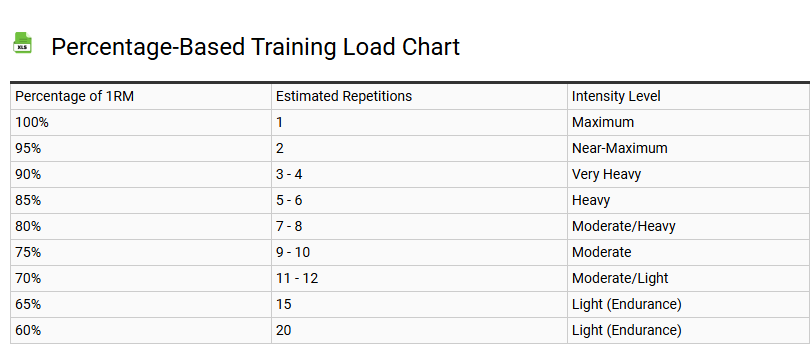
Implementing a percentage-based training load chart is a cornerstone of effective strength programming and periodization. By calculating specific intensities derived from an athlete's one-rep max (1RM), this template ensures precise progressive overload throughout various training cycles. These charts map intensity zones to optimal rep ranges, allowing lifters to target specific physiological goals ranging from hypertrophy to maximal neuromuscular power.
Utilizing structured barbell loading data streamlines resistance training, removing the guesswork from compound movements. Integrating RPE (Rate of Perceived Exertion) with fixed percentages facilitates autoregulation, adjusting for daily recovery levels. Whether applied to powerlifting or general weightlifting, a comprehensive load chart optimizes training volume and recovery. This systematic approach enhances athletic development, ensuring consistent strength gains while mitigating the risk of overtraining through data-driven load management.
Epley and Brzycki Formula Comparison
💾 Epley and Brzycki Formula Comparison .xls
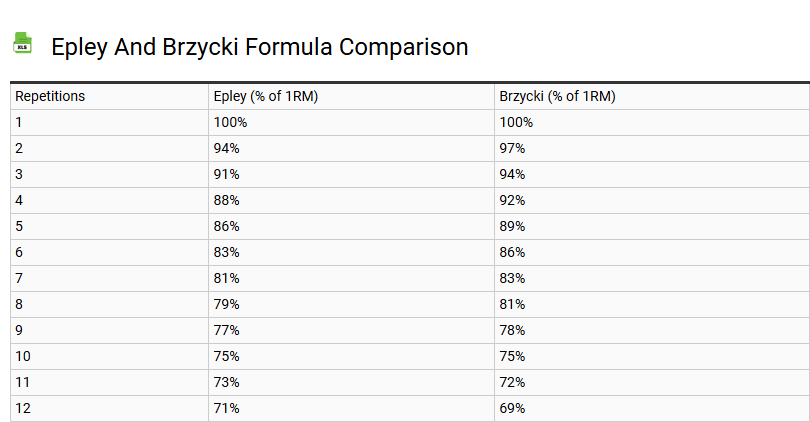
Comparing the Epley and Brzycki formulas is essential for accurate one-repetition maximum (1RM) estimation within a professional strength training framework. These mathematical models allow athletes to predict their maximal lifting capacity using submaximal weight and repetition volume, reducing the risk of injury associated with true failure testing.
The Epley equation is frequently favored for higher repetition ranges, making it ideal for bodybuilding and muscular endurance assessments. In contrast, the Brzycki formula is often cited for its precision during lower rep counts, offering a reliable strength assessment for powerlifters. Both algorithms serve as vital tools for calculating training intensity and ensuring progressive overload. By integrating these metrics into your resistance training routine, you can effectively track performance gains in core lifts like the bench press, squat, and deadlift while optimizing your overall fitness programming.
Estimated 1RM Volume Tracker
💾 Estimated 1RM Volume Tracker .xls
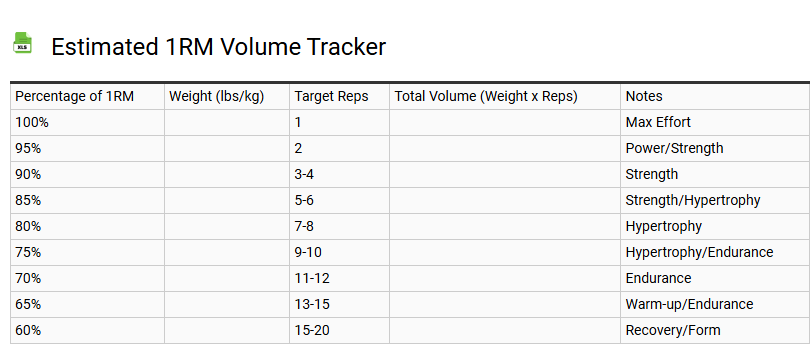
An Estimated 1RM Volume Tracker serves as a vital tool for data-driven strength training and progressive overload management. By utilizing validated algorithms like the Brzycki formula or Epley equation, this template calculates your theoretical one-repetition maximum based on submaximal lifting intensity. Users can monitor total training volume, track muscular hypertrophy trends, and evaluate workload capacity over specific periods. This performance tracking system is essential for powerlifting and bodybuilding, allowing lifters to visualize strength gains without the fatigue of frequent maximal testing. Integrating fitness analytics into your routine ensures precise resistance training adjustments, helping to optimize plateau breaking strategies and overall athletic performance. This structured approach to weightlifting data streamlines periodization, making it easier to manage tonnage and ensure consistent repetition maximum improvements across various compound movements.
Training Max Percentage Generator
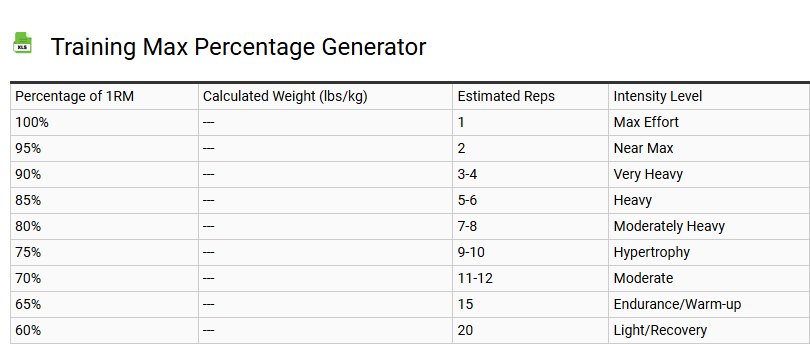
💾 Training Max Percentage Generator .xls
A Training Max Percentage Generator is an essential utility for powerlifters and strength athletes utilizing percentage-based programming. This tool accurately calculates specific weight loads based on your one rep max (1RM) or a designated training max (TM), typically set at 85-90% of true capacity. By focusing on submaximal training, it helps manage systemic fatigue and prevents overtraining during intense lifting cycles like Jim Wendler's 5/3/1.
Optimizing your load management ensures consistent progression across various rep schemes and intensity levels. This generator simplifies complex strength training mathematics, providing precise increments for hypertrophy or peak power phases. Whether you are adjusting RPE-based targets or following a structured periodization block, integrating a percentage calculator refines your lifting split. Ensure every set is programmed for maximum efficiency, balancing recovery with high-performance output for long-term strength gains.
Wendler 5/3/1 Training Load Calculator
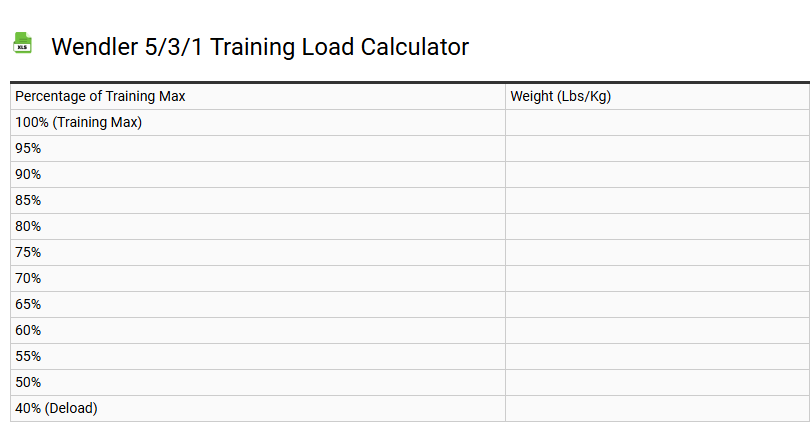
💾 Wendler 5/3/1 Training Load Calculator .xls
This Wendler 5/3/1 Training Load Calculator streamlines Jim Wendler's powerlifting methodology by automating monthly progression. By inputting your one rep max (1RM) for core compound lifts-squat, bench press, deadlift, and overhead press-the template establishes your Training Max (TM), traditionally set at 85-90% to ensure sustainable growth.
Using advanced periodization, the calculator generates precise weight increments for each cycle, focusing on progressive overload. Key features include:
- Automated percentage-based calculations for weekly sets and reps.
- Customizable increments for barbell training progression.
- Integrated tracking for AMRAP (As Many Reps As Possible) sets to gauge strength gains.
This digital utility eliminates manual arithmetic, allowing athletes to focus on hypertrophy and peak force production. It is an essential tool for structured strength training, providing a clear roadmap for long-term athletic development and consistent PRs.
RPE to 1RM Conversion Table
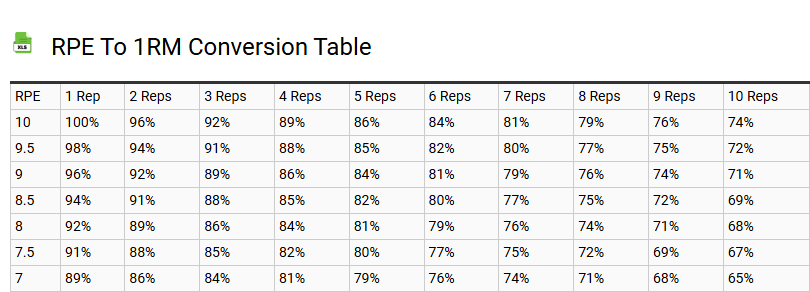
💾 RPE to 1RM Conversion Table .xls
This RPE to 1RM conversion table serves as a vital tool for strength training athletes utilizing autoregulation. By mapping the Rating of Perceived Exertion against specific repetition ranges, lifters can accurately estimate their one-rep max percentages in real-time. This dynamic approach to load management accounts for daily fluctuations in recovery, CNS fatigue, and performance readiness.
Integrating Repetitions in Reserve (RIR) data allows powerlifters and bodybuilders to fine-tune training intensity without the risk of overreaching. Whether programming for hypertrophy or absolute strength, this template translates subjective effort into actionable percentage-based loading. Utilizing this intensity chart ensures precise volume prescription, helping you optimize neuromuscular adaptations and maintain consistent progress throughout your periodization cycle. Adjust your working weight based on the intersection of perceived difficulty and targeted reps for superior physiological outcomes.
Olympic Lifting Percentage Chart
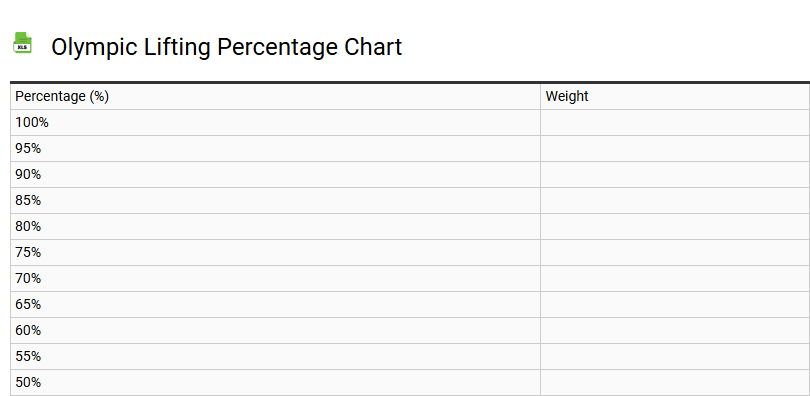
💾 Olympic Lifting Percentage Chart .xls
An Olympic lifting percentage chart serves as a foundational framework for athletes aiming to refine their Snatch and Clean and Jerk. By calculating training loads relative to a verified One-Rep Max (1RM), lifters achieve precise progressive overload throughout their barbell cycles. These templates often integrate principles from Prilepin's Chart to optimize the relationship between intensity and lifting volume, ensuring effective load management.
- Enhances neuromuscular adaptation by targeting specific training zones.
- Facilitates data-driven strength programming for peaking phases.
- Optimizes technical proficiency through controlled, sub-maximal repetitions.
Utilizing a structured percentage-based approach allows for calculated adjustments in accessory work and explosive power development. This systematic method minimizes injury risk while maximizing peak performance on the platform, making it an indispensable resource for competitive weightlifting and periodized strength training.
Powerlifting Meet Attempt Planner
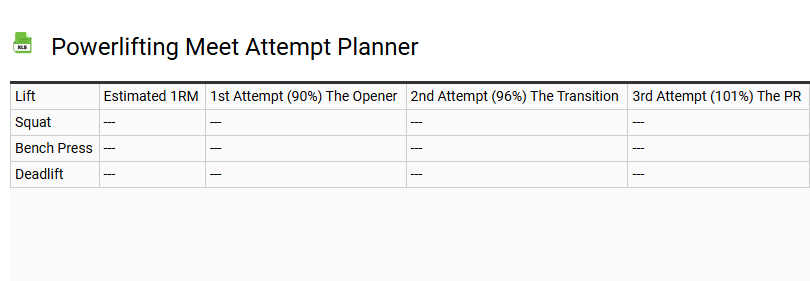
💾 Powerlifting Meet Attempt Planner .xls
A Powerlifting Meet Attempt Planner is a strategic tool designed for strength athletes to optimize platform performance. This template facilitates precise attempt selection for the squat, bench press, and deadlift, ensuring lifters hit their desired total. By inputting projected maxes, the calculator generates recommended openers, conservative second attempts, and aggressive third attempts based on RPE and recovery.
Integrated kilo conversion charts and Wilks or DOTS score estimators allow for real-time competitive analysis within specific weight classes. Effective planning prevents "bombing out" and manages the nervous system during a peaking cycle. Utilizing a structured log helps coaches track warm-up room timing and plate loading, ensuring the athlete remains focused on execution. Whether competing in a local sanctioned meet or a national championship, this strength training resource is essential for maximizing every pound on the bar.
Weekly 1RM Progression Sheet
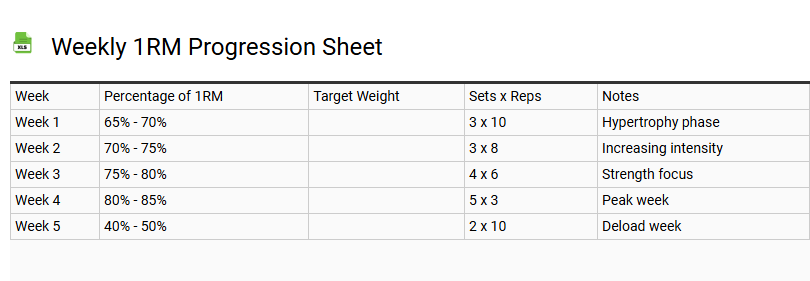
💾 Weekly 1RM Progression Sheet .xls
This Weekly 1RM Progression Sheet serves as a strategic framework for athletes implementing progressive overload to maximize absolute strength. By systematically tracking compound lifts like the squat, bench press, and deadlift, lifters can calculate precise intensity percentages for every training session. This template facilitates structured periodization, allowing for seamless transitions between hypertrophy and strength-focused blocks.
- One Rep Max (1RM) estimation based on submaximal performance.
- Integration of RPE (Rate of Perceived Exertion) to manage central nervous system fatigue.
- Data-driven tracking of training volume and load increments.
Utilizing this lifting log ensures objective adjustments to your training cycles, effectively minimizing plateaus. Whether following a powerlifting protocol or a general strength training routine, this weightlifting tracking tool optimizes performance through consistent, measurable feedback on strength gains.
Strength Zone Intensity Calculator
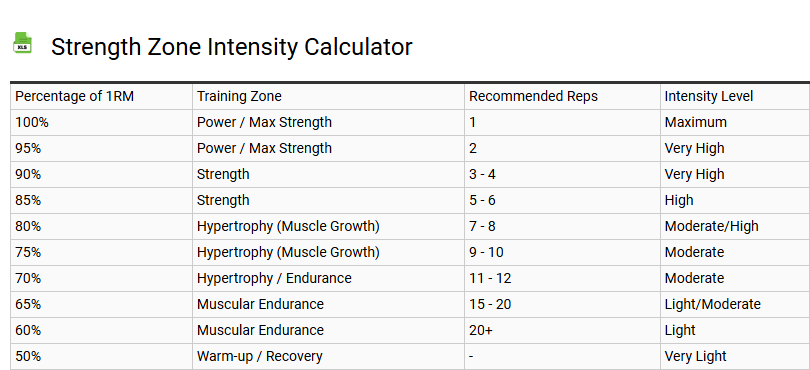
💾 Strength Zone Intensity Calculator .xls
This Strength Zone Intensity Calculator is a vital tool for optimizing resistance training by determining precise load requirements based on your one-rep max (1RM). By leveraging percentage-based loading, athletes can accurately target specific physiological adaptations, including explosive power, hypertrophy, and muscular endurance. This template streamlines progressive overload strategies, helping lifters overcome strength plateaus through data-driven periodization.
Integrating this calculator into your weightlifting routine ensures that every set aligns with your training volume goals and RPE (Rate of Perceived Exertion) targets. Whether you are a competitive powerlifter or focusing on muscular hypertrophy, understanding these intensity zones is crucial for effective program design. Use these calculated metrics to refine your lifting technique and ensure consistent neuromuscular adaptation, maximizing peak performance while minimizing the risk of overtraining during high-intensity cycles.
Personal Record Percentage Breakdown
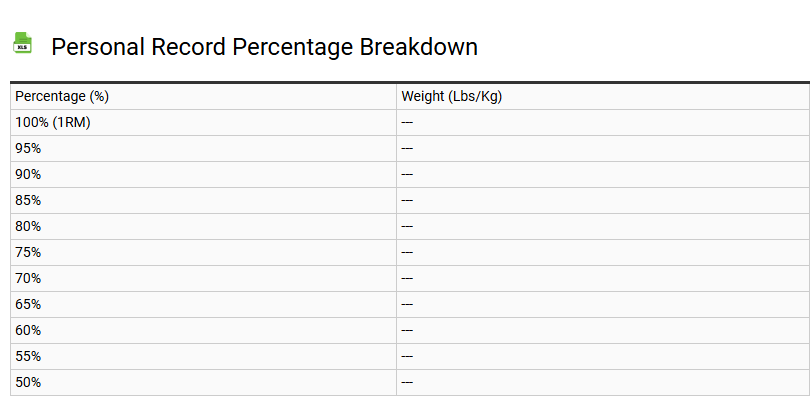
💾 Personal Record Percentage Breakdown .xls
A Personal Record (PR) Percentage Breakdown is an essential tool for athletes utilizing percentage-based training to optimize strength cycles. By calculating specific increments of your one-rep max (1RM), this template allows for precise load management and training intensity adjustments. Whether your goal is muscle hypertrophy or peak power, understanding these ratios ensures systematic progressive overload.
Utilizing a structured lifting chart helps define working sets and relative intensity, reducing the risk of performance plateaus. This breakdown simplifies volume calculation for various compound movements, ensuring every training session aligns with specific fitness objectives. Track your lift progression accurately and refine your weightlifting program to reach your peak performance with data-driven accuracy.
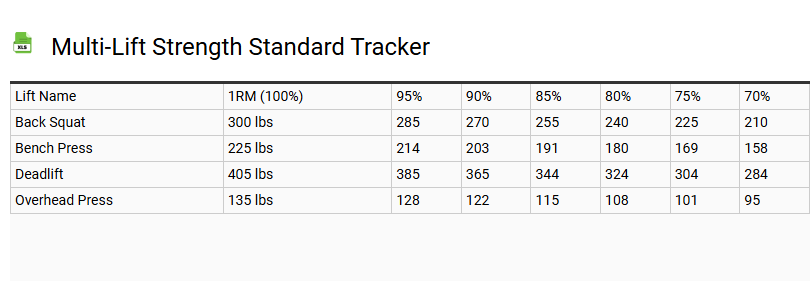
Multi-Lift Strength Standard Tracker
💾 Multi-Lift Strength Standard Tracker .xls
This multi-lift strength standard tracker is an essential tool for athletes dedicated to monitoring progressive overload across core compound movements. By recording performance data for the squat, deadlift, bench press, and overhead press, users can evaluate their current 1RM (one-rep max) against objective strength benchmarks.
The template focuses on key lifting metrics, including:
- Relative strength ratios based on body weight categories.
- Detailed performance logging for historical progress visualization.
- Assessment of resistance training proficiency levels (Novice to Elite).
Utilizing this structured approach aids in athletic development by identifying physiological plateaus and optimizing volume load. This data-driven framework ensures balanced muscle recruitment and provides a clear roadmap for achieving peak physical performance through consistent strength gains and disciplined weightlifting tracking.
Dynamic Effort Percentage Calculator
💾 Dynamic Effort Percentage Calculator .xls
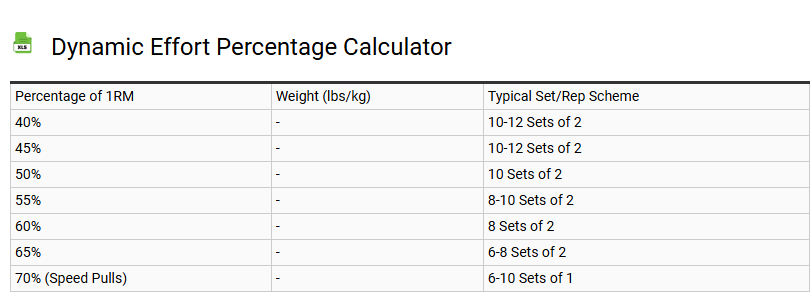
The Dynamic Effort Percentage Calculator is a specialized tool designed for athletes implementing the Conjugate Method to enhance their rate of force development (RFD). By inputting a current one-rep max (1RM), lifters can accurately determine the submaximal loads necessary for high-velocity speed work.
Commonly utilized in powerlifting protocols like Westside Barbell, this method focuses on compensatory acceleration. The calculator generates precise training intensities, typically ranging from 50% to 60%, to optimize explosive power during the squat, bench press, and deadlift. This template accounts for accommodating resistance, such as bands and chains, ensuring peak bar speed and neuromuscular efficiency. By managing training volume through these calculations, strength athletes can improve athletic performance and explosive strength without overtaxing the central nervous system during strength training cycles.
Max Effort Day Intensity Tracker
💾 Max Effort Day Intensity Tracker .xls
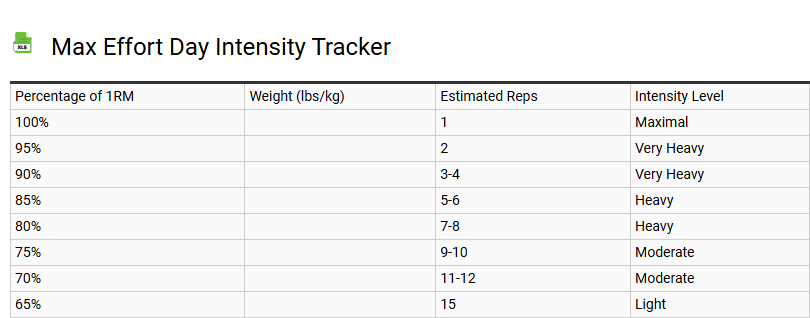
This Max Effort Day Intensity Tracker serves as a critical diagnostic tool for powerlifters and strength athletes utilizing the Conjugate Method. By meticulously logging absolute strength output, this template quantifies neurological strain and ensures consistent progressive overload.
Users can record specific exercise selection, 1RM (one-rep max) attempts, and the corresponding Rate of Perceived Exertion (RPE) to monitor CNS fatigue. Integrating these metrics into your training cycle facilitates long-term periodization, balancing high-intensity lifting performance with systemic recovery.
Tracking personal records (PRs) across various movement patterns prevents stagnation and optimizes training volume. This systematic approach allows for precise adjustments in load, ensuring every heavy session contributes to peak force production while minimizing the risk of overtraining. Use this data-driven framework to refine your strength development and master high-tension stimulus.
Custom Rep-to-Max Conversion Sheet
💾 Custom Rep-to-Max Conversion Sheet .xls
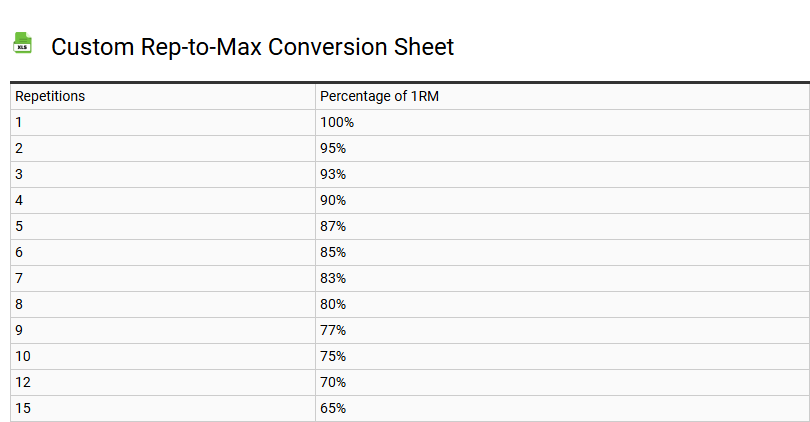
This Custom Rep-to-Max Conversion Sheet serves as a precision tool for athletes to calculate their estimated one-repetition maximum (1RM) based on sub-maximal lifting data. By utilizing validated algorithms like the Brzycki formula or the Epley equation, this template streamlines strength training programming. It effectively translates resistance training loads into actionable intensity levels, allowing for accurate load progression and optimized training volume.
Designed for powerlifting and hypertrophy phases, the sheet facilitates data-driven periodization. Users can input specific lifting percentages and integrate RPE (Rate of Perceived Exertion) metrics to refine their strength protocols. This dynamic calculator ensures that your lifting routine remains aligned with individual performance capacity, mitigating overtraining risks while maximizing structural adaptation and peak force output.
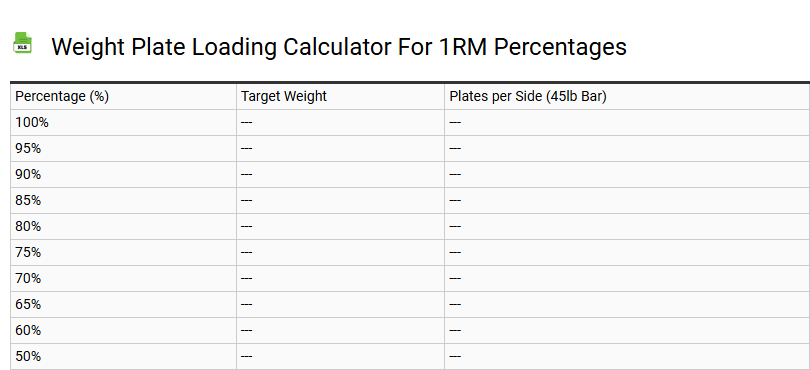
Weight Plate Loading Calculator for 1RM Percentages
💾 Weight Plate Loading Calculator for 1RM Percentages .xls
Optimizing your strength training requires precision when calculating lifting ratios based on your one-rep max (1RM). This weight plate loading calculator eliminates the complex mental math involved in barbell loading. By inputting your target training intensity, the tool determines the exact plate distribution needed for a standard Olympic bar.
Whether you are utilizing iron plates or bumper plates, achieving the correct weight increment is vital for progressive overload. This template assists powerlifting athletes in visualizing the necessary barbell weight for specific percentage-based sets. Key features include:
- Accurate plate math for 45lb or 20kg bars.
- Visual breakdowns of heavy lifting increments.
- Optimized rep max calculations for peak performance.
Streamline your gym session and ensure barbell symmetry for every high-intensity lift using these lifting math solutions.
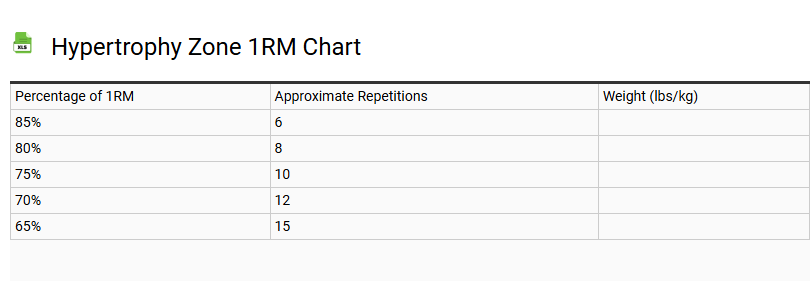
Hypertrophy Zone 1RM Chart
💾 Hypertrophy Zone 1RM Chart .xls
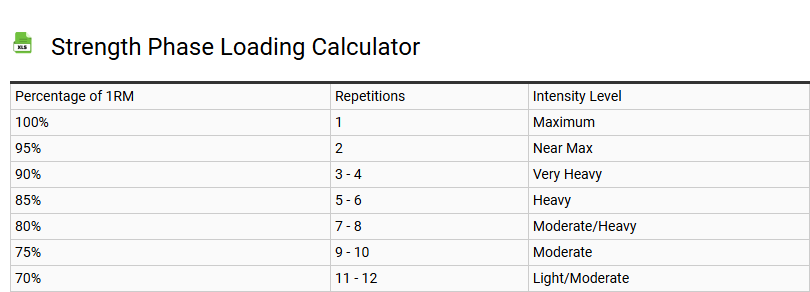
Strength Phase Loading Calculator
💾 Strength Phase Loading Calculator .xls
Maximize your gains with this precision Strength Phase Loading Calculator, engineered for athletes targeting neuromuscular adaptations and peak force production. This tool streamlines periodization by calculating optimal training intensities based on your current one-rep max (1RM). By quantifying specific loading parameters for compound lifts, the template ensures systematic progressive overload across your microcycles.
Refine your barbell prescriptions by transitioning from hypertrophy foundations to high-intensity maximal strength blocks. Whether you prefer percentage-based training or monitoring Rate of Perceived Exertion (RPE), this calculator manages your total tonnage and repetition maximums effectively. Avoid central nervous system (CNS) fatigue while stimulating motor unit recruitment. Use this data-driven approach to structure your sets and reps, ensuring every training block culminates in a new personal record through validated weightlifting metrics.
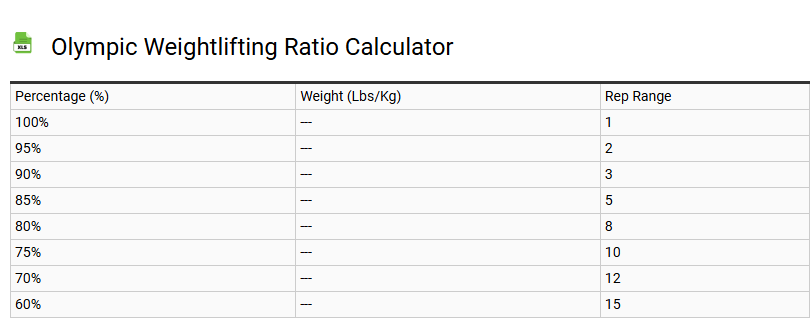
Olympic Weightlifting Ratio Calculator
💾 Olympic Weightlifting Ratio Calculator .xls
This Olympic Weightlifting Ratio Calculator evaluates the critical balance between your Snatch, Clean and Jerk, and foundational strength lifts like the Back Squat and Front Squat. In competitive weightlifting, maintaining specific strength ratios ensures structural integrity and technical efficiency. For instance, a common benchmark is a Snatch-to-Clean and Jerk ratio of approximately 78-82%. Significant deviations often indicate a need for improved technical proficiency or raw explosive power.
By analyzing these percentages, athletes can pinpoint weaknesses within their kinetic chain and optimize their training cycles. This tool assists weightlifters in transitioning general strength into specific barbell sport performance, ensuring leg strength translates effectively into overhead stability and triple extension drive. Use these data-driven insights to fine-tune your programming, improve force production, and achieve a balanced, competitive athletic profile.
Utilizing this one rep max percentage calculator streamlines strength training by determining precise lift intensity for movements like the bench press, squat, and deadlift. By applying the Brzycki or Epley formulas, athletes accurately estimate training loads across various intensity zones. This tool is essential for progressive overload, helping powerlifters and bodybuilders optimize rep ranges for hypertrophy or peak power. Implement these calculated weightlifting percentages to refine your program, ensure safe progression, and achieve your peak physical performance goals.