
One Rep Max Tracker Template: Strength Progress and 1RM Logging
Achieving peak performance in strength training requires a reliable method for measuring progress. A professional One Rep Max (1RM) tracker allows lifters to monitor lifting capacity and calculate precise training percentages for various cycles. By documenting personal records in core lifts like the squat and deadlift, you can optimize resistance training and avoid plateaus. These tools are vital for effective weightlifting programming and tracking long-term fitness goals. Please check out the already made variations of templates provided below.
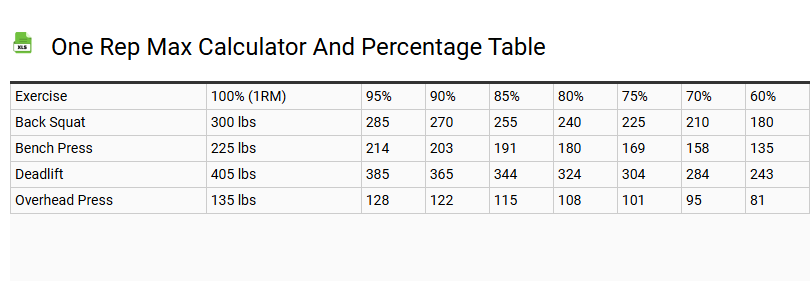
One Rep Max Calculator and Percentage Table
💾 One Rep Max Calculator and Percentage Table .xls
Optimize your strength training routine using this comprehensive One Rep Max (1RM) calculator and percentage table. Designed for powerlifting, bodybuilding, and functional fitness, this tool utilizes verified algorithms like the Brzycki formula and Epley formula to estimate your peak lift capacity without the physical strain of a max effort attempt. By entering your recent weight and repetitions, you can accurately determine intensity zones essential for progressive overload.
The integrated load calculation chart offers a granular breakdown of percentages, assisting in the design of training blocks focused on hypertrophy, endurance, or absolute power. These data-driven rep ranges allow athletes to manage volume and intensity effectively, ensuring safe periodization for compound movements such as the bench press, squat, and deadlift. Leverage these metrics to track neuromuscular adaptation and reach your peak performance goals.
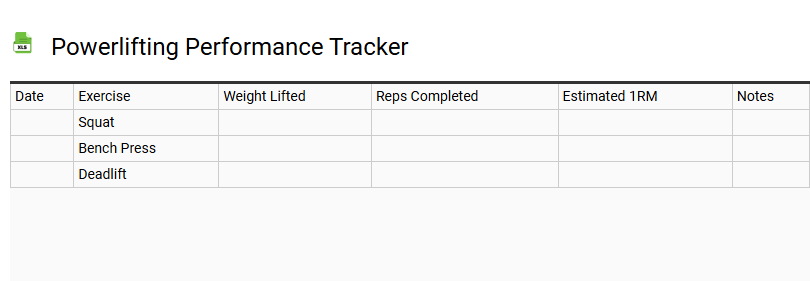
Powerlifting Performance Tracker
💾 Powerlifting Performance Tracker .xls
A powerlifting performance tracker is an indispensable tool for athletes dedicated to mastering the "Big Three": squat, bench press, and deadlift. This comprehensive template facilitates precise logging of training cycles, allowing lifters to monitor progressive overload and volume trends with accuracy. By integrating RPE (Rate of Perceived Exertion) scales and one-rep max (1RM) calculators, the tracker provides real-time feedback on strength gains and intensity levels.
- Automated Wilks or DOTS score benchmarking for competitive comparisons.
- Visual analytics for tonnage tracking and intensity distribution.
- Dedicated sections for accessory movements and hypertrophy goals.
- Strategic planning for peaking phases and meet preparation.
Utilizing structured data entry ensures long-term athletic development, helping lifters identify plateaus and optimize recovery. This systematic approach transforms raw workout logs into actionable insights for peak physical performance.
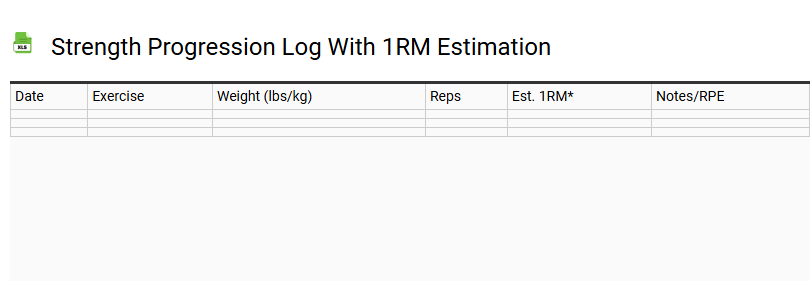
Strength Progression Log with 1RM Estimation
💾 Strength Progression Log with 1RM Estimation .xls
A strength progression log serves as a critical tool for athletes prioritizing progressive overload and systematic hypertrophy. By meticulously documenting exercise variables such as sets, repetitions, and load intensity, lifters can accurately monitor total lifting volume and identify performance trends.
Integrating a 1RM estimation component-utilizing validated algorithms like the Brzycki or Epley formula-allows for the calculation of an estimated one-rep max from submaximal loads. This quantitative data is essential for structuring training blocks, overcoming plateaus, and managing central nervous system fatigue.
Tracking these performance metrics within a digital workout journal ensures that absolute strength and muscular endurance are consistently challenged. This template optimizes neuromuscular adaptation, providing a clear roadmap for powerlifting or bodybuilding success through precise data visualization and strength gain analysis.
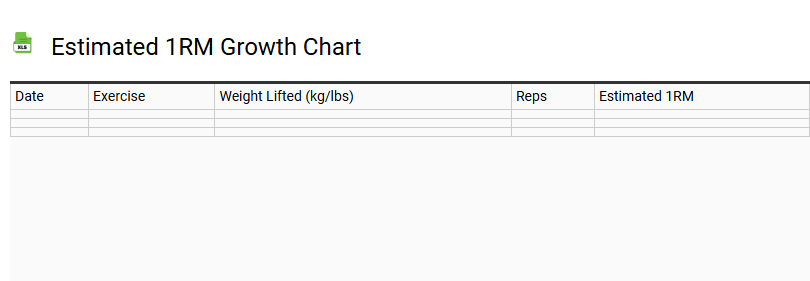
Estimated 1RM Growth Chart
💾 Estimated 1RM Growth Chart .xls
An Estimated 1RM Growth Chart serves as a sophisticated visualization tool for longitudinal strength progression. By leveraging lifting data through validated algorithms like the Brzycki formula or Epley equation, athletes can project their absolute strength without the systemic fatigue associated with maximal testing. This template facilitates the tracking of progressive overload across multiple resistance training cycles, pinpointing strength peaks and identifying training plateaus early. Integrating these powerlifting metrics into a performance tracking dashboard allows for precise adjustments to volume load and intensity. Whether the goal is hypertrophy or explosive power, mapping your estimated one-rep max ensures data-driven insights into your muscular endurance and strength-to-weight ratio. Use this structural framework to refine rep max calculator inputs and visualize consistent athletic development and improved force production over time.
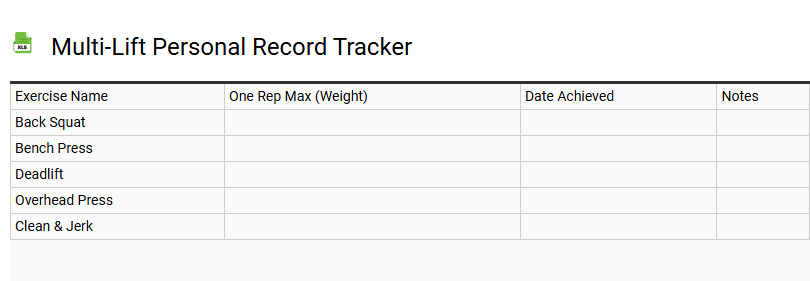
Multi-Lift Personal Record Tracker
💾 Multi-Lift Personal Record Tracker .xls
Optimize your strength training journey with this comprehensive multi-lift personal record tracker. Designed for powerlifters and athletes, this template systematically monitors core compound movements including the squat, bench press, and deadlift.
By documenting your one-rep max (1RM) and submaximal loads, you can effectively visualize progressive overload and analyze critical performance metrics. This tool provides a structured framework for:
- Monitoring volume load and intensity across training cycles.
- Tracking strength gains for hypertrophy or peak performance.
- Logging PR milestones for overhead presses and accessory lifts.
This weightlifting journal acts as a data-driven training log, ensuring accountability toward your fitness goals. Transform your raw workout data into actionable insights to refine your programming and achieve superior athletic development through precise load management and recovery tracking.
Weightlifting Intensity and 1RM Calculator
💾 Weightlifting Intensity and 1RM Calculator .xls
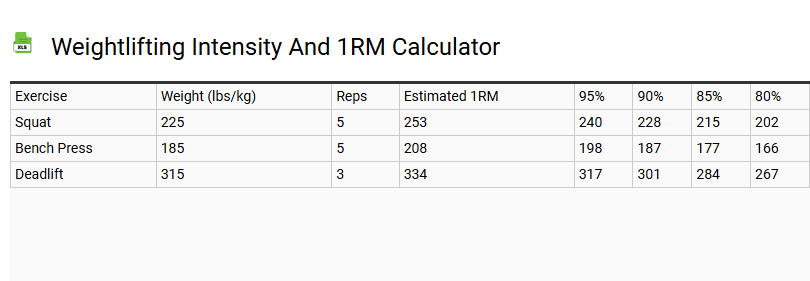
This weightlifting intensity and 1RM calculator template serves as a vital tool for optimizing strength training protocols. By inputting lifted weight and repetitions, athletes can accurately estimate their one-rep max using industry-standard formulas like Epley or Brzycki. This data allows for the precise calculation of intensity zones, ensuring every session aligns with specific goals such as hypertrophy, power, or raw strength. Managing relative intensity and training volume is essential for effective progressive overload and injury prevention in powerlifting and bodybuilding. Use these metrics to determine the optimal load for compound movements, including back squats, deadlifts, and bench presses. Integrating this rep max data into your programming facilitates better resistance training periodization, helping you track performance gains and adjust your lifting capacity for peak competitive results or personal milestones.
Brzycki and Epley Formula 1RM Tracker
💾 Brzycki and Epley Formula 1RM Tracker .xls
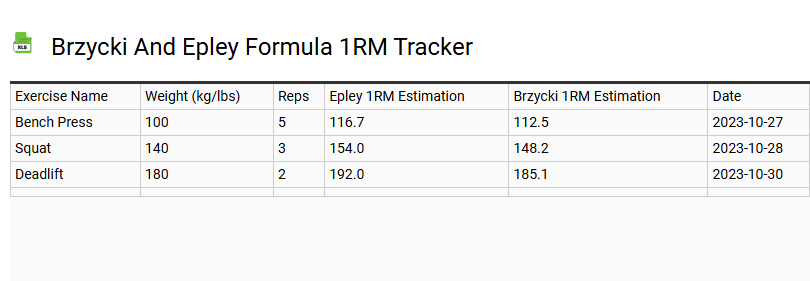
This specialized tracker provides a precise framework for calculating your one-repetition maximum (1RM) using the industry-standard Brzycki and Epley formulas. These mathematical models allow athletes to estimate peak strength and lifting intensity without the physical strain of absolute failure. By inputting lifting weight and completed repetitions, the tool generates a reliable predicted max essential for periodized strength training.
The Brzycki equation is highly effective for lower rep ranges, while the Epley method is a staple in powerlifting and bodybuilding for assessing muscular endurance. Integrating this data into your resistance training routine facilitates progressive overload across core movements like the squat, bench press, and deadlift. This template transforms raw workout metrics into actionable insights, ensuring optimal volume management and strategic performance gains for serious lifters.
Training Volume and 1RM Correlation Sheet
💾 Training Volume and 1RM Correlation Sheet .xls
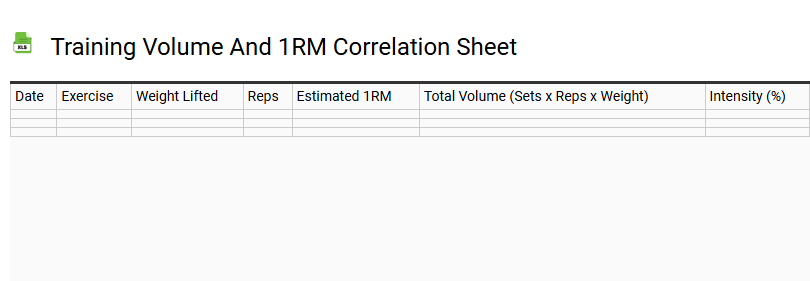
Utilizing a Training Volume and 1RM Correlation Sheet is essential for optimizing progressive overload and tracking physiological strength adaptations. This data-driven template analyzes the intricate relationship between total tonnage-calculated via sets, repetitions, and load-and your estimated one-rep max (1RM). By mapping these variables, athletes can pinpoint the specific intensity thresholds required to trigger neuromuscular recruitment and muscular hypertrophy.
The sheet serves as a diagnostic tool for periodization, ensuring that incremental increases in workload translate directly into peak force production. Monitoring this correlation helps prevent overtraining while maximizing mechanical tension. Through precise calculation of relative intensity and volume load, lifters can visualize their strength progression curve, facilitating informed adjustments to training frequency and macrocycle planning for sustained athletic performance and effective plateau mitigation.
Squat Bench and Deadlift Max Log
💾 Squat Bench and Deadlift Max Log .xls
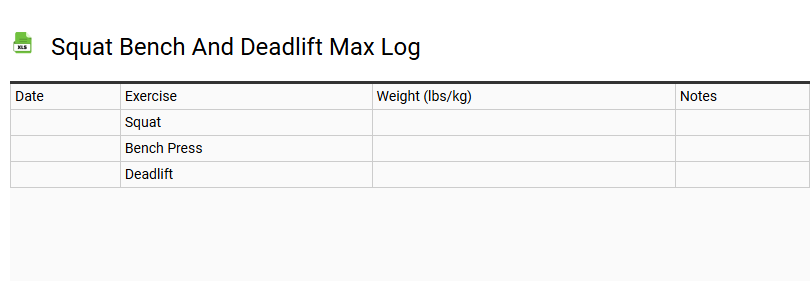
This specialized strength log template is designed for powerlifters and athletes to systematically track their powerlifting total across the three primary compound movements: the back squat, bench press, and deadlift. By utilizing this structured lifting journal, users can effectively monitor progressive overload and document their one-rep max (1RM) milestones.
Integrating this tracking tool into your routine facilitates better periodization and training volume management. It serves as a central hub for recording personal records (PRs) and calculating precise training percentages for future cycles. Consistently logging these athletic benchmarks helps identify performance plateaus and refine strength training protocols. Use this digital log to visualize your strength progress, ensure peak performance during peaking blocks, and maintain a detailed history of your physical evolution in the gym.
Repetition Maximum Standards Template
💾 Repetition Maximum Standards Template .xls
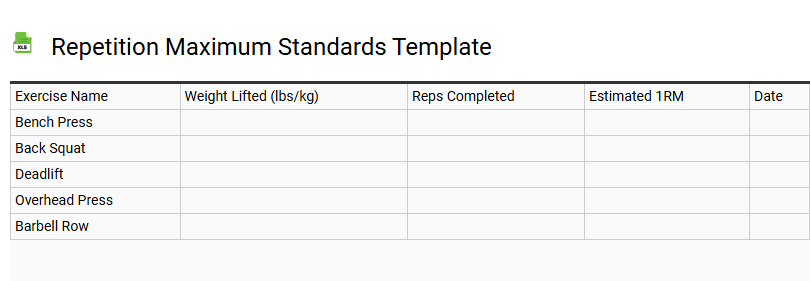
This template provides a structured framework for evaluating physical strength levels across various weightlifting disciplines. By utilizing standardized benchmarks, athletes can determine their current performance tier-ranging from novice to elite-based on their one-repetition maximum capabilities.
The data organization focuses on essential metrics to ensure clarity and accuracy:
- Lift Identification: Specific movements such as the squat, bench press, or deadlift.
- Body Weight Correlation: Measuring strength relative to an individual's total mass for fair comparison.
- Performance Tiers: Comparative data points that define specific strength milestones and experience levels.
Implementing this format ensures consistent tracking and objective goal setting. It allows coaches and practitioners to analyze progress through clear, measurable outputs. Use these tables to align training intensity with recognized athletic norms, facilitating effective programming and long-term development in strength training protocols.
Dynamic Strength Training 1RM Projection
💾 Dynamic Strength Training 1RM Projection .xls
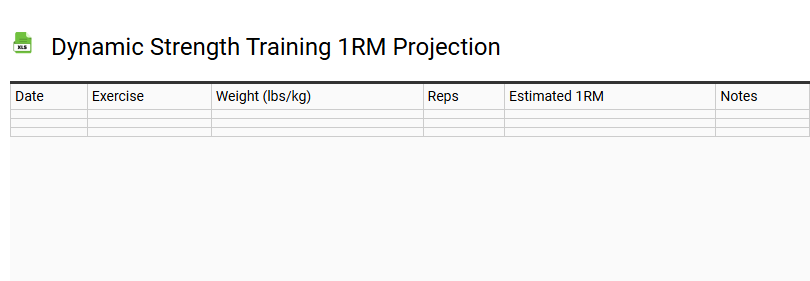
This Dynamic Strength Training 1RM Projection template utilizes periodization principles to estimate maximal power output without necessitating physical failure. By integrating submaximal loading with velocity-based training metrics, athletes can accurately forecast their one-rep max across various strength cycles. The framework emphasizes autoregulation, allowing for real-time adjustments based on RPE (Rate of Perceived Exertion) and current physiological fatigue levels.
Utilizing progressive overload through explosive repetitions ensures consistent neuromuscular adaptation. This predictive model tracks load progression and force production, offering a data-driven approach to hypertrophy and peak performance. By analyzing the correlation between bar speed and intensity percentages, this tool optimizes training volume and load management. Implementing these biometric markers minimizes injury risk while maximizing absolute strength gains, ensuring every resistance training session aligns with specific performance benchmarks.
Weekly 1RM Percentage Training Plan
💾 Weekly 1RM Percentage Training Plan .xls
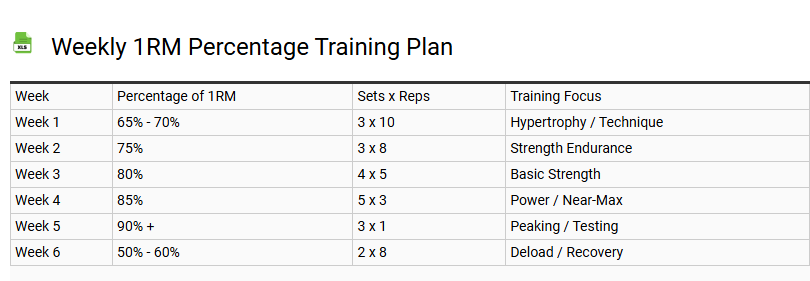
This weekly 1RM percentage training plan utilizes a systematic approach to periodization, ensuring precise intensity management for core compound movements. By calculating loads based on a verified one-rep max, lifters can implement progressive overload across various microcycles. This template focuses on strength training variables, balancing total volume with specific intensity thresholds for the squat, bench press, and deadlift.
Athletes use these loading parameters to target specific adaptations, ranging from muscle hypertrophy to neuromuscular efficiency. Integrating RPE (Rate of Perceived Exertion) alongside fixed percentages allows for autoregulation during high-intensity sessions. A structured weightlifting routine using this percentage-based methodology mitigates overtraining while facilitating consistent PR breakthroughs. Whether for powerlifting or general conditioning, tracking strength gains through a percentage-based template ensures measurable progress, optimal recovery phases, and long-term athletic development within a professional strength program.
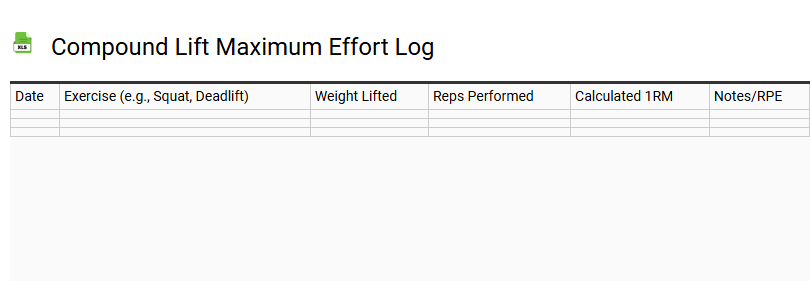
Compound Lift Maximum Effort Log
💾 Compound Lift Maximum Effort Log .xls
This tracking resource optimizes your strength training routine by documenting high-intensity barbell movements. A compound lift maximum effort log focuses on foundational multi-joint exercises like the back squat, bench press, and deadlift. By recording peak intensity and tracking one-rep max (1RM) attempts, athletes ensure consistent progressive overload. This systematic approach monitors central nervous system (CNS) recovery while managing total training volume and systemic fatigue. Utilizing a dedicated log facilitates effective periodization, allowing powerlifters to visualize performance trends and hit new personal records (PRs). Precision in documenting sets, reps, and RPE (Rate of Perceived Exertion) within this template ensures data-driven adjustments for hypertrophy and peak force production. Use this log to master primary lifts and refine athletic programming for maximum strength gains.
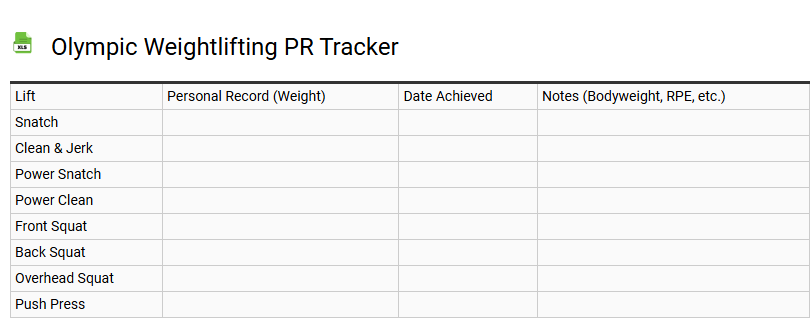
Olympic Weightlifting PR Tracker
💾 Olympic Weightlifting PR Tracker .xls
An Olympic Weightlifting PR Tracker is a specialized tool designed to monitor progress in core disciplines like the Snatch and Clean and Jerk. By systematically recording your 1RM (one-rep max), you can visualize strength gains and refine your barbell technique over time. This template emphasizes periodization, allowing athletes to track training volume and intensity to avoid performance plateaus.
- Log personal records to calculate precise loading percentages.
- Monitor explosive power and lifting mechanics.
- Analyze training frequency within your strength training cycles.
Whether you are a competitive athlete or a fitness enthusiast, maintaining a detailed lifting log ensures accountability. This structured approach to weightlifting data helps optimize recovery and ensures every session on the platform moves you closer to your next major milestone.
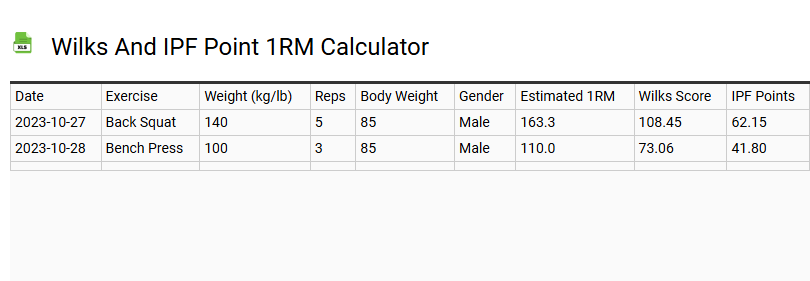
Wilks and IPF Point 1RM Calculator
💾 Wilks and IPF Point 1RM Calculator .xls
This integrated Wilks and IPF Point 1RM Calculator provides a comprehensive analysis of relative strength for competitive powerlifters. By inputting your body weight and maximum load for the squat, bench press, or deadlift, the tool calculates your one-rep max alongside normalized scoring metrics. The Wilks coefficient and modern IPF Points (GL points) are essential for comparing performance across different weight classes and genders. These strength-to-weight ratio formulas allow athletes to evaluate their standing against global strength standards regardless of body mass. Whether you are peaking for a meet or tracking progressive overload, understanding these powerlifting coefficients ensures accurate performance tracking. Utilize this data to refine your training intensity, optimize your strength-to-bodyweight efficiency, and benchmark your athletic progress using industry-standard mathematical models designed for elite and amateur lifters alike.
Utilizing a One Rep Max tracker template is essential for optimizing strength training cycles and monitoring personal records. By integrating precise calculation formulas, this tool simplifies lifting progress and helps define training intensity for powerlifting or bodybuilding. A structured fitness log ensures consistent performance monitoring while preventing plateaus. Ultimately, this template empowers athletes to visualize muscle strength gains and achieve weightlifting goals. Leverage these insights to refine your workout programming and master your peak physical performance effectively.