
Pilates Core Measurement Tracker Template: Methods and Monitoring Progress
Elevate your fitness journey by utilizing a specialized Pilates core measurement tracker. Monitoring your powerhouse strength and midsection stability is vital for achieving peak physical alignment and functional movement. By consistently recording key performance metrics like abdominal engagement, waist dimensions, and postural balance, you gain valuable insights into your body's transformation. This structured approach ensures long-term motivation and precision in your workout routine, helping you visualize progress towards a stronger, more resilient core. Please review our diverse range of already made variation of templates below.
Pilates Progress Log
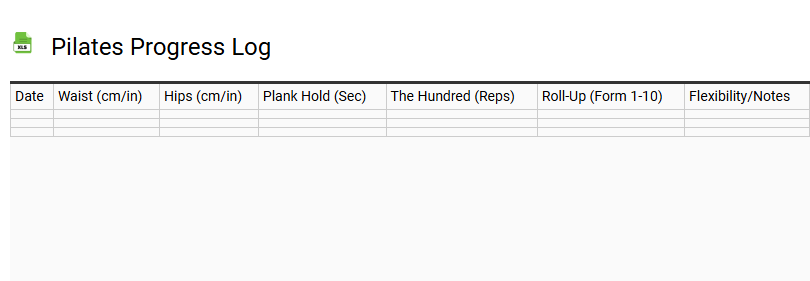
This Pilates progress log serves as a strategic tool for tracking physical evolution and mindful movement. Designed for both Mat and Reformer enthusiasts, the template facilitates detailed documentation of core strength gains, flexibility milestones, and postural alignment improvements.
By recording session duration, exercise variations, and muscle engagement levels, practitioners can monitor their mind-body connection and breath control mastery. Tracking specific metrics like spinal mobility and pelvic stability ensures a balanced fitness journey. Use this structured format to evaluate workout intensity, note physiological sensations, and set intentional goals for future routines.
Consistent data entry helps refine technique, prevents plateaus, and celebrates incremental improvements in functional strength. Maintaining a precise training journal is essential for optimizing movement patterns and achieving long-term health objectives through the Joseph Pilates method.
Core Circumference Tracker
💾 Core Circumference Tracker .xls
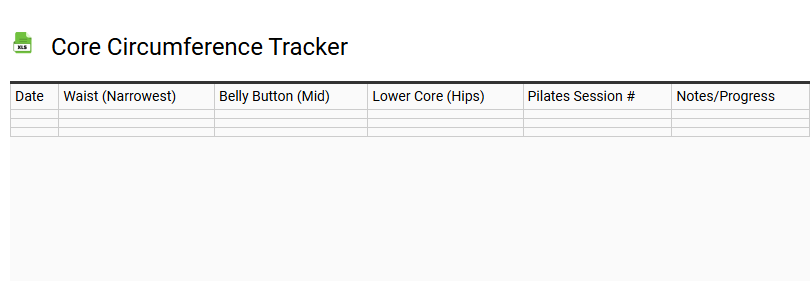
The Core Circumference Tracker serves as a comprehensive measurement log designed to monitor critical body composition changes. By documenting specific anatomical points such as the natural waist, hips, and chest, users gain a precise overview of their fitness journey.
Unlike traditional scales, this tracking tool prioritizes fat loss and muscle gain through tangible metrics. Utilizing this template facilitates the calculation of the waist-to-hip ratio, providing deep insights into metabolic health and physical transformation.
Through consistent data visualization of body measurements, individuals can identify physiological trends and refine weight management strategies. This structured progress monitoring system ensures high-accuracy circumference data entry, making it an essential resource for achieving long-term wellness and body contouring objectives.
Abdominal Strength Assessment
💾 Abdominal Strength Assessment .xls
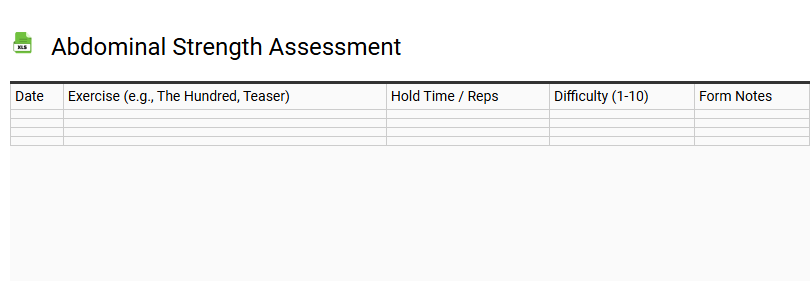
This Abdominal Strength Assessment template provides a standardized framework for evaluating core stability and trunk flexor endurance. By focusing on the rectus abdominis and internal/external obliques, clinicians can accurately measure functional movement capacity and muscular power. This clinical tool is essential for physical therapy screenings and athletic performance tracking, utilizing validated protocols such as the isometric plank hold or timed sit-up tests.
Key metrics included in this evaluation focus on:
- Core engagement and lumbopelvic rhythm.
- Pelvic tilt control and spinal alignment.
- Identification of kinetic chain compensations.
- Muscular endurance benchmarks for injury prevention.
Utilizing this structured fitness evaluation ensures reproducible results, allowing practitioners to monitor postural control and progress within core conditioning or rehabilitation programs effectively.
Pelvic Alignment Log
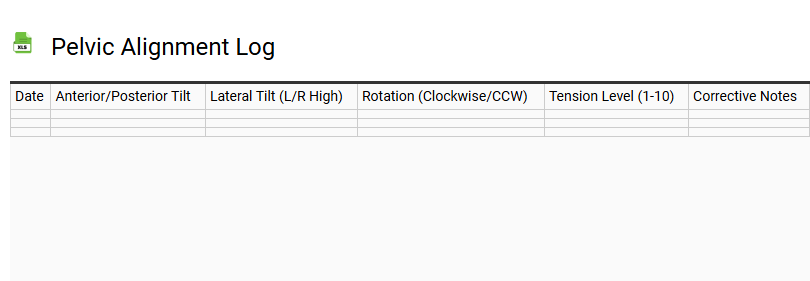
A Pelvic Alignment Log serves as a comprehensive monitoring tool for tracking hip symmetry and postural balance. This template enables users to document daily observations of pelvic tilt-whether anterior, posterior, or lateral-to identify patterns affecting spinal health. By recording fluctuations in sacroiliac joint stability and lumbar spine positioning, individuals can optimize their musculoskeletal alignment.
Integrating this log into a physical therapy routine or corrective exercise program enhances body awareness and functional movement. Key metrics often include:
- Core stability levels and abdominal engagement.
- Degree of pelvic girdle rotation or elevation.
- Progress in achieving a neutral pelvis during biomechanical assessments.
Consistent tracking facilitates data-driven adjustments to rehabilitation protocols, ensuring improved kinetic chain efficiency, reduced compensatory patterns, and enhanced long-term mobility.
Spinal Mobility Tracker
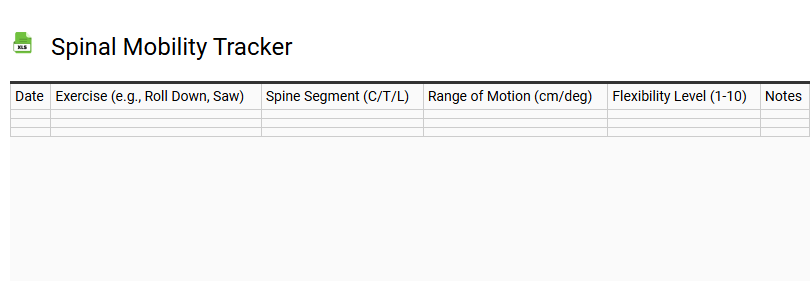
💾 Spinal Mobility Tracker .xls
A Spinal Mobility Tracker serves as a comprehensive tool for monitoring vertebral health and range of motion (ROM) across the cervical, thoracic, and lumbar regions. By systematically recording spinal flexion, extension, and lateral rotation, users can identify localized joint stiffness or functional imbalances that impact posture and core stability.
- Monitor thoracic mobility to enhance respiratory mechanics and shoulder function.
- Track lumbar flexibility to mitigate lower back discomfort and improve athletic performance.
- Log vertebral alignment progress during physical therapy or rehabilitative exercises.
Utilizing this template facilitates data-driven recovery, allowing individuals to visualize improvements in kinesiologic fluidity. Consistent assessment of spinal articulation ensures long-term musculoskeletal health, helping to prevent chronic injury while optimizing functional movement patterns through targeted flexibility training and corrective movement strategies.
Pilates Performance Metrics
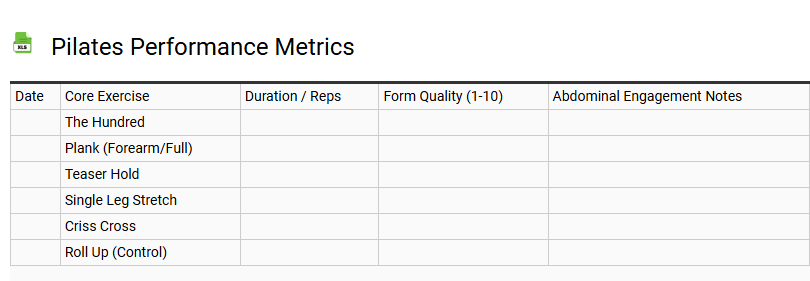
💾 Pilates Performance Metrics .xls
A comprehensive Pilates performance metrics template serves as a vital tool for tracking core stability and postural alignment. By documenting specific data points across reformer and mat-based sessions, practitioners can quantify improvements in eccentric control and breath coordination. These metrics emphasize functional movement patterns, focusing on muscular endurance and spinal mobility to ensure balanced physical development.
- Monitoring range of motion and flexibility gains over time.
- Evaluating adherence to Pilates principles such as precision, centering, and flow.
- Analyzing kinesthetic awareness during complex athletic sequences.
Utilizing structured assessment logs ensures progressive overload is managed safely, fostering long-term physical conditioning. This analytical approach transforms subjective feelings of strength into objective data, highlighting critical milestones in body mechanics and overall biometric feedback for optimized recovery and peak performance.
Weekly Core Body Measurements
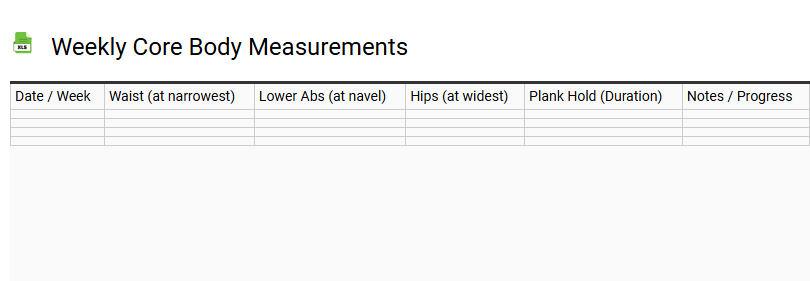
💾 Weekly Core Body Measurements .xls
Tracking weekly core body measurements is an essential practice for anyone serious about monitoring their fitness transformation. Unlike traditional weight scales, these anthropometric assessments provide deep insights into body composition and metabolic health. By capturing consistent biometric data, you can accurately evaluate fat loss, muscle hypertrophy, and overall structural changes.
This comprehensive template focuses on key health metrics, including:
- Waist Circumference: A primary indicator of visceral fat and cardiovascular risk.
- Hip-to-Waist Ratio: Vital for assessing body shape and hormonal balance.
- Limb Girth: Measuring chest, thighs, and biceps to track muscle mass development.
Utilizing a standardized tape measure protocol ensures data integrity and high-quality progress monitoring. These quantitative insights allow for precise adjustments to nutrition and training, celebrating non-scale victories and ensuring long-term success in your wellness journey.
Postural Assessment Template
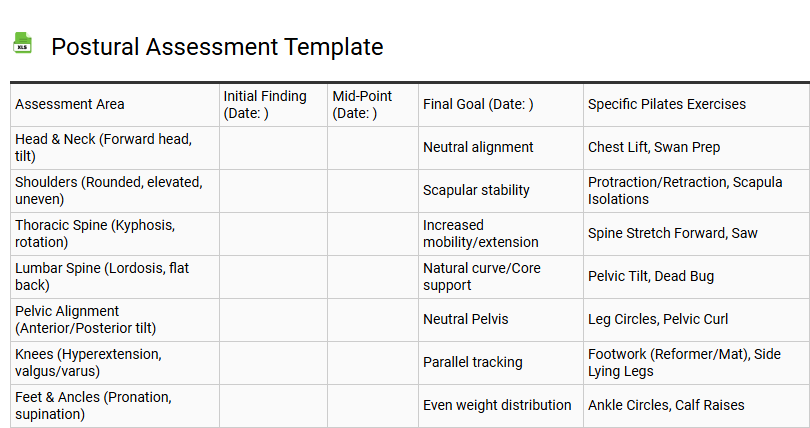
💾 Postural Assessment Template .xls
A comprehensive postural assessment template serves as an essential diagnostic tool for healthcare professionals to evaluate musculoskeletal alignment and identify kinetic chain dysfunctions. By systematically documenting anatomical landmarks, practitioners can detect deviations in spinal curvature, such as kyphosis, lordosis, or scoliosis. This biomechanical screening process involves analyzing static posture and dynamic body mechanics to pinpoint muscle imbalances and restricted range of motion (ROM). Utilizing a standardized evaluation form facilitates precise data collection, enabling the development of targeted corrective exercises and personalized physical therapy interventions. Integrating ergonomic assessments into this workflow helps mitigate chronic pain while improving overall functional movement patterns. Whether applied in clinical or athletic environments, a structured posture analysis ensures objective tracking of pelvic tilt, shoulder symmetry, and head positioning. This data-driven approach is vital for optimizing patient recovery and enhancing long-term physiological health through tailored rehabilitation protocols.
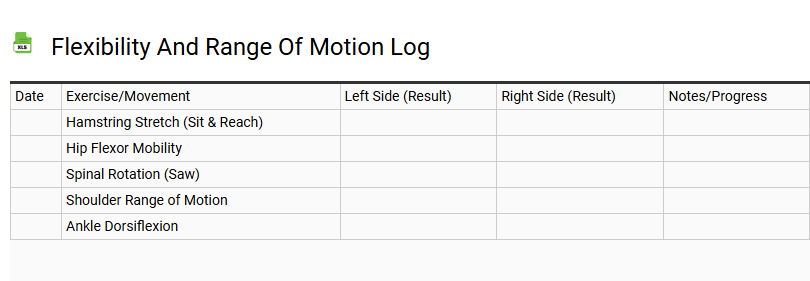
Flexibility and Range of Motion Log
💾 Flexibility and Range of Motion Log .xls
A flexibility and range of motion log serves as an essential instrument for monitoring joint mobility and muscle elasticity. By utilizing a structured template, individuals can systematically document daily stretching routines, dynamic movements, and static poses. This data-driven approach allows for precise tracking of functional movement gains and athletic performance benchmarks.
Incorporating a log into your fitness or physical therapy regimen facilitates injury prevention and effective myofascial release management. Consistent documentation helps identify musculoskeletal imbalances and provides a clear flexibility assessment over time. Key elements to record include:
- Target muscle groups and specific mobility drills.
- Degrees of joint rotation or reach measurements.
- Duration of yoga practice or active recovery sessions.
Maintaining this record enhances body awareness, ensuring you achieve maximum supple strength and long-term physical wellness through evidence-based progress.
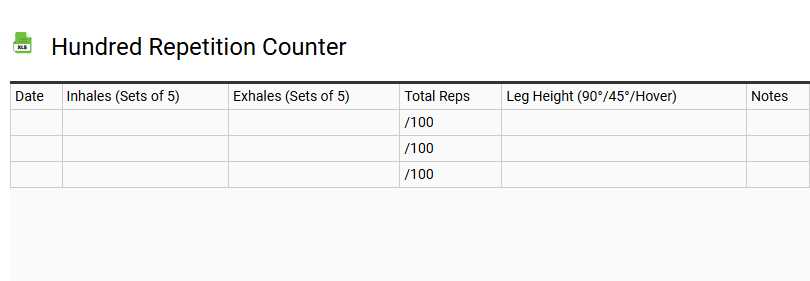
Hundred Repetition Counter
💾 Hundred Repetition Counter .xls
This hundred repetition counter provides a streamlined interface for tracking high-volume fitness routines and endurance training. Designed for simplicity, the layout features a prominent digital display that updates instantly upon interaction. Athletes and enthusiasts can monitor progress through incremental tallies, ensuring every movement is recorded without the need for mental tracking.
The structure utilizes clear interactive elements, including primary action buttons for adding counts and resetting values. By visualizing the path toward the target of one hundred repetitions, users maintain better focus on technique and breathing patterns.
- Large, legible numerical display for quick reference.
- Intuitive controls for seamless operation during intense activity.
- Responsive design compatible with mobile and desktop devices.
This tool serves as a digital companion for bodyweight exercises, physical therapy protocols, or any habit-building activity requiring precise quantification and steady progress monitoring.
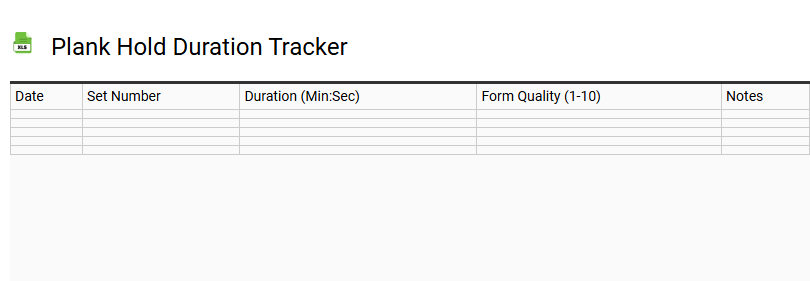
Plank Hold Duration Tracker
💾 Plank Hold Duration Tracker .xls
Utilizing a dedicated plank hold duration tracker optimizes core strength development by providing precise performance monitoring for this essential isometric exercise. This systematic workout log allows fitness enthusiasts to document static hold intervals, facilitating clear fitness progression and endurance building. By recording daily metrics, users can effectively target abdominal muscles and improve spinal stability through training consistency.
A well-structured tracker highlights muscle engagement patterns and encourages athletes to surpass their personal best. This data-driven approach to functional training ensures progressive overload is achieved, transforming isometric tension into measurable results. Whether managing high-intensity interval training or a dedicated core stability routine, maintaining a precise record of your plank duration is vital for long-term physical transformation and athletic performance enhancement.
Torso Stability Log
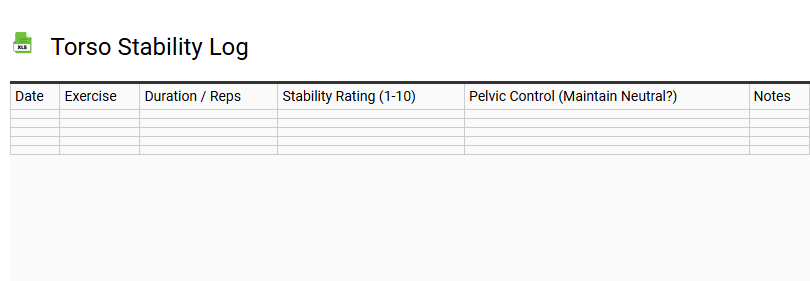
A Torso Stability Log serves as a comprehensive tracking tool for monitoring core strength, spinal alignment, and functional movement patterns. This template allows users to document specific exercises focused on trunk control and postural integrity, such as isometric holds and dynamic stabilization drills.
- Abdominal Bracing: Recording the activation of the transverse abdominis and internal obliques for better spinal protection.
- Kinetic Chain Efficiency: Assessing how pelvic stability influences total body power and athletic performance.
- Injury Prevention: Tracking lumbar support metrics to mitigate lower back strain and enhance physical rehabilitation.
By systematically logging sets, repetitions, and time-under-tension for core-centric movements, individuals can optimize their strength training regimen. Consistent use of this log promotes superior muscular endurance and ensures a balanced approach to achieving optimal trunk stiffness and functional mobility.
Pilates Body Transformation Sheet
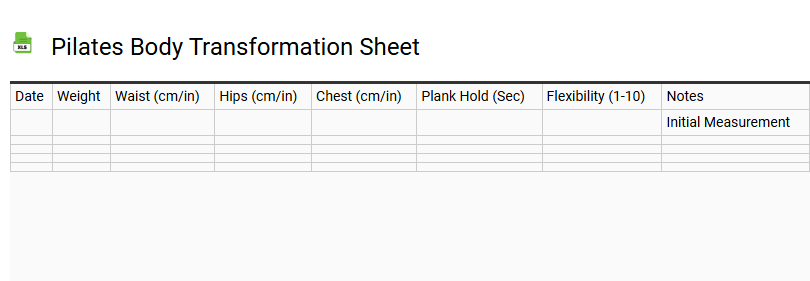
💾 Pilates Body Transformation Sheet .xls
A Pilates Body Transformation Sheet serves as a strategic progress tracker designed to document your journey toward enhanced core strength and postural alignment. This essential fitness template allows practitioners to monitor specific muscle toning milestones and significant gains in flexibility. By utilizing a structured measurement log, you can objectively record changes in body composition and track workout consistency across both Mat and Reformer sessions.
Effective tracking tools prioritize the mind-body connection by incorporating:
- Defined wellness goals for long-term health.
- Weekly logs for functional movement patterns.
- Comparative data for spinal mobility and balance.
Integrating this data-driven approach fosters accountability, ensuring your Pilates practice yields visible results. Whether focusing on injury rehabilitation or athletic performance, documenting your physical evolution is vital for a successful and sustained fitness transformation.
Oblique and Transverse Abdominis Tracker
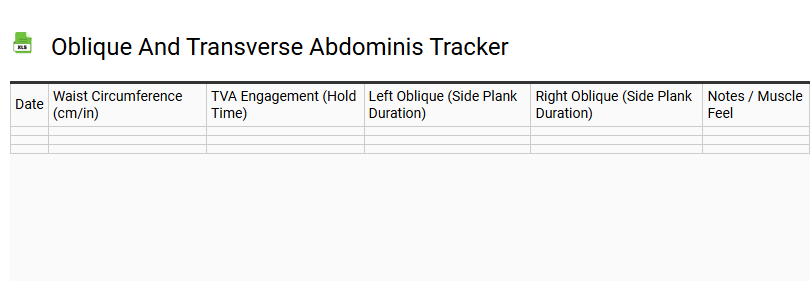
💾 Oblique and Transverse Abdominis Tracker .xls
Maximize your core development using this comprehensive Oblique and Transverse Abdominis Tracker. This specialized template is engineered to monitor internal and external obliques alongside the deep transverse abdominis (TVA), ensuring peak trunk stability and spinal protection. By documenting specific metrics for rotational strength, lateral flexion, and isometric holds, athletes can effectively measure progress in abdominal hypertrophy and functional core engagement.
Use this log to record sets, reps, and time-under-tension for movements like side planks, cable woodchoppers, and stomach vacuums. Consistent tracking of intra-abdominal pressure and midsection control facilitates improved posture and enhanced athletic performance. This data-driven approach optimizes your strength training routine, targeting the entire abdominal wall for superior core definition and structural integrity. Whether focusing on dynamic rotations or static stability, this professional tracking tool ensures every layer of your musculature is precisely developed.
Breath and Core Engagement Log
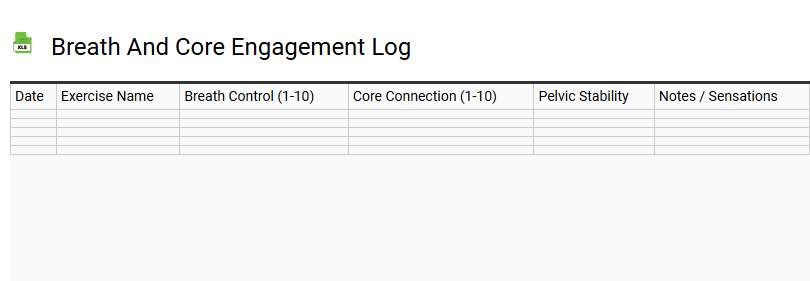
💾 Breath and Core Engagement Log .xls
A Breath and Core Engagement Log serves as a vital tool for mastering diaphragmatic breathing and deep core activation. By tracking daily sessions, individuals can monitor their ability to maintain intra-abdominal pressure while performing specific movements. This template focuses on the coordination between the transverse abdominis and the pelvic floor, essential for spinal stability and postural alignment.
- Record abdominal bracing duration and quality.
- Monitor respiratory control patterns during exercise.
- Assess core stability and mind-muscle connection.
- Track progress in intra-abdominal pressure management.
Using this log enhances functional movement patterns and prevents injury by ensuring consistent transverse abdominis recruitment. Whether for rehabilitation or athletic performance, documenting breathwork and core engagement ensures a systematic approach to improving trunk stability and overall physical resilience.
Core Endurance Weekly Log
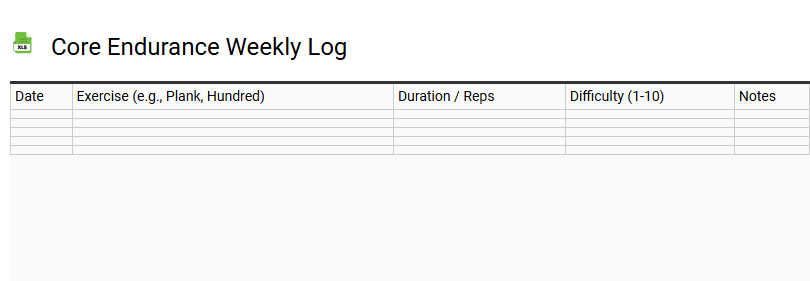
💾 Core Endurance Weekly Log .xls
A Core Endurance Weekly Log serves as a vital tool for athletes prioritizing long-term physical resilience and stamina. By meticulously recording daily training sessions, individuals can monitor cardiovascular progress and core stability improvements. This systematic approach to tracking workout intensity and volume ensures optimal aerobic capacity growth while mitigating injury risks.
Key performance metrics such as mileage, heart rate zones, and perceived exertion provide actionable data for periodic review. Utilizing this structured template fosters accountability in strength conditioning and endurance building, allowing for precise adjustments to recovery schedules. Whether focusing on marathon preparation or functional fitness, maintaining a consistent log facilitates data-driven decisions for peak athletic performance. Consistent documentation of weekly volume and supplementary exercises guarantees a balanced progression toward endurance milestones, ensuring every session contributes to sustained muscular durability and overall physical conditioning.
Pilates Reformer Progress Tracker
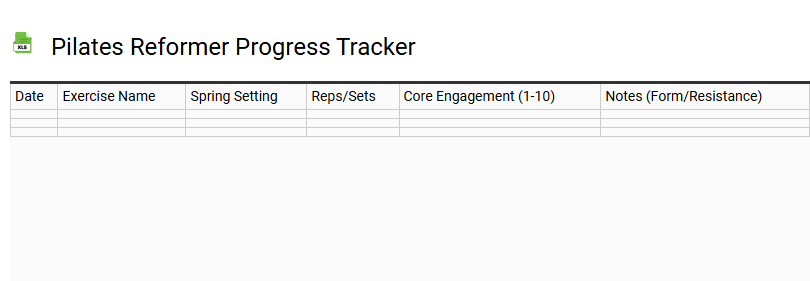
💾 Pilates Reformer Progress Tracker .xls
Utilizing a Pilates Reformer Progress Tracker is essential for quantifying your physical evolution and mastering complex apparatus movements. This structured workout log empowers practitioners to document specific resistance settings, such as spring tension and footbar positions, ensuring progressive overload. By recording repetitions within your exercise repertoire-from the Hundred to the Long Stretch Series-you can visualize tangible gains in core strength, muscular endurance, and postural alignment.
Tracking performance metrics helps refine carriage control and breath work, fostering a deeper mind-body connection. Whether your fitness goals prioritize increased flexibility or muscle tone, a dedicated template provides the data necessary to adjust routines. Documenting each session ensures balanced development and highlights milestones in your journey, transforming every controlled movement into a measurable step toward functional mobility and peak physical conditioning.
Total Core Toning Sheet
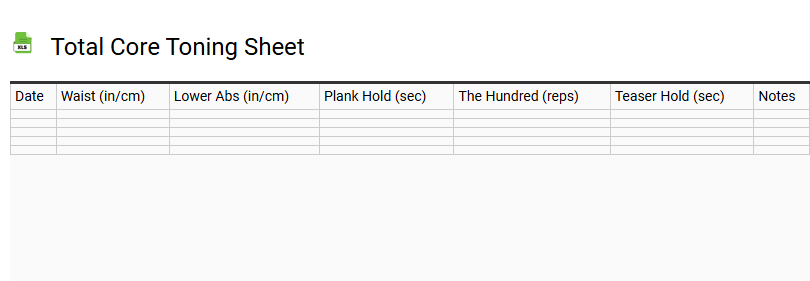
💾 Total Core Toning Sheet .xls
This Total Core Toning Sheet serves as a comprehensive workout log designed to optimize abdominal muscle engagement and enhance core stability. By tracking daily exercise metrics, fitness enthusiasts can effectively target the rectus abdominis, obliques, and deep transverse abdominis for a sculpted midsection.
Utilizing this template facilitates progressive overload, ensuring consistent strength training gains and improved posture. Each session focuses on functional movement patterns to strengthen the lumbar region and pelvic floor. Integrating this structural fitness tool into your routine encourages discipline in monitoring sets, repetitions, and recovery intervals. Achieving peak physical conditioning requires precise muscle activation and dedicated performance tracking. This streamlined document empowers users to visualize their progress, refining their exercise regimen for maximum metabolic efficiency while fostering long-term spinal health and functional endurance.
Monthly Pilates Measurement Comparison
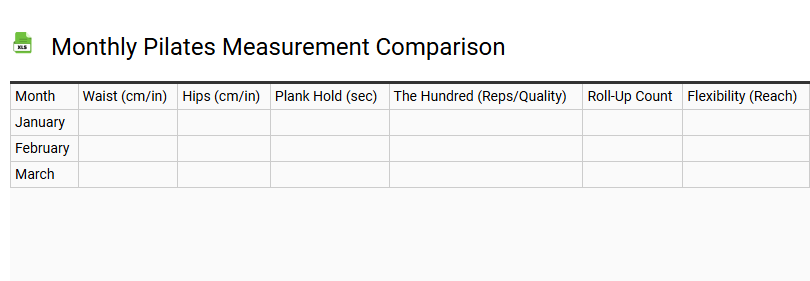
💾 Monthly Pilates Measurement Comparison .xls
Utilizing a Monthly Pilates Measurement Comparison template is essential for tracking long-term physical transformation and functional progress. This structured tool captures vital baseline metrics, allowing practitioners to monitor shifts in core strength, postural alignment, and flexibility. By documenting anthropometric data and body composition changes, you can visualize improvements in muscle tone and spinal mobility.
Integrating this fitness assessment into your wellness journey ensures that your Reformer Pilates or mat-based sessions are effectively targeting biomechanical efficiency. Key performance indicators typically include:
- Functional movement patterns and core stability.
- Centering and breath control milestones.
- Waist-to-hip ratio and circumference measurements.
Consistent progress tracking empowers students to refine their mind-body connection, providing a data-driven approach to achieving peak physical vitality and postural balance.
Dynamic Core Stability Scorecard
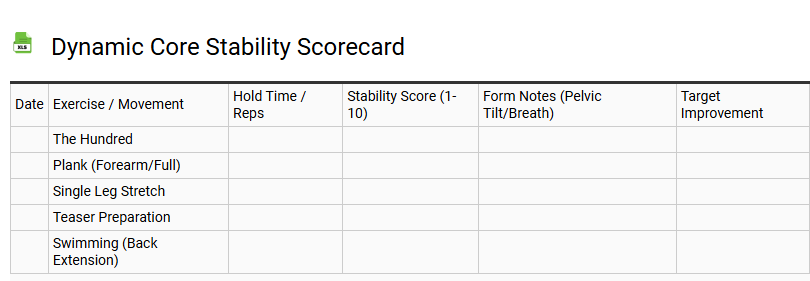
💾 Dynamic Core Stability Scorecard .xls
This Dynamic Core Stability Scorecard serves as a sophisticated framework for assessing functional movement and trunk stability. By analyzing the kinetic chain and motor control, practitioners can effectively measure spinal health and postural alignment across various athletic disciplines.
- Tracks core activation and muscular endurance through standardized testing.
- Facilitates biomechanical assessments to enhance injury prevention.
- Optimizes neuromuscular efficiency and functional movement patterns.
The template quantifies spinal stabilization, ensuring deep stabilizers provide a foundation for explosive power. Integrating these performance metrics into training protocols helps athletes refine body mechanics and improve muscular balance. It is a critical asset for data-driven rehabilitation and strength conditioning, providing a clear roadmap for improving lumbopelvic rhythm and overall core strength.
This Pilates Core Measurement Tracker provides a comprehensive framework for monitoring abdominal strength and posture alignment. By consistently logging workout metrics and muscle engagement, practitioners can visualize their fitness progress and core stability gains.
Utilizing this exercise log ensures precise tracking of body composition shifts and physical performance. Leverage these insights to enhance flexibility and achieve peak functional health through data-driven, mindful movement.