
Postpartum Strength Recovery Log Template
Regaining physical vitality after childbirth requires a structured approach to ensure safe, effective healing. Utilizing a postpartum strength recovery log is essential for monitoring your postnatal fitness journey, specifically targeting core stability and pelvic floor rehabilitation. By documenting daily movements and progressive resistance, you can track muscle rebuilding while honoring your body's unique recovery timeline. This specialized exercise diary empowers new mothers to maintain consistency and achieve long-term wellness goals. Please check the already made variation of templates below.
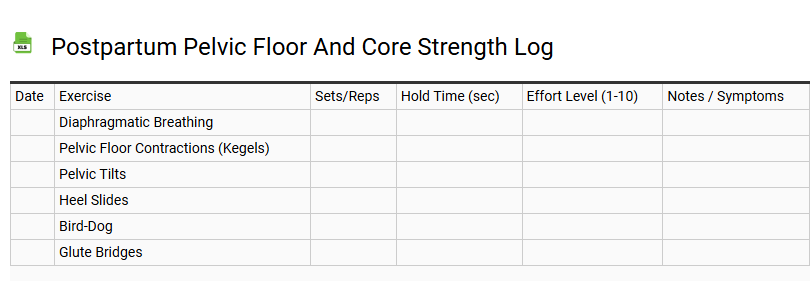
Postpartum Pelvic Floor and Core Strength Log
💾 Postpartum Pelvic Floor and Core Strength Log .xls
Utilizing a postpartum pelvic floor and core strength log is a vital strategy for navigating postnatal recovery and restoring structural integrity. This tracking template focuses on pelvic health by documenting daily Kegel exercises, transverse abdominis activation, and diastasis recti repair progress. By recording specific rehabilitative movements, users can monitor functional core stability and identify patterns in muscle recruitment.
- Track abdominal wall healing and intra-abdominal pressure management.
- Log physical therapy milestones and pelvic girdle comfort levels.
- Monitor neuromuscular reconnection during the fourth trimester.
Consistent documentation supports restorative fitness, ensuring a safe transition back to high-impact activities. This wellness resource bridges the gap between early healing phases and long-term functional movement, providing a comprehensive overview of physiological progress and core rehabilitation success.
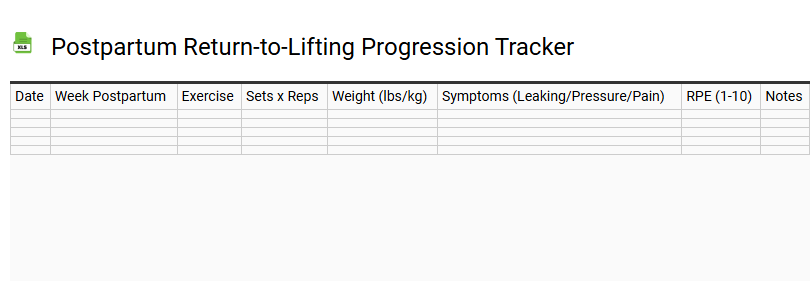
Postpartum Return-to-Lifting Progression Tracker
💾 Postpartum Return-to-Lifting Progression Tracker .xls
This Postpartum Return-to-Lifting Progression Tracker serves as a comprehensive roadmap for navigating postnatal strength rehabilitation. By focusing on gradual progressive overload, this template monitors your journey from foundational core stability and pelvic floor integration to high-intensity compound movements. Each phase prioritizes restorative movement patterns to mitigate risks of diastasis recti or pelvic organ prolapse while rebuilding muscular endurance. Tracking variables such as intra-abdominal pressure management, RPE (Rate of Perceived Exertion), and specific postnatal symptoms ensures a safe, data-driven approach to regaining athletic performance. This digital log streamlines the transition back to the barbell, emphasizing functional recovery and structural integrity. Whether you are addressing core dysfunction or aiming for a new personal best, this structured recovery tool provides the necessary oversight for a sustainable return to the weight room after childbirth.
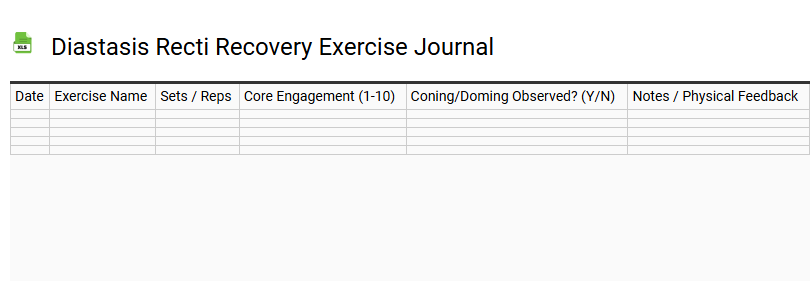
Diastasis Recti Recovery Exercise Journal
💾 Diastasis Recti Recovery Exercise Journal .xls
A Diastasis Recti Recovery Exercise Journal serves as a vital blueprint for closing abdominal separation and restoring core stability. This template focuses on tracking progress within the linea alba, monitoring both the distance and tension of the midline. By documenting daily corrective exercises, such as transverse abdominis (TVA) activations and pelvic floor integration, individuals can effectively manage intra-abdominal pressure.
Logging specific metrics like gap measurement, diaphragmatic breathing patterns, and functional movements ensures a safe return to postpartum fitness. This systematic approach prioritizes connective tissue healing while avoiding movements that cause coning or doming. Use this journal to refine your rehabilitation program, ensuring every workout strengthens deep stabilizers without compromising the rectus abdominis. Consistent data entry facilitates better communication with healthcare providers, optimizing the recovery of a functional, strong core.
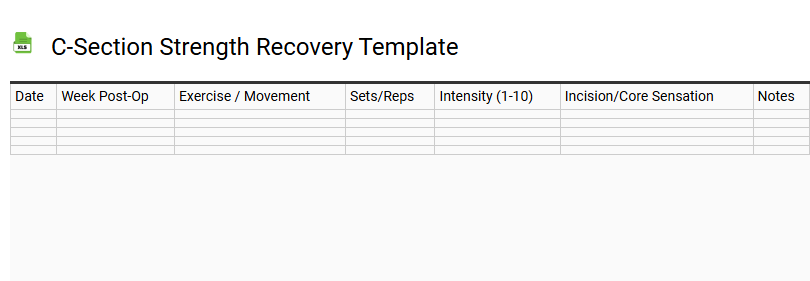
C-Section Strength Recovery Template
💾 C-Section Strength Recovery Template .xls
This C-section strength recovery template provides a structured framework for postpartum rehabilitation following major abdominal surgery. Designed to bridge the gap between clinical clearance and functional fitness, the protocol emphasizes core stability and pelvic floor integration. Early phases prioritize diaphragmatic breathing and gentle scar tissue mobilization to promote healthy incision healing and neurological reconnection.
As recovery progresses, the focus shifts toward transverse abdominis activation and posterior chain strengthening. Utilizing this evidence-based approach helps mitigate risks of diastasis recti and improves postnatal mobility. Key components include:
- Low-impact corrective exercises for postural alignment.
- Graduated resistance training to rebuild functional capacity.
- Mobility drills targeting hip flexors and the lumbar spine.
By following this systematic post-surgical recovery plan, individuals can safely restore their physical resilience and return to peak performance with confidence.
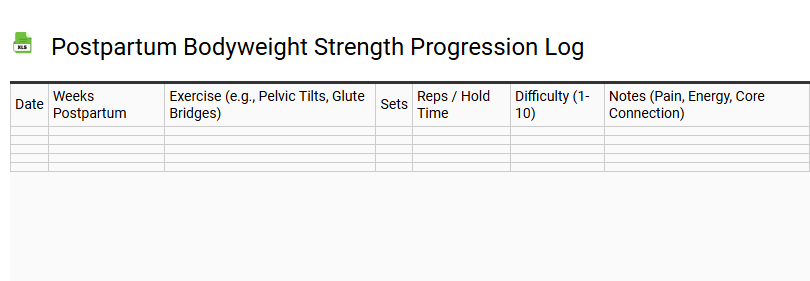
Postpartum Bodyweight Strength Progression Log
💾 Postpartum Bodyweight Strength Progression Log .xls
This tracking tool assists new parents in monitoring physical recovery and rebuilding functional power after childbirth. By documenting specific movements, practitioners can observe gradual improvements in core stability and muscular endurance without the need for external equipment. Using a structured log helps maintain a safe pace while honoring the body's healing process.
- Movement Selection: Record foundational exercises such as pelvic tilts, glute bridges, and modified squats.
- Volume and Intensity: Note total repetitions, sets, and the perceived level of exertion for each session.
- Physical Feedback: Document any sensations within the abdominal wall or pelvic floor to ensure movements remain appropriate for current recovery stages.
- Progressive Load: Track subtle increases in time under tension or reduced rest intervals.
Consistent documentation fosters a mindful approach to fitness. It prioritizes long-term wellbeing by highlighting steady growth and encouraging sustainable activity levels throughout the postnatal period.
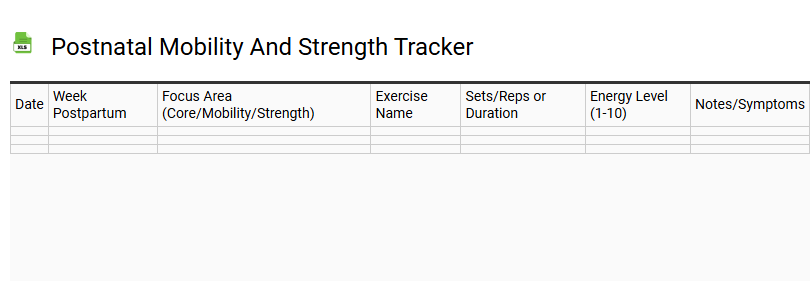
Postnatal Mobility and Strength Tracker
💾 Postnatal Mobility and Strength Tracker .xls
Efficiently monitor your postpartum recovery journey with a specialized postnatal mobility and strength tracker. This tool is designed to prioritize pelvic floor health, core stability, and restorative functional movement. By documenting diastasis recti healing and daily mobility drills, users ensure a safe, structured return to physical activity.
This tracking template facilitates the monitoring of:
- Progressive overload in postnatal strength training.
- Daily flexibility and range of motion improvements.
- Recovery milestones and postnatal wellness indicators.
- Energy levels and postpartum fitness consistency.
Utilizing a physical activity log helps balance restorative exercises with gradual strength gains, fostering sustainable physical restoration. Optimize your health with a data-driven approach to post-pregnancy exercise, ensuring long-term vitality and musculoskeletal support after childbirth.
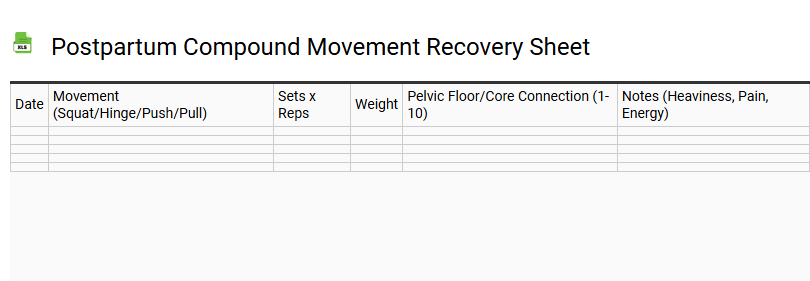
Postpartum Compound Movement Recovery Sheet
💾 Postpartum Compound Movement Recovery Sheet .xls
A Postpartum Compound Movement Recovery Sheet serves as a strategic blueprint for restoring functional strength and core stability following childbirth. This structured guide emphasizes multi-joint movements that integrate the kinetic chain, facilitating a safe return to maternal daily activities. By prioritizing pelvic floor health and diastasis recti management, the template ensures intra-abdominal pressure is regulated during exertion.
- Corrective exercises for structural integration.
- Progressive overload strategies for posterior chain activation.
- Functional patterns like hinging, squatting, and carrying.
This postnatal fitness resource bridges the gap between physical therapy and traditional strength conditioning. Prioritizing movement quality over intensity helps rebuild the musculoskeletal system safely, fostering long-term maternal wellness and physical resilience through evidence-based rehabilitation protocols.
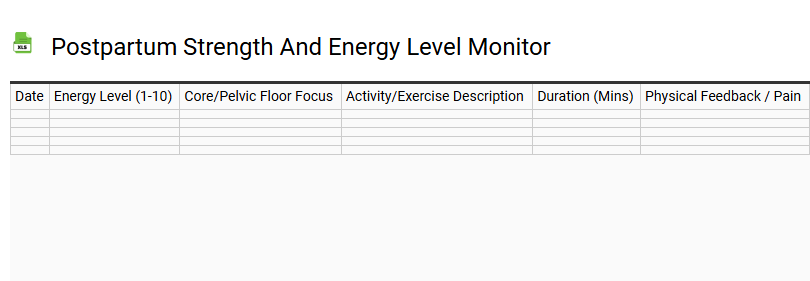
Postpartum Strength and Energy Level Monitor
💾 Postpartum Strength and Energy Level Monitor .xls
This postpartum strength and energy level monitor serves as a vital diagnostic tool for navigating the fourth trimester. By consistently tracking maternal wellness and physical endurance, this template facilitates a mindful approach to postnatal recovery. Users can document fluctuations in core stability and pelvic floor health while monitoring gradual progress in functional movement.
Identifying specific patterns in postpartum fatigue helps balance restorative exercise with daily childcare demands, ensuring a safe return to fitness. Tracking nutritional intake and sleep quality alongside strength gains provides a holistic view of hormonal recovery and metabolic health. This data-driven method empowers women to listen to their bodies, preventing overexertion while rebuilding muscle tone and stamina. Implementing a structured log optimizes long-term health outcomes, supporting a sustainable transition back into an active lifestyle after childbirth.
Postpartum Functional Fitness Training Log
💾 Postpartum Functional Fitness Training Log .xls
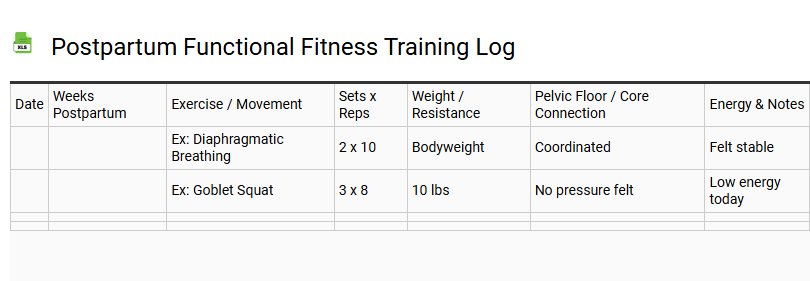
A postpartum functional fitness training log serves as a dedicated record to monitor physical recovery and strength progression after childbirth. This tool focuses on a gradual return to movement by tracking specific data points essential for long-term health and core integrity.
- Core and Pelvic Floor Health: Note any sensations of pressure or engagement during foundational movements.
- Energy and Recovery: Record sleep quality and fatigue levels to adjust intensity based on daily capacity.
- Movement Selection: Log functional patterns such as hinging, squatting, and carrying that translate to daily motherhood tasks.
- Symptom Tracking: Document any discomfort to ensure the workload remains safe and supportive.
- Progressive Load: Track incremental increases in resistance or duration as the body heals.
Using this structured approach ensures a sustainable transition back to peak performance while prioritizing the body's unique needs during the fourth trimester and beyond.
Postnatal Resistance Band Workout Tracker
💾 Postnatal Resistance Band Workout Tracker .xls
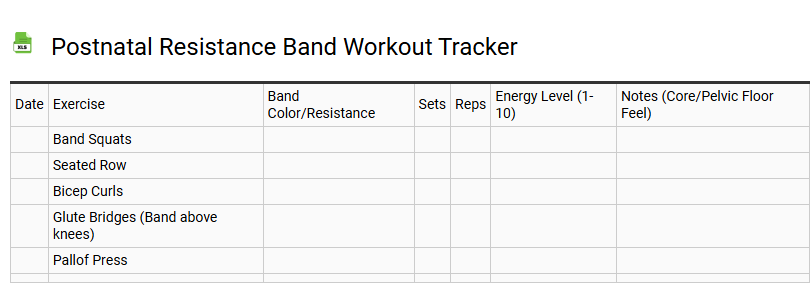
Utilizing a postnatal resistance band workout tracker is a strategic approach to rebuilding core stability and functional strength safely after childbirth. This specialized log enables new mothers to monitor progressive overload while prioritizing pelvic floor health and diastasis recti recovery.
- Track resistance levels and repetition counts for low-impact movements.
- Monitor exercise frequency to ensure consistent postpartum fitness progress.
- Document recovery milestones and energy levels during strength training sessions.
By recording elastic band exercises like glute bridges and rows, you create a visual roadmap for muscle toning and postural correction. This rehabilitative strength training tool ensures your journey remains sustainable, preventing overexertion while promoting long-term wellness. A structured workout log transforms your physical therapy into a measurable path toward total-body restoration and increased stamina.
Gradual Postpartum Weightlifting Log
💾 Gradual Postpartum Weightlifting Log .xls
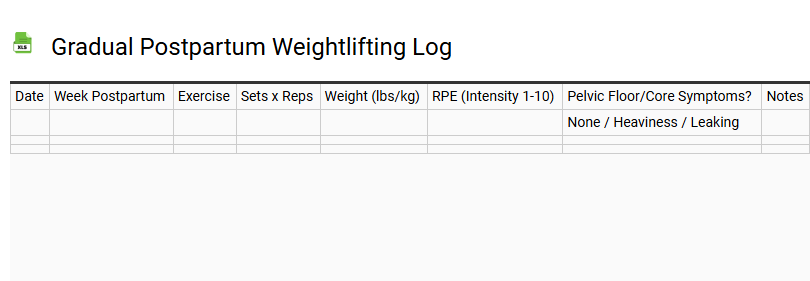
Utilizing a gradual postpartum weightlifting log is essential for safely navigating your postnatal fitness journey. This specialized template prioritizes core stability and pelvic floor health, ensuring a structured return to strength training. By documenting progressive overload and lifting mechanics, you can monitor recovery markers like diastasis recti healing and daily energy levels. A comprehensive log should track compound movements, rest intervals, and breathwork integration to prevent intra-abdominal pressure issues. Focusing on functional hypertrophy helps rebuild muscle mass while respecting ligamentous laxity post-childbirth. Whether you are recording kettlebell deadlifts or modified squats, a workout tracker provides the data needed for periodized recovery. Consistent logging fosters accountability, allowing for incremental gains in muscular endurance without compromising your postpartum recovery timeline or long-term pelvic health.
Postpartum Core Stability and Strength Journal
💾 Postpartum Core Stability and Strength Journal .xls
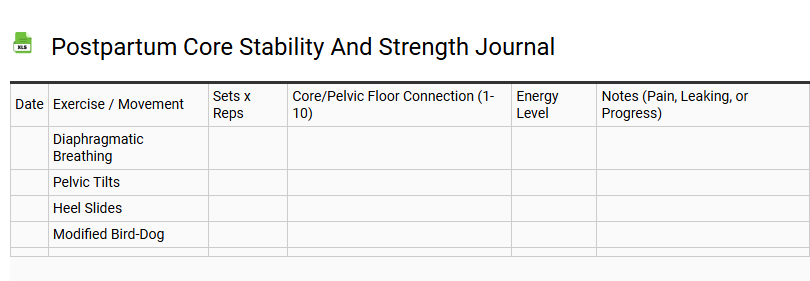
A Postpartum Core Stability and Strength Journal is an essential resource for monitoring postnatal recovery and physical rehabilitation. This structured template allows mothers to track diastasis recti healing and pelvic floor health through consistent data entry. By focusing on transverse abdominis activation and diaphragmatic breathing, the log ensures a safe progression toward functional movement and low-impact strength training.
Documenting your journey helps identify improvements in abdominal wall integrity and pelvic stability. Key metrics to record include:
- Core engagement quality and muscle recruitment patterns.
- Daily corrective exercise completion and intensity levels.
- Symptom monitoring for pelvic organ prolapse or discomfort.
- Weekly milestones in postpartum fitness and musculoskeletal health.
Utilizing this journal during the fourth trimester fosters accountability, ensuring a mindful approach to restoring core strength while preventing injury during postnatal exercise routines.
Postpartum Posture and Strength Recovery Tracker
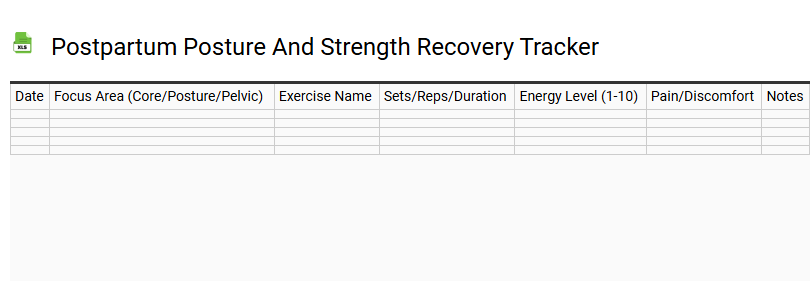
💾 Postpartum Posture and Strength Recovery Tracker .xls
This tracker serves as a dedicated resource for mothers navigating the physical transition after childbirth. It prioritizes the gradual restoration of core stability and spinal alignment, ensuring a safe return to daily activities. By logging daily movements, users can monitor vital progress indicators including:
- Pelvic floor engagement and deep abdominal activation.
- Ribcage positioning to support optimal breathing patterns.
- Shoulder mobility and upper back postural correction.
- Daily energy levels and muscular endurance milestones.
A systematic approach helps identify patterns in recovery, highlighting improvements in functional strength while preventing overexertion. Using this framework provides a clear roadmap from initial healing to active wellness, fostering long-term physical health and structural balance during the restorative months following delivery.
Weekly Postpartum Strength Milestone Log
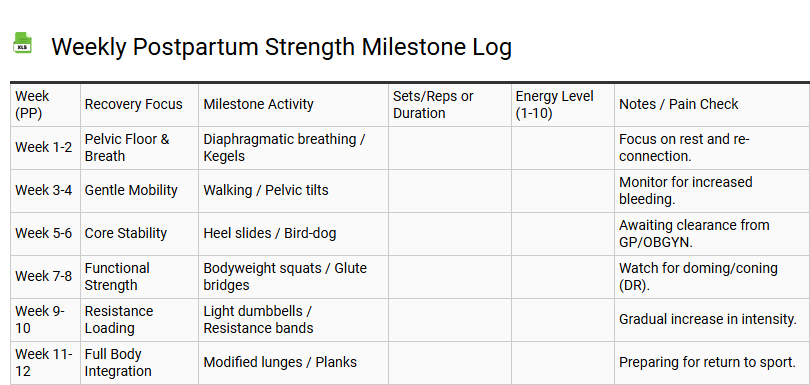
💾 Weekly Postpartum Strength Milestone Log .xls
A weekly postpartum strength milestone log serves as a vital diagnostic tool for monitoring postnatal recovery and physical progression. This template prioritizes core stability and pelvic floor health, ensuring a safe transition back to functional movement. By tracking progressive overload and specific corrective exercises, mothers can objectively measure improvements in diastasis recti symptoms and overall muscle engagement.
Documenting your healing journey through the fourth trimester allows for precise adjustments in resistance training intensity. Use this log to record body mechanics, energy fluctuations, and physical therapy benchmarks. This systematic approach to postpartum fitness fosters consistency while preventing injury, providing a clear roadmap for rebuilding athletic capacity and long-term wellness. Consistent data entry ensures every strength training session aligns with your body's unique recovery timeline and physiological needs.
Utilizing a Postpartum Strength Recovery Log is essential for monitoring pelvic floor health and restoring core stability. This template facilitates safe progressive overload, ensuring your postnatal exercise routine promotes effective muscle recovery without compromising physiological healing. By prioritizing consistent fitness tracking, you can effectively manage abdominal separation and visualize your physical progress.
Embark on your healing journey with precision. Download this structured log to reclaim your strength, stay motivated, and navigate your fourth-trimester rehabilitation with confidence and clarity.