
POTS Daily Log Template: Tracking Heart Rate and Salt Intake.
Managing Postural Orthostatic Tachycardia Syndrome (POTS) requires precise tracking of daily metrics to mitigate symptoms like dizziness and palpitations. A comprehensive POTS heart rate and salt intake log serves as a vital tool for monitoring dysautonomia triggers. By documenting orthostatic vitals alongside sodium consumption and fluid levels, patients can better manage tachycardia episodes and maintain electrolyte balance. Tracking these trends assists healthcare providers in refining personalized treatment plans. Please check our already made variation of templates below.
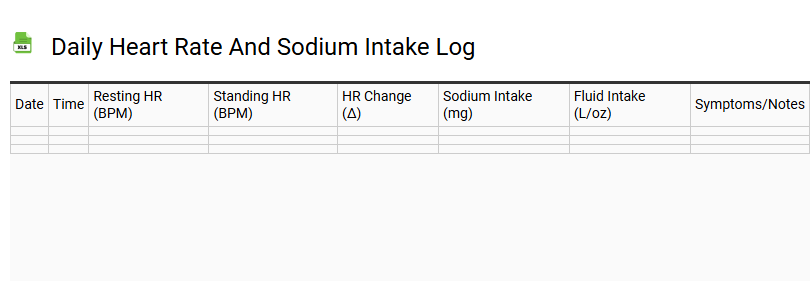
Daily Heart Rate and Sodium Intake Log
💾 Daily Heart Rate and Sodium Intake Log .xls
Utilizing a comprehensive Daily Heart Rate and Sodium Intake Log is essential for effective cardiovascular monitoring and dietary management. By meticulously recording resting heart rate (BPM) alongside daily milligrams of sodium consumed, individuals can track the direct impact of salt intake on blood pressure and fluid retention. This structured template facilitates the identification of patterns related to hypertension and cardiac strain, offering vital longitudinal data for healthcare consultations. Tracking pulse fluctuations and electrolyte balance helps in managing conditions like tachycardia or systemic inflammation. Consistent documentation through this log ensures precise nutritional tracking, allowing for proactive adjustments to lifestyle habits. By maintaining a clear record of these vital signs, users can better understand their physiological responses to dietary triggers, ultimately promoting improved heart health and long-term wellness through disciplined biometric observation and caloric scrutiny.
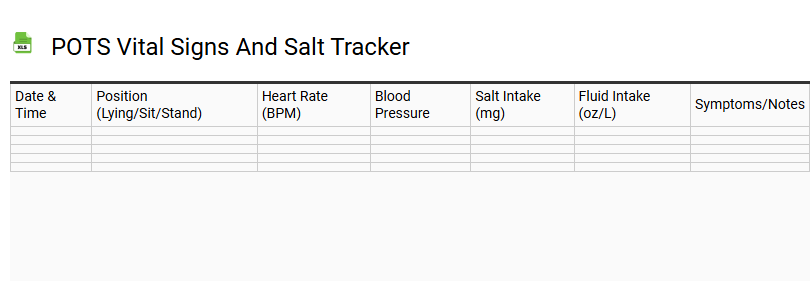
POTS Vital Signs and Salt Tracker
💾 POTS Vital Signs and Salt Tracker .xls
Effectively managing Postural Orthostatic Tachycardia Syndrome (POTS) requires diligent tracking of orthostatic intolerance triggers and autonomic nervous system responses. This specialized dysautonomia monitoring template facilitates the precise documentation of heart rate variability, blood pressure fluctuations, and daily sodium intake. By maintaining a consistent chronic illness log, patients can correlate electrolyte balance and hydration levels with symptom severity.
- Record tachycardia episodes during postural transitions.
- Log milligrams of salt to support blood volume expansion.
- Monitor vital signs to identify patterns in dizziness or syncope.
Utilizing a POTS tracker provides data-driven insights for healthcare providers, streamlining symptom management and clinical interventions. This structured approach ensures a comprehensive overview of electrolyte consumption and physiological trends, empowering individuals to optimize their daily function through proactive health monitoring.
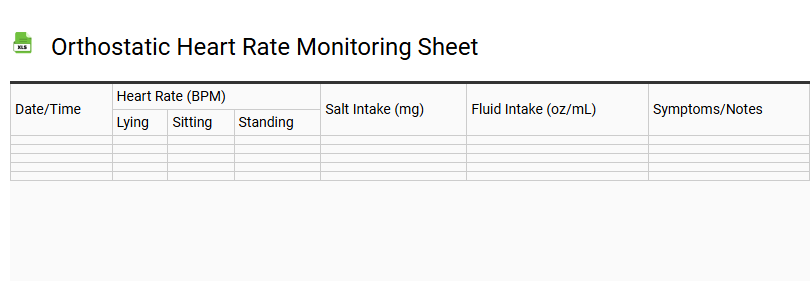
Orthostatic Heart Rate Monitoring Sheet
💾 Orthostatic Heart Rate Monitoring Sheet .xls
An orthostatic heart rate monitoring sheet serves as a critical diagnostic tool for assessing autonomic dysfunction and hemodynamic stability. This structured template facilitates the precise recording of vital signs as a patient transitions from a supine position to a standing posture. By systematically documenting heart rate variability and blood pressure fluctuations at one, three, and five-minute intervals, clinicians can effectively screen for Postural Tachycardia Syndrome (POTS) and orthostatic hypotension.
The monitoring log tracks the body's physiological response to gravity, highlighting potential baroreceptor sensitivity issues. Utilizing this sheet during a tilt table test or home-based clinical assessment ensures accurate data collection for managing symptoms like syncope or lightheadedness. This cardiovascular health record provides essential insights into resting pulse trends and circulatory adaptation, streamlining the diagnostic pathway for complex dysautonomia conditions.
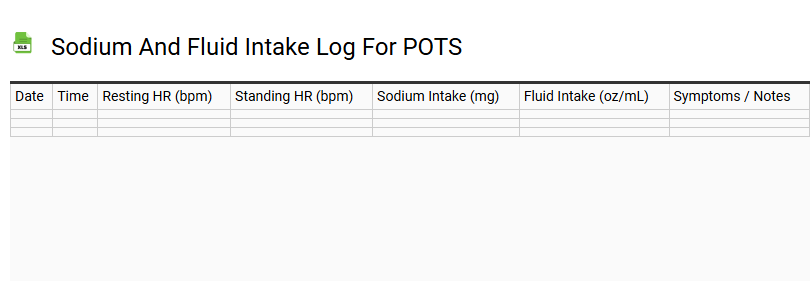
Sodium and Fluid Intake Log for POTS
💾 Sodium and Fluid Intake Log for POTS .xls
Managing Postural Orthostatic Tachycardia Syndrome (POTS) requires precise monitoring of daily salt and water consumption to maintain adequate blood volume. A dedicated sodium and fluid intake log serves as a vital tool for patients navigating dysautonomia and orthostatic intolerance. By documenting milligrams of sodium chloride alongside total ounces of hydration, individuals can identify direct correlations between electrolyte levels and symptom severity. This daily tracker assists in maintaining fluid balance, supporting the expansion of plasma volume to mitigate sudden tachycardia episodes. Consistent logging of mineral intake and liquid volume helps healthcare providers fine-tune treatment plans. Utilizing a structured tracking sheet ensures you meet specific medical targets for salt loading, ultimately improving orthostatic stability and cardiovascular function. This data-driven approach empowers patients to manage their chronic condition through optimized hydration strategies and lifestyle adjustments.
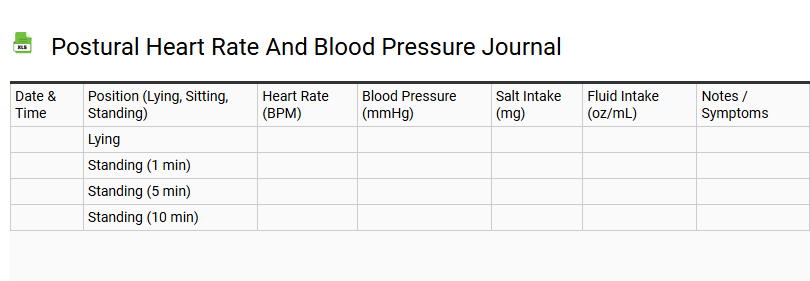
Postural Heart Rate and Blood Pressure Journal
💾 Postural Heart Rate and Blood Pressure Journal .xls
A postural heart rate and blood pressure journal serves as a critical diagnostic tool for monitoring dysautonomia and POTS (Postural Orthostatic Tachycardia Syndrome) symptoms. This template facilitates the systematic tracking of orthostatic vitals, capturing essential systolic and diastolic measurements across supine, seated, and standing positions.
- Clinical Tracking: Document pulse rate fluctuations to identify patterns of orthostatic hypotension or tachycardia.
- Symptom Logging: Correlate heart rate variability with physical sensations such as dizziness, palpitations, or syncope.
- Data Precision: Maintain a structured record of cardiovascular health metrics to assist healthcare providers with treatment titration.
By consistently recording autonomic nervous system responses, patients provide actionable insights into their circulatory health. Utilizing this structured log for orthostatic intolerance ensures a comprehensive overview of physiological patterns, aiding in the effective management of chronic conditions and improving clinical outcomes.
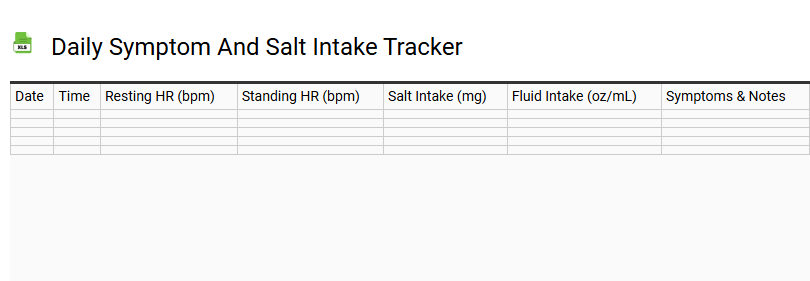
Daily Symptom and Salt Intake Tracker
💾 Daily Symptom and Salt Intake Tracker .xls
A Daily Symptom and Salt Intake Tracker is an essential tool for managing cardiovascular health and monitoring chronic conditions. By documenting dietary sodium consumption alongside physical manifestations, users can effectively identify triggers for hypertension and fluid retention. This structured medical log facilitates the tracking of daily blood pressure readings, morning weight fluctuations, and symptoms like edema or fatigue.
Utilizing a comprehensive health diary assists in maintaining electrolyte balance and ensures adherence to low-sodium protocols. This proactive approach to patient self-monitoring provides healthcare providers with precise data to refine treatment plans. Whether managing congestive heart failure or kidney health, consistent sodium monitoring helps correlate dietary habits with systemic responses, fostering improved wellness through detailed symptom documentation and targeted lifestyle adjustments.
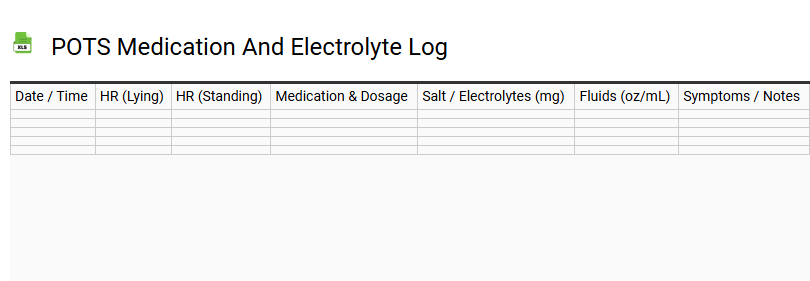
POTS Medication and Electrolyte Log
💾 POTS Medication and Electrolyte Log .xls
Effectively managing Postural Orthostatic Tachycardia Syndrome (POTS) requires meticulous tracking of medication adherence and electrolyte balance. A dedicated log serves as a vital tool for monitoring sodium intake, daily hydration levels, and salt supplementation, which are crucial for maintaining adequate blood volume and stabilizing blood pressure fluctuations.
By recording heart rate variability, orthostatic intolerance triggers, and specific dysautonomia symptoms, patients can identify correlations between syncope episodes and fluid retention. This chronic illness management template facilitates data-driven discussions with specialists regarding:
- Sodium-to-fluid ratios for optimal osmotic balance.
- Efficacy of beta-blockers, fludrocortisone, or midodrine.
- Identifying flare-up triggers and autonomic nervous system stressors.
Consistent logging empowers patients to optimize their treatment protocols, manage tachycardia, and improve daily functionality through precise lifestyle interventions.
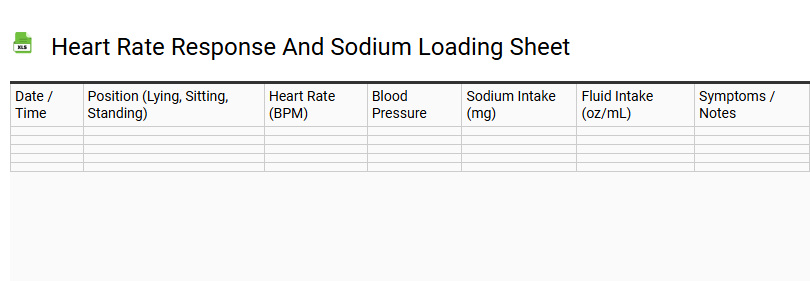
Heart Rate Response and Sodium Loading Sheet
💾 Heart Rate Response and Sodium Loading Sheet .xls
The Heart Rate Response and Sodium Loading Sheet serves as a critical clinical instrument for evaluating autonomic nervous system function and cardiovascular reactivity. By documenting the physiological shift following controlled electrolyte intake, this template tracks hemodynamic changes and baroreceptor sensitivity. Practitioners utilize this data to assess salt sensitivity and its impact on blood pressure regulation and fluid volume expansion.
Monitoring heart rate variability (HRV) and sympathetic drive during a saline challenge helps identify potential orthostatic hypotension or underlying autonomic dysfunction. This systematic recording of electrolyte balance and compensatory tachycardia or bradycardia provides a comprehensive profile of a patient's cardiovascular stability. Utilizing this structured approach ensures precise observation of plasma volume adjustments, allowing for tailored therapeutic interventions in patients with hypertension or metabolic concerns. Effective data integration supports a deeper understanding of the correlation between sodium-induced stress and myocardial response.
Comprehensive POTS Management Spreadsheet
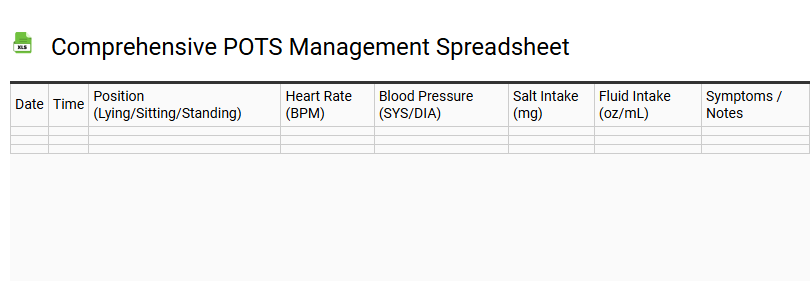
💾 Comprehensive POTS Management Spreadsheet .xls
Weekly Salt Intake and Heart Rate Summary
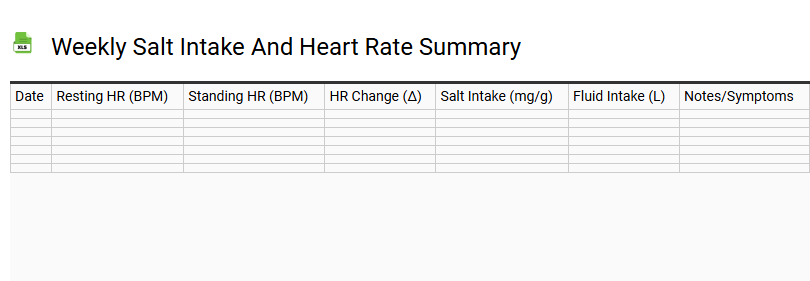
💾 Weekly Salt Intake and Heart Rate Summary .xls
Monitoring your weekly salt intake is a vital component of maintaining optimal cardiovascular health. This tracking template enables users to log daily sodium consumption alongside fluctuations in resting heart rate. By documenting these metrics, individuals can identify direct correlations between dietary sodium levels and blood pressure trends.
Effective hypertension management requires precise data on electrolyte balance and cardiac rhythm. Utilizing this summary helps in visualizing how high salt consumption impacts arterial tension and beats per minute. This health tracking tool is designed for those prioritizing wellness monitoring, providing a comprehensive overview of nutritional habits and their physiological effects. Consistent data logging of milligrams consumed and heart rate variability fosters informed adjustments to one's lifestyle, ensuring long-term heart health and improved circulatory function.
POTS Flare-Up and Sodium Tracking Log
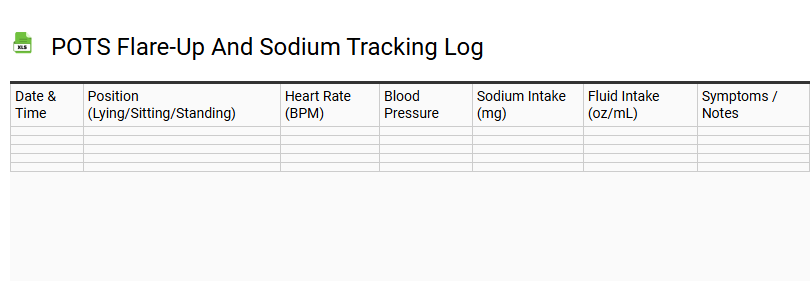
💾 POTS Flare-Up and Sodium Tracking Log .xls
Managing Postural Orthostatic Tachycardia Syndrome (POTS) requires diligent monitoring of daily electrolyte intake and symptom fluctuations. This tracking log is designed to document sodium consumption and total fluid intake to optimize blood volume and reduce orthostatic intolerance. By recording tachycardia episodes, dizziness, and chronic fatigue, patients can identify specific dysautonomia triggers.
Consistent data entry helps correlate salt loading strategies with autonomic nervous system stability. Users should note heart rate variability, blood pressure readings, and the frequency of pre-syncope events. This comprehensive symptom diary serves as a vital tool for healthcare providers to adjust treatment protocols and manage flare-up duration through precise hydration tracking and mineral balance. Maintaining a structured health log facilitates better patient outcomes and more effective chronic illness management.
Activity Level and Heart Rate Variability Monitor
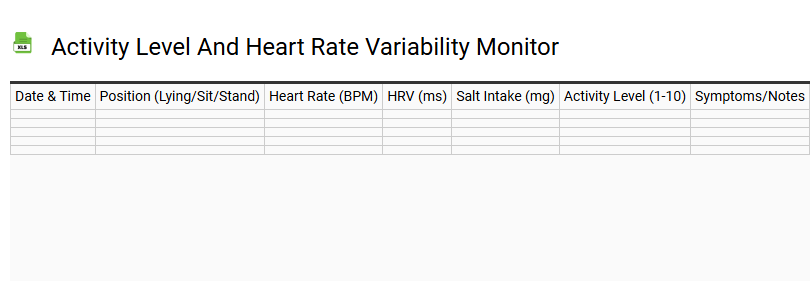
💾 Activity Level and Heart Rate Variability Monitor .xls
This Activity Level and Heart Rate Variability (HRV) Monitor template provides a sophisticated framework for tracking the synergy between physical exertion and the autonomic nervous system. By integrating biometric tracking from wearable technology, users can analyze physiological data to determine precise recovery metrics and stress resilience.
The system captures inter-beat intervals to measure parasympathetic activity, offering a clear view of cardiovascular health and systemic fatigue. Utilizing baseline measurements, this tool facilitates fitness optimization by aligning daily training intensity with the body's current readiness state. Through the analysis of metabolic demands and sleep quality patterns, the monitor empowers individuals to make data-driven decisions. This holistic approach to health monitoring ensures a comprehensive understanding of rhythmic heart patterns, helping users balance high-performance output with essential restorative periods for long-term wellness.
Utilizing a POTS Heart Rate and Salt Intake Log is essential for managing dysautonomia symptoms effectively. By tracking daily sodium consumption, fluid intake, and orthostatic vitals, patients can pinpoint triggers and monitor tachycardia trends. This structured record-keeping assists healthcare providers in adjusting treatment plans based on accurate electrolyte balance and heart rate data. Implementing this template fosters better communication with medical teams, helping you gain control over chronic illness and improve your overall quality of life through diligent monitoring.