
Powerlifting Meet Prep Log Template: Track Training and Peaking Progress
Executing a successful peaking cycle requires a systematic approach to tracking your strength training progress. Utilizing a comprehensive powerlifting meet prep log ensures you monitor critical variables like RPE, training volume, and intensity across the squat, bench press, and deadlift. By documenting your periodization strategy, you can analyze recovery patterns and refine your training blocks for optimal performance on the platform. Please check out our professionally designed variation of templates below.
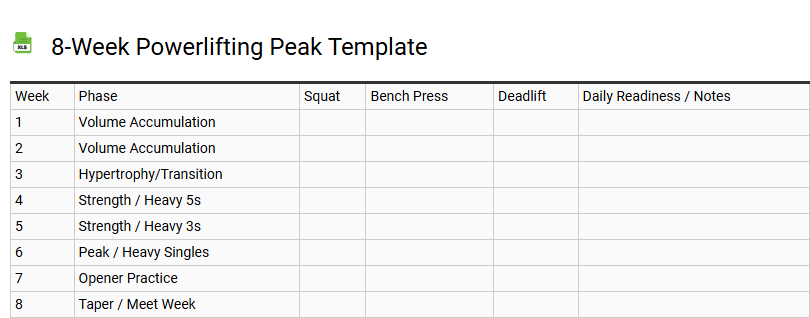
8-Week Powerlifting Peak Template
💾 8-Week Powerlifting Peak Template .xls
This 8-week powerlifting peak template is meticulously designed to optimize one-rep max potential through strategic linear periodization. The initial phase focuses on building strength capacity with moderate volume, gradually transitioning into high-intensity neuromuscular adaptation. Athletes will prioritize specificity in the squat, bench press, and deadlift while managing systemic fatigue via a calculated tapering phase.
By utilizing RPE (Rate of Perceived Exertion) and percentage-based loading, this program ensures peak force production for competition day. Key elements include:
- Progressive overload to drive central nervous system efficiency.
- Specific Physical Preparedness (SPP) for technical mastery under heavy loads.
- A final deload week to dissipate accumulated stress and enhance recovery.
Maximize your strength block efficiency and step onto the platform with total confidence and refined lifting mechanics.
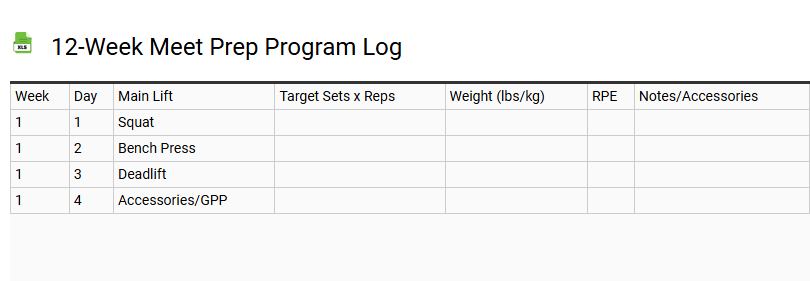
12-Week Meet Prep Program Log
💾 12-Week Meet Prep Program Log .xls
This 12-week meet prep program log serves as a comprehensive roadmap for powerlifters transitioning from a high-volume hypertrophy phase into a specialized peaking block. By meticulously tracking squat, bench press, and deadlift variations, this template utilizes linear periodization to maximize force production for competition day. Each entry allows for precise monitoring of RPE (Rate of Perceived Exertion), tonnage, and intensity percentages to manage CNS fatigue effectively.
The structured layout prioritizes:
- Strength cycles focusing on technical proficiency and bracing.
- Accessory movements to address muscular imbalances.
- A strategic taper phase to ensure full recovery before hitting the platform.
Using this log ensures consistent progressive overload and data-driven adjustments, helping athletes refine their openers and secure a new personal best total under meet conditions.
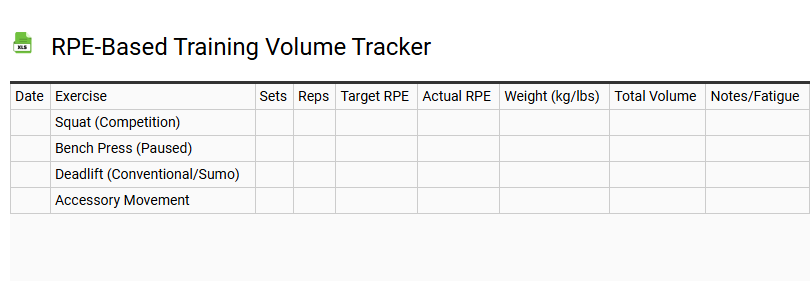
RPE-Based Training Volume Tracker
💾 RPE-Based Training Volume Tracker .xls
An RPE-based training volume tracker is a vital tool for athletes utilizing autoregulation to optimize physiological adaptations. By monitoring the Rate of Perceived Exertion, lifters can dynamically adjust workout intensity based on daily recovery capacity, ensuring consistent progressive overload. This template facilitates precise logging of sets, reps, and load, calculating total tonnage to measure hypertrophy stimulus accurately.
- Fatigue Management: Balancing CNS recovery with high-intensity efforts.
- Data-Driven Gains: Tracking volume load to trigger muscle protein synthesis.
- Performance Insights: Utilizing the Borg Scale to prevent overreaching and plateaus.
Implementing a structured lifting log ensures that mechanical tension and metabolic stress are maximized. This systematic approach transforms a standard fitness program into a precision instrument for strength training, allowing for real-time adjustments that foster long-term muscle growth and peak athletic performance.
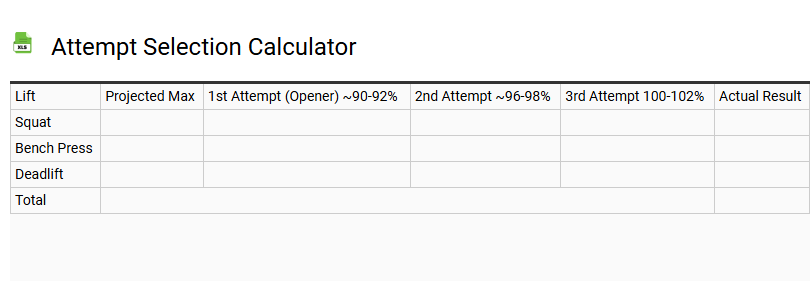
Attempt Selection Calculator
💾 Attempt Selection Calculator .xls
This attempt selection calculator is an essential tool for powerlifters and strength athletes aiming to maximize their total on the platform. By utilizing your one-rep max (1RM) and current RPE (Rate of Perceived Exertion), the template generates a strategic progression for the squat, bench press, and deadlift.
The algorithm focuses on three critical phases of competition:
- Opener: A conservative weight to build confidence and secure a successful lift.
- Second Attempt: A tactical jump to position the athlete for a potential personal record.
- Third Attempt: A peak effort designed for total optimization and podium placement.
Effective meet strategy requires balancing ambition with technical proficiency. Use this data-driven approach to manage fatigue, ensure white lights, and avoid the risk of bombing out during your next strength sanctioned event.
One-Rep Max Progression Chart
💾 One-Rep Max Progression Chart .xls
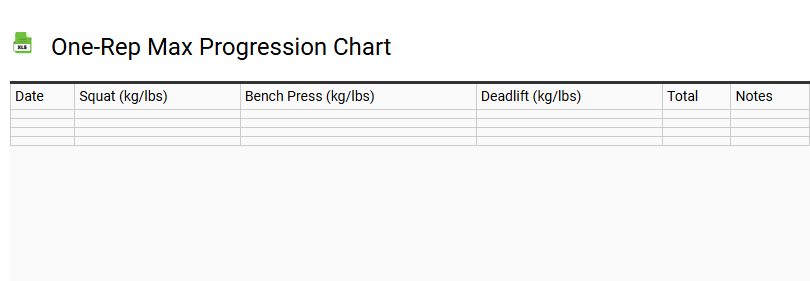
A One-Rep Max (1RM) Progression Chart serves as a foundational tool for structured strength training and powerlifting. By systematically tracking your maximum lifting capacity, this template facilitates progressive overload, ensuring consistent strength gains over time. Athletes utilize these performance metrics to establish accurate intensity zones for percentage-based training programs.
Key benefits of monitoring these strength benchmarks include:
- Visualizing athletic development and long-term trajectory.
- Optimizing training volume and resistance levels for specific goals.
- Identifying plateaus in muscle hypertrophy and neuromuscular adaptation.
This data-driven approach allows for precise adjustments to workout routines, maximizing efficiency and minimizing injury risk through calculated load management and objective fitness assessment. Integrating a progression chart transforms raw effort into a strategic roadmap for peak physical performance.
Daily Readiness and Wellness Log
💾 Daily Readiness and Wellness Log .xls
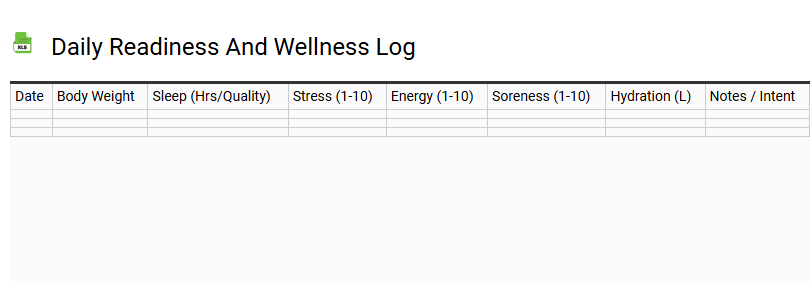
A daily readiness and wellness log serves as a vital framework for performance optimization and holistic health tracking. This template allows individuals to monitor essential biometric data, including heart rate variability (HRV) and resting heart rate, to determine an accurate recovery score.
By integrating habit tracking with subjective self-assessment, users can evaluate the relationship between physical exertion and restorative sleep. Key components of an effective log include:
- Sleep quality and duration metrics.
- Stress management indicators and mental health status.
- Hydration levels and nutritional consistency.
- Daily physiological strain and training intensity.
Utilizing fitness tracking insights alongside mood monitoring empowers users to balance active recovery with high-intensity demands, ensuring long-term wellness and injury prevention through data-driven lifestyle adjustments.
Bodyweight and Wilks Score Tracker
💾 Bodyweight and Wilks Score Tracker .xls
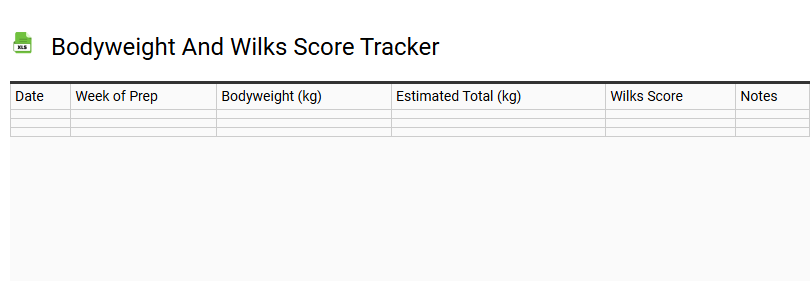
This Bodyweight and Wilks Score Tracker is a specialized digital log designed for powerlifters and strength athletes to quantify their relative strength. By utilizing the Wilks Coefficient, this template provides a standardized metric to compare lifting performance across different weight classes, ensuring competitive equity.
Integrating this tool into your routine allows for precise monitoring of:
- Strength-to-weight ratio based on total kilograms lifted.
- Fluctuations in body mass relative to one-rep max gains.
- Progressive trends in squat, bench press, and deadlift totals.
- Historical powerlifting points for peak performance analysis.
Maintaining an accurate fitness dashboard is essential for optimizing training volume and peaking for competition. By tracking your pound-for-pound efficiency, you can objectively measure athletic development and adjust your macronutrient intake or programming to improve your overall strength standards and ranking.
Accessory Movement Progression Log
💾 Accessory Movement Progression Log .xls
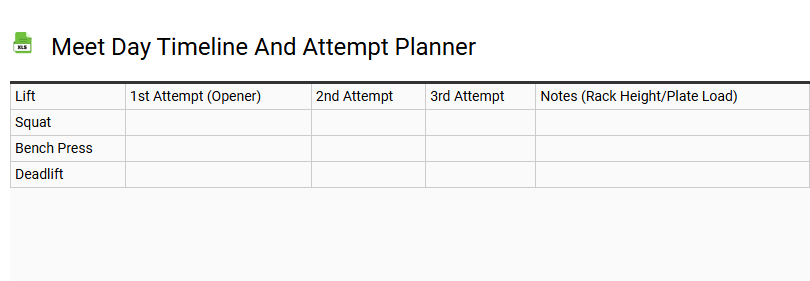
Meet Day Timeline and Attempt Planner
💾 Meet Day Timeline and Attempt Planner .xls
A comprehensive meet day timeline and attempt planner is vital for optimizing performance in strength sports. This template streamlines your competition strategy, covering everything from initial weigh-ins to final platform execution. By utilizing a detailed loading chart, athletes can manage their warm-up room progression, ensuring peak readiness for their opener. The planner facilitates calculated jumps between second and third attempts, maximizing your total while accounting for flight timing and rack heights. Effective attempt selection minimizes decision fatigue during the lifting meet, allowing you to focus on securing white lights and achieving a personal record (PR). Whether tracking Wilks/DOTS or managing attempt cards, this structured approach ensures every lift aligns with your strength potential and peaking phase for a successful meet outcome.
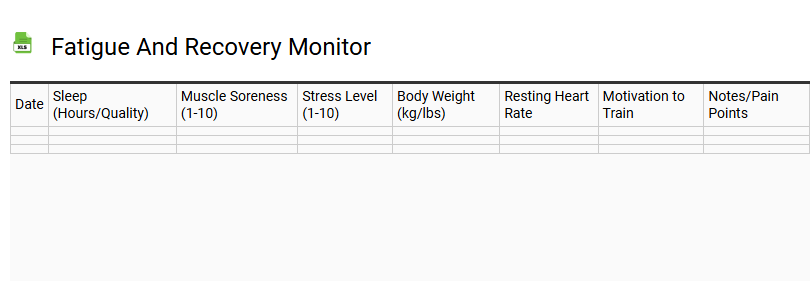
Fatigue and Recovery Monitor
💾 Fatigue and Recovery Monitor .xls
This Fatigue and Recovery Monitor template provides a comprehensive framework for tracking physiological stress and training load. By integrating key biometrics such as heart rate variability (HRV), sleep quality, and resting heart rate, users can calculate an accurate readiness score to prevent overtraining syndrome.
The system focuses on neuromuscular fatigue and metabolic recovery through the following metrics:
- Subjective Wellness: Monitoring muscle soreness, mood disturbances, and perceived exertion levels.
- Performance Optimization: Analyzing the balance between central nervous system (CNS) fatigue and acute workload.
- Injury Mitigation: Identifying trends in accumulated strain to adjust periodization schedules.
Utilizing this data-driven approach ensures superior athletic longevity. By visualizing the work-to-rest ratio, athletes and coaches can make informed decisions to enhance supercompensation and maintain peak physical output throughout the competitive season.
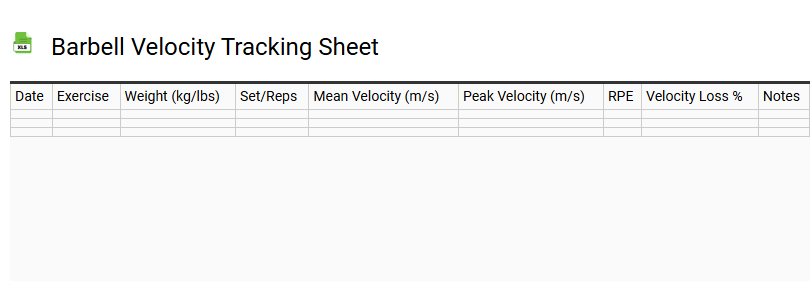
Barbell Velocity Tracking Sheet
💾 Barbell Velocity Tracking Sheet .xls
A comprehensive Barbell Velocity Tracking Sheet is a foundational tool for Velocity Based Training (VBT), enabling athletes to monitor mean velocity and peak velocity with precision. By logging the concentric phase speed of each lift, users can develop a customized load-velocity profile to guide autoregulation and adjust daily intensity. This template tracks barbell speed in meters per second (m/s), providing objective data to estimate a one-rep max (1RM) without the need for maximal testing.
Integrating metrics from a linear position transducer or accelerometer allows for the identification of velocity loss, signifying central nervous system fatigue. By correlating RPE with movement speed and power output, lifters can optimize hypertrophy and explosive strength. This data-driven approach ensures every training session hits the target velocity zone to maximize athletic performance and recovery.
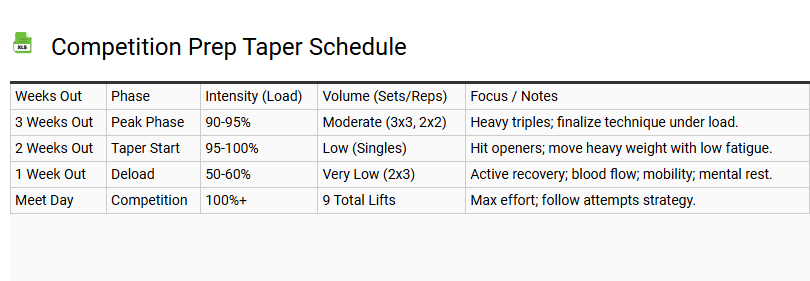
Competition Prep Taper Schedule
💾 Competition Prep Taper Schedule .xls
A strategic competition prep taper schedule is a critical periodization phase designed to facilitate supercompensation and peak athletic readiness. This process involves a systematic reduction in training volume-often by 40-60%-while maintaining high intensity to preserve neuromuscular adaptations and power output. By prioritizing central nervous system (CNS) recovery and metabolic repair, the body effectively sheds accumulated fatigue.
Implementing a structured tapering phase typically spanning 7 to 21 days ensures the replenishment of glycogen stores and optimal muscle repair. To maximize performance optimization, athletes should focus on:
- Maintaining movement frequency to keep technical skills sharp.
- Prioritizing recovery modalities and hormonal balance.
- Reducing metabolic stress while sustaining specific work capacity.
This calculated reduction in physiological load transforms months of rigorous training into peak performance, ensuring the athlete reaches the starting line in an optimal physical and mental state.
A structured powerlifting meet prep log is essential for managing your training cycle and tracking strength gains. By documenting squat, bench press, and deadlift metrics, athletes can analyze volume and intensity via the RPE scale.
This template ensures a precise peaking phase and effective tapering before competition day. Monitoring progress through a dedicated log minimizes injury risk while maximizing performance, ensuring you reach the platform in peak condition for a successful meet.