
Prehabilitation Strength Training Journal Template
Establishing a proactive foundation for orthopedic health involves the systematic tracking of corrective exercise and mobility drills. A dedicated prehabilitation strength journal template provides the necessary structure for injury prevention, focusing on functional movement patterns and joint stability. By documenting strength programming and clinical wellness metrics, athletes enhance their sports performance while mitigating physical setbacks. This tool facilitates precise data entry for rehabilitative protocols and neuromuscular activation routines. Please check already made variation of templates below.
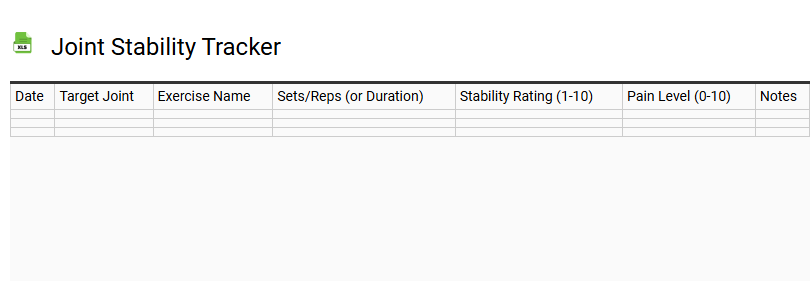
Joint Stability Tracker
💾 Joint Stability Tracker .xls
A Joint Stability Tracker serves as a sophisticated tool for monitoring musculoskeletal health and maintaining articular integrity. By meticulously logging range of motion (ROM) and flexibility assessments, users can effectively evaluate connective tissue resilience and ligament strength over time. This template is indispensable for orthopedic monitoring and physical therapy protocols, ensuring that biomechanics remain optimal during intensive strength training or rehabilitative cycles.
Consistent data entry regarding mobility drills and functional movement patterns aids in proactive injury prevention. Tracking joint laxity and inflammatory responses provides actionable insights for adjusting exercise intensity. Whether managing chronic conditions or peaking for athletic performance, this systematic approach to orthopedic wellness ensures long-term functional stability and improved kinesthetic awareness across all major muscle groups and skeletal attachments.
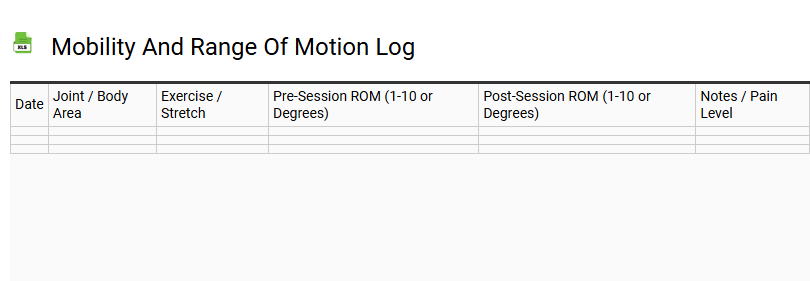
Mobility and Range of Motion Log
💾 Mobility and Range of Motion Log .xls
A Mobility and Range of Motion Log serves as a vital instrument for tracking joint flexibility and functional movement patterns. By documenting daily stretching routines and corrective exercises, users can systematically monitor musculoskeletal health and recovery progress. This structured log captures essential data on joint articulation, muscle elasticity, and physical limitations, facilitating more effective physical therapy interventions and rehabilitation outcomes.
Consistent recording helps identify recurring stiffness or discomfort, enhancing kinesthetic awareness to optimize athletic performance and reduce injury risk. Whether managing post-surgical recovery or enhancing general fitness, this template tracks both active and passive range of motion to ensure peak body mechanics. Detailed entries regarding myofascial release and dynamic warm-ups provide a comprehensive overview of long-term mobility gains and synovial joint health, supporting sustainable physical longevity and functional independence.
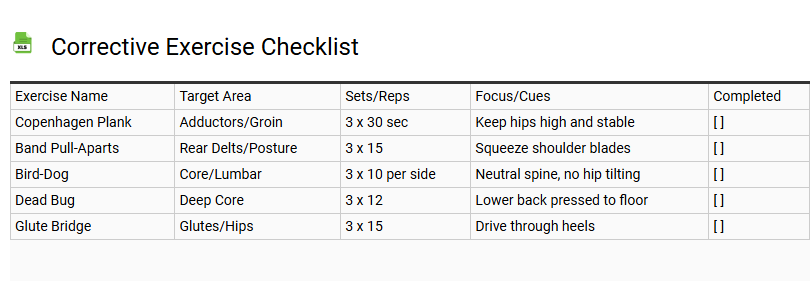
Corrective Exercise Checklist
💾 Corrective Exercise Checklist .xls
A corrective exercise checklist serves as a vital framework for fitness professionals to address movement dysfunction. By systematically evaluating postural alignment and the kinetic chain, practitioners can identify specific muscle imbalances and compensations. This structured template facilitates a comprehensive movement assessment, focusing on mobility and stability across various joints.
Key components include:
- Inhibitory techniques to reduce overactive tissue tension.
- Lengthening protocols for improving range of motion.
- Activation exercises targeting underactive muscle groups.
- Integration movements to re-train the neuromuscular system.
- Functional movement screening for injury prevention.
Utilizing this evidence-based approach optimizes biomechanics and enhances athletic performance. By documenting progress through a standardized template, clinicians ensure precise rehabilitation and long-term joint health, bridging the gap between clinical therapy and functional strength training.
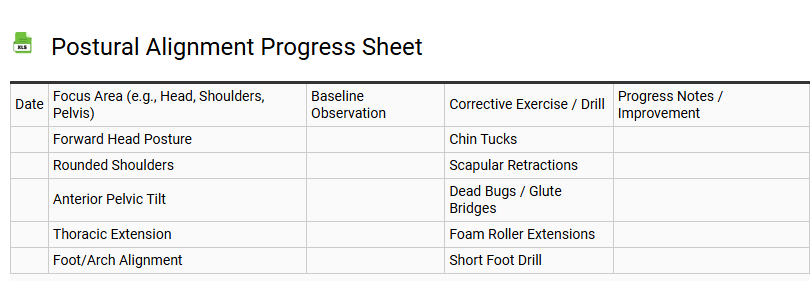
Postural Alignment Progress Sheet
💾 Postural Alignment Progress Sheet .xls
This template for a Postural Alignment Progress Sheet provides a structured framework for clinical assessment and longitudinal tracking. It facilitates precise documentation of musculoskeletal deviations, including kyphosis, lordosis, and lateral pelvic tilts. By recording baseline metrics across the kinetic chain, practitioners can monitor the efficacy of corrective exercises and rehabilitative interventions.
The sheet includes specialized fields for analyzing spinal curvature, shoulder symmetry, and foot pronation during both static and dynamic movement assessments. Utilizing this tool enhances biomechanical awareness, allowing for targeted adjustments in ergonomic habits and physical therapy protocols. Regularly updating these metrics ensures objective data for evaluating postural restoration, addressing muscle imbalances, and optimizing functional mobility. This comprehensive documentation serves as a vital resource for patients and clinicians aiming for sustainable structural integrity and pain-free movement through systematic posture analysis.
Injury Prevention Routine Planner
💾 Injury Prevention Routine Planner .xls
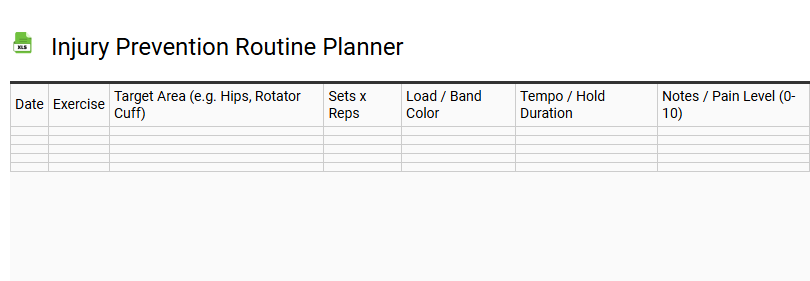
The Injury Prevention Routine Planner acts as a proactive framework designed to enhance physical durability and minimize the risk of strain. By structuring daily movements around joint stability, flexibility, and muscle balance, this tool helps transition recovery efforts into a consistent performance strategy. It allows users to document specific exercises that target vulnerable areas, ensuring that corrective work remains a core component of their fitness regimen.
- Mobility Focus: Prioritize drills that increase range of motion and reduce stiffness.
- Consistency Tracking: Monitor daily adherence to build long-term structural resilience.
- Targeted Strengthening: Identify and reinforce muscle groups prone to fatigue or imbalance.
Utilizing a structured approach ensures that preventative care is never overlooked. This systematic planning fosters a body that is better equipped to handle repetitive stress, supporting sustained activity and overall physical longevity without the setback of avoidable injuries.
Elastic Band Resistance Tracker
💾 Elastic Band Resistance Tracker .xls
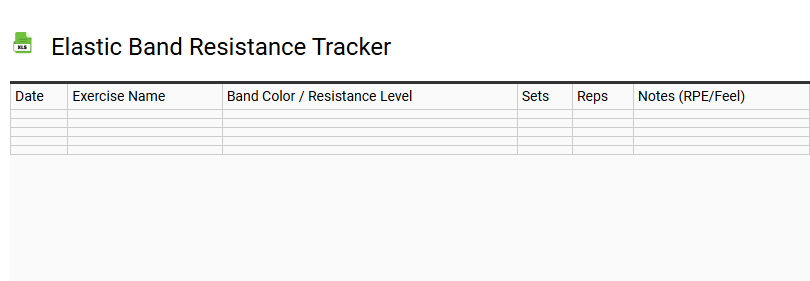
This Elastic Band Resistance Tracker serves as a specialized workout log for athletes utilizing portable gym equipment. By meticulously recording tension levels and color-coded resistance, users can effectively implement progressive overload strategies. Whether you are using latex loops or heavy-duty tube bands, documenting each set and repetition is crucial for maximizing muscle activation and hypertrophy.
This exercise journal is optimized for strength training, physical therapy recovery, and athletic conditioning. By tracking resistance increments and training volume, you can visualize strength gains and ensure consistency within your fitness regimen. Utilizing structured performance data helps refine functional mobility and muscle endurance, making it an essential template for maintaining a disciplined approach to home workouts or gym sessions without the need for traditional heavy weights.
Functional Movement Screening Log
💾 Functional Movement Screening Log .xls
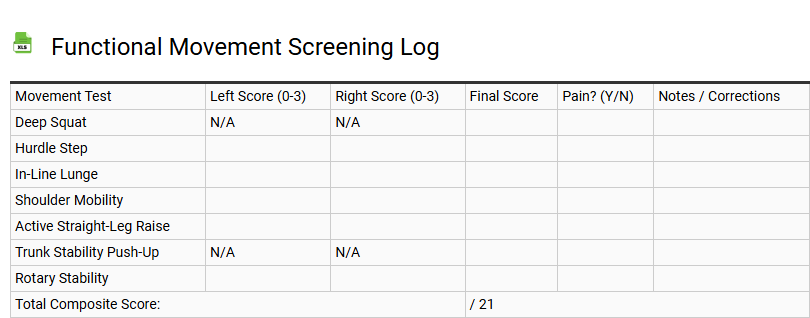
A Functional Movement Screening (FMS) Log is an essential instrument for documenting biomechanical assessments and evaluating movement quality. This systematic template captures objective data from seven fundamental movement patterns: the deep squat, hurdle step, inline lunge, shoulder mobility, active straight-leg raise, trunk stability push-up, and rotary stability. By tracking these metrics, practitioners identify structural asymmetries and functional limitations within the kinetic chain. Maintaining a detailed FMS log establishes baseline data necessary for designing personalized corrective exercises that target specific mobility and stability deficits. This proactive approach to injury prevention enhances athletic development by ensuring physical performance is built upon a stable foundation. Utilizing this screening protocol allows for precise programming adjustments, optimizing musculoskeletal health and functional capacity through standardized scoring and longitudinal progress tracking.
Rotator Cuff Strengthening Journal
💾 Rotator Cuff Strengthening Journal .xls
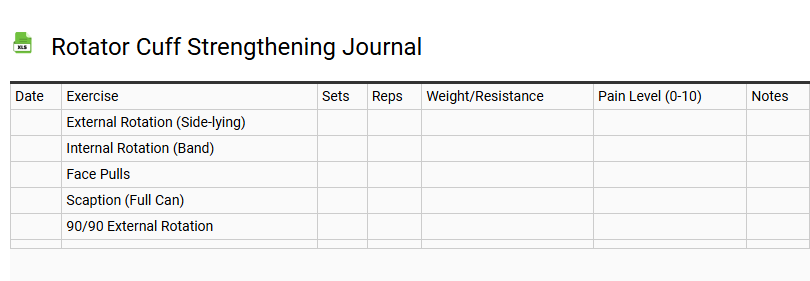
A rotator cuff strengthening journal serves as a vital tool for documenting shoulder rehabilitation progress and maintaining long-term joint health. By systematically logging physical therapy exercises, such as external rotations and resistance band routines, individuals can ensure progressive overload while monitoring muscle recovery effectively. This structured approach helps track the activation of the supraspinatus and infraspinatus muscles, which are crucial for scapular stability and humeral head control.
Utilizing a dedicated log facilitates the following clinical benefits:
- Measuring improvements in range of motion (ROM) and flexibility.
- Recording sets, repetitions, and resistance levels for eccentric loading.
- Monitoring pain thresholds to adjust isometric holds and prevent reinjury.
- Optimizing functional mobility through consistent injury prevention protocols.
Maintaining a detailed performance diary fosters accountability and provides healthcare providers with data-driven insights to refine recovery strategies and enhance overall athletic longevity.
Core Stability and Pelvic Floor Tracker
💾 Core Stability and Pelvic Floor Tracker .xls
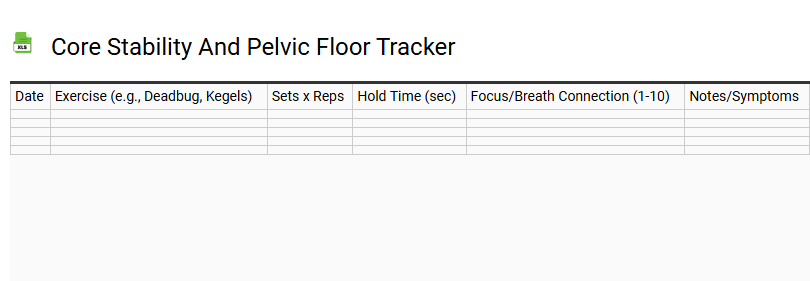
This core stability and pelvic floor tracker serves as a comprehensive tool for monitoring deep core activation and musculoskeletal health. By documenting transverse abdominis engagement and pelvic floor muscle (PFM) contractions, users can effectively manage intra-abdominal pressure and improve spinal stability. This template is optimized for postpartum recovery, bladder control management, and functional strength development. Regular logging of Kegel exercises, diaphragmatic breathing, and lumbar support metrics ensures a holistic approach to pelvic health. Tracking these biometric data points allows for the identification of pelvic floor dysfunction triggers while promoting muscle endurance. Consistent use of this progress log bridges the gap between rehabilitative exercise and peak physical performance, ensuring long-term urogenital wellness and core integration through precise, data-driven insights.
Eccentric Loading Progress Log
💾 Eccentric Loading Progress Log .xls
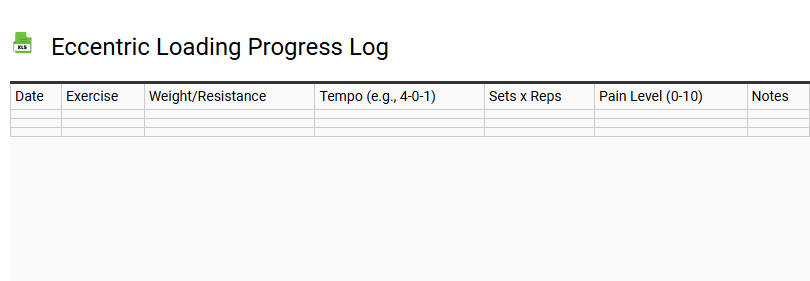
An eccentric loading progress log is a specialized performance tracking tool designed to monitor negative repetitions and muscle lengthening contractions. By focusing on the deceleration phase of an exercise, athletes can maximize time under tension (TUT), which is critical for muscle hypertrophy, tendon rehabilitation, and connective tissue adaptation.
This template utilizes progressive overload principles by documenting specific load intensity and tempo variations. Key metrics often include:
- Tempo Control: Recording the precise duration of the lowering phase to enhance neuromuscular efficiency.
- Volume Tracking: Monitoring sets and reps to ensure consistent mechanical tension.
- Recovery Indicators: Assessing delayed onset muscle soreness (DOMS) and joint integrity.
Systematically logging these variables facilitates injury prevention and significant strength gains, ensuring structural resilience through controlled eccentric exercise protocols and data-driven adjustments.
Balance and Proprioception Diary
💾 Balance and Proprioception Diary .xls
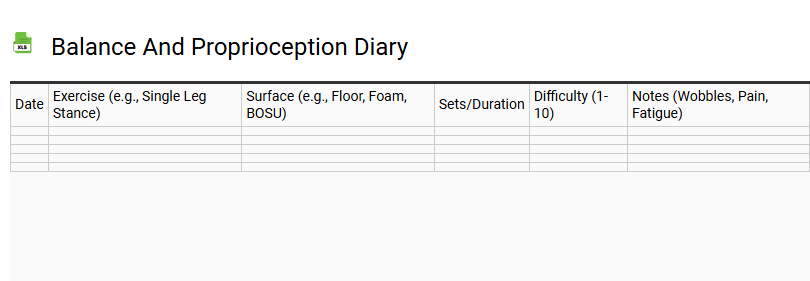
A balance and proprioception diary serves as a vital instrument for monitoring neuromuscular control and postural stability. By utilizing a structured logbook, individuals can track daily body awareness and equilibrium, providing essential sensorimotor feedback for rehabilitation or athletic progression. Documenting specific stability drills and vestibular exercises helps identify patterns in kinesthetic sense and coordination levels.
This systematic approach to tracking facilitates fall prevention strategies and enhances joint position sense through consistent data entry. Whether focusing on physical therapy recovery or refining motor skills, maintaining a detailed record ensures a comprehensive overview of functional mobility. Integrating these metrics into your routine promotes long-term musculoskeletal health and provides a clear roadmap for improving dynamic balance and overall physical performance.
Hip and Knee Prehab Schedule
💾 Hip and Knee Prehab Schedule .xls
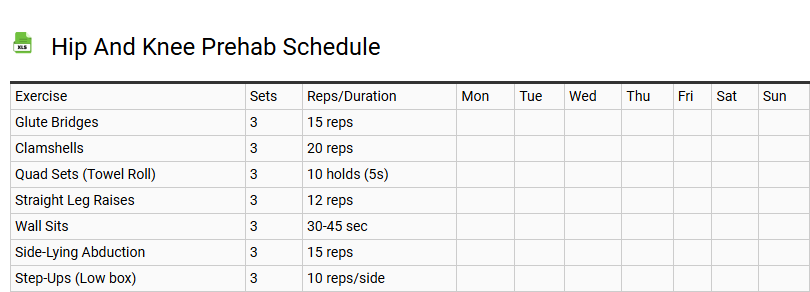
A comprehensive hip and knee prehab schedule serves as a strategic roadmap to optimize surgical outcomes and accelerate the postoperative recovery timeline. By engaging in targeted strength training and mobility exercises prior to joint replacement, patients effectively combat muscle atrophy and enhance joint stability. This proactive physical therapy regimen focuses on the quadriceps, glutes, and core to support functional movement patterns and long-term musculoskeletal health.
- Range of motion drills to preserve joint flexibility.
- Low-impact cardiovascular conditioning to improve surgical stamina.
- Specific strengthening protocols for the surrounding connective tissues.
- Neuromuscular training to improve balance and proprioception.
Adhering to a structured pre-habilitation routine ensures the body is physiologically prepared for the stress of orthopedic surgery. Consistently following this template maximizes rehabilitation efficiency and restores independence through improved orthopedic wellness and mobility.
Muscle Imbalance Assessment Sheet
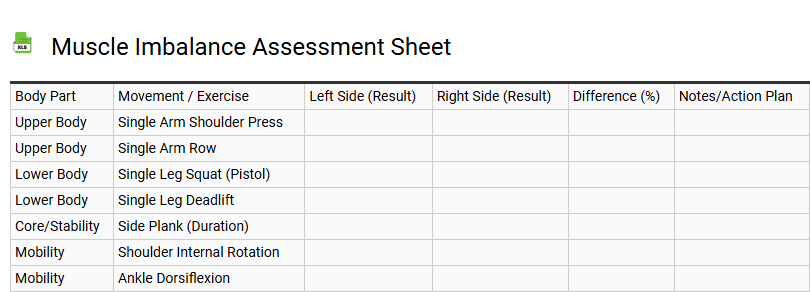
💾 Muscle Imbalance Assessment Sheet .xls
A comprehensive muscle imbalance assessment sheet serves as a vital diagnostic tool for identifying kinetic chain dysfunction and postural deviations. By systematically documenting range of motion (ROM) and performing static postural assessments, practitioners can pinpoint specific overactive and underactive muscles. This template facilitates objective orthopedic testing and functional movement screening to address chronic muscular asymmetries.
Integrating data on agonist-antagonist balance enhances neuromuscular efficiency and guides precise corrective exercise programming. Focusing on joint alignment and muscle length-tension relationships allows for the identification of biomechanical compensations that lead to injury. Utilizing this structured evaluation ensures a data-driven approach to restoring functional integrity, optimizing athletic performance, and improving overall musculoskeletal health through targeted therapeutic interventions.
Soft Tissue Recovery and Foam Rolling Log
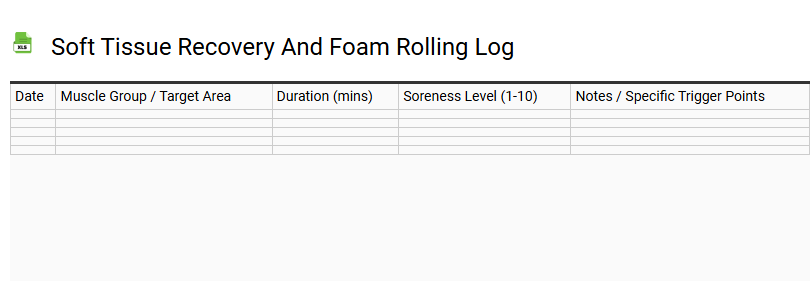
💾 Soft Tissue Recovery and Foam Rolling Log .xls
This soft tissue recovery log is meticulously designed to optimize self-myofascial release protocols and improve overall tissue quality. By utilizing a structured foam rolling template, athletes can systematically track the mitigation of delayed onset muscle soreness (DOMS) while identifying persistent trigger points within the fascia. Documenting daily mobility drills and self-massage frequency is essential for enhancing range of motion and long-term flexibility.
To elevate athletic performance and ensure neuromuscular efficiency, your log should monitor:
- Targeted muscle groups and specific anatomical adhesions.
- Intensity levels of mechanical tension applied.
- Duration of compressive techniques per session.
- Post-recovery functional movement improvements.
Consistent data entry facilitates better recovery cycles, helping to prevent injury through proactive soft tissue therapy management and improved blood circulation to fatigued muscles.
Pre-Surgery Strength Baseline Tracker
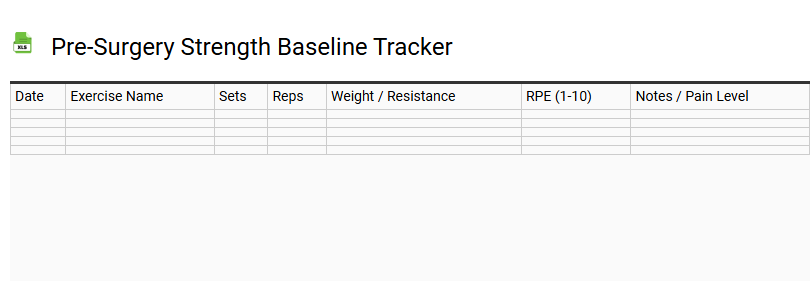
💾 Pre-Surgery Strength Baseline Tracker .xls
This pre-surgery strength baseline tracker serves as an essential prehabilitation tool designed to quantify a patient's physiological starting point before medical intervention. By documenting functional mobility, muscle symmetry, and range of motion, clinicians can establish objective postoperative recovery benchmarks. Utilizing this template helps mitigate muscle atrophy and optimizes surgical outcomes by providing quantitative metrics for physical therapy evaluation.
Tracking specific resistance levels, core stability, and joint flexibility ensures that rehabilitation goals are data-driven and personalized. This baseline assessment is critical for orthopedic surgery candidates aiming to accelerate their return to daily activities. Maintaining a detailed log of physical conditioning prior to hospital admission allows healthcare providers to monitor progress effectively, ensuring that musculoskeletal health is prioritized throughout the entire continuum of care.
Activation Drill Monitoring Sheet
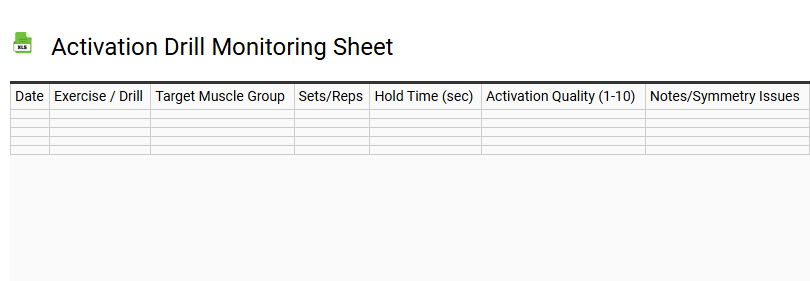
💾 Activation Drill Monitoring Sheet .xls
An activation drill monitoring sheet serves as a vital instrument for evaluating emergency preparedness and disaster response capabilities. This structured template facilitates the systematic tracking of response times, resource mobilization, and notification protocols during simulated crises. By utilizing standardized performance metrics, organizations can identify critical gaps in their standard operating procedures (SOPs) and enhance overall organizational resilience.
Key data points typically recorded include:
- Personnel arrival and check-in times
- Communication equipment functionality
- Efficiency of the incident command structure
- Adherence to safety compliance standards
Regular use of these monitoring tools ensures regulatory compliance and fosters continuous improvement. Implementing a robust readiness assessment allows stakeholders to validate contingency plans, ensuring team proficiency in emergency management strategies and post-action review accuracy.
Flexibility and Static Stretching Log
💾 Flexibility and Static Stretching Log .xls
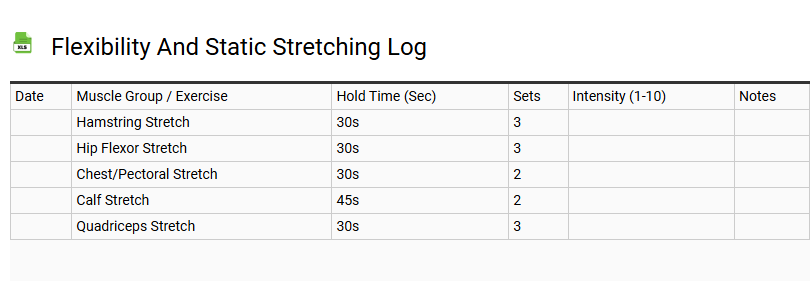
Utilizing a flexibility and static stretching log is a vital strategy for improving your range of motion and overall joint mobility. By consistently tracking your sessions, you can monitor muscle elasticity and ensure effective post-workout recovery. This document helps in recording isometric holds, the duration of stretches, and specific muscle groups targeted to alleviate muscle tension and prevent injury. A structured log encourages the lengthening of connective tissues and promotes better postural alignment through disciplined mobility drills. Documenting your progress allows for data-driven adjustments, helping you overcome plateaus in functional movement. Whether focusing on cool-down routines or rehabilitative exercises, maintaining a detailed record ensures long-term musculoskeletal health and peak athletic performance.
Plyometric Readiness Tracker
💾 Plyometric Readiness Tracker .xls
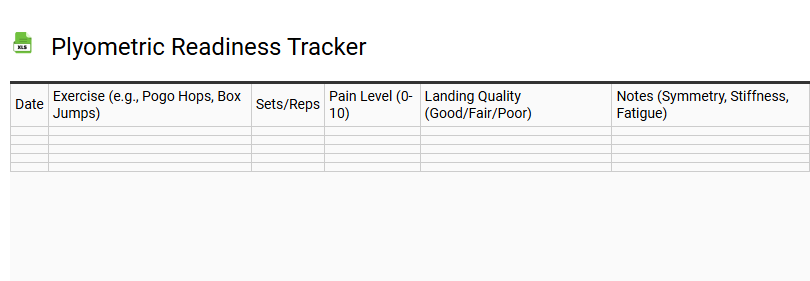
The Plyometric Readiness Tracker is a specialized diagnostic tool designed to evaluate neuromuscular fatigue and explosive power potential. By monitoring the stretch-shortening cycle (SSC) and Reactive Strength Index (RSI), athletes can determine their physical preparedness for high-intensity jump training.
- CNS Readiness: Assess central nervous system recovery to prevent overtraining and ensure peak performance.
- Landing Mechanics: Track technical proficiency during eccentric loading phases to maintain joint integrity.
- Amortization Phase: Measure the efficiency of energy transfer and ground contact time.
- Injury Prevention: Monitor musculoskeletal health to mitigate risks from repetitive high-impact forces.
Integrating this tracker into a strength and conditioning workflow ensures peak force production is achieved safely. By establishing baseline performance metrics, coaches can optimize plyometric volume and intensity based on real-time athlete monitoring data.
Ankle Mobility and Stability Journal
💾 Ankle Mobility and Stability Journal .xls
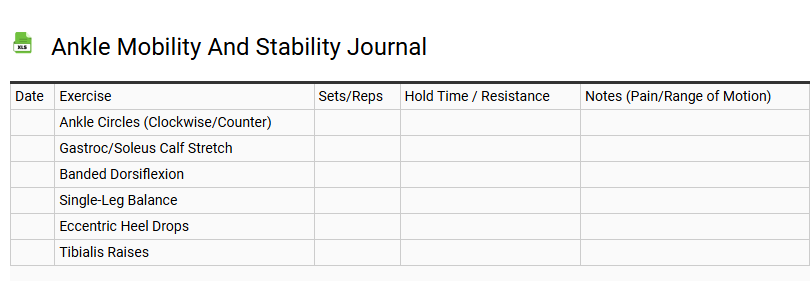
Consistency in tracking ankle mobility and joint stability is essential for athletic longevity and injury prevention. This journal serves as a specialized log for monitoring dorsiflexion range of motion, subtalar mechanics, and talocrural joint health. By documenting daily corrective exercises-such as eccentric loading, proprioceptive drills, and dynamic stretching-you optimize the entire kinetic chain from the ground up.
Focusing on functional movement patterns improves balance and mitigates the risk of ligamentous strain or chronic instability. Use this template to assess weekly progress in flexibility, eversion strength, and neuromuscular control. Maintaining a detailed record of your rehabilitation protocols or pre-habilitation routines ensures better biomechanical efficiency, allowing for enhanced power output and stability during complex movements. Prioritizing ankle health through systematic observation fosters long-term peak performance and structural integrity across all weight-bearing activities.
Scapular Control Exercise Log
💾 Scapular Control Exercise Log .xls
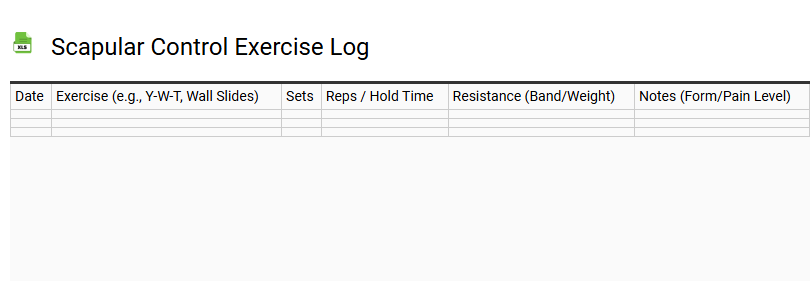
This scapular control exercise log is a vital tool for tracking shoulder blade stability and correcting scapular dyskinesis. Utilizing this template helps monitor serratus anterior activation, middle trapezius engagement, and rhomboid strength to improve overall postural alignment. Documenting specific movements, such as wall slides and prone retractions, ensures proper glenohumeral rhythm and reduces the risk of shoulder impingement.
By recording progressive overload parameters-sets, repetitions, and intensity-you optimize your rotator cuff health and strengthen the kinetic chain. Tracking daily progress aids in identifying patterns related to a winging scapula while enhancing neuromuscular control. This data-driven rehabilitation approach supports thoracic extension and scapular upward rotation, facilitating better communication with physical therapists. Consistent logging of these corrective exercises is essential for restoring functional mobility and upper body mechanics during overhead activities.
This prehabilitation strength journal template serves as a vital tool for documenting baseline physical metrics prior to elective surgery or intense training cycles. This structured log facilitates proactive injury prevention and optimizes postoperative recovery timelines through targeted resistance exercises. Implementing this systematic approach ensures patients and athletes maintain objective performance data, bridging the gap between clinical rehabilitation and peak functional health. Utilize this standardized framework to track progressive overload and enhance long-term physiological resilience and surgical outcomes efficiently.