
Progressive Overload Tracker Template for Strength Training
Achieving consistent muscle hypertrophy requires a strategic approach to resistance training. Utilizing a dedicated progressive overload tracker allows you to monitor vital metrics like volume, intensity, and repetitions. By documenting every workout session, you ensure steady physiological adaptation while avoiding common training plateaus.
Whether aiming for strength or endurance, precise logging is the foundation of long-term fitness success. This systematic method ensures every lift contributes to your peak performance. Please check our already made variation of templates below.
Linear Progression Log
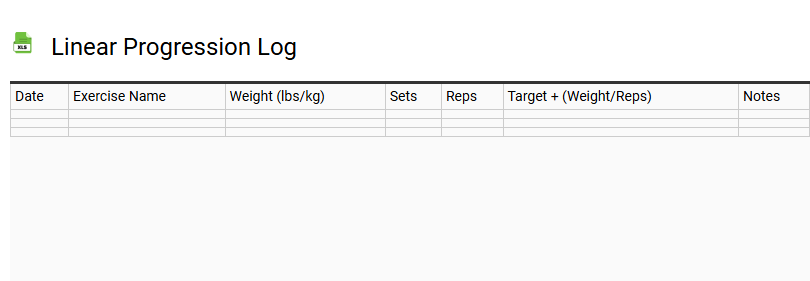
This structured log provides a precise method for tracking incremental strength gains over time. Designed for athletes following a systematic training approach, it captures essential data points to ensure every session builds upon the previous one. By documenting specific performance metrics, lifters can maintain a clear trajectory toward their fitness goals while ensuring consistent physical adaptation.
The template prioritizes the following core components for effective monitoring:
- Date and Session Number: Tracks frequency and chronological advancement.
- Exercise Selection: Identifies the specific movements targeted for improvement.
- Load and Volume: Records the exact weight used alongside sets and repetitions completed.
- Performance Notes: Captures subjective feedback on recovery, form, and difficulty.
Regularly updating this record facilitates progressive overload, ensuring that the training stimulus remains challenging. It allows for the early identification of plateaus, enabling informed adjustments to intensity and volume to maintain steady, long-term development.
Volume Load Tracker
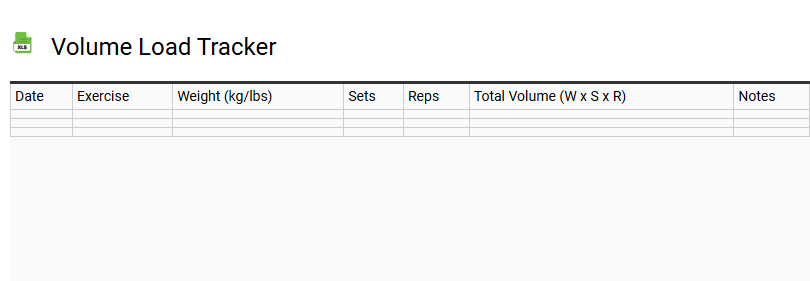
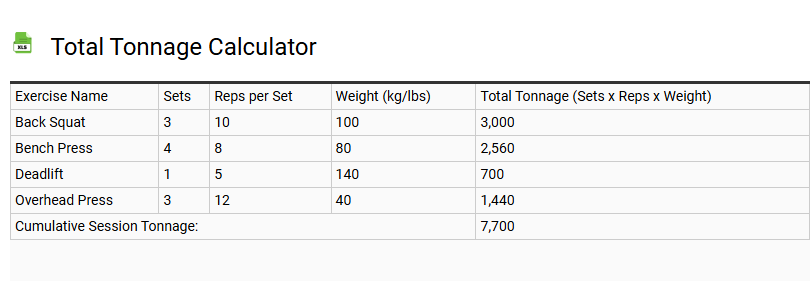
A volume load tracker is an essential tool for athletes prioritizing progressive overload and long-term strength gains. By calculating total tonnage-the product of sets, reps, and weight-lifters can meticulously monitor their strength training trajectory. This template facilitates precise load management, ensuring consistent muscle hypertrophy while mitigating the risk of overtraining. Users can document specific intensity levels across various compound and isolation exercises to visualize their lifting capacity over specific training cycles. Tracking workout volume provides data-driven insights into fitness performance, allowing for strategic adjustments to resistance. By analyzing cumulative volume load, individuals can optimize recovery periods and drive physiological adaptations. This streamlined approach to workout logs empowers athletes to refine their training variables for peak efficiency and measurable muscular development.
One Rep Max Predictor
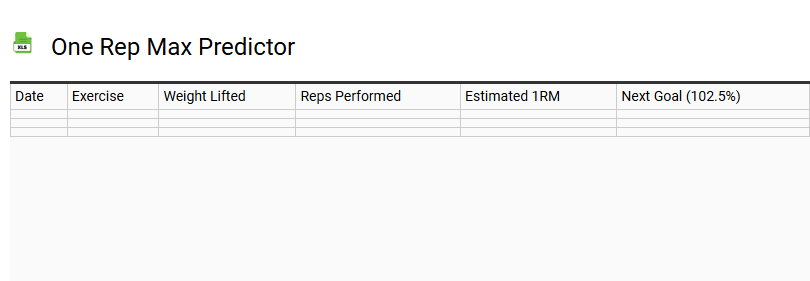
This One Rep Max Predictor template serves as a vital tool for athletes seeking to quantify their strength training potential without the risk of total muscular failure. By leveraging validated mathematical models like the Brzycki formula or Epley equation, users can accurately estimate their maximum lift capacity based on submaximal loads. This weightlifting estimation is crucial for establishing strength standards and fine-tuning progressive overload strategies.
Integrating this calculator into your resistance training regimen allows for precise percentage-based training, optimizing training volume and managing neuromuscular fatigue. Whether aiming for a new personal record (PR) in powerlifting or enhancing hypertrophy in bodybuilding, this tool provides the data-driven insights necessary for elite performance. Utilize these strength metrics to structure your workout programming and safely push your physical boundaries through accurate repetition maximum calculations.
Compound Lift Progression Sheet
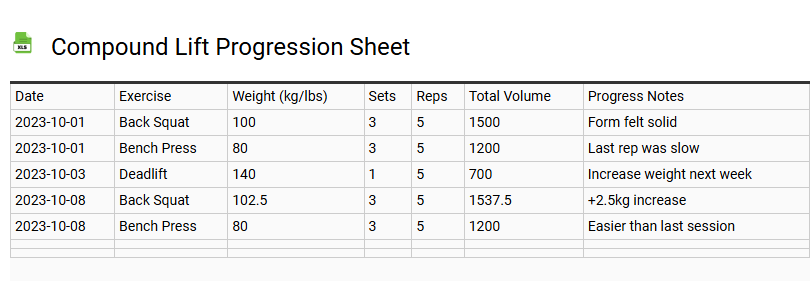
💾 Compound Lift Progression Sheet .xls
A compound lift progression sheet serves as a fundamental tool for managing progressive overload in any serious strength training regimen. By meticulously tracking multi-joint movements such as the squat, deadlift, bench press, and overhead press, athletes can ensure consistent physiological adaptation. This template facilitates the recording of essential variables, including sets, reps, and load, while integrating advanced metrics like RPE (Rate of Perceived Exertion) and calculated 1RM (One Rep Max).
Utilizing a structured log helps identify performance plateaus and informs necessary adjustments to training volume or linear progression cycles. Beyond primary lifts, documenting accessory movements and recovery windows promotes balanced muscle hypertrophy and neuromuscular efficiency. By transforming raw data into actionable insights, this tracking system optimizes your workout routine, ensuring every session contributes to long-term strength gains and peak physical performance.
RPE Training Diary
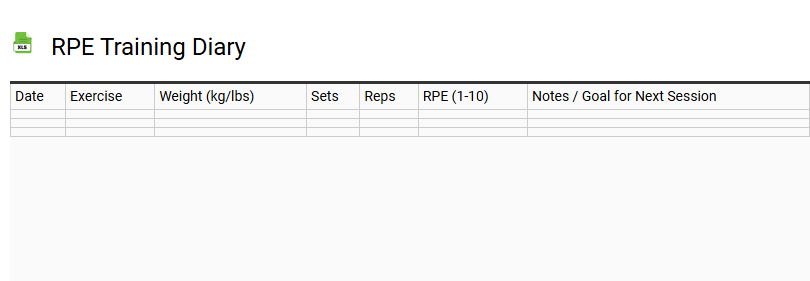
An RPE training diary serves as a vital tool for autoregulation in strength training. By utilizing the Borg Scale or a 1-10 rating system, athletes can track subjective intensity relative to their daily physical readiness. A well-structured template focuses on load management, allowing lifters to adjust volume and intensity based on real-time feedback rather than fixed percentages. Consistent entries help monitor fatigue, prevent overtraining, and optimize recovery cycles.
In your workout log, document the exercise, weight, and the Rate of Perceived Exertion to accurately gauge proximity to failure. This data-driven approach enhances performance optimization by ensuring every set aligns with your current physiological state. Whether tracking powerlifting progress or general fitness, an RPE-based diary bridges the gap between planned programming and actual capability, fostering long-term sustainable gains through precise effort tracking.
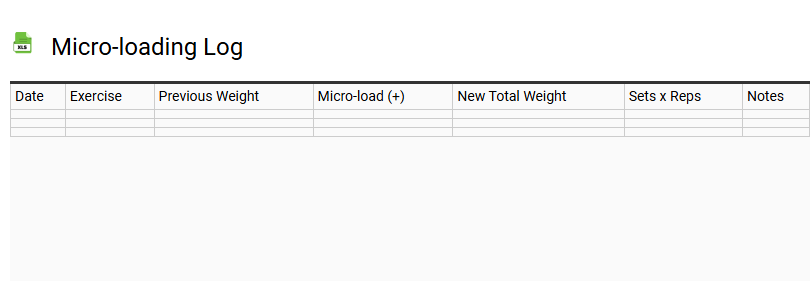
Micro-loading Log
Total Tonnage Calculator
💾 Total Tonnage Calculator .xls
This total tonnage calculator provides a streamlined solution for logistics professionals to determine the precise cumulative mass of freight shipments. By inputting specific quantities and unit weights, users can calculate gross weight across various metrics, including kilograms, pounds, and metric tons. This tool is essential for managing cargo capacity, optimizing transport load distribution, and ensuring strict compliance with carrier limits.
Whether handling sea freight or road haulage, accurate shipment estimation minimizes overhead costs and prevents hazardous overloading. This template simplifies unit conversion and enhances supply chain efficiency by evaluating net weight alongside dimensional weight. Integrating this functional module allows for rapid analysis of shipping volume, ensuring your total payload remains within safety parameters while streamlining the documentation process for international transport and logistics planning.
Weekly Weight Increment Tracker
💾 Weekly Weight Increment Tracker .xls
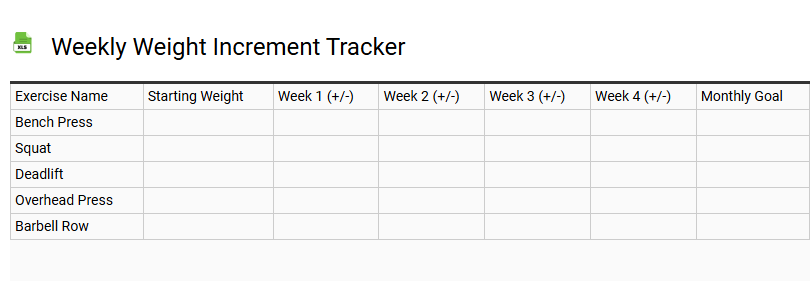
A Weekly Weight Increment Tracker is a specialized tool designed to facilitate progressive overload and steady muscle hypertrophy. This template functions as a comprehensive weightlifting log, enabling athletes to document strength gains and monitor resistance training variables with precision. By recording weekly gym performance metrics, users can visualize their fitness progress and make informed decisions regarding volume adjustment.
- Optimizes micro-loading strategies for consistent improvement.
- Supports long-term bodybuilding goals through data-driven insights.
- Enhances accountability by archiving essential tracking metrics.
Integrating this structured approach into your routine ensures that every session contributes to your peak physical potential, effectively preventing plateaus in your strength training journey and optimizing recovery cycles.
Rep Goal System Template
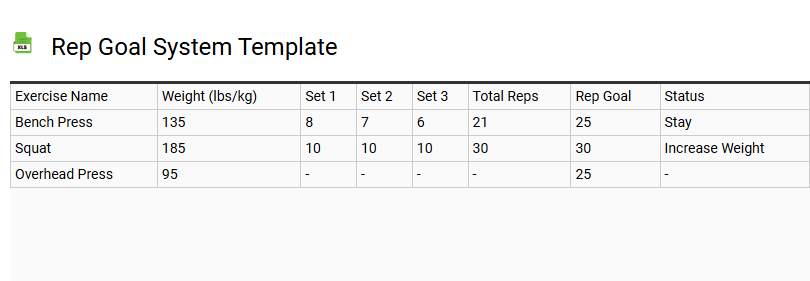
💾 Rep Goal System Template .xls
The Rep Goal System serves as a robust framework for managing progressive overload within any strength training regimen. Unlike rigid sets-and-reps, this template prioritizes total training volume across multiple sets to stimulate hypertrophy and muscle growth. By utilizing autoregulation, lifters can adjust their intensity based on daily performance, ensuring consistent strength progression. Once the cumulative rep target is achieved with a specific load, the user increases the resistance training weight, fostering long-term periodization.
This gym logging tool optimizes workout efficiency by focusing on high-quality work capacity and metabolic stress. It bridges the gap between powerlifting foundations and bodybuilding aesthetics, allowing for fluid adjustments in rep ranges. Implementing this systematic approach ensures every resistance session contributes to physiological adaptation, helping athletes track their evolution while preventing plateaus through data-driven volume tracking.
Hypertrophy Volume Matrix
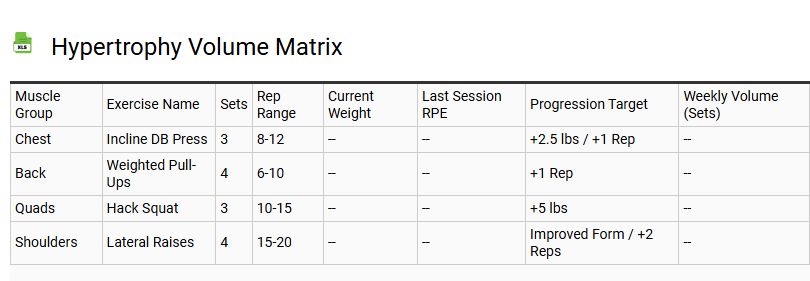
💾 Hypertrophy Volume Matrix .xls
A Hypertrophy Volume Matrix serves as a strategic framework for optimizing muscle growth through precise tracking of weekly sets. By utilizing this template, athletes can implement progressive overload across specific muscle groups while balancing mechanical tension and metabolic stress. This tool is essential for monitoring the stimulus-to-fatigue ratio, ensuring that training volume stays within the range of the minimum effective dose and maximum recoverable volume (MRV).
Effective use of the matrix facilitates data-driven periodization, allowing for structured adjustments in training frequency and intensity. By documenting resistance training variables, lifters can maximize muscle protein synthesis and navigate recovery needs. This systematic approach to hypertrophy training ensures consistent gains in lean mass by organizing volume tracking into actionable insights for long-term physiological adaptation and structural remodeling.
Mesocycle Periodization Planner
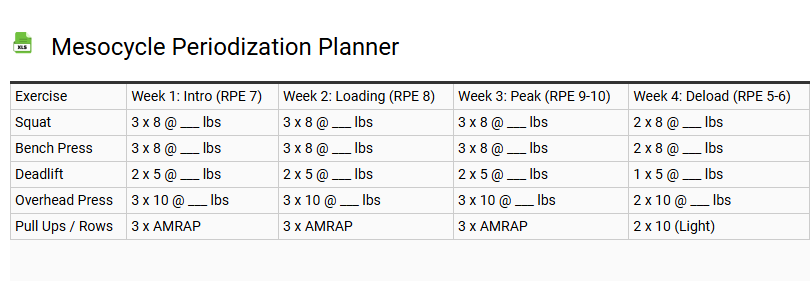
💾 Mesocycle Periodization Planner .xls
A professional mesocycle periodization planner serves as the structural foundation for orchestrating targeted training blocks aimed at optimizing athletic performance. This template typically spans four to six weeks, allowing athletes to systematically implement progressive overload across specific microcycles. By manipulating variables such as training volume, intensity, and frequency, the planner facilitates distinct physiological adaptations, including hypertrophy, maximal strength, and power development.
Effective exercise programming within this framework ensures a balanced transition between high-intensity accumulation phases and necessary deload weeks to mitigate central nervous system fatigue. Integrating these mid-term training phases into a broader macrocycle provides a data-driven roadmap for overcoming strength plateaus. Utilizing this structured approach promotes structural adaptation and enhanced workload capacity, ensuring every repetition aligns with long-term fitness objectives and peak physiological readiness.
Strength Standards Comparison Chart
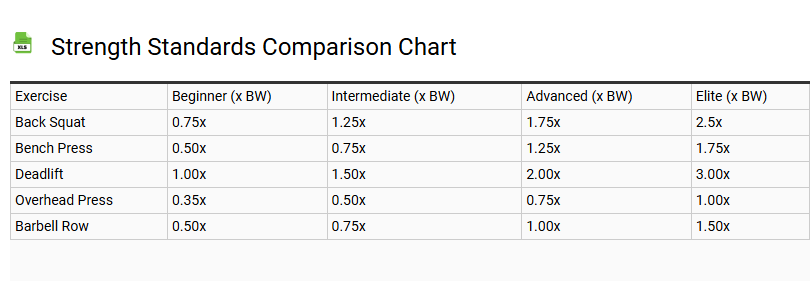
💾 Strength Standards Comparison Chart .xls
A strength standards comparison chart serves as a vital framework for evaluating lifting proficiency and tracking resistance training progress. This template utilizes standardized benchmarks across core barbell movements-including the squat, bench press, and deadlift-to categorize athletes into performance tiers such as novice, intermediate, advanced, and elite. By analyzing one-rep max (1RM) data and relative strength-to-bodyweight ratios, lifters can gain objective insights into their current physical capabilities.
Integrating these metrics into a structured program facilitates progressive overload and helps identify specific muscular imbalances. Whether focused on powerlifting performance or general hypertrophy, these data-driven benchmarks ensure training volume remains optimized for peak athletic output. Utilizing a comparison chart allows for precise goal setting based on peer-reviewed lifting norms, providing a roadmap for long-term neuromuscular adaptation and strength development across various weight classes and demographics.
Workout Intensity Log
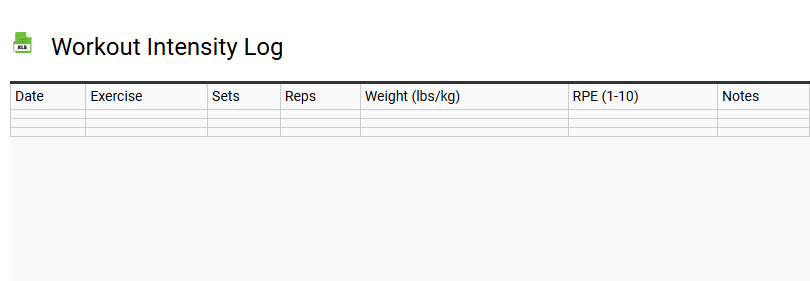
A comprehensive workout intensity log serves as a strategic framework for mastering progressive overload and maximizing muscle hypertrophy. By systematically recording the Rate of Perceived Exertion (RPE) and Repetitions in Reserve (RIR), trainees can accurately gauge neuromuscular fatigue and training volume. This data-driven approach allows for precise adjustments in resistance levels, ensuring each exercise set hits the desired stimulus-to-fatigue ratio.
Integrating heart rate monitoring and recovery metrics into your fitness journal helps mitigate overtraining risks while enhancing athletic performance. Monitoring perceived effort alongside total tonnage provides a holistic view of metabolic stress and mechanical tension. Whether focusing on strength conditioning or cardiovascular endurance, a well-structured intensity tracker facilitates consistent physiological adaptations, helping athletes avoid training plateaus and optimize recovery intervals for peak physical output.
Rest Interval Consistency Tracker
💾 Rest Interval Consistency Tracker .xls
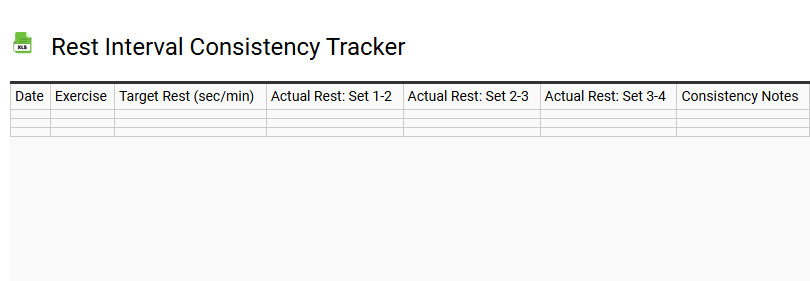
A Rest Interval Consistency Tracker is an essential tool for optimizing hypertrophy and managing metabolic stress during high-intensity resistance training. By meticulously logging recovery periods between sets, athletes can ensure progressive overload and maintain precise training intensity. This template facilitates better muscle fatigue management, ensuring that hormonal responses and muscle fiber recruitment remain consistent throughout a session. Utilizing a dedicated tracker eliminates guesswork, allowing for accurate workout performance analysis and improved athletic conditioning. Whether your goal is strength or endurance, monitoring rest duration prevents premature exhaustion and enhances training volume efficiency. Integrate this gym log data to refine your fitness programming, improve stopwatch accuracy, and achieve superior physiological adaptations through disciplined timing.
Compound vs Isolation Volume Ratio Log
💾 Compound vs Isolation Volume Ratio Log .xls
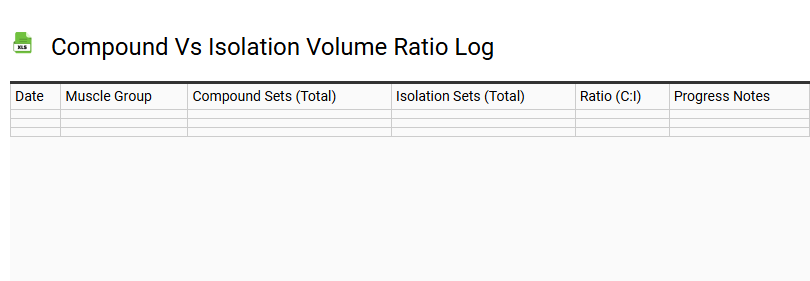
This tracking tool optimizes the critical balance between multi-joint movements and single-joint exercises to enhance hypertrophy and systemic recovery. Monitoring your compound vs isolation volume ratio ensures that primary lifts drive mechanical tension while accessory work provides targeted metabolic stress. By logging total sets and weekly workload, athletes can prevent excessive central nervous system fatigue and maintain structural balance across muscle groups.
Utilizing this log facilitates progressive overload by identifying if supplementary accessory movements are overshadowing foundational strength lifts. A well-structured ratio promotes muscle protein synthesis and reduces injury risk by managing cumulative fatigue. Refine your training frequency and intensity by analyzing these metrics to ensure every session contributes to long-term muscle growth and improved functional performance through strategic resistance training periodization.
Double Progression Method Sheet
💾 Double Progression Method Sheet .xls
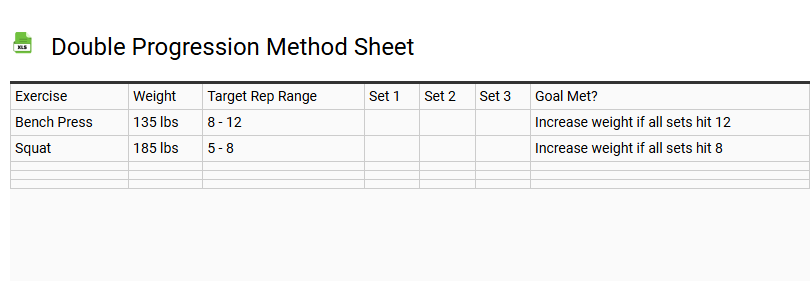
The Double Progression Method is a foundational strategy in resistance training designed to ensure consistent progressive overload and muscle hypertrophy. By utilizing a structured tracking sheet, athletes manage two specific variables: repetitions and load. Initially, you focus on increasing volume by reaching the upper limit of a defined rep range with a static weight. Once this performance benchmark is met, you introduce weight increments in the subsequent session.
This systematic approach to strength gains prevents training plateaus by prioritizing volume before intensity. A high-quality template typically includes data points for:
- Exercise selection and target sets
- Micro-loading resistance levels
- Logging fitness performance metrics
- Tracking muscle mass adaptations
By maintaining a precise training log, lifters can simplify complex periodization, making it easier to achieve long-term strength gains and metabolic efficiency through disciplined data tracking.
Strength Training Heat Map
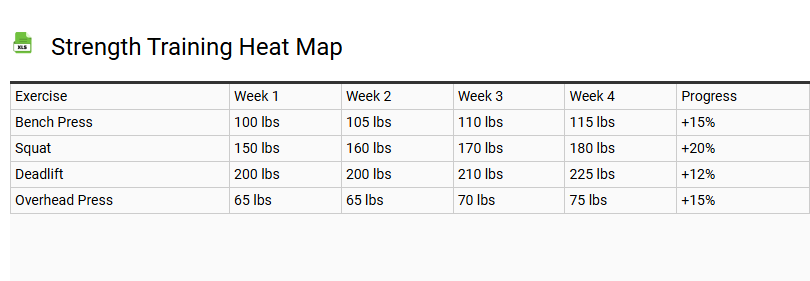
💾 Strength Training Heat Map .xls
A strength training heat map serves as a dynamic visual tool for monitoring muscle group activation and workload distribution. This specialized template utilizes color-coded intensity scales to track training volume, frequency, and progressive overload across the human anatomy. By mapping compound movements and isolation exercises, athletes can identify neglected target zones or potential overtraining risks.
Integrating this anatomical visualization into your workout log enhances hypertrophy outcomes by ensuring balanced development of primary movers and secondary stabilizers. Key metrics captured include:
- Volume load per major muscle group.
- Regional hypertrophy distribution.
- Neuromuscular fatigue indicators.
- Symmetry assessment for functional movement.
Utilizing a digital heat map streamlines resistance training cycles, allowing for precise adjustments in training density. This data-driven approach optimizes recovery phases and maximizes biomechanical efficiency for peak physical performance.
Lifting Frequency Tracker
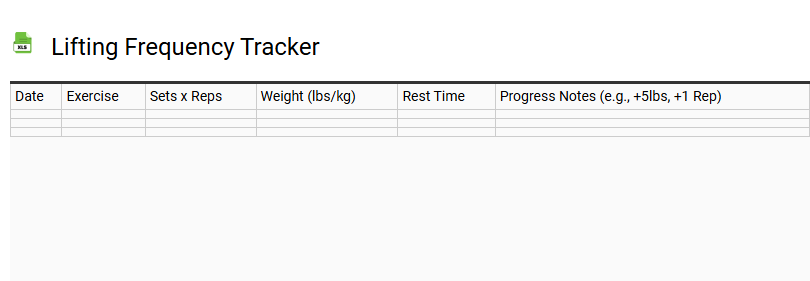
💾 Lifting Frequency Tracker .xls
A lifting frequency tracker serves as a vital instrument for optimizing strength training protocols and ensuring peak athletic performance. By systematically monitoring workout volume and training consistency, athletes can balance high-intensity sessions with necessary muscle recovery phases. This template facilitates precise logging of resistance training variables, including rep ranges, set totals, and load distribution, which are fundamental for driving progressive overload. Incorporating this weightlifting log into your fitness regimen enhances visibility into hypertrophy cycles and periodization strategies. Tracking frequency helps mitigate injury risks by identifying potential overtraining while maximizing metabolic stress and mechanical tension. Use these data-driven performance metrics to refine your split, manage fatigue, and achieve consistent physiological adaptations across every training microcycle.
Percentage Based Training Log
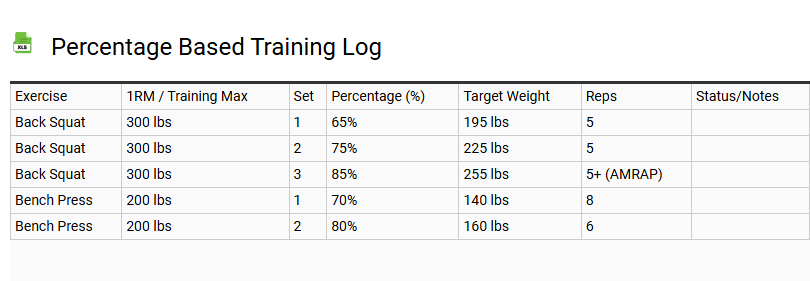
💾 Percentage Based Training Log .xls
A Percentage Based Training Log is an essential tool for athletes utilizing structured periodization to maximize strength gains. By inputting your One-Rep Max (1RM) or a conservative Training Max (TM), this template automatically calculates precise weight loads for every session. This data-driven approach ensures consistent progressive overload while managing relative intensity across various strength cycles and hypertrophy phases.
Tracking your lifting volume and total workload helps prevent overtraining and identifies performance plateaus early. Key features of a robust log include:
- Automated intensity percentages for core compound lifts.
- Volume tracking for total repetitions and sets.
- Monitoring Rate of Perceived Exertion (RPE) against calculated weights.
- Visualizing progress through estimated 1RM adjustments.
Using a standardized log streamlines your programming, allowing for objective adjustments to your strength routine based on accurate performance metrics and cumulative stress management.
Exercise Variation Progression Diary
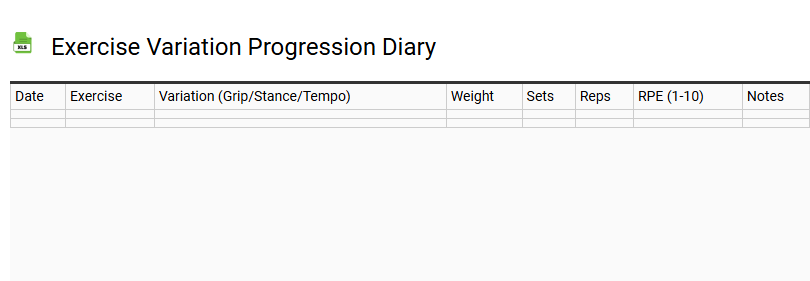
💾 Exercise Variation Progression Diary .xls
An exercise variation progression diary serves as a strategic framework for tracking long-term strength training evolution. By documenting specific movement patterns and their modifications, athletes can ensure consistent progressive overload. This systematic log monitors essential performance metrics, including training volume, mechanical tension, and intensity across various sets and reps.
Utilizing a structured template facilitates the identification of training plateaus, allowing for precise periodization adjustments to stimulate muscle hypertrophy and neurological adaptation. Key components of a high-quality training log often include:
- Tracking exercise modifications and regressions to manage fatigue.
- Recording total tonnage and metabolic stress levels.
- Monitoring recovery intervals and RPE (Rate of Perceived Exertion).
A well-maintained workout log provides a data-driven roadmap, ensuring every session contributes to functional gains and physical development while minimizing injury risks through controlled progressive resistance and consistent movement standards.
This progressive overload tracker template streamlines your strength training journey. By monitoring volume, intensity, and frequency, athletes ensure consistent muscle hypertrophy and performance gains. Utilizing a digital logbook simplifies data entry for every set and rep, allowing you to visualize long-term trends effectively.
Start recording your resistance training metrics today to eliminate guesswork. This systematic approach ensures each gym session contributes to your ultimate fitness goals through precise data management and incremental load adjustments.