
REM Sleep Duration Tracker Templates
Optimizing your nocturnal recovery begins with a structured REM sleep duration tracker. By monitoring rapid eye movement phases and overall sleep cycles, you can gain deep insights into your circadian rhythm and sleep quality. Utilizing a specialized log helps identify disruptions in restorative rest, which is essential for peak cognitive function and long-term health. Tracking these dream patterns ensures you achieve the vital rejuvenation required daily. Check already made variation of templates below.
Weekly REM Duration Log
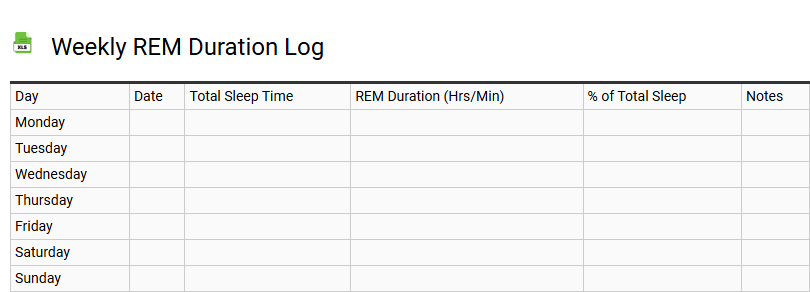
💾 Weekly REM Duration Log .xls
A Weekly REM Duration Log serves as a vital instrument for optimizing sleep architecture and enhancing cognitive function. By documenting the exact minutes spent in the Rapid Eye Movement stage, individuals can analyze their circadian rhythm and the consistency of restorative sleep. This systematic tracking facilitates the identification of patterns related to dream recall, memory consolidation, and emotional regulation.
Utilizing this template involves recording key metrics, including:
- Total sleep cycle frequency per night.
- Specific REM latency intervals.
- The influence of sleep hygiene on sleep stages.
- Daily sleep-wake cycle fluctuations.
Monitoring these variables provides insights similar to a professional hypnogram, helping users refine habits for peak neurological recovery. Consistent data collection is essential for anyone looking to evaluate their sleep efficiency and ensure the brain achieves necessary deep sleep phases.
Daily Sleep Phase Tracker
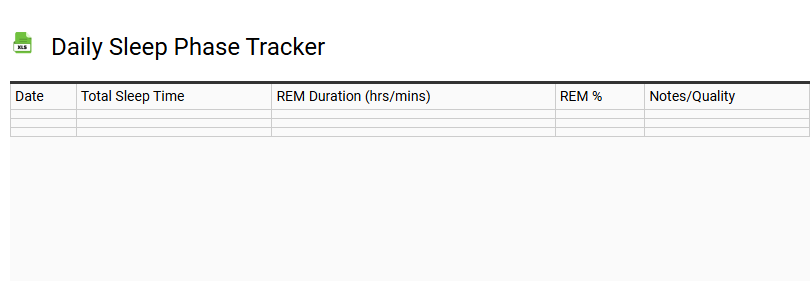
💾 Daily Sleep Phase Tracker .xls
Utilizing a Daily Sleep Phase Tracker is a sophisticated method for monitoring your circadian rhythm and analyzing sleep architecture. This template facilitates the precise logging of REM sleep, deep sleep, and light sleep stages to generate a detailed hypnogram of your nightly rest.
- Track sleep efficiency and total sleep duration to identify restorative patterns.
- Evaluate sleep latency and mid-night awakenings to optimize sleep hygiene.
- Observe how melatonin cues and evening routines influence sleep cycles.
By documenting biometric data and consistency in your internal clock, you can uncover trends that affect sleep quality. This structured sleep monitoring tool empowers users to correlate lifestyle habits with restorative wellness, ultimately enhancing daytime alertness and long-term cognitive health through data-driven insights.
Monthly REM Cycle Analysis
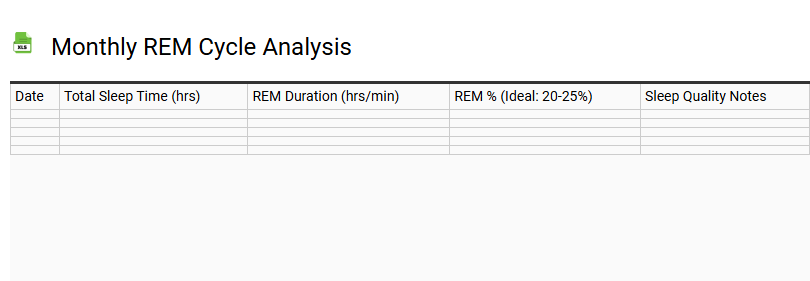
💾 Monthly REM Cycle Analysis .xls
A comprehensive Monthly REM Cycle Analysis template serves as a vital instrument for evaluating sleep architecture and circadian rhythm consistency. By documenting rapid eye movement phases and sleep latency, users can visualize their hypnogram patterns over a thirty-day duration. This framework tracks essential biometrics, including restorative sleep depth and transitions between light and deep sleep stages. Systematically analyzing these metrics aids in identifying sleep hygiene deficiencies or parasomnias that may impair cognitive function and daytime alertness. Utilizing this data-driven sleep tracking approach ensures that neurological recovery is prioritized. Integrating such detailed analysis into a wellness routine optimizes sleep quality, providing a clear overview of sleep efficiency and physiological restoration for improved long-term health outcomes and hormonal balance.
Wearable Data Sleep Stage Sync
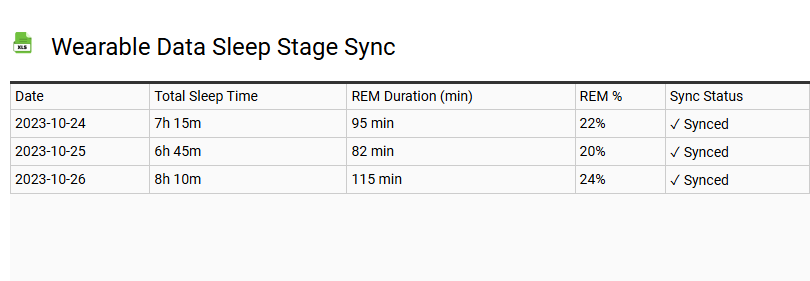
💾 Wearable Data Sleep Stage Sync .xls
This streamlined framework facilitates seamless wearable data sleep stage sync, bridging the gap between biometric sensors and digital health platforms. By utilizing advanced API integration, the template automates the transmission of granular sleep architecture metrics, including REM, deep sleep, and light sleep cycles. This synchronization ensures data integrity across various IoT devices, such as smartwatches and fitness trackers.
The architecture is optimized for low-latency connectivity, allowing for the real-time mapping of circadian rhythms and nocturnal heart rate variability. Through secure cloud encryption, users can monitor restorative rest patterns within a centralized health dashboard. Implementing this protocol enhances sleep hygiene analysis by standardizing telemetry from multiple wearable ecosystems, providing a comprehensive overview of physiological recovery and daily readiness scores.
Sleep Architecture Dashboard
💾 Sleep Architecture Dashboard .xls
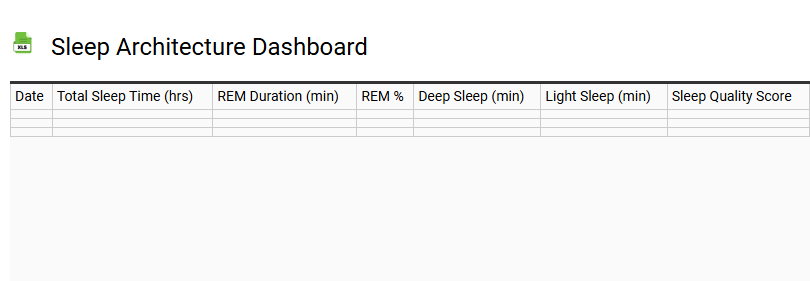
The Sleep Architecture Dashboard provides a comprehensive visualization of nocturnal rest patterns. By tracking the progression through REM, Light, and Deep sleep stages, this interface allows for a detailed analysis of the structural integrity of every sleep cycle.
- Hypnogram Integration: Displays a chronological timeline of stage transitions throughout the night to identify natural rhythms.
- Cycle Efficiency: Measures the duration spent in restorative phases compared to periods of wakefulness or fragmentation.
- Disturbance Tracking: Pinpoints micro-arousals and environmental interruptions that impact overall recovery quality.
This data-driven layout transforms raw biometric input into actionable insights. Users can monitor how lifestyle variables influence their biological clock, ensuring optimal cognitive function and physical repair through balanced sleep distribution and improved timing across all physiological stages.
REM Intensity and Duration Chart
💾 REM Intensity and Duration Chart .xls
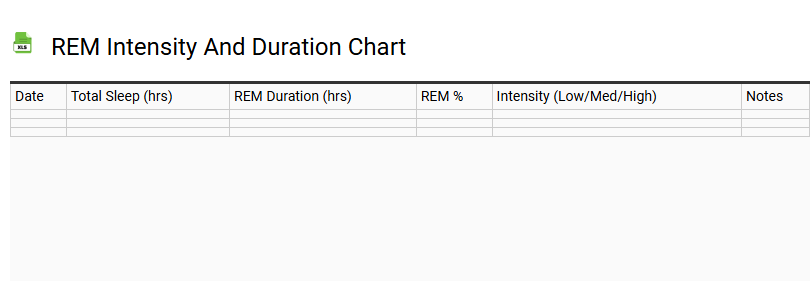
A REM Intensity and Duration Chart serves as a vital visualization tool for analyzing sleep architecture and circadian rhythm patterns. By utilizing a structured template, users can track the frequency of Rapid Eye Movement cycles, which are essential for cognitive restoration and memory consolidation. This data typically reflects brain activity levels and REM density, distinguishing between tonic and phasic stages of sleep throughout the night.
- Monitor sleep cycles via a detailed hypnogram format.
- Evaluate polysomnography metrics such as ocular movement intensity.
- Identify fluctuations in dream frequency and duration for better health insights.
Integrating these metrics into a consistent logging practice helps pinpoint disruptions in sleep stages, ensuring a clearer understanding of overall neurological recovery and restorative rest quality. This template is indispensable for those tracking sleep hygiene and long-term wellness trends.
Annual Sleep Quality Trends
💾 Annual Sleep Quality Trends .xls
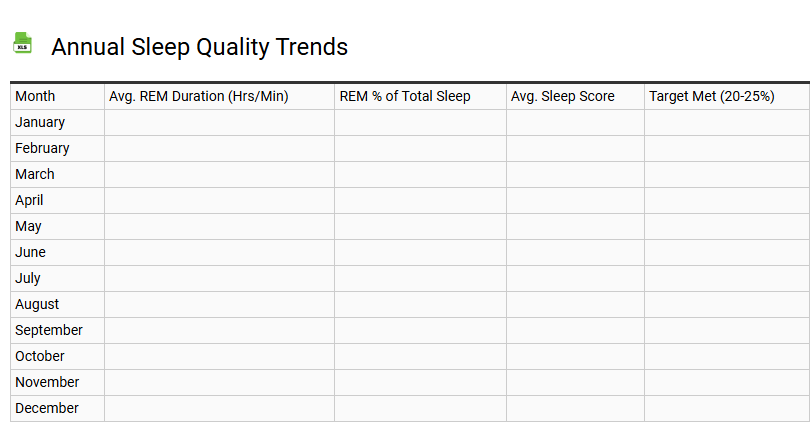
This annual sleep quality trends template provides a comprehensive framework for monitoring longitudinal data related to restorative rest. By tracking biometric metrics such as sleep duration, REM sleep cycles, and deep sleep consistency, users can identify significant seasonal variability in their circadian rhythms. This structured dashboard facilitates the analysis of sleep latency and overall sleep efficiency across a twelve-month period.
Integrating data on sleep hygiene practices and lifestyle factors helps pinpoint specific triggers for insomnia or disruptions in sleep architecture. Utilizing this wellness analytics tool empowers individuals to optimize their nocturnal recovery through evidence-based insights. The template visualizes monthly fluctuations, allowing for the correlation between daily habits and long-term vitality. By maintaining a detailed record of nocturnal disturbances and wakefulness patterns, users achieve a holistic overview of their physiological recovery and neurological health throughout the year.
Deep and REM Sleep Comparison
💾 Deep and REM Sleep Comparison .xls
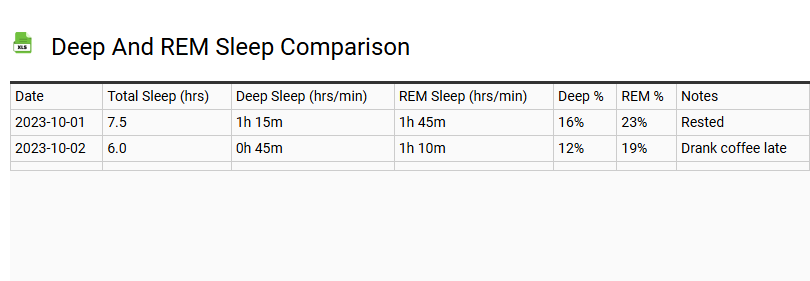
Understanding the nuanced differences between deep sleep and REM sleep is essential for optimizing sleep architecture. Deep sleep, or slow-wave sleep (SWS), occurs during the NREM stage and is characterized by high-amplitude delta waves. This phase is the bedrock of physical restoration, facilitating tissue repair, immune function, and the release of growth hormones.
Conversely, Rapid Eye Movement (REM) sleep prioritizes cognitive health and memory consolidation. During this stage, brain activity mirrors wakefulness, supporting emotional regulation and creative problem-solving. While deep sleep focuses on metabolic recovery, REM is famous for vivid dreaming and muscle atonia, which prevents physical movement during sleep cycles. Balancing these distinct phases within your circadian rhythm is crucial for neurological longevity and daily alertness, ensuring the brain successfully navigates both physiological repair and information processing.
Circadian Rhythm REM Log
💾 Circadian Rhythm REM Log .xls
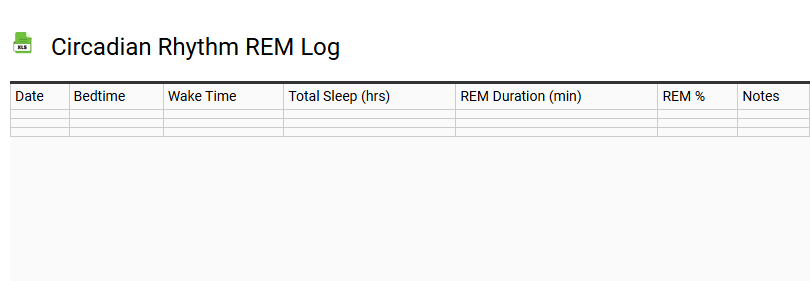
Utilizing a Circadian Rhythm REM Log is essential for optimizing your internal biological clock and understanding personal sleep-wake cycles. This tracking template monitors Rapid Eye Movement (REM) phases, which are critical for cognitive function and restorative rest. By documenting daily sleep hygiene habits, users can identify how the suprachiasmatic nucleus responds to environmental cues like light exposure.
Recording sleep debt, melatonin production, and wakefulness periods allows for a detailed analysis of your specific chronotype. This data-driven approach helps refine sleep architecture, ensuring that sleep cycles align with natural physiological needs. Monitoring these metrics reduces fatigue and enhances overall sleep efficiency. Consistent use of this log transforms qualitative observations into actionable insights, promoting long-term health through synchronized circadian alignment and improved nocturnal recovery.
Sleep Hygiene and REM Duration Tracker
💾 Sleep Hygiene and REM Duration Tracker .xls
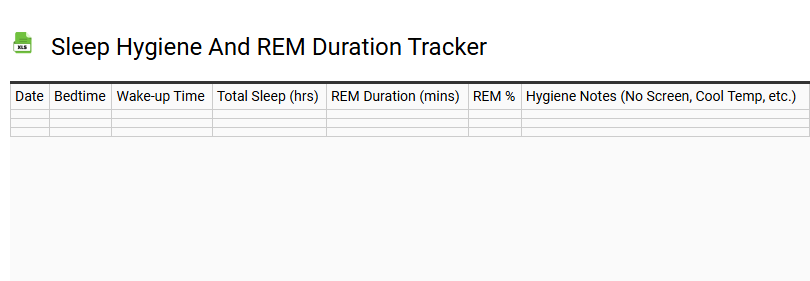
This specialized Sleep Hygiene and REM Duration Tracker is engineered to optimize your circadian rhythm and enhance overall sleep quality. By utilizing this structured template, users can systematically monitor sleep stages, specifically focusing on the duration of Rapid Eye Movement (REM) sleep essential for cognitive function and memory consolidation. The tracker integrates core sleep hygiene variables, including blue light exposure, ambient sleep environment, and consistent bedtime routines.
By logging biometric data and daily habits, you can identify specific triggers that disrupt restorative rest. Monitoring sleep cycles through this organized framework facilitates data-driven adjustments to natural melatonin production and sleep efficiency. Use this comprehensive tool to analyze patterns, reduce sleep latency, and ensure every night contributes to peak physical recovery and mental clarity.
Biometric Sleep Stage Spreadsheet
💾 Biometric Sleep Stage Spreadsheet .xls
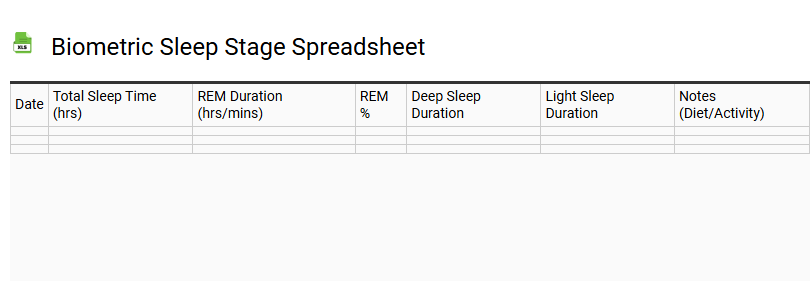
Optimize your restorative health using a comprehensive biometric sleep stage spreadsheet designed for precise data-driven wellness. This specialized tracking tool allows users to log granular sleep cycle data, including specific durations of REM sleep, deep sleep, and light sleep. By integrating metrics from wearable technology, you can monitor heart rate variability (HRV) and resting pulse to accurately gauge recovery metrics.
The template facilitates clear data visualization of your sleep architecture, helping identify shifts in your circadian rhythm and overall sleep efficiency. Analyzing these biofeedback trends enables actionable adjustments to your nightly routine, significantly improving long-term restfulness. Whether you are mapping a hypnogram or monitoring nocturnal disturbances, this spreadsheet serves as a vital log for mastering biological rest patterns and enhancing daily performance through systematic biometric monitoring.
Dream and REM Correlation Journal
💾 Dream and REM Correlation Journal .xls
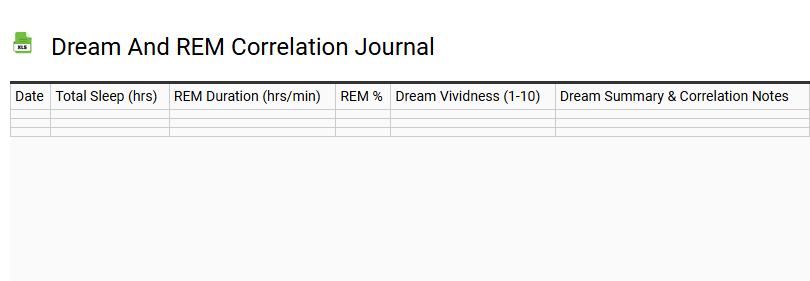
A Dream and REM Correlation Journal serves as a sophisticated instrument for mapping the synergy between nocturnal cognitive activity and physiological sleep cycles. By meticulously logging dream narratives alongside Rapid Eye Movement (REM) data, practitioners can visualize their unique sleep architecture. This template facilitates the identification of patterns involving memory consolidation, subconscious processing, and emotional regulation.
Utilizing this structured approach helps bridge the gap between circadian rhythms and subjective experiences. Users can track variables such as sleep latency, dream vividness, and recurring motifs to enhance dream recall. Integrating these metrics promotes better sleep hygiene and provides insights into the neurobiology of rest. Whether aiming for lucid dreaming or improved mental clarity, documenting these correlations offers a holistic view of internal recovery processes and psychological well-being, turning raw sleep data into actionable self-awareness.
Nocturnal Phase Breakdown
💾 Nocturnal Phase Breakdown .xls
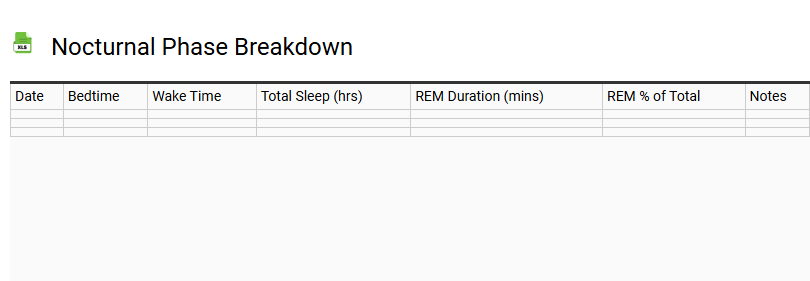
A comprehensive nocturnal phase breakdown categorizes the intricate stages of human sleep architecture. This systematic analysis monitors the circadian rhythm as it regulates transitions between NREM (non-rapid eye movement) and REM sleep. The cycle typically begins with sleep latency, moving through light stages into slow-wave sleep, which is vital for physiological recovery and hormonal regulation.
As the biological clock progresses, the density of restorative rest shifts, influenced heavily by melatonin secretion and core body temperature fluctuations. Analyzing these sleep cycles helps identify patterns in sleep efficiency and cognitive consolidation. By mapping these nocturnal intervals, one can optimize sleep hygiene and ensure the body completes essential neural repair. This data-driven approach to rest highlights how physiological recovery varies across the night, ensuring a balanced transition from deep sleep to morning alertness.
REM Percentage Calculator
💾 REM Percentage Calculator .xls
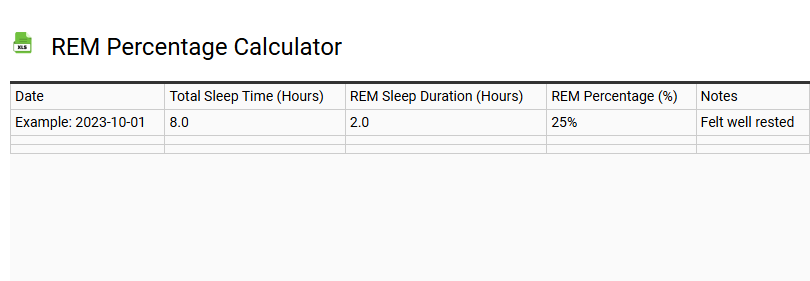
A REM percentage calculator is an essential digital tool for analyzing sleep cycles and optimizing physical recovery. By inputting your total sleep duration alongside the specific minutes spent in the rapid eye movement stage-often captured by wearable sleep trackers-this utility provides a precise breakdown of your sleep architecture. Understanding these metrics is vital for cognitive function, memory consolidation, and emotional regulation.
Typically, healthy adults aim for 20-25% of their nightly rest in this restorative phase. This template simplifies the percentage calculation, allowing users to evaluate the balance between light sleep, deep sleep, and REM. Monitoring these sleep stages helps identify fluctuations in circadian rhythms and sleep efficiency. Use this data-driven approach to refine sleep hygiene, enhance nootropic recovery, and ensure your nightly rest supports peak mental clarity and long-term health.
Sleep Recovery and REM Duration Sheet
💾 Sleep Recovery and REM Duration Sheet .xls
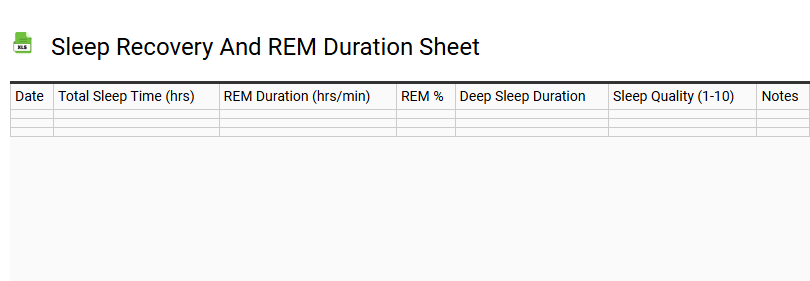
Utilizing a Sleep Recovery and REM Duration Sheet is essential for individuals aiming to optimize their circadian rhythm and enhance nocturnal recovery. This template tracks critical biometric data, including sleep architecture and the frequency of sleep cycles. By monitoring the balance between Rapid Eye Movement (REM) and deep sleep (NREM), users can accurately assess their sleep efficiency and the quality of restorative rest.
Key metrics focus on sleep latency, total sleep time, and sleep debt to identify patterns affecting cognitive restoration. Consistent use of a tracking log promotes better sleep hygiene, helping to regulate melatonin levels and manage adenosine buildup. Implementing this data-driven approach ensures physiological repair and mental clarity, providing a structured framework for achieving peak sleep performance and long-term metabolic health.
Utilizing a REM sleep duration tracker template is essential for analyzing nocturnal patterns and restorative health. By documenting rapid eye movement cycles, you capture vital biometric data necessary for sleep hygiene optimization. This structured approach helps monitor the dream phase, ensuring cognitive recovery and peak mental performance. In summary, consistent tracking facilitates better sleep cycle management. Leverage this template to refine your rest quality and achieve superior physiological recovery through informed, data-driven wellness habits.