
Strength Training Volume Tracker Template
Mastering progressive overload requires a systematic approach to monitoring your exercise data. Using a comprehensive strength training volume tracker enables lifters to log total tonnage, sets, and repetitions precisely. By evaluating these fitness metrics, you can fine-tune your recovery and optimize hypertrophy phases for maximum muscle growth. Accurate workout logs are essential for identifying plateaus and maintaining consistent performance gains over time. Please check the already made variation of templates below.
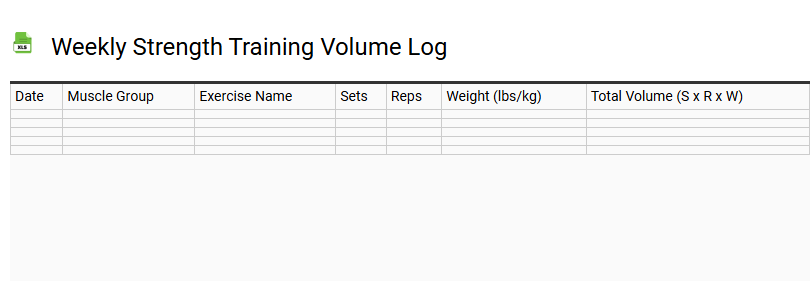
Weekly Strength Training Volume Log
💾 Weekly Strength Training Volume Log .xls
A weekly strength training volume log serves as a foundational instrument for implementing progressive overload and accelerating muscle hypertrophy. This template systematically tracks critical workload variables, including total sets, repetitions, and poundage across targeted muscle groups. By recording training frequency and intensity, lifters can utilize periodization strategies to avoid plateaus and optimize recovery through better fatigue management.
Effective fitness tracking focuses on performance metrics like volume load and RPE (Rate of Perceived Exertion). Whether your objective is powerlifting strength or bodybuilding aesthetics, documenting every microcycle ensures consistent progress. Utilizing a structured log facilitates data-driven adjustments to resistance training routines, ensuring that total work capacity increases over time while maintaining neuromuscular adaptation. This analytical approach transforms raw data into a roadmap for long-term physiological development and peak physical performance.
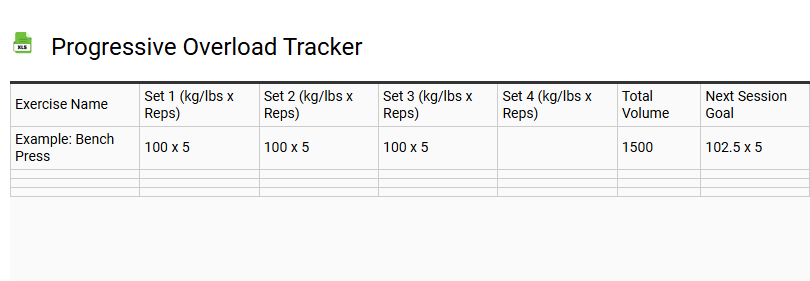
Progressive Overload Tracker
💾 Progressive Overload Tracker .xls
Optimizing muscle hypertrophy requires a systematic progressive overload tracker to monitor training volume and intensity. This template facilitates precise data collection, allowing lifters to visualize mechanical tension trends and total workload. By documenting specific variables such as sets, repetitions, and weight lifted, athletes can ensure consistent physiological adaptation while avoiding performance plateaus.
Utilizing a structured logbook or digital spreadsheet enables data-driven adjustments to frequency and resistance levels. Whether tracking 1RM percentages or RPE (Rate of Perceived Exertion), the primary goal remains incremental improvement. Enhancing strength training outcomes depends on stimulating the central nervous system and muscular tissue through calculated increases in load. This strategic approach to resistance training ensures long-term fitness progression and efficient body recomposition through disciplined workout logging and performance analysis.
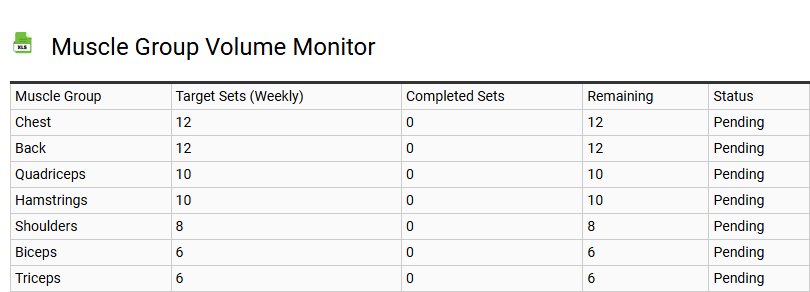
Muscle Group Volume Monitor
💾 Muscle Group Volume Monitor .xls
This Muscle Group Volume Monitor serves as a sophisticated tool for tracking resistance training metrics essential for hypertrophy. By quantifying total working sets per week, this template ensures athletes maintain the optimal training volume necessary for sustained muscle growth and metabolic adaptation.
Utilizing this data-driven workout log facilitates precise progressive overload and recovery optimization. Users can categorize exercise selection to balance training frequency across major muscle groups, preventing plateaus. This monitoring system helps identify individual maximum recoverable volume (MRV) and maintenance volume thresholds, allowing for strategic periodization. By focusing on strength training variables and lean tissue development, this tool streamlines fitness tracking to maximize anabolic response and long-term athletic performance within a structured bodybuilding or powerlifting framework.
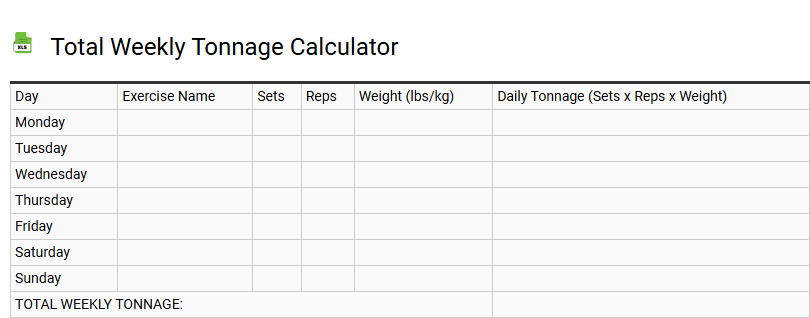
Total Weekly Tonnage Calculator
💾 Total Weekly Tonnage Calculator .xls
This specialized template streamlines the calculation of your total training volume by aggregating the weight, repetitions, and sets completed throughout a microcycle. Monitoring weekly tonnage is a critical component of progressive overload, facilitating consistent hypertrophy and strength gains. By quantifying cumulative workload, athletes can objectively evaluate lifting intensity and recovery capacity.
This calculator simplifies complex workout programming, enabling you to visualize total workload and adjust resistance training variables to avoid plateauing. Whether you are prioritizing powerlifting metrics or bodybuilding aesthetics, tracking this specific fitness data provides essential insights into physiological stress and adaptation. Enhancing your periodization strategy through meticulous load tracking ensures your training cycles remain productive. Utilize this tool to quantify muscle stimulation, optimize your volume-load ratio, and refine your approach to physical performance and long-term athletic development.
Sets and Reps Volume Planner
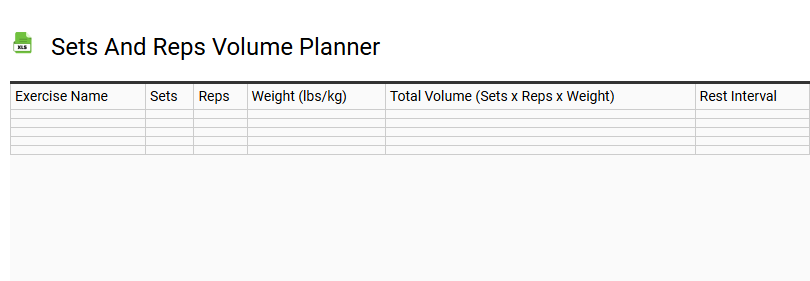
💾 Sets and Reps Volume Planner .xls
This Sets and Reps Volume Planner serves as a strategic framework for optimizing muscular hypertrophy and strength gains. By meticulously tracking weekly volume-calculated as the product of total sets, repetitions, and load-athletes can ensure consistent progressive overload. This template facilitates precise monitoring of training frequency and intensity across specific muscle groups, allowing for data-driven adjustments to RPE (Rate of Perceived Exertion) and rest intervals.
Effective fitness programming relies on these quantitative metrics to balance total workload with essential muscle recovery. Whether targeting compound movements or isolation exercises, this volume tracker streamlines periodization, making it easier to visualize training density. Implementing this structured log ensures every gym session contributes to long-term physiological adaptations, preventing plateaus while maximizing weightlifting performance and overall athletic development.
Compound Movement Volume Tracker
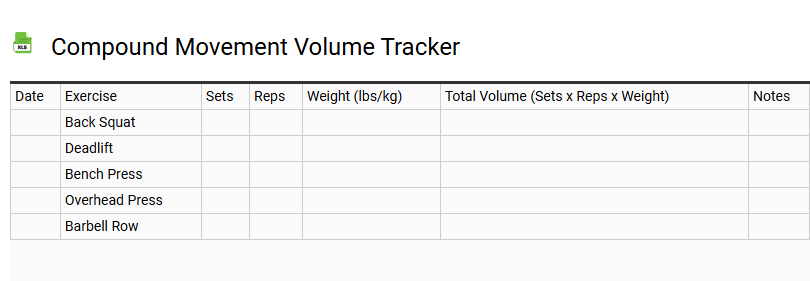
💾 Compound Movement Volume Tracker .xls
A compound movement volume tracker is an essential tool for athletes prioritizing progressive overload and strength gains. By meticulously logging multi-joint exercises-such as squats, deadlifts, and bench presses-this template calculates total tonnage and monitors training frequency to ensure consistent muscle hypertrophy.
Effective fitness data management allows lifters to analyze key performance metrics, including:
- Detailed set-and-rep schemes for optimized recovery.
- Intensity adjustments based on one-rep max percentages.
- Historical lifting log data to prevent training plateaus.
Utilizing this structured approach transforms a standard workout routine into a data-driven strength program. By evaluating work capacity across various muscle groups, users can fine-tune their resistance training for peak physiological adaptation and long-term athletic development.
Hypertrophy Volume Distribution Sheet
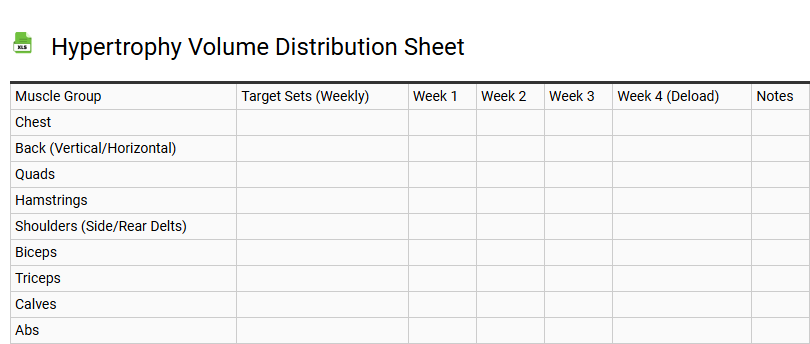
💾 Hypertrophy Volume Distribution Sheet .xls
A Hypertrophy Volume Distribution Sheet serves as a strategic blueprint for maximizing muscle growth through precise training volume management. This tool allows athletes to track weekly sets across specific muscle groups, ensuring each physiological system reaches the threshold for muscle protein synthesis without inducing excessive fatigue. By quantifying set volume and intensity, users can implement progressive overload more effectively, transitioning between accumulation phases and deload cycles.
Key components of an optimized sheet include:
- Frequency of stimulation per body part for optimal recovery.
- Exercise selection categorized by primary and secondary movers.
- Recovery management markers to mitigate overtraining risks.
- Total work capacity metrics for sustained hypertrophy.
Utilizing this distribution model balances mechanical tension and metabolic stress, fostering a systematic approach to long-term body recomposition and structural adaptation.
One Rep Max and Volume Intensity Log
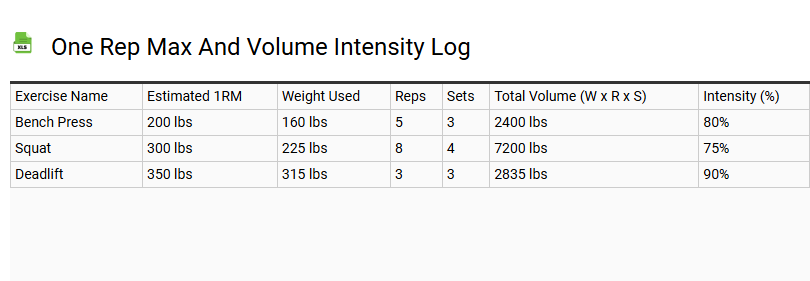
💾 One Rep Max and Volume Intensity Log .xls
This structured log serves as a central repository for tracking peak strength metrics and cumulative training stress. By documenting the heaviest weight successfully lifted for a single repetition, athletes establish a baseline for calculating precise intensity zones tailored to specific fitness goals.
- Maximum Output: Records the highest load capacity to benchmark current physical strength.
- Volume Metrics: Captures total work performed by multiplying sets, repetitions, and weight to monitor workload trends.
- Intensity Adjustments: Facilitates the calibration of training sessions based on a percentage of top-tier performance.
Utilizing this template ensures a data-driven approach to progressive overload. Consistently updating these values allows for the identification of plateaus and the optimization of recovery periods, ensuring that every training cycle is aligned with measurable performance gains and physiological adaptation.
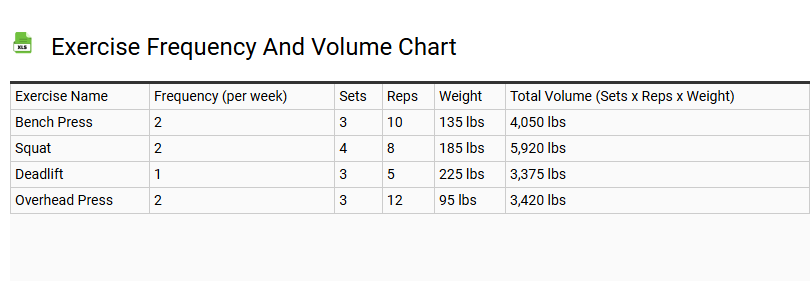
Exercise Frequency and Volume Chart
💾 Exercise Frequency and Volume Chart .xls
An effective exercise frequency and volume chart serves as a foundational blueprint for optimizing professional fitness programming. By meticulously tracking weekly sets, rep ranges, and total workload volume, athletes can precisely manage their training load to trigger hypertrophy while ensuring adequate muscle recovery.
This structured template facilitates progressive overload, allowing for systematic increases in intensity and resistance over time. Key benefits of utilizing a data-driven log include:
- Strategic implementation of periodization for long-term strength gains.
- Optimized workout frequency to prevent overtraining.
- Balanced distribution of physiological stress across muscle groups.
Refining your workout schedule through these metrics transforms raw data into a sustainable, results-oriented strategy, ensuring every session aligns with specific body composition and performance goals.
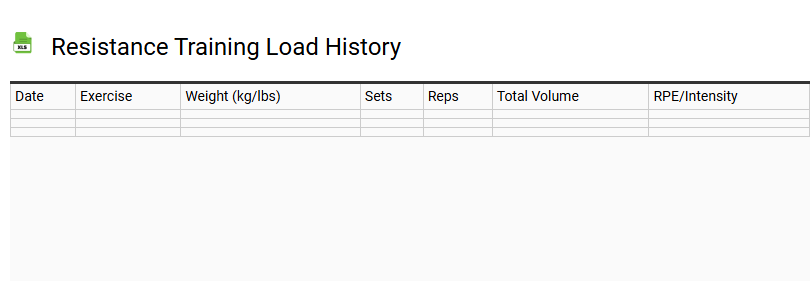
Resistance Training Load History
💾 Resistance Training Load History .xls
A resistance training load history template serves as a vital instrument for monitoring progressive overload and mechanical tension. By systematically documenting volume load-calculated through sets, repetitions, and weight lifted-athletes can ensure consistent muscle hypertrophy and strength gains. This structured logbook tracks specific performance metrics, helping to identify potential strength plateaus and optimize recovery management.
Effective tracking incorporates variables like intensity (percentage of 1RM) and metabolic stress across various exercise modalities. Maintaining a comprehensive history allows for precise periodization adjustments, ensuring that training frequency and absolute strength trends align with long-term fitness goals. Utilizing such data-driven insights facilitates informed programming, enabling practitioners to refine neuromuscular adaptations and enhance overall athletic development through empirical evidence of past performance.
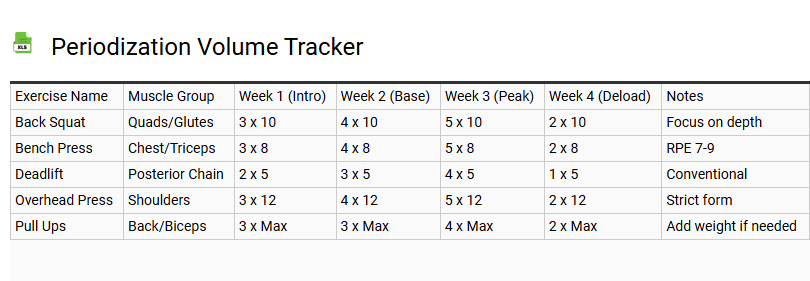
Periodization Volume Tracker
💾 Periodization Volume Tracker .xls
This template provides a structured framework for managing long-term athletic development through systematic load management. It enables precise documentation of training variables across distinct phases, ensuring measurable progression and recovery. By recording specific metrics such as total sets, repetitions, and intensity percentages, users can visualize the relationship between workload and performance outcomes.
The tracker organizes data into manageable cycles, facilitating transitions between various training blocks. Utilizing this system helps identify performance plateaus and prevents physical burnout by balancing high-intensity efforts with scheduled deload periods.
- Track total tonnage and volume load per muscle group.
- Monitor intensity shifts across microcycles and mesocycles.
- Analyze recovery trends to optimize future training stimulus.
This comprehensive approach ensures that every session contributes effectively to specific fitness objectives, offering a detailed history of physiological adaptations and workload capacity over time.
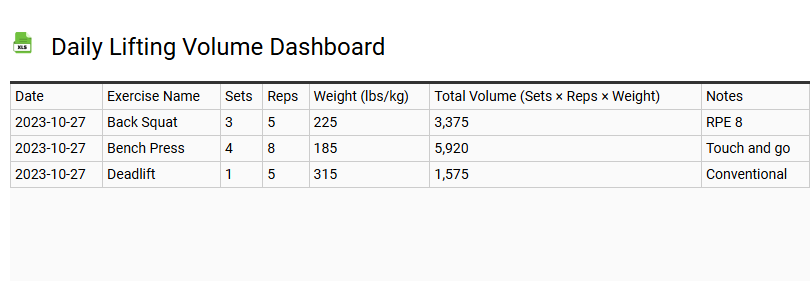
Daily Lifting Volume Dashboard
💾 Daily Lifting Volume Dashboard .xls
The Daily Lifting Volume Dashboard provides a centralized interface for monitoring strength training efficiency. It calculates total workload by aggregating sets, repetitions, and weight across every session. This structured approach allows athletes to visualize progressive overload through clear, data-driven insights.
- Volume Tracking: Monitor total tonnage lifted per workout to ensure consistent growth.
- Performance Trends: Identify strength gains and plateaus using historical data visualizations.
- Exercise Breakdown: Analyze specific movements to balance muscle groups and intensity.
By transforming raw entry logs into actionable metrics, this template assists in optimizing recovery and adjusting training cycles. The layout emphasizes clarity, making it easy to see how individual sessions contribute to long-term fitness goals and physical development.
Bodyweight and Weighted Volume Log
💾 Bodyweight and Weighted Volume Log .xls
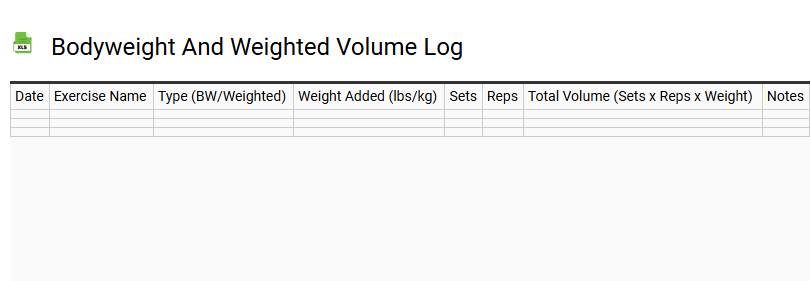
This bodyweight and weighted volume log serves as a precision tool for monitoring progressive overload and athletic development. By systematically documenting sets, repetitions, and external load, users can calculate total training tonnage and intensity across various modalities. This template bridges the gap between calisthenics and traditional resistance training, allowing for seamless tracking of gravity-based movements and added weight metrics. Utilizing a structured log facilitates muscle hypertrophy and strength gains by providing clear data on performance trends and recovery needs. Whether you are performing high-volume pull-ups or low-rep weighted dips, capturing these specific variables ensures a data-driven approach to fitness. Refine your programming, eliminate plateaus, and optimize muscle fiber recruitment through consistent documentation of your physical exertion and workload capacity within this streamlined performance framework.
Powerlifting Volume Analysis Tool
💾 Powerlifting Volume Analysis Tool .xls
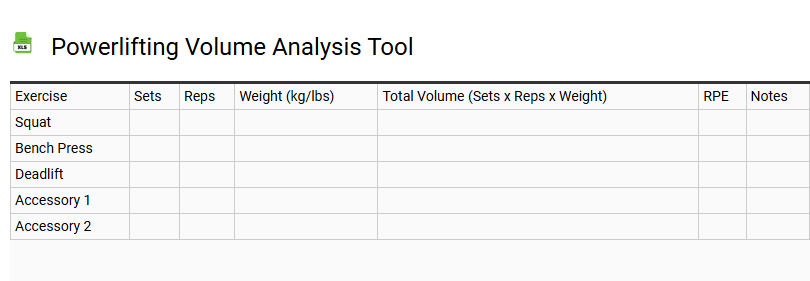
This Powerlifting Volume Analysis Tool serves as a comprehensive dashboard for tracking training load and tonnage across the "Big Three" lifts. By quantifying total volume load for the squat, bench press, and deadlift, athletes can meticulously monitor progressive overload and hypertrophy stimulus. The template integrates set-rep schemes and intensity metrics to visualize total work capacity within a specific macrocycle.
- Analyze training frequency to optimize neuromuscular recovery.
- Calculate relative intensity and RPE-based fatigue management.
- Monitor metabolic stress for accessory movements and supplemental lifts.
Utilizing this data-driven approach allows for precise periodization adjustments, ensuring peak strength gains while minimizing injury risks through strategic fatigue accumulation tracking. Enhance your lifting performance by identifying plateaus and refining your repetition ranges for maximum power output.
Volume and Intensity Heat Map
💾 Volume and Intensity Heat Map .xls
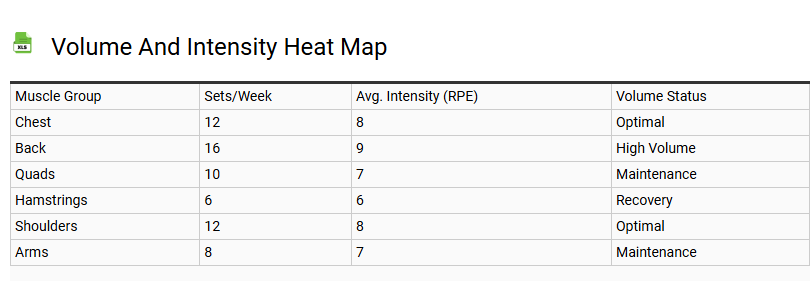
A Volume and Intensity Heat Map serves as a sophisticated data visualization tool for optimizing training load and periodization strategies. By mapping total workload distribution against lifting intensity, athletes can identify critical patterns in strength training frequency and fatigue management. This template utilizes a color-coded grid to represent variables like RPE (Rate of Perceived Exertion), total sets, and rep ranges, ensuring progressive overload is achieved without overtraining.
Integrating this heat map into your workout programming enhances recovery optimization by highlighting high-stress phases and necessary deload periods. It provides visual analytics for monitoring training density, allowing coaches to fine-tune hypertrophy blocks or peaking cycles. Leveraging these performance metrics ensures a balanced approach to volume accumulation, maximizing physiological adaptations through precise, data-driven workload monitoring.
This strength training volume tracker serves as a vital tool for athletes prioritizing progressive overload and muscle hypertrophy. By meticulously documenting workout logs, including specific sets, reps, and resistance intensity, you can ensure consistent fitness progress. This data-driven approach to resistance training helps optimize recovery periods and prevent plateaus. Use this template to monitor your workload and refine your gym strategy. Start logging your performance today to achieve peak physical results through precise volume management and long-term athletic development.