
Trail Running Elevation Tracker Template
Efficiently monitoring total vertical gain is essential for any mountain athlete. This trail running elevation tracker offers a comprehensive framework to log altitude shifts, steep gradients, and cumulative climbing metrics. By analyzing topographic profiles and GPS-derived vertical meters, runners gain deep insights into their aerobic capacity and muscular endurance on technical terrain. Accurate data visualization helps optimize recovery and peak performance for ultra-marathons and skyrunning events. Explore our diverse selection of layouts to streamline your training data. Check out the already made variation of templates below.
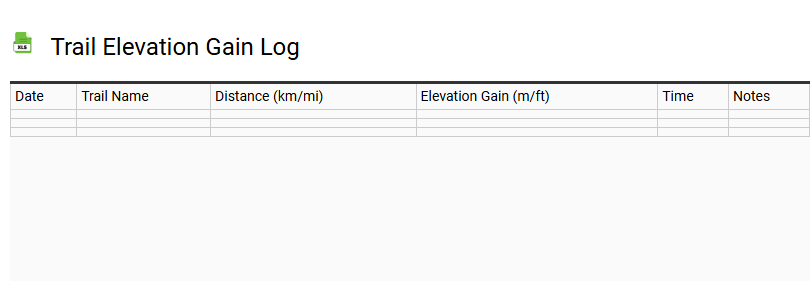
Trail Elevation Gain Log
💾 Trail Elevation Gain Log .xls
A comprehensive trail elevation gain log is an essential tool for hikers and mountain athletes seeking to quantify their vertical progress. By systematically recording cumulative ascent and total descent, users can generate detailed topographic profiles that reflect their trekking statistics. This data-driven approach allows for precise fitness tracking, helping individuals monitor endurance levels and adapt to varying gradient intensities.
Effective logs focus on key hiking metrics such as:
- Vertical gain per mile to determine trail difficulty.
- Precise altimeter data for accurate incline analysis.
- Total climb duration to evaluate cardiovascular performance.
Utilizing a structured template facilitates peak bagging goals and long-term performance monitoring. Documenting every foot of elevation provides a clear visual of your progression through diverse terrains, ensuring you are physically prepared for the challenges of steep mountain slopes and high-altitude environments.
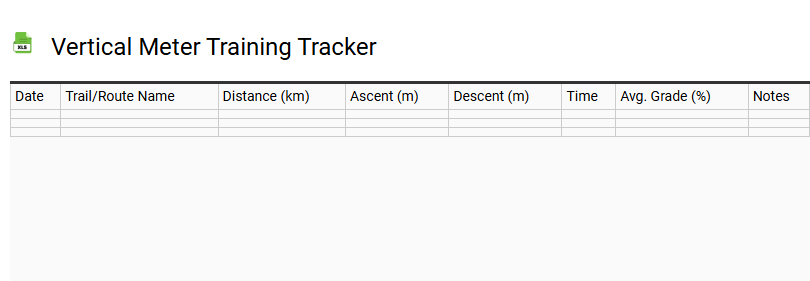
Vertical Meter Training Tracker
💾 Vertical Meter Training Tracker .xls
A Vertical Meter Training Tracker is a specialized tool designed for athletes to monitor elevation gain and climbing performance. By logging every vertical foot or meter ascended, trail runners, cyclists, and mountaineers can analyze critical endurance metrics and aerobic capacity. This template streamlines the collection of topographic data, allowing users to visualize fitness progress through cumulative ascent statistics and gradient intensity.
Utilizing a structured workout log helps in optimizing altitude training loads and managing descent recovery intervals. Key features often include:
- Total Ascent Tracking: Monitoring daily and weekly vertical displacement.
- Gradient Analysis: Evaluating performance across varying steepness levels.
- Stamina Benchmarking: Comparing heart rate data against specific elevation benchmarks.
Whether preparing for a peak-bagging expedition or an ultramarathon, this tracking system ensures precise climbing volume management for peak physical conditioning.
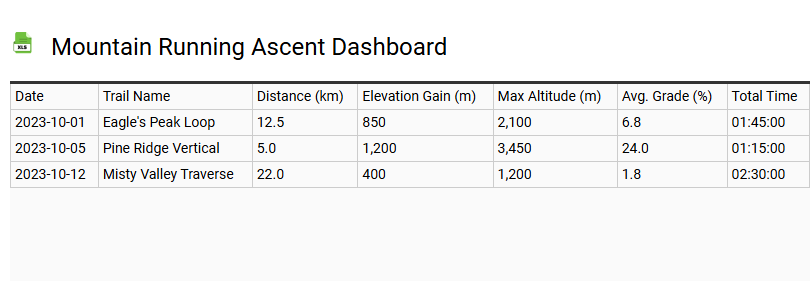
Mountain Running Ascent Dashboard
💾 Mountain Running Ascent Dashboard .xls
This specialized dashboard provides a comprehensive overview for athletes tackling high-altitude terrain. It focuses on vertical velocity and total elevation gain, ensuring runners can monitor their performance on steep inclines. The interface displays real-time data regarding grade-adjusted pace, allowing for better energy management during grueling climbs.
Users can track their progress through specific heart rate zones calibrated for aerobic efficiency in thin air. Additionally, the platform integrates technical terrain difficulty and weather-impacted ascent rates. By centralizing these metrics, the template empowers mountain runners to refine their climbing technique, analyze recovery periods, and set realistic goals for future summits.
Whether training for a vertical kilometer or an ultra-distance trail race, this tool offers the precise insights needed to master every ridge. Users can visualize their climb history and compare efforts across different mountain ranges effortlessly.
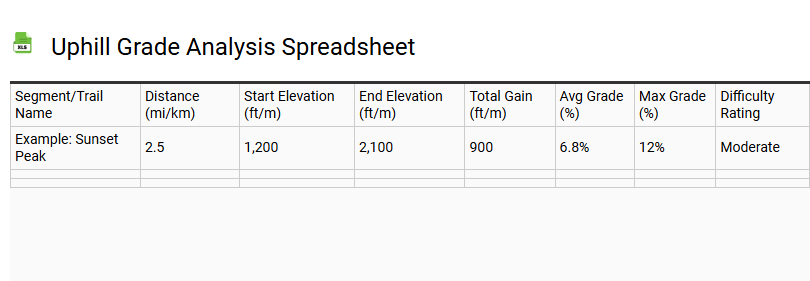
Uphill Grade Analysis Spreadsheet
💾 Uphill Grade Analysis Spreadsheet .xls
This Uphill Grade Analysis Spreadsheet is a specialized tool designed for civil engineers and logistics planners to evaluate vertical alignment and terrain feasibility. By inputting elevation changes and horizontal distances, the template accurately calculates the gradient percentage, ensuring compliance with incline safety standards. It is essential for haul road optimization, allowing users to predict truck performance and haulage efficiency under varying loads.
The slope calculation engine integrates rolling resistance data to estimate fuel consumption and mechanical strain on heavy equipment. Whether designing climbing lanes for highway infrastructure or analyzing topographic data for mining operations, this parametric model streamlines gradient analysis. Leveraging this spreadsheet ensures precise transportation planning, minimizes operational costs, and enhances safety protocols for any project requiring rigorous uphill grade assessment and terrain profiling.
Monthly Vertical Goal Planner
💾 Monthly Vertical Goal Planner .xls
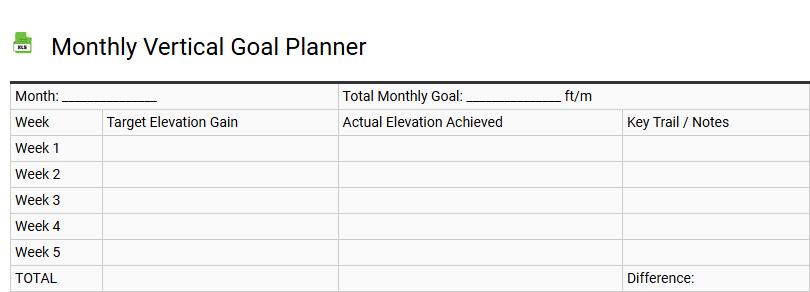
A monthly vertical goal planner serves as a high-performance productivity tool designed for streamlined objective setting and efficient time management. This specific vertical layout provides a structured organizational framework to map out your primary action plan and key milestones. By utilizing a comprehensive monthly overview, users ensure seamless goal alignment across professional and personal projects. These templates frequently integrate a priority list, habit tracker, and task management sections to facilitate consistent progress monitoring. Whether accessed as a digital download or a printable planner, the vertical orientation enhances visual clarity, helping individuals decompose ambitious targets into achievable steps. Leverage this intentional design to boost focus, maintain accountability, and ensure every daily effort contributes to your broader monthly success and long-term vision.
Summit and Peak Bagging Log
💾 Summit and Peak Bagging Log .xls
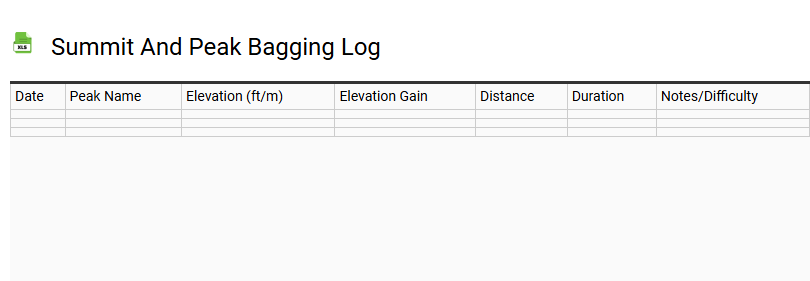
A comprehensive summit and peak bagging log serves as a vital archival tool for mountaineers and high-pointers tracking their alpine achievements. This template facilitates the precise recording of elevation gain, total mileage, and specific mountain ranges explored. By documenting trailhead coordinates and topographical prominence, hikers can maintain a detailed chronological record of their progress toward list finishing.
- Record ascent duration and technical scrambling difficulty grades.
- Log weather conditions and geospatial data captured from GPS tracks.
- Archive summit photos and personal reflections on trail accessibility and terrain.
Optimizing your trekking data ensures better preparation for future high-altitude expeditions. Whether pursuing state high points or technical crags, this structured format captures essential terrain statistics and backcountry navigation details for every successful peak attainment and descent route.
Technical Trail Elevation Calculator
💾 Technical Trail Elevation Calculator .xls
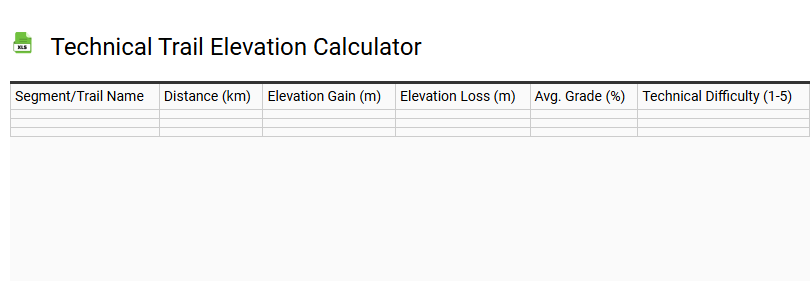
The Technical Trail Elevation Calculator is a specialized tool designed for hikers, mountain bikers, and trail runners to analyze vertical gain and total descent with precision. By inputting GPS data or coordinates from a topographical map, users can calculate the exact grade percentage and slope analysis for any given segment. This utility is essential for determining trail difficulty and understanding the altitude profile before setting out.
Key metrics processed include:
- Cumulative ascent and peak elevation points.
- Incline steepness for performance optimization.
- Total elevation change over specific trail distances.
Optimizing your route using accurate terrain metrics ensures better energy management. Whether you are navigating rugged singletrack or planning a high-altitude expedition, this calculator provides the geospatial data necessary for safety and efficiency on the trail.
Weekly Ascent and Descent Summary
💾 Weekly Ascent and Descent Summary .xls
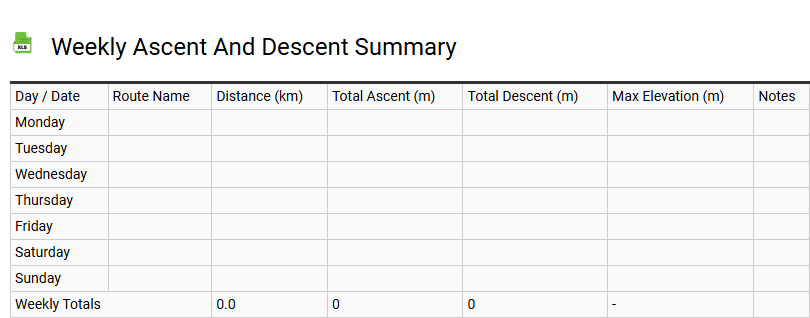
This weekly ascent and descent summary provides a data-driven overview of your vertical performance metrics. By documenting total elevation gain and cumulative loss, athletes can effectively analyze climbing efficiency and technical downhill stability. This structured training log monitors weekly progression, focusing on altitude adjustments and aerobic capacity across various terrains.
Integrating these statistics allows for precise tracking of topographical challenges, such as grade percentages and peak summits reached. Use this template to evaluate your:
- Cumulative vertical displacement
- Uphill aerobic intensity
- Downhill recovery phases
- Total incline and decline statistics
Consistently recording these performance indicators ensures optimized physical conditioning and helps maintain a balanced training load between intense verticality and active recovery, ultimately enhancing long-term fitness goals and endurance milestones.
Trail Race Elevation Profile Planner
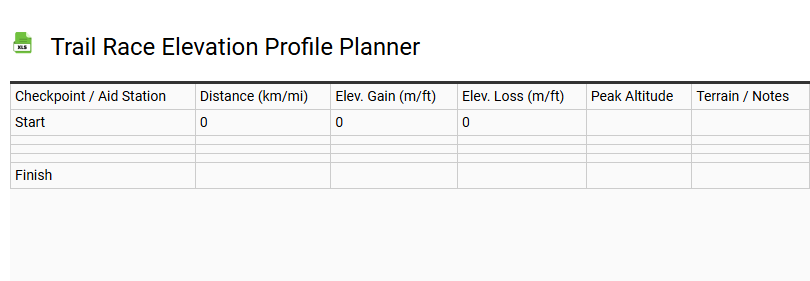
💾 Trail Race Elevation Profile Planner .xls
This trail race elevation profile planner serves as a vital resource for athletes navigating complex topography. By visualizing the total vertical gain and mapping technical descents, runners can develop a precise pacing chart tailored to specific altitude changes. This template integrates GPS data to highlight steep climbs and calculate the grade percentage across the entire course profile.
Strategic terrain analysis allows for better management of energy output, helping participants stay ahead of cut-off times. Use this tool to coordinate your nutrition plan with the most demanding inclines and descents. Whether tackling rugged mountain peaks or rolling forest paths, this race strategy tool optimizes performance by providing a clear topographic overview of the total ascent and undulating terrain challenges encountered during ultra-distance events.
VAM and Vertical Speed Tracker
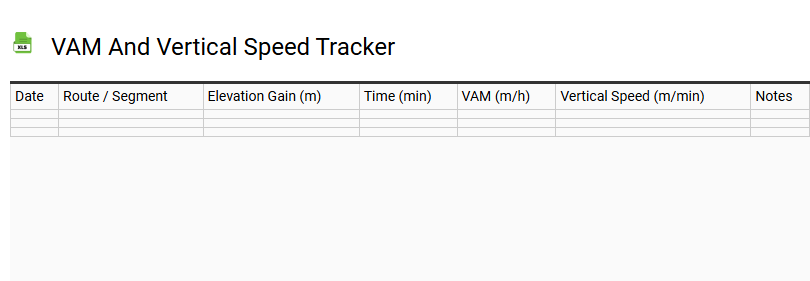
💾 VAM and Vertical Speed Tracker .xls
This specialized tracking template provides a comprehensive interface for monitoring Velocity Ascended Mountain (VAM) and real-time vertical rate fluctuations. It serves as a vital analytical tool for cyclists, climbers, and pilots who need to quantify climbing efficiency and sustained power over varying elevations.
- Vertical Speed: Delivers instantaneous data on elevation gain or loss, allowing for precise pacing during steep intervals.
- VAM Metrics: Automatically calculates the average hourly ascent rate, measured in meters per hour, to benchmark performance against historical data.
- Gradient Analysis: Correlates vertical progress with terrain steepness to identify optimal effort thresholds.
The layout is designed for high readability during intense activity. By integrating these metrics into a single dashboard, users can evaluate their aerobic capacity and mechanical efficiency, ensuring a data-driven approach to mountain training and altitude management.
Elevation Change per Kilometer Log
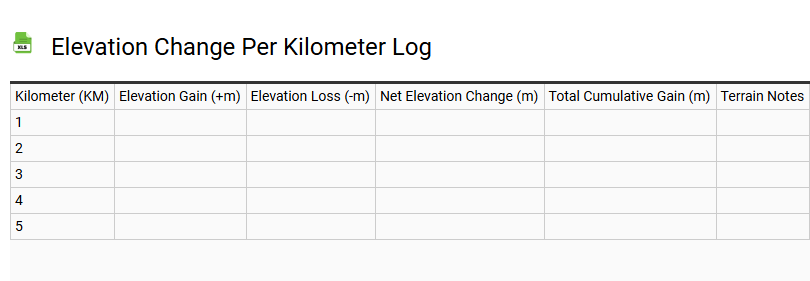
💾 Elevation Change per Kilometer Log .xls
This tracking template is designed to monitor elevation change per kilometer, providing a detailed topographic profile for athletes and outdoor enthusiasts. By recording vertical gain and loss alongside distance, users can calculate precise gradient percentages and slope intensity for any route.
Utilizing altimeter data and GPS tracking, this log captures essential performance metrics such as:
- Cumulative vertical meters climbed and descended.
- Average ascent rate and descent velocity per segment.
- Terrain difficulty based on incline and geospatial displacement.
Whether for trail running, cycling, or alpine hiking, quantifying the total elevation gain ensures optimal training load management and improved climbing efficiency. Tracking these topographical variations helps in visualizing the rate of climb across diverse geographic landscapes.
High Altitude Performance Journal
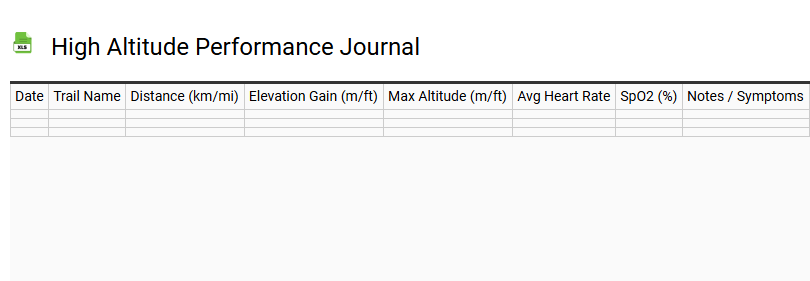
💾 High Altitude Performance Journal .xls
This high altitude performance journal template is engineered for athletes and mountaineers aiming to optimize physiological adaptation to hypoxia. By meticulously tracking oxygen saturation (SpO2) and resting heart rate, users can monitor acclimatization progress and manage the risks of acute mountain sickness. The framework facilitates logging barometric pressure and elevation gains, providing critical context for VO2 max fluctuations and aerobic capacity in thin air. Documenting heart rate variability (HRV), hydration protocols, and metabolic demands ensures precise recovery management under reduced partial pressure. This structured approach to biometric data collection allows for the correlation of training load with respiratory rate and sleep quality. Utilize these entries to refine endurance strategies and enhance erythropoiesis, ensuring peak metabolic efficiency during high-ascent expeditions and elite alpine training sessions.
Steepness Category Breakdown Sheet
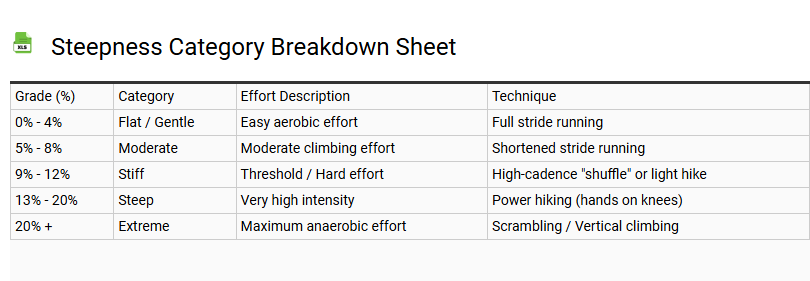
💾 Steepness Category Breakdown Sheet .xls
A Steepness Category Breakdown Sheet serves as a critical diagnostic tool for accurately assessing surface inclines and slope factors. This template organizes terrain or roofing data by classifying the ratio of vertical rise to horizontal run, ensuring precise pitch measurement across different sectors. By segmenting architectural surfaces into categories such as flat, low-slope, and steep-grade, estimators can determine exact square footage requirements and material waste variables.
- Incline Analysis: Quantifies the gradient to establish safety fall protection protocols.
- Labor Estimation: Adjusts man-hour projections based on the difficulty of the pitch classification.
- Resource Allocation: Optimizes staging areas and equipment needs according to topographical variations.
Utilizing this structured format ensures data integrity for contractors and engineers, facilitating streamlined workflow management and highly accurate cost projections for complex structural projects.
Yearly Vertical Gain Progress Chart
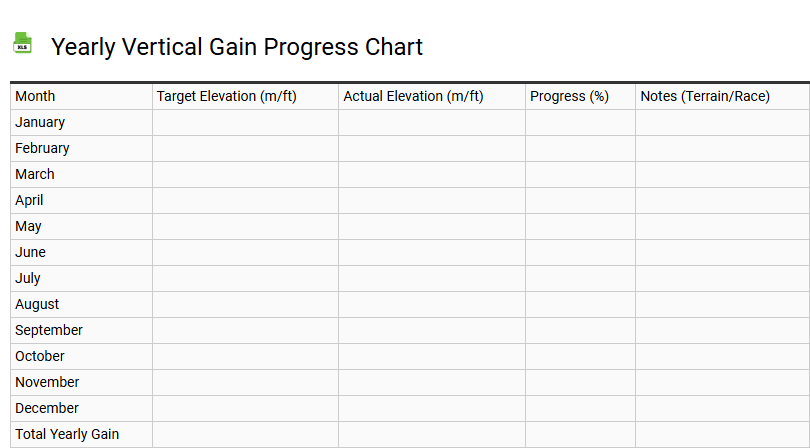
💾 Yearly Vertical Gain Progress Chart .xls
A Yearly Vertical Gain Progress Chart serves as a robust data visualization tool for tracking cumulative elevation gain and climbing performance. This template allows outdoor enthusiasts to monitor vertical meters or feet conquered throughout the calendar year, providing a clear overview of endurance training volume. By systematically logging ascent statistics, athletes can analyze seasonal trends, progressive load, and fitness milestones. The layout emphasizes performance metrics, enabling users to visualize their trajectory toward specific elevation goals. Integrating this vertical tracker into a regular activity log facilitates deeper growth analysis and peak performance planning. Whether for mountain running, cycling, or alpinism, this annual summary highlights total ascent and summit achievements, ensuring consistent progress and motivation across every climbing session within the competitive or recreational season.
Route Specific Elevation Strategy Template
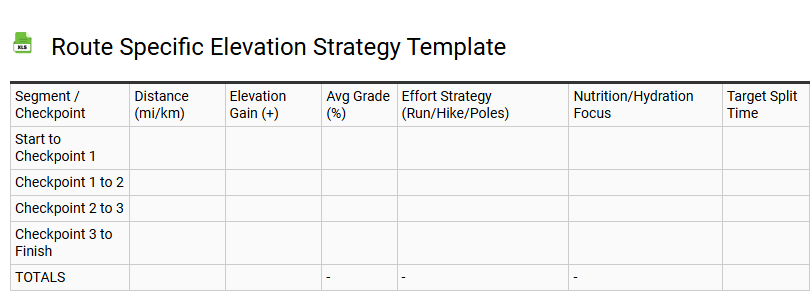
💾 Route Specific Elevation Strategy Template .xls
The Route Specific Elevation Strategy functions as a blueprint for optimizing individual URL pathways to improve visibility and user experience. This approach ensures that every segment of a website receives tailored enhancements that align with the specific intent of the visitor.
- Path Analysis: Evaluating the current performance and technical health of specific directories or subfolders.
- Contextual Tailoring: Developing targeted messaging and layouts that resonate with the unique audience visiting a particular route.
- Technical Alignment: Ensuring site architecture and internal linking structures support the priority status of the chosen pathway.
By implementing this strategy, organizations can move beyond broad site-wide updates to deliver precise, high-impact improvements. This focused methodology bridges the gap between general site architecture and the specialized requirements of high-value content clusters, driving better discovery and engagement across all digital touchpoints.
This trail running elevation tracker template simplifies monitoring vertical gain, cumulative ascent, and total descent. Designed for mountain athletes, it transforms GPS data into actionable performance metrics. By documenting every climb and gradient change within your training log, you gain vital insights into aerobic capacity and technical endurance.
Utilize this spreadsheet to master steep terrain and optimize your mountain racing strategy. Elevate your progress with precise topographic tracking, ensuring readiness for every rugged peak and valley.