
Comprehensive Ultra Marathon Training Journal Template for Endurance Athletes
Embarking on an ultra-endurance journey requires meticulous planning and consistent data tracking. A comprehensive ultra marathon training journal enables athletes to log daily mileage, vertical gain, and heart rate zones effectively. By monitoring recovery cycles, nutrition, and hydration, you optimize physiological adaptation for rugged trail performance. This systematic approach ensures you maintain consistent weekly volume while preventing overtraining through precise analysis of your fitness milestones. Check out the already made variation of templates below.
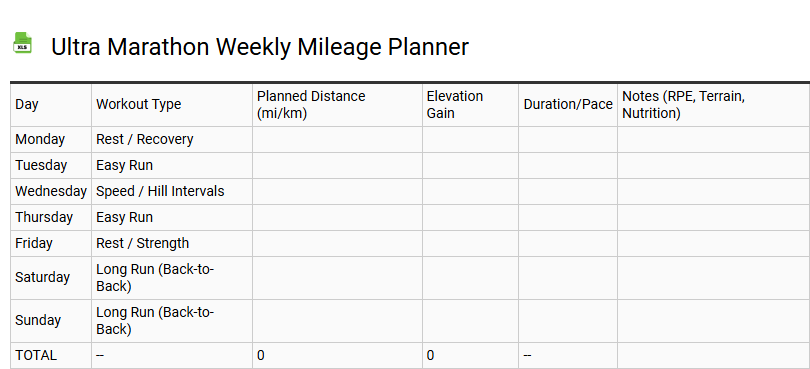
Ultra Marathon Weekly Mileage Planner
💾 Ultra Marathon Weekly Mileage Planner .xls
This Ultra Marathon Weekly Mileage Planner serves as a comprehensive roadmap for athletes targeting 50k to 100-mile distances. By implementing strategic periodization, the template balances high-volume peak mileage with necessary recovery weeks to maximize physiological adaptations and grit.
- Track long runs to solidify your aerobic base and muscular endurance.
- Monitor elevation gain and vertical feet to simulate specific race-day trail conditions.
- Log active recovery and taper phases to ensure peak performance and injury prevention.
Effective training cycles require precise data on weekly totals and intensity distribution. This tool allows for mileage progression adjustments, helping runners manage the physical demands of ultra-endurance events while refining hydration strategies and fueling protocols for the long haul. Use this structured format to maintain consistency throughout your base-building and sharpening blocks.
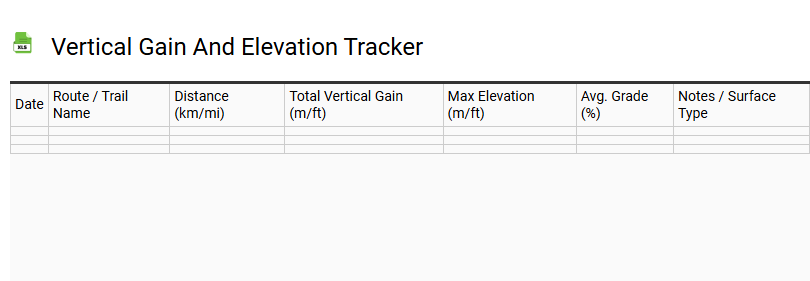
Vertical Gain and Elevation Tracker
💾 Vertical Gain and Elevation Tracker .xls
A Vertical Gain and Elevation Tracker serves as a dedicated digital log for athletes and outdoor enthusiasts to monitor their climbing progress across various terrains. This specialized layout focuses on capturing precise data regarding total ascent, peak altitude, and cumulative elevation changes during activities like hiking, cycling, or trail running.
- Progress Monitoring: Measure your physical output by documenting every foot of elevation achieved during your training sessions.
- Goal Orientation: Establish specific climbing targets to enhance stamina and prepare for high-altitude expeditions or competitive mountain races.
- Historical Trends: Review past performances to identify improvements in climbing efficiency and recovery times over diverse topographical profiles.
By utilizing this structured framework, users can transform raw topographical data into actionable insights. It provides a clear visual representation of your vertical journey, ensuring that every climb contributes to your long-term fitness objectives and mountain-based ambitions.
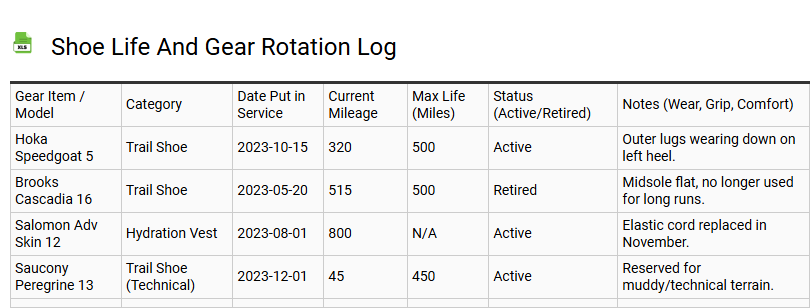
Shoe Life and Gear Rotation Log
💾 Shoe Life and Gear Rotation Log .xls
This shoe life and gear rotation log serves as a vital tool for dedicated athletes monitoring mileage tracking and equipment durability. By systematically recording running shoe usage, users can identify patterns in outsole wear and foam compression, ensuring timely replacements before cushioning breakdown compromises safety. Implementing a gear rotation strategy allows midsoles to recover, extending the lifespan of your athletic footwear.
Key metrics within this template include:
- Total distance accumulated per pair to monitor structural integrity.
- Surface conditions (trail vs. road) affecting traction longevity.
- Gait analysis observations regarding comfort and mechanical efficiency.
- Purchase dates for age-based degradation assessment.
Maintaining this performance log supports injury prevention by highlighting the optimal transition period for new gear, ensuring peak biomechanical support and sustained energy return.
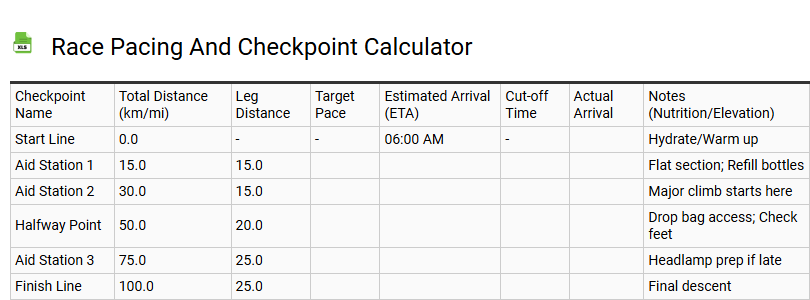
Race Pacing and Checkpoint Calculator
💾 Race Pacing and Checkpoint Calculator .xls
Optimize your endurance strategy with this comprehensive race pacing and checkpoint calculator. Designed for marathoners and ultramarathon runners, this template simplifies split time projections across varied terrain. By inputting your goal finishing time and total distance, athletes can generate a precise pacing chart that accounts for elevation gain and technical trail sections.
Monitor progress at specific aid stations to ensure you remain safely ahead of cutoff times. This tool integrates performance metrics such as average pace per mile or kilometer, allowing for real-time adjustments to your hydration plan and energy expenditure. Whether aiming for a personal best or simply managing race day logistics, these data-driven insights help maintain consistent momentum. Refine your target pace by factoring in atmospheric conditions and fatigue levels, ensuring a strategic approach to every timing mat and milestone.
Heart Rate Zone and Intensity Journal
💾 Heart Rate Zone and Intensity Journal .xls
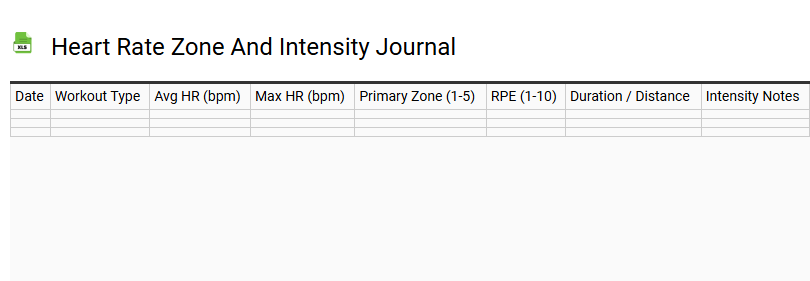
Optimize your cardiovascular fitness using a structured heart rate zone and intensity journal. By tracking biometric data across different physiological thresholds-ranging from the aerobic base to anaerobic capacity-athletes can refine their training stimulus for peak performance. This log captures vital metrics such as resting heart rate (RHR), VO2 max estimations, and the Rate of Perceived Exertion (RPE).
Monitoring fluctuations in cardiac output helps prevent overtraining while ensuring workouts hit specific target heart rate ranges. Whether focusing on fat oxidation or high-intensity interval training, a dedicated journal provides:
- Precise analysis of heart rate variability (HRV) and recovery.
- Evaluation of metabolic efficiency and endurance gains.
- Insights into cardiovascular health and athletic progression.
Utilizing this systematic approach transforms raw pulse data into actionable insights for sustained athletic development and improved performance monitoring.
Body Metric and Recovery Monitor
💾 Body Metric and Recovery Monitor .xls
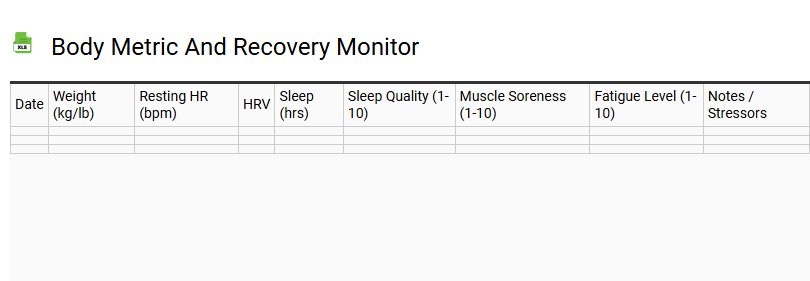
The Body Metric and Recovery Monitor provides a sophisticated wellness dashboard for tracking essential physiological data. By integrating real-time fitness analytics, this template monitors heart rate variability (HRV), resting heart rate, and metabolic trends to calculate a precise daily readiness score.
Users can analyze sleep cycles and quality to ensure optimal muscle recovery and hormonal balance. This data-driven approach simplifies physical strain management, allowing for performance optimization based on biometric feedback. Comprehensive data visualization tools highlight long-term health trends, helping users balance high-intensity training with restorative rest.
Whether tracking oxygen saturation or caloric expenditure, this recovery monitoring system serves as a vital tool for achieving peak physical condition. By leveraging biometric reporting and health tracking insights, you can make informed adjustments to your lifestyle, ensuring sustainable progress and enhanced well-being through personalized biometric data analysis.
Strength and Mobility Training Log
💾 Strength and Mobility Training Log .xls
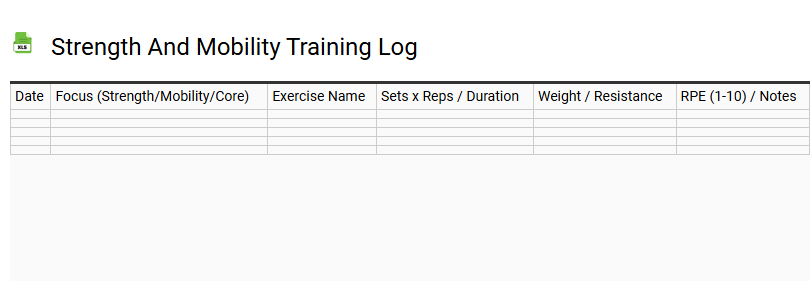
This comprehensive strength and mobility training log template serves as a strategic framework for documenting physiological adaptations and athletic progress. By tracking progressive overload across resistance training sessions, users can monitor muscle hypertrophy and functional strength gains with precision. The layout prioritizes compound lifts, sets, and reps, while integrating dedicated data points for joint health and range of motion.
Incorporating dynamic flexibility drills and corrective exercises ensures balanced musculoskeletal development, reducing injury risk. This workout journal captures essential metrics like intensity, volume, and active recovery phases. By maintaining a detailed record of functional movement patterns and weight tracking, athletes can analyze performance trends and optimize their periodization cycles. This holistic approach bridges the gap between raw power and fluid agility, fostering long-term physical longevity and peak conditioning.
Nutrition and Hydration Strategy Planner
💾 Nutrition and Hydration Strategy Planner .xls
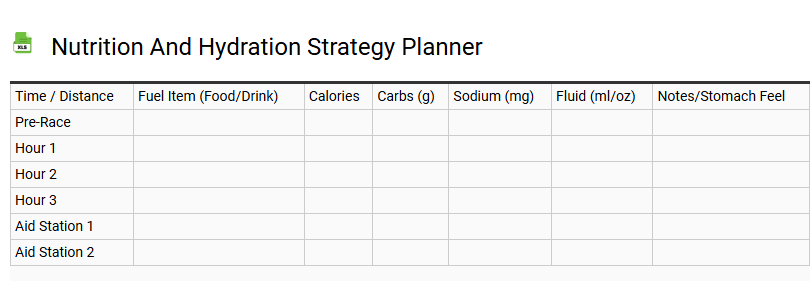
This comprehensive nutrition and hydration strategy planner is engineered to optimize metabolic efficiency by streamlining your daily caloric intake and macronutrient distribution. Designed for peak endurance performance, the template meticulously tracks fluid replacement and electrolyte balance to prevent dehydration and premature fatigue.
By calculating your specific sweat rate and unique dietary requirements, users can maintain stable glycogen stores throughout intensive training cycles. This personalized fuel plan integrates pre-workout priming, intra-session refueling, and recovery nutrition to ensure rapid physiological restoration.
Whether managing micronutrient density or timing carbohydrate loading, this tool provides a structured framework for nutritional periodization. Implement these data-driven insights to refine your fueling protocol, enhance gut comfort, and sustain energy levels across various athletic disciplines and environmental conditions.
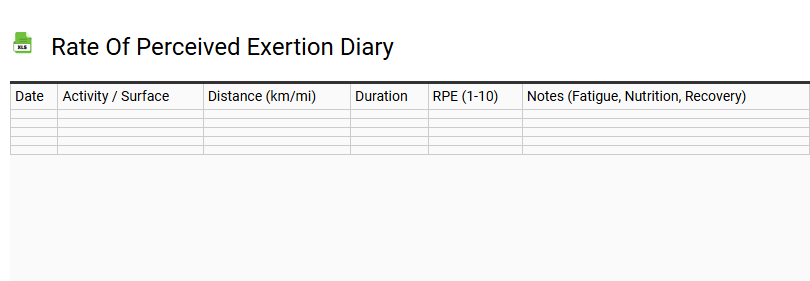
Rate of Perceived Exertion Diary
💾 Rate of Perceived Exertion Diary .xls
A Rate of Perceived Exertion (RPE) Diary serves as a vital tool for monitoring training intensity and managing physical fatigue. Utilizing a structured template allows athletes to log subjective effort levels using the Borg Scale, ranging from resting states to maximal exertion. By tracking daily workout volume and cardiovascular strain, individuals can implement autoregulation strategies to optimize fitness progress.
This diary format focuses on qualitative data, complementing quantitative metrics like heart rate or power output. Consistent entries help identify patterns in recovery and overtraining syndrome prevention. Whether for strength training or endurance sports, recording RPE ensures a balanced exercise load, fostering long-term athletic performance and injury prevention. Maintaining this log enhances mind-muscle connection, providing a comprehensive overview of how the body responds to specific physical activities and stimulus over time.
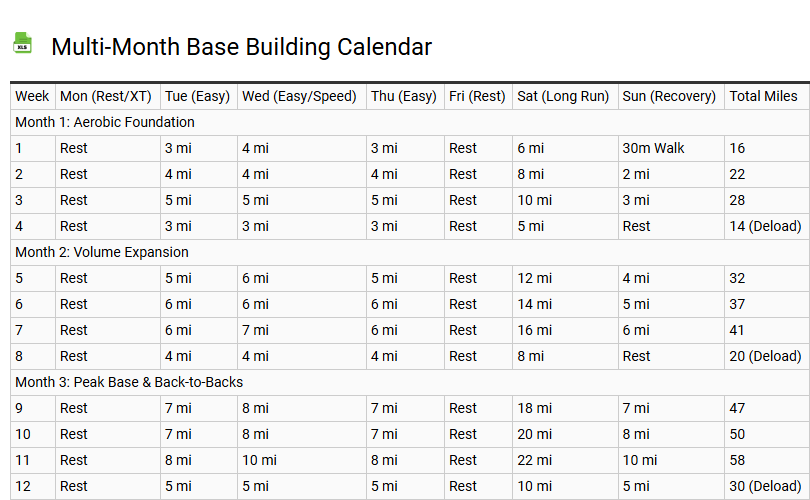
Multi-Month Base Building Calendar
💾 Multi-Month Base Building Calendar .xls
A multi-month base building calendar serves as the essential macrocycle for athletes seeking long-term aerobic development. This structured periodization template prioritizes low-intensity steady state (LISS) workouts to enhance mitochondrial density and cardiovascular efficiency. By focusing on Zone 2 training blocks, endurance athletes establish a robust physiological foundation before introducing high-intensity anaerobic work. Each mesocycle within the plan emphasizes progressive overload through gradual volume increases, ensuring structural integrity and injury prevention. This systematic training framework optimizes metabolic efficiency and fat oxidation, creating a solid platform for future peak performance. By balancing cumulative fatigue with scheduled recovery weeks, the calendar facilitates optimal physiological adaptation. Utilizing this foundational phase is critical for strengthening the heart, increasing capillary density, and building the aerobic capacity necessary for sustained athletic success throughout the competitive season.
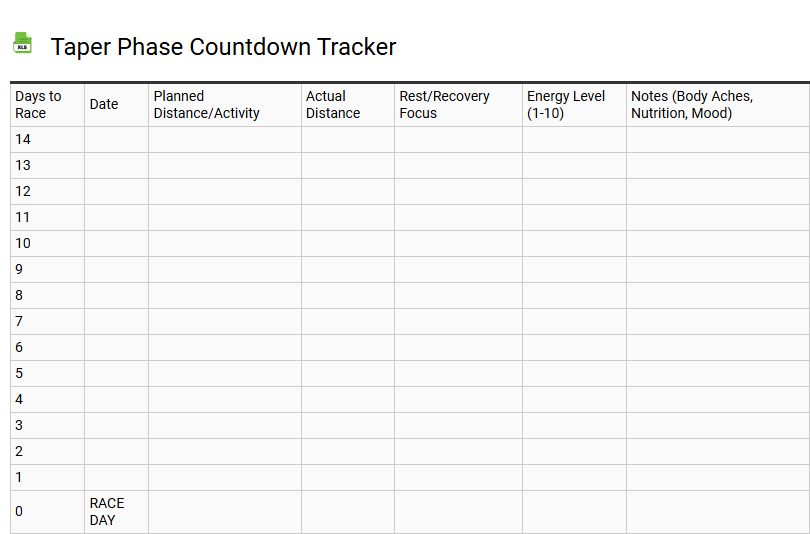
Taper Phase Countdown Tracker
💾 Taper Phase Countdown Tracker .xls
A Taper Phase Countdown Tracker serves as a vital tool for athletes navigating the critical weeks before a competition. By systematically monitoring the reduction in training volume, this template ensures optimal physiological recovery and glycogen replenishment. Integrating key concepts like peak performance, muscle repair, and neuromuscular adaptation, the tracker assists in balancing tapering intensity with restorative rest. Users can visualize their progress toward race day readiness, effectively managing the sharpening phase to prevent overtraining syndrome.
This strategic countdown focuses on supercompensation, allowing the body to reach its athletic peak. Whether preparing for a marathon or triathlon, a well-structured tracking interface provides the psychological confidence and data-driven insights necessary to transition from high-load training to a refreshed, competitive state, ensuring you arrive at the starting line fully primed and physiologically peaked for maximum output.
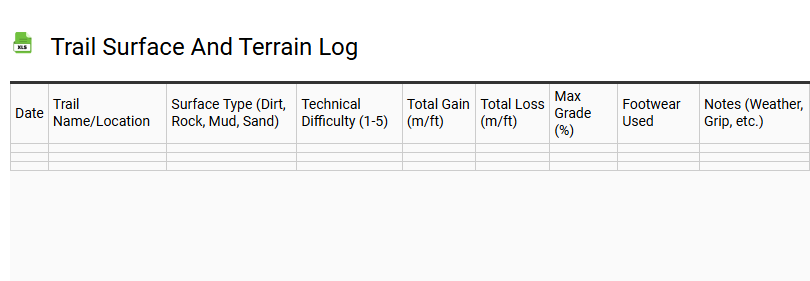
Trail Surface and Terrain Log
💾 Trail Surface and Terrain Log .xls
A Trail Surface and Terrain Log serves as a detailed inventory for documenting the physical attributes and ground conditions of outdoor pathways. This documentation process allows land managers and maintenance crews to track the evolution of a trail, ensuring the path remains safe and navigable for all users.
The log typically captures several critical data points to assist in long-term preservation:
- Composition: Identifying materials such as packed earth, loose gravel, bedrock, or mulch.
- Topography: Recording slope gradients, elevation changes, and significant dips or rises.
- Hydrology: Noting areas of standing water, drainage efficiency, and potential erosion risks.
- Obstructions: Marking the location of protruding roots, fallen timber, or seasonal overgrowth.
By maintaining consistent records, organizations can prioritize repairs, allocate resources effectively, and provide accurate difficulty ratings for hikers and cyclists.
Drop Bag and Gear Checklist
💾 Drop Bag and Gear Checklist .xls
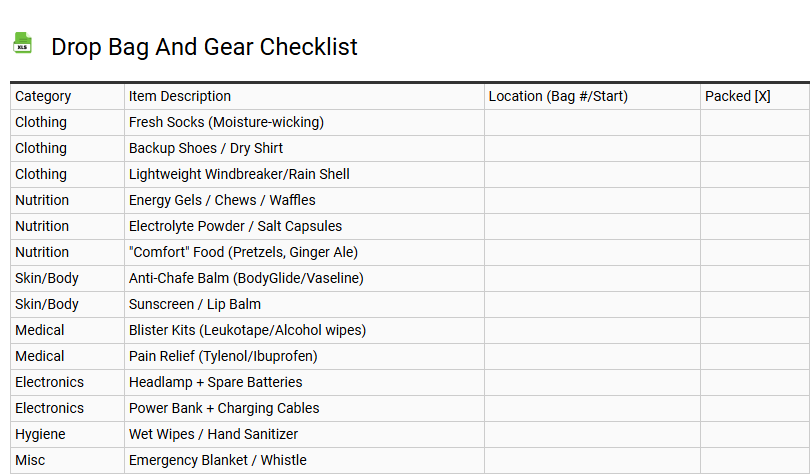
Optimizing your endurance race strategy requires a comprehensive drop bag and gear checklist to manage logistics at remote aid stations. This template serves as a vital tool for ultramarathon runners, ensuring race day essentials like nutrition protocols, hydration supplies, and technical apparel are strategically placed along the course. Incorporating items such as salt tabs, energy gels, and anti-chafe balm prevents common performance plateaus during long-distance events.
- Mandatory equipment: Headlamps, spare batteries, and thermal layers for night sections.
- Personal care: Fresh technical socks, blister kits, and electrolyte replenishment.
- Fueling strategy: Palatable solid snacks and liquid calories to maintain glycogen levels.
By refining your logistical planning, you minimize transition times and maintain pacing consistency. A well-organized checklist enhances mental clarity, ensuring all safety gear is accessible during critical race milestones.
Post-Run Fatigue and Injury Report
💾 Post-Run Fatigue and Injury Report .xls
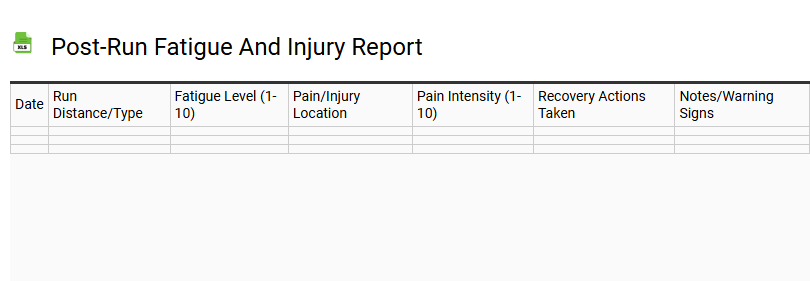
Analyzing post-run fatigue and potential injury patterns is essential for maintaining long-term athletic health. This report template focuses on tracking physiological strain and biomechanical efficiency to proactively prevent common overuse injuries. By documenting specific biometric data, runners can identify early warning signs of plantar fasciitis, runner's knee, or stress fractures.
Key indicators for evaluation include:
- Rating of Perceived Exertion (RPE) to monitor systemic fatigue.
- Localized muscle soreness and inflammation levels.
- Assessment of running gait deviations and joint stability.
- Recovery timelines linked to training load adjustments.
Consistently utilizing this performance tracking tool helps optimize your recovery protocol and aerobic capacity. Integrating these injury prevention metrics ensures sustainable muscular endurance and high-level physical conditioning through data-driven insights.
Annual Training Volume Dashboard
💾 Annual Training Volume Dashboard .xls
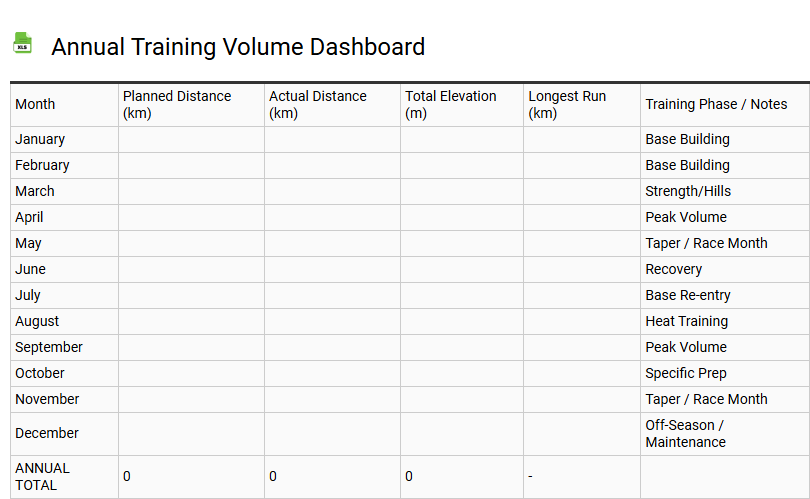
An Annual Training Volume Dashboard serves as a comprehensive central hub for long-term periodization and macrocycle planning. This template enables athletes and coaches to visualize workload tracking through advanced data visualization, ensuring consistent progressive overload across various strength cycles and hypertrophy phases.
- Monitor volume load and training frequency to optimize fitness metrics.
- Identify seasonal trends to adjust intensity and prevent overtraining.
- Leverage performance analytics for precise athlete monitoring and gym management.
By integrating tonnage calculations and recovery markers, this dashboard transforms raw data into actionable insights. It provides a holistic view of yearly performance trends, helping users maintain peak physical condition while balancing accumulated fatigue and readiness scores for optimal athletic development.
Back-to-Back Long Run Scheduler
💾 Back-to-Back Long Run Scheduler .xls
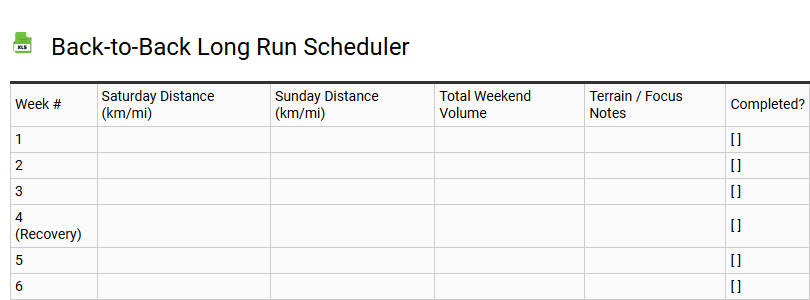
The Back-to-Back Long Run Scheduler is a specialized training tool designed for ultramarathon runners to organize consecutive high-mileage sessions. This method involves completing two long-distance runs within a 24-hour window to simulate the physiological stress experienced during the latter stages of a race.
- Fatigue Simulation: Training on tired legs builds muscular endurance and mental resilience.
- Injury Mitigation: Splitting total volume over two days reduces peak impact compared to a single ultra-long effort.
- Metabolic Adaptation: It teaches the body to move efficiently even when glycogen stores are partially depleted.
By utilizing this structured framework, athletes can calculate precise distance ratios tailored to their specific goal events. This approach ensures a balanced distribution of stress, allowing for better recovery management while building the necessary stamina for 50k, 100k, or 100-mile distances.
Electrolyte and Fueling Audit
💾 Electrolyte and Fueling Audit .xls
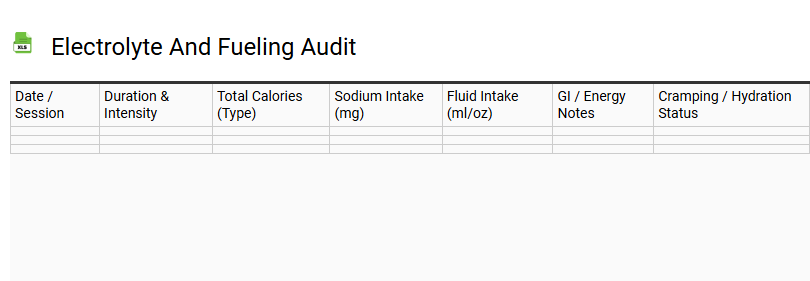
This Electrolyte and Fueling Audit serves as a strategic assessment tool designed to optimize athletic performance and metabolic efficiency. By systematically tracking macronutrient intake and micronutrient ratios, athletes can fine-tune their hydration strategy to mitigate the risks of hyponatremia, muscle cramping, and glycogen depletion.
Utilizing this comprehensive template allows for the precise monitoring of critical physiological variables:
- Sweat rate dynamics and sodium concentration requirements per hour.
- Carbohydrate oxidation rates, focusing on glucose and fructose transport synergy.
- Fluid replacement volumes to maintain plasma volume and osmolarity.
- Identification of gastrointestinal distress triggers through nutrient timing analysis.
Refining your fueling protocol based on these data points ensures sustained exertion levels, improved endurance capacity, and accelerated post-exercise recovery cycles.
Sleep and HRV Performance Tracker
💾 Sleep and HRV Performance Tracker .xls
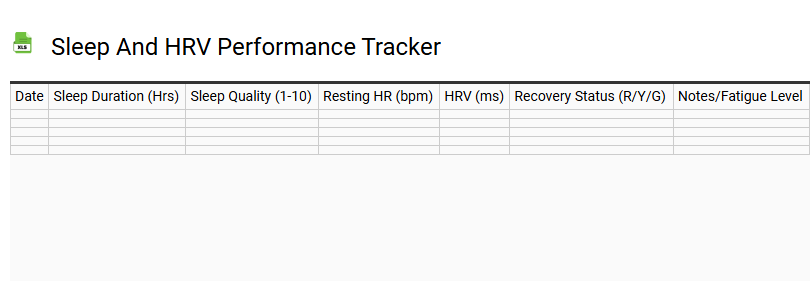
Optimize your physiological recovery using this comprehensive Sleep and HRV Performance Tracker. Designed for peak health optimization, this template monitors critical biometrics such as heart rate variability (HRV), resting heart rate, and circadian rhythm alignment. By analyzing sleep architecture-including REM sleep, deep sleep, and sleep cycles-users gain actionable insights into their autonomic nervous system balance between sympathetic and parasympathetic states.
Track your recovery score to gauge daily readiness and manage metabolic strain effectively. This tool utilizes data visualization to highlight sleep efficiency, latency, and nocturnal disturbances. Whether syncing with wearable technology or inputting manual logs, the tracker identifies baseline fluctuations to prevent overtraining. Enhance your restorative rest and mental clarity through consistent trend analysis of your unique biological markers and sleep hygiene habits.
Race Day Crew Instructions Sheet
💾 Race Day Crew Instructions Sheet .xls
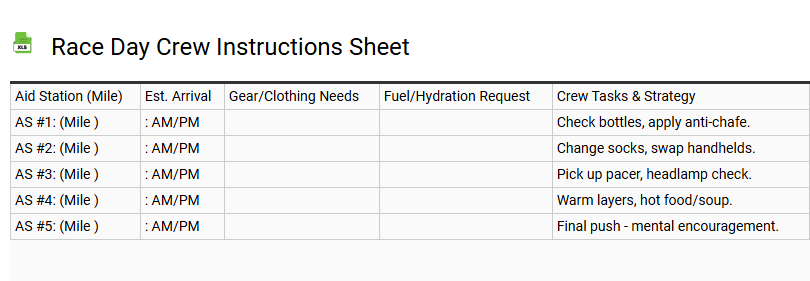
An effective race day crew instructions sheet serves as the definitive roadmap for athletic logistics and pit crew synchronization. This essential document outlines critical athlete support protocols, including precise fueling strategies, hydration schedules, and transition zone procedures. By detailing timing splits, pacing charts, and equipment checklists, the support team can anticipate needs before the competitor arrives.
Incorporate a clear communication plan and emergency contact list to ensure safety across the course. From finish line logistics to mechanical troubleshooting, well-structured directives minimize the margin for error during high-pressure events. Utilizing a comprehensive template optimizes performance by streamlining gear bag management and nutrition replenishment. Whether for a marathon, triathlon, or ultra-endurance race, providing your support squad with technical clarity allows the athlete to maintain focus on the competition and peak performance.
Interval and Speed Work Progression Log
💾 Interval and Speed Work Progression Log .xls
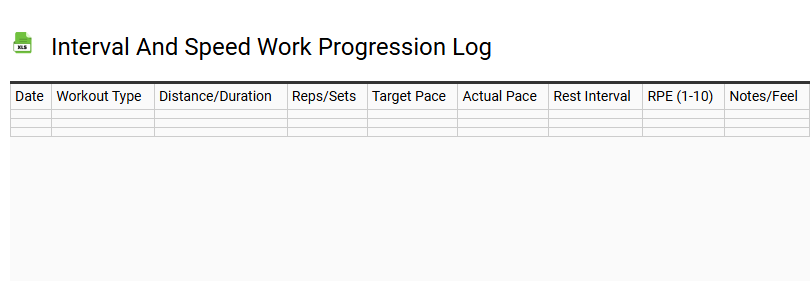
This Interval and Speed Work Progression Log serves as a high-performance framework for athletes and coaches aiming to optimize anaerobic threshold and VO2 max. By systematically documenting sprint repeats and recovery periods, runners can monitor pace intensity and running economy across a structured training cycle.
The template focuses on essential running data and performance metrics, including:
- Split times and lap consistency for precision speed development.
- Heart rate zones and cardiovascular endurance adaptations.
- High-intensity interval training (HIIT) volume to manage progressive overload.
Utilizing this log ensures a data-driven approach to athletic performance, allowing for real-time adjustments to workload ratios. Consistent tracking of these variables facilitates peaking for competition while effectively mitigating the risk of overtraining through detailed recovery monitoring.
This ultra marathon training journal provides a comprehensive framework for documenting critical endurance metrics and trail running progress. By meticulously logging daily mileage, vertical gain, and heart rate variability, athletes can fine-tune their peak performance. This template integrates essential sections for nutrition strategies, hydration tracking, and recovery analysis, fostering the mental grit needed for race day success. Consistent data entry helps mitigate injury risks while optimizing long-distance preparation. Utilize this structured log to transform your grueling miles into a strategic roadmap for the finish line.