
Vitamin D Titration Sheet: Template for Tracking and Adjusting Dosage
Achieving optimal serum levels requires precision and consistent monitoring. A professional Vitamin D Titration Sheet serves as an essential clinical tool for tracking cholecalciferol supplementation and adjusting dosages based on periodic lab results. By documenting baseline data and subsequent blood tests, users can effectively manage deficiency protocols while maintaining a safe therapeutic range. This structured approach simplifies the oversight of long-term bone health and immune function. Please explore our diverse collection of expertly designed Vitamin D titration templates below.
Daily Vitamin D Intake Log
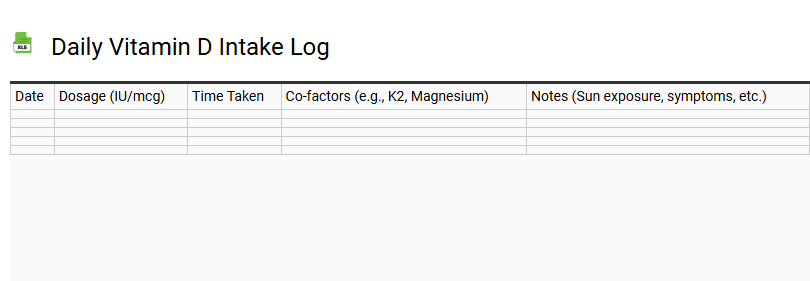
💾 Daily Vitamin D Intake Log .xls
Maintaining a daily Vitamin D intake log is a vital strategy for optimizing bone density and bolstering immune system function. This template allows users to systematically track their cholecalciferol (D3) or ergocalciferol (D2) consumption in International Units (IU). By recording dosage levels from dietary supplements, fortified foods, and UVB sun exposure, individuals can ensure they meet their Recommended Dietary Allowance (RDA).
- Dosage Tracking: Monitor daily micrograms or IU to prevent deficiency or toxicity.
- Absorption Factors: Note intake alongside healthy fats to enhance the bioavailability of this fat-soluble vitamin.
- Clinical Correlation: Provide accurate data for healthcare providers to evaluate serum 25-hydroxyvitamin D levels.
Consistent documentation helps manage calcium phosphorus balance and supports overall metabolic health. Using a structured log ensures precise monitoring of supplementation habits, helping to maintain peak physiological wellness throughout the seasons.
Vitamin D3 and K2 Synergy Tracker
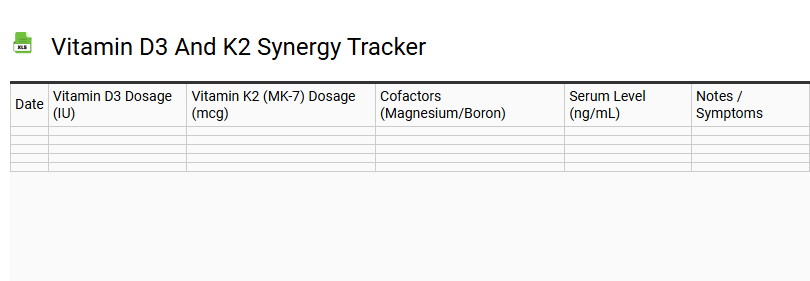
💾 Vitamin D3 and K2 Synergy Tracker .xls
A Vitamin D3 and K2 Synergy Tracker is a vital tool for optimizing bone health and cardiovascular wellness. This specialized log monitors the critical interplay between cholecalciferol (D3) and menaquinone-7 (MK-7). While Vitamin D3 significantly enhances calcium absorption, Vitamin K2 ensures that this calcium is directed into the bone matrix rather than accumulating in the arteries, effectively preventing arterial calcification.
By utilizing this template, users can document daily supplementation dosages, record serum 25(OH)D levels, and observe trends in bone mineral density. Tracking these fat-soluble vitamins together ensures maximum bioavailability and physiological harmony. Maintaining a precise digital record assists in fine-tuning your nutritional regimen to achieve peak immune support and metabolic function while avoiding common mineral imbalances associated with isolated high-dose supplementation.
Serum Level Progress Chart
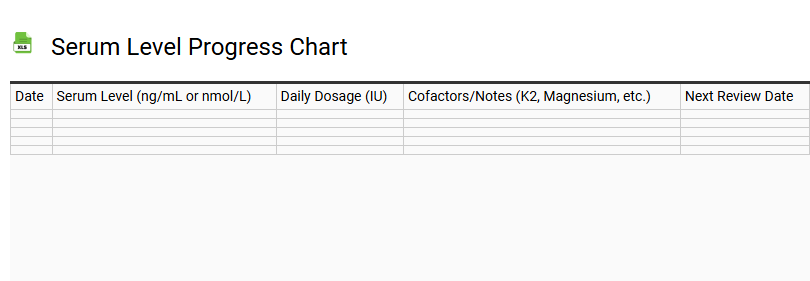
💾 Serum Level Progress Chart .xls
This serum level progress chart template is a specialized tool designed for systematic therapeutic drug monitoring and clinical health tracking. It allows healthcare practitioners to document fluctuations in blood concentration, ensuring that medication levels remain within the established therapeutic range for maximum efficacy.
By recording peak and trough levels alongside specific laboratory results, users can visualize pharmacokinetic trends over time. This data is critical for making informed dosage adjustments and identifying potential toxicity or sub-therapeutic dosing patterns.
- Facilitates precise bio-marker tracking and patient data visualization.
- Monitors metabolic clearance and drug bioavailability.
- Supports long-term health monitoring for chronic condition management.
Implementing this structured clinical log enhances patient safety and provides a clear trend analysis of physiological responses to ongoing medical treatments.
Vitamin D Loading Dose Calculator
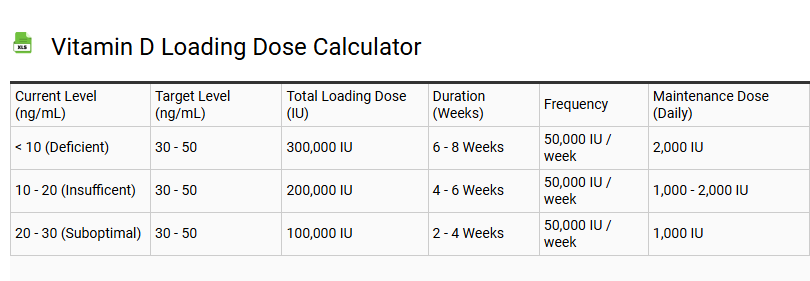
💾 Vitamin D Loading Dose Calculator .xls
A Vitamin D loading dose calculator is a precise clinical tool designed to rectify cholecalciferol deficiency by determining the total intake required to achieve optimal serum 25-hydroxyvitamin D [25(OH)D] concentrations. By analyzing baseline levels and factoring in body weight or BMI, the algorithm calculates the cumulative IU (International Units) necessary for rapid restoration.
This high-dose supplementation protocol is essential for patients with severe insufficiency, facilitating a quick transition to a long-term maintenance dose. Utilizing evidence-based formulas accounts for bioavailability and adipose tissue sequestration, ensuring safe and effective nutritional therapy. Regular monitoring of circulating levels through this personalized approach supports bone mineral density, immune system regulation, and calcium homeostasis, effectively bridging the gap between clinical deficiency and physiological wellness without the risk of toxicity.
Weekly Titration Schedule
💾 Weekly Titration Schedule .xls
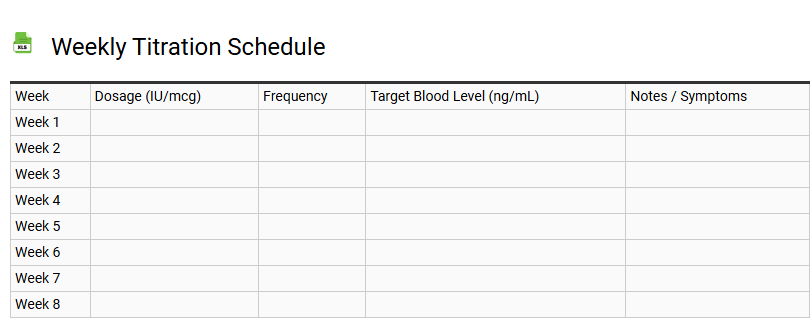
A Weekly Titration Schedule serves as a critical blueprint for managing complex medication regimens. This structured template facilitates precise dosage adjustments, allowing for a gradual dose escalation or tapering process to reach the optimal therapeutic range. By documenting incremental steps, patients and healthcare providers can closely monitor pharmacological efficacy while mitigating potential adverse effects.
Utilizing a standardized log improves patient compliance and ensures safety protocols are strictly followed during step-up protocols. Effective templates often incorporate:
- Specific milligram strength and daily frequency.
- Detailed symptom tracking for clinical review.
- Professional prescription oversight to prevent toxicity.
This medication management tool is indispensable for chronic conditions requiring careful titration cycles, ensuring every dosage modification is data-driven and medically sound for long-term health stabilization and pharmaceutical safety.
Vitamin D and Magnesium Cofactor Log
💾 Vitamin D and Magnesium Cofactor Log .xls
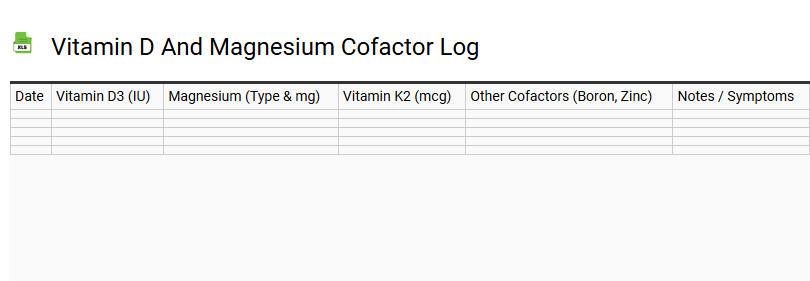
A Vitamin D and Magnesium Cofactor Log is a vital tool for managing the intricate biochemical synergy between these essential nutrients. Magnesium serves as a critical enzymatic cofactor, necessary for converting cholecalciferol into its active hormonal form. Without sufficient magnesium, Vitamin D3 supplementation may remain stored and inactive, potentially leading to suboptimal serum levels or vascular calcification.
Utilizing a tracking template enhances bioavailability and ensures safe metabolic pathways. By documenting daily dosages, calcium regulation, and Vitamin K2 intake, users can optimize bone mineral density and prevent toxicity. This structured record allows for precise adjustments to supplementation protocols based on biochemical markers, ensuring effective nutrient absorption. Maintaining a log facilitates data-driven discussions with healthcare providers regarding micronutrient interactions and long-term systemic wellness.
Seasonal Dosage Adjustment Planner
💾 Seasonal Dosage Adjustment Planner .xls
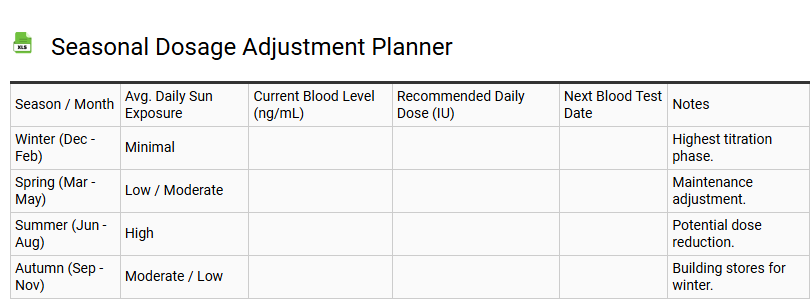
The Seasonal Dosage Adjustment Planner provides a structured framework for managing medication or supplement variations throughout the year. It is designed to track how environmental shifts-such as changes in sunlight, temperature, or allergen levels-impact personal health requirements.
This template simplifies the process of recording:
- Current intake levels across different periods.
- Scheduled modifications aligned with seasonal transitions.
- Observations of physical and mental well-being during changes.
- Professional guidance and consultation notes.
By utilizing this organized approach, users can maintain physiological balance and ensure their health regimen remains responsive to external conditions. This tool bridges the gap between static prescriptions and the dynamic needs of the human body, fostering a more proactive and personalized approach to long-term wellness and stability.
Vitamin D Blood Test Results Tracker
💾 Vitamin D Blood Test Results Tracker .xls
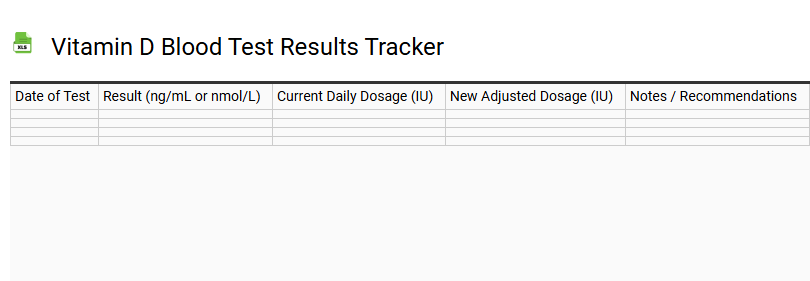
A Vitamin D blood test results tracker serves as a vital diagnostic log for monitoring 25-hydroxyvitamin D serum levels over time. By documenting calcidiol concentrations, users can accurately observe trends relative to the clinical reference range, ensuring metabolic health and robust immune system support.
This template facilitates precise data entry for measurements in both ng/mL and nmol/L, highlighting statuses ranging from deficiency to potential toxicity. Consistent tracking is essential for evaluating the efficacy of supplementation strategies and managing calcium absorption for long-term bone health.
By correlating biomarker data with seasonal variations and lifestyle adjustments, individuals can bridge the gap between laboratory diagnostics and proactive wellness. Utilizing this structured format allows for informed discussions with healthcare providers regarding hormone precursor optimization and overall physiological vitality.
Maintenance Dose Stability Sheet
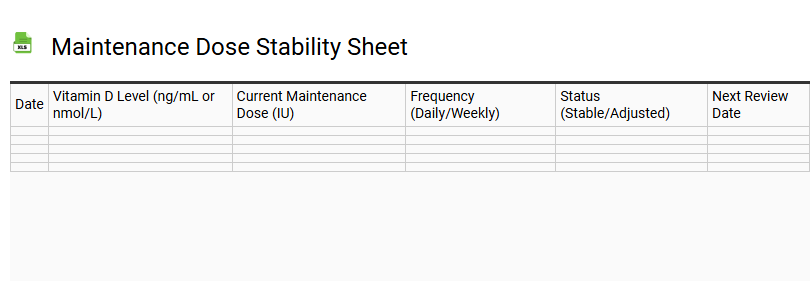
💾 Maintenance Dose Stability Sheet .xls
A maintenance dose stability sheet is a vital component of professional medication management, ensuring that long-term therapy remains effective. This structured template tracks the pharmacological integrity and potency of a dosage regimen over time. By documenting steady-state levels, healthcare providers can monitor the therapeutic range and minimize risks to patient safety.
Key elements of this clinical documentation include:
- Verification of drug concentration and shelf-life benchmarks.
- Monitoring storage conditions to prevent chemical degradation.
- Recording pharmacokinetic observations for pharmaceutical stability.
Utilizing a standardized protocol for dose titration and stability tracking ensures consistent bioavailability. This data-driven approach allows for precise adjustments in chronic care, maintaining the efficacy of active pharmaceutical ingredients while adhering to strict regulatory compliance standards for patient outcomes.
Sunlight Exposure and Supplementation Log
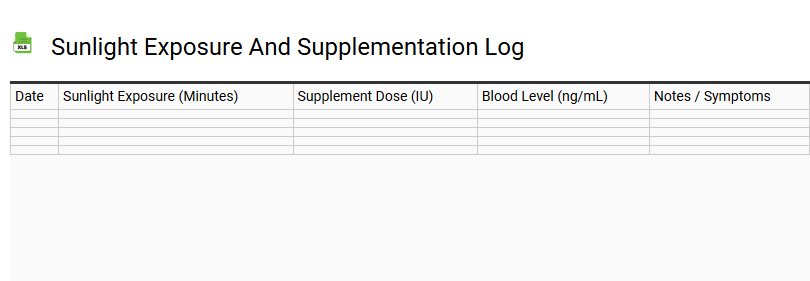
💾 Sunlight Exposure and Supplementation Log .xls
Maintaining a comprehensive sunlight exposure and supplementation log is vital for optimizing vitamin D synthesis and regulating the circadian rhythm. This template tracks daily variables such as the UV index, duration of direct dermal contact, and timing relative to solar noon to ensure efficient cholecalciferol production. By recording supplemental dosage-including vitamin D3, magnesium cofactors, and vitamin K2-users can monitor serum levels and prevent deficiency.
Documenting these metrics supports bone density, immune function, and mood stability, particularly during periods of low UVB radiation. This structured approach allows for precise adjustments to dietary intake and phototherapy routines, providing actionable data for metabolic health. Integrating skin type observations and outdoor activity logs ensures a balanced strategy for achieving hormonal homeostasis and long-term wellness through informed, data-driven habits.
Vitamin D Deficiency Recovery Monitor
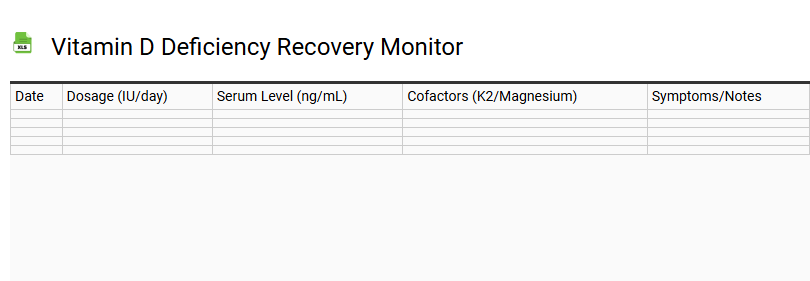
💾 Vitamin D Deficiency Recovery Monitor .xls
Efficiently managing vitamin D deficiency recovery requires precise tracking of serum 25-hydroxyvitamin D levels. This monitor facilitates the transition from clinical insufficiency to an optimal therapeutic range by logging daily cholecalciferol supplementation dosages and dietary intake. By observing the correlation between bioavailability and consistent sun exposure, users can better understand their unique metabolic response.
- Track calcidiol concentrations to ensure skeletal health and immune regulation.
- Monitor symptoms of malabsorption or secondary hyperparathyroidism.
- Optimize calcium absorption through synergistic nutrient tracking.
Using a structured template ensures that serum levels remain within a safe window, preventing toxicity while addressing chronic fatigue, bone density loss, and mood fluctuations. Consistent data entry helps healthcare providers adjust oral doses based on real-time biological feedback and lifestyle factors influencing vitamin D synthesis.
IU to mcg Conversion and Dosage Tracker
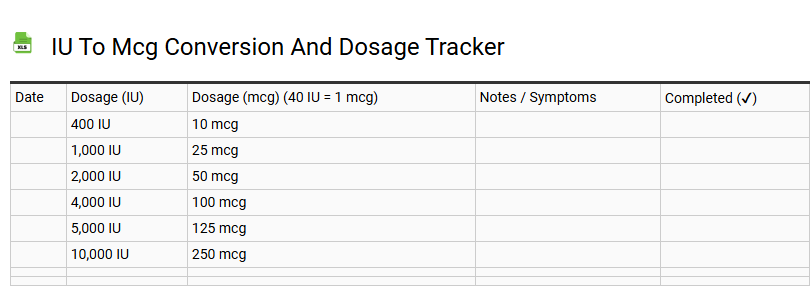
💾 IU to mcg Conversion and Dosage Tracker .xls
Accurately managing nutrient levels requires a reliable IU to mcg conversion framework. While International Units (IU) measure the biological activity of a substance, micrograms (mcg) provide a precise mass measurement essential for modern dosage tracking. This template facilitates seamless calculations for fat-soluble supplements like Vitamin D3 (cholecalciferol) and Vitamin A (retinol), where conversion factors vary based on specific potency and bioavailability.
Utilizing a structured dosage tracker ensures your daily intake adheres to Recommended Dietary Allowances (RDA) and safety thresholds. Key benefits of this measurement tool include:
- Precise unit conversion for various nutritional supplements.
- A detailed log for monitoring cumulative supplement potency.
- Reference guides for adjusting biological activity per milligram.
Maintaining a standardized log prevents accidental toxicity and supports long-term nutritional health through rigorous measurement protocols and streamlined data entry.
Long-term Vitamin D Trend Analysis
💾 Long-term Vitamin D Trend Analysis .xls
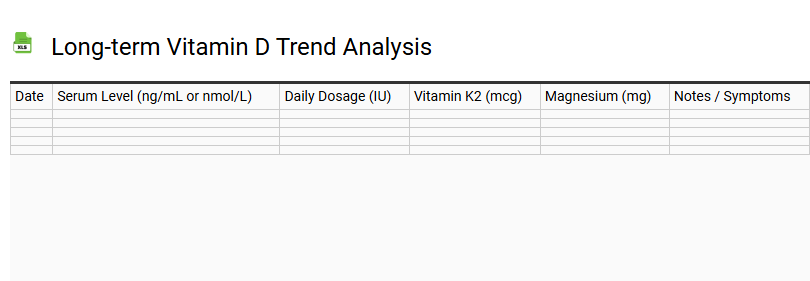
This specialized template for Long-term Vitamin D Trend Analysis facilitates the systematic tracking of 25-hydroxyvitamin D serum concentrations over extended periods. By documenting longitudinal data, users can identify seasonal variations and evaluate the physiological efficacy of cholecalciferol supplementation. Monitoring calcifediol levels is vital for maintaining bone mineral density and supporting immune system homeostasis.
- Baseline Serum Levels: Documenting initial laboratory results to establish a clinical starting point.
- Temporal Patterns: Analyzing fluctuations correlated with UVB exposure and lifestyle changes.
- Metabolic Responses: Assessing how dietary intake and bioavailable nutrients influence total serum hydroxyvitamin D.
- Risk Mitigation: Identifying early indicators of hypovitaminosis D or secondary hyperparathyroidism.
Utilizing this analytical framework ensures precise visualization of biological markers, helping clinicians adjust dosages based on calcium absorption requirements and chronic deficiency prevention strategies.
Monthly Supplement Compliance Checklist
💾 Monthly Supplement Compliance Checklist .xls
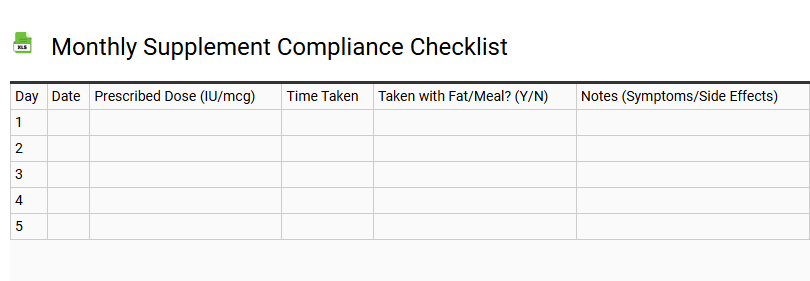
A monthly supplement compliance checklist is a vital tool for maintaining rigorous quality control and GMP (Good Manufacturing Practices) standards. This structured template facilitates adherence to FDA regulations, ensuring that inventory management and storage conditions remain optimal. By systematically tracking batch records, expiration dates, and shelf life, manufacturers can guarantee product potency and safety. The checklist emphasizes ingredient transparency and accurate labeling requirements, which are crucial for consumer trust. Implementing these safety protocols creates a reliable audit trail, streamlining the regulatory compliance process. Regular documentation of dosage accuracy and purity testing minimizes risks of contamination and non-compliance. Ultimately, this monthly review serves as a proactive measure to uphold industry integrity while optimizing supply chain efficiency and production standards.
Vitamin D Toxicity Safety Monitor
💾 Vitamin D Toxicity Safety Monitor .xls
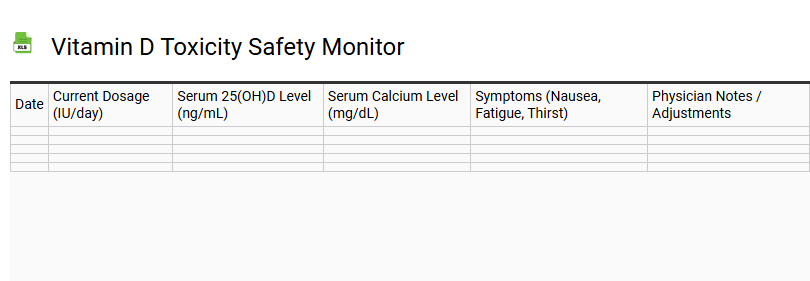
Effective management of serum 25-hydroxyvitamin D levels is essential to prevent hypervitaminosis D. This safety monitor template tracks daily cholecalciferol intake and cumulative blood concentration to ensure patients remain below the toxicity threshold. Excessive calcium absorption triggered by megadoses can lead to hypercalcemia, potentially compromising kidney function and cardiovascular health.
By documenting clinical symptoms such as nausea or fatigue alongside laboratory data, this monitoring protocol identifies early signs of vitamin D accumulation. Maintaining an optimal range requires consistent screening to balance bone health benefits against adverse effects. Utilizing a structured tracking system allows for precise adjustments to supplement dosage based on individual metabolic responses, ensuring long-term skeletal integrity while avoiding dangerous systemic toxicity.
A Vitamin D titration sheet serves as a vital clinical tool for managing serum 25-hydroxyvitamin D levels. This template facilitates precise dosage adjustment based on individual lab results, ensuring patients reach optimal therapeutic ranges while preventing cholecalciferol toxicity. By utilizing a structured monitoring log, healthcare providers can streamline the transition from loading doses to a sustainable maintenance dose. Implementing this supplementation protocol empowers individuals to track their progress accurately, fostering long-term bone health and immune resilience through personalized nutritional interventions.