
Weight Loss Calorie Deficit Log Template for Tracking Daily Progress
Achieving sustainable weight loss requires a precise calorie deficit log to monitor the balance between daily caloric intake and energy expenditure. Utilizing a structured tracking template empowers you to visualize your metabolic data, ensuring consistent progress toward your fitness goals. By documenting nutritional habits and physical activity, you create a data-driven roadmap for long-term health optimization and weight management success. Please review our diverse selection of professionally designed variation of templates below.
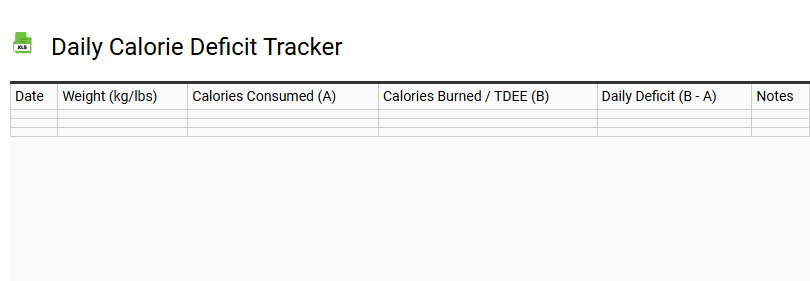
Daily Calorie Deficit Tracker
💾 Daily Calorie Deficit Tracker .xls
Optimizing your weight loss journey requires a precise Daily Calorie Deficit Tracker to manage energy balance. This template facilitates monitoring your Total Daily Energy Expenditure (TDEE) against actual caloric intake to ensure a sustainable deficit for fat loss.
Key components of an effective tracking system include:
- Basal Metabolic Rate (BMR) estimation for baseline energy needs.
- Detailed macronutrient tracking (proteins, fats, and carbohydrates).
- Logging physical activity to calculate net calories accurately.
- Weekly progress reviews to adjust nutritional targets and metabolic health.
By maintaining a consistent record of food consumption and exercise, users can achieve their fitness goals more efficiently. Using a structured template promotes accountability and provides data-driven insights into your body's response to different caloric thresholds, ensuring long-term success in weight management and body composition goals.
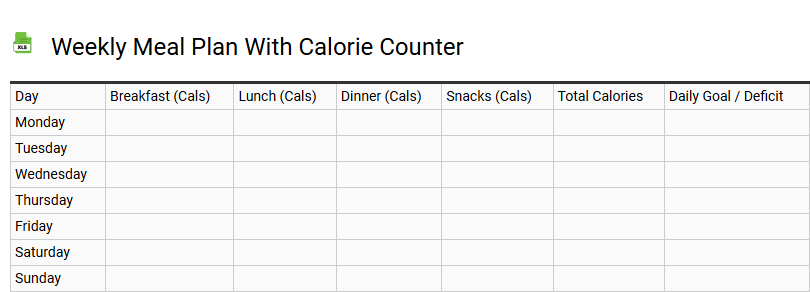
Weekly Meal Plan with Calorie Counter
💾 Weekly Meal Plan with Calorie Counter .xls
Utilizing a weekly meal plan with a calorie counter is a strategic approach to achieving sustainable weight management and balanced nutrition. This template functions as a comprehensive food diary, allowing users to monitor macronutrients and total daily intake with precision. By integrating portion control into your meal prep routine, you can align healthy recipes with specific metabolic rate requirements.
- Track nutritional data for every breakfast, lunch, and dinner.
- Monitor carbohydrates, proteins, and fats to reach dietary goals.
- Simplify grocery shopping while maintaining a consistent fitness journey.
This structured nutritional tracking tool ensures that every snack and meal supports your energy expenditure, making intentional eating effortless and measurable for long-term health success and metabolic efficiency.
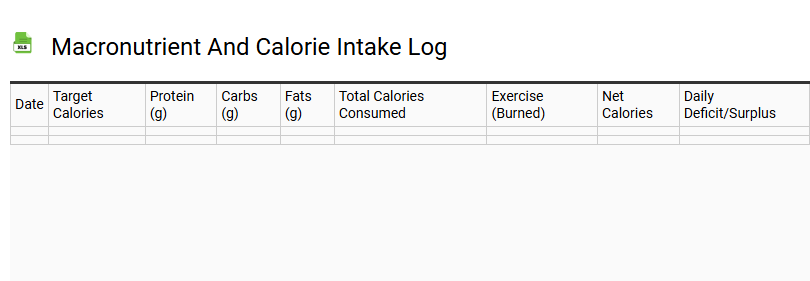
Macronutrient and Calorie Intake Log
💾 Macronutrient and Calorie Intake Log .xls
Utilizing a comprehensive macronutrient and calorie intake log is a foundational strategy for optimizing body composition and metabolic health. This nutritional tracking template facilitates the precise monitoring of proteins, carbohydrates, and dietary fats, ensuring users maintain an ideal energy balance. Whether targeting a caloric deficit for fat loss or a caloric surplus for hypertrophy, consistent food logging provides quantitative data on daily energy expenditure.
By documenting nutrient density and portion sizes, individuals can fine-tune their dietary intake to match specific fitness goals. This food diary approach eliminates guesswork, allowing for better management of basal metabolic rate and long-term wellness. Integrating this digital log into your routine enhances nutritional awareness and supports sustainable weight management through disciplined data collection of all macro-nutritional variables.
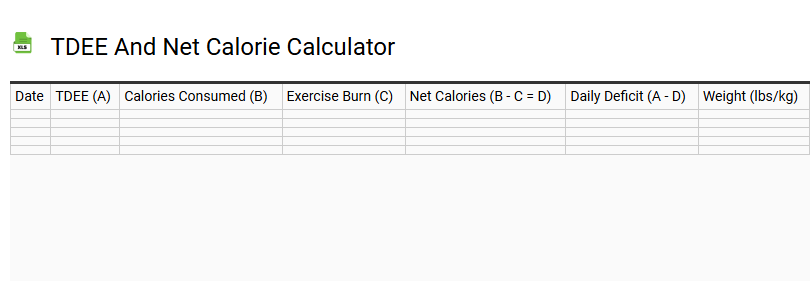
TDEE and Net Calorie Calculator
💾 TDEE and Net Calorie Calculator .xls
This Total Daily Energy Expenditure (TDEE) and Net Calorie Calculator is a vital tool for mastering your metabolism and achieving weight management goals. By evaluating your Basal Metabolic Rate (BMR) alongside your physical activity level (PAL), this resource identifies your exact maintenance calories.
Whether you are targeting a calorie deficit for sustainable fat loss or a calorie surplus for muscle hypertrophy, understanding your energy balance is essential. The calculator accounts for the thermic effect of food (TEF) and daily movement to provide a precise estimate of daily caloric needs. Use these data-driven insights to refine your macronutrient distribution and optimize body composition. This approach ensures your nutritional planning aligns with your fitness tracking, fostering long-term health and metabolic efficiency through accurate energy expenditure monitoring.
Food Diary with Caloric Deficit Summary
💾 Food Diary with Caloric Deficit Summary .xls
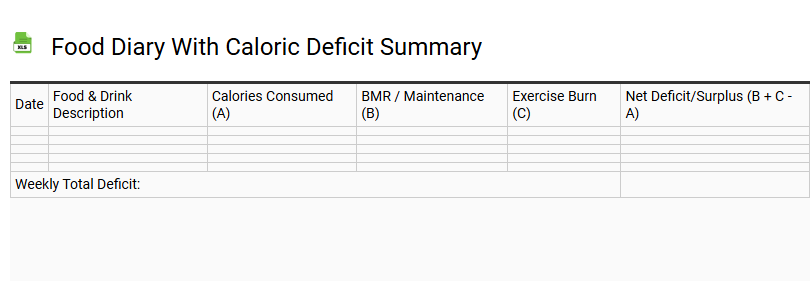
This streamlined food diary template facilitates precise nutritional tracking and energy balance management. By maintaining a daily food log, users can monitor calorie counting efforts alongside a detailed macronutrient breakdown. The layout emphasizes the caloric deficit, a critical metric for achieving weight loss goals and optimizing metabolic rate. Documenting dietary habits allows for a clear comparison between total daily energy expenditure and caloric intake. This summary tool serves as a comprehensive weight management resource, integrating portion control and nutrient density analysis. Consistent data entry highlights the gap between basal metabolic rate and consumed fuel, ensuring a sustainable energy deficit. Use this structured approach to refine your wellness journey, improve metabolic health, and foster mindful eating practices through actionable biometric data and quantitative dietary assessment for long-term success.
Exercise and Calorie Burn Log
💾 Exercise and Calorie Burn Log .xls
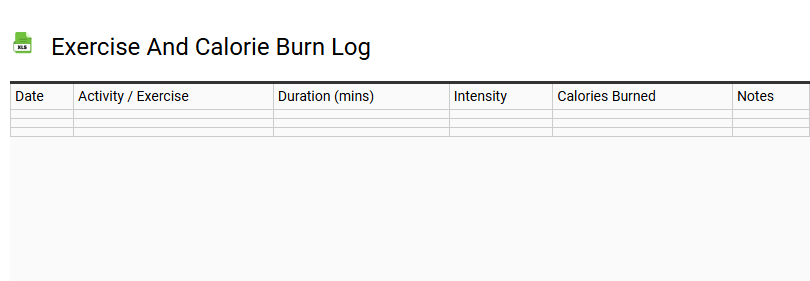
Utilizing a comprehensive exercise and calorie burn log is vital for optimizing your fitness tracker data and achieving long-term health goals. This template serves as a detailed workout journal, allowing you to document physical activity, exercise duration, and intensity levels across various modalities like cardio and strength training. By recording specific metrics, you can more accurately estimate energy expenditure and monitor your metabolic rate for better weight management.
Tracking your heart rate zones and active calories burned provides the necessary insights to adjust your fitness routine for peak performance. A structured log enhances accountability and facilitates progress tracking, making it easier to visualize improvements in endurance and physical conditioning. Integrating this data-driven approach into your daily habit ensures that every session contributes effectively to your total daily energy expenditure and overall wellness journey.
Intermittent Fasting Calorie Tracker
💾 Intermittent Fasting Calorie Tracker .xls
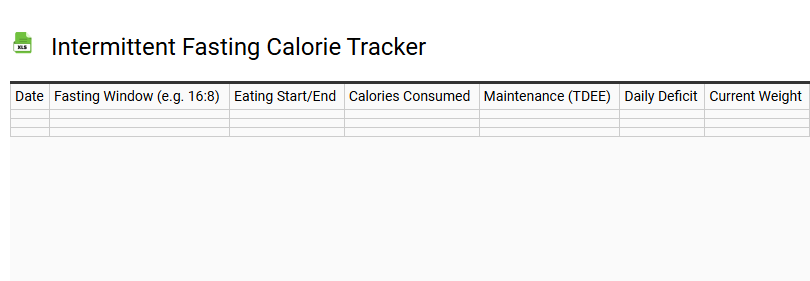
This tracking interface provides a streamlined way to monitor nutritional intake and fasting durations simultaneously. By documenting daily food consumption alongside specific time windows, users maintain a clear overview of their energy balance and metabolic rest periods. The layout prioritizes precise data entry for meals, ensuring total caloric totals remain within target parameters for weight management or muscle retention.
Visualizing progress through these integrated logs allows for quick adjustments to feeding schedules. Each section focuses on data accuracy, helping individuals transition between eating and fasting states effectively. Whether following a 16:8 protocol or a one-meal-a-day approach, this digital tool acts as a central hub for health metrics. Efficiently organizing macronutrients and hydration levels helps optimize the physiological benefits of time-restricted feeding while encouraging long-term consistency and sustainable lifestyle habits.
Recipe Calorie and Macronutrient Log
💾 Recipe Calorie and Macronutrient Log .xls
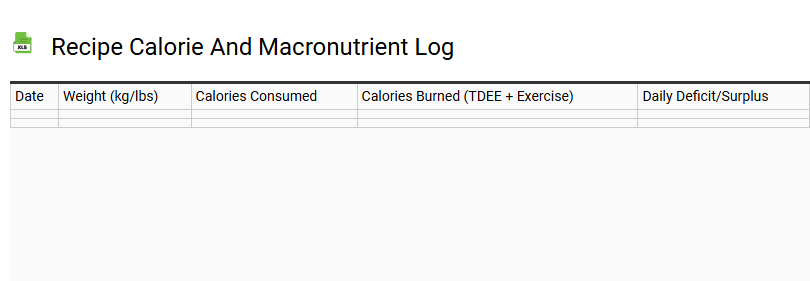
Optimizing your dietary intake begins with a structured Recipe Calorie and Macronutrient Log. This essential food diary provides a systematic way to track nutritional data, ensuring precision in caloric density and portion control. By documenting specific serving sizes and the distribution of proteins, carbohydrates, and fats, users can maintain a perfect energy balance tailored to their fitness goals.
This nutritional tracking tool simplifies meal planning and enhances metabolic health through consistent data entry. Whether managing weight loss, muscle gain, or macronutrient ratios for specific diets, this template offers the clarity needed for informed eating habits. Integrating micronutrient density monitoring into your daily routine fosters long-term accountability, making it easier to achieve balanced nutrition and sustainable wellness results.
Monthly Weight Loss Progress Chart
💾 Monthly Weight Loss Progress Chart .xls
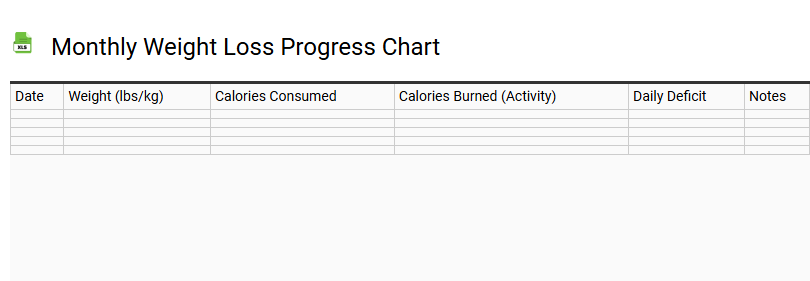
Utilizing a monthly weight loss progress chart serves as a vital instrument for precise fitness tracking and long-term weight management. This structured measurement log enables users to visualize their health journey, monitoring critical data points such as body mass index (BMI) and body composition changes.
By documenting consistent caloric deficit efforts, the template highlights metabolic trends and milestone tracking. Key benefits of this data visualization approach include:
- Enhanced accountability for daily nutritional and exercise choices.
- Clear insights into metabolism fluctuations and plateaus.
- Simplified goal setting based on empirical performance evidence.
Integrating this tool into your routine ensures that every fitness milestone is recorded, fostering motivation through tangible visual progress. This systematic strategy transforms raw data into a comprehensive roadmap for achieving sustainable wellness objectives and improved physical health.
Grocery List with Calorie Estimates
💾 Grocery List with Calorie Estimates .xls
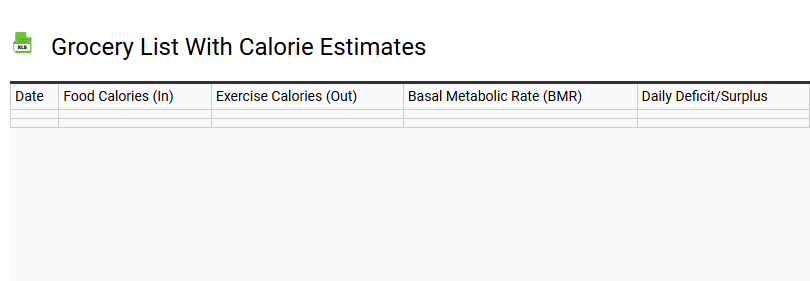
Organizing a grocery list with calorie estimates is an essential strategy for successful meal planning and weight management. This template serves as a comprehensive tool for nutrition tracking, allowing you to monitor energy density before items even reach your pantry. By documenting the approximate caloric content of various food groups-such as lean proteins, whole grains, and fresh produce-you gain better portion control and insight into your daily caloric intake.
Integrating macronutrient data into your shopping routine helps prioritize nutrient-dense options over processed snacks. This proactive approach to healthy shopping minimizes impulse buys and ensures your kitchen is stocked with essentials that align with your dietary goals. Whether focusing on calorie counting for weight loss or ensuring adequate fueling for fitness, a structured list simplifies metabolic health management and supports a balanced lifestyle.
Meal Prep Calorie Breakdown Sheet
💾 Meal Prep Calorie Breakdown Sheet .xls
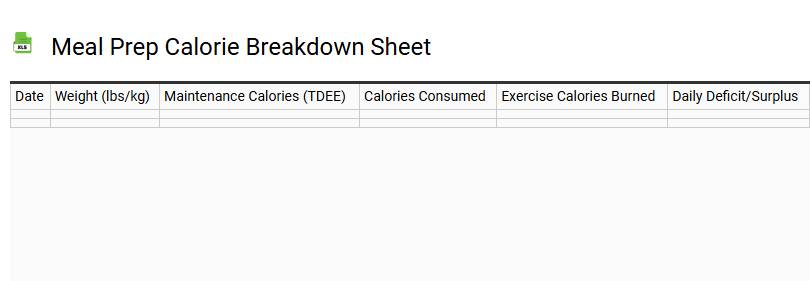
A comprehensive meal prep calorie breakdown sheet serves as a vital instrument for precise nutrition management and portion control. By utilizing this structured food tracking template, individuals can accurately monitor their daily caloric intake while balancing essential macronutrients, including proteins, healthy fats, and carbohydrates. This systematic approach to meal planning ensures that every serving size aligns with specific dietary goals and weight management objectives.
- Detailed nutritional data for individual ingredients.
- Calculations for total energy density per container.
- Consistent food logging for accountability.
- Optimized batch cooking workflows.
Implementing this nutritional strategy simplifies the preparation process, providing the data-driven insights necessary for long-term health optimization. Whether tracking for performance or wellness, a well-organized calorie spreadsheet fosters sustainable eating habits and metabolic consistency.
Healthy Habit and Calorie Deficit Checklist
💾 Healthy Habit and Calorie Deficit Checklist .xls
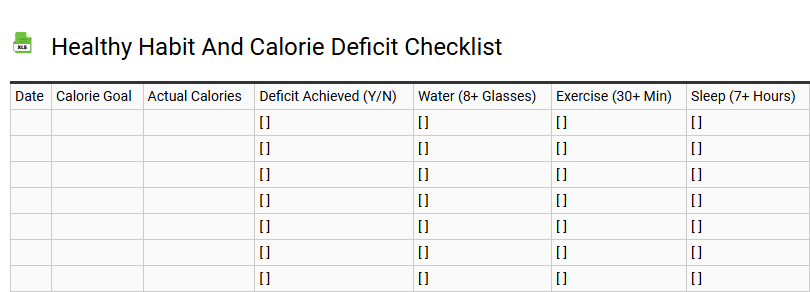
This comprehensive template streamlines weight management by integrating core principles of energy balance and nutritional consistency. Achieving a sustainable calorie deficit requires precise tracking of daily caloric intake against total energy expenditure. This checklist allows users to monitor macronutrient distribution, ensuring adequate protein for muscle preservation while balancing healthy fats and complex carbohydrates.
Beyond simple math, the framework emphasizes metabolic health through hydration, sleep hygiene, and consistent physical activity. By documenting daily routines, individuals cultivate mindful eating habits and long-term behavioral changes. This structured approach simplifies meal planning and portion control, which are essential for reaching long-term fitness goals. Utilizing this tracker provides a visual roadmap for fat loss and improved vitality, bridging the gap between nutritional intent and actionable healthy habits through evidence-based progress monitoring.
Utilizing a structured template for a weight loss calorie deficit log is vital for monitoring energy balance and achieving sustainable results. By documenting daily caloric intake alongside physical expenditure, individuals can accurately manage their metabolic rate. This tracking tool facilitates precise adjustments to macronutrient distribution, ensuring consistent progress toward fitness goals. Whether you prefer a digital spreadsheet or a handwritten journal, maintaining a detailed record fosters accountability. Efficiently logging your journey simplifies weight management, providing the necessary data to optimize your health transformation effectively.