
Workout Split Optimization Sheet Template: Design and Implementation
Achieving peak physical performance requires more than effort; it demands a strategic workout split optimization sheet. This essential tool helps balance training intensity with muscle recovery, ensuring your weekly volume and frequency align with hypertrophy goals. By refining exercise selection and implementing progressive overload, you can create a sustainable fitness programming blueprint that prevents plateaus and maximizes gains. Please review our diverse range of professionally designed template variations below.
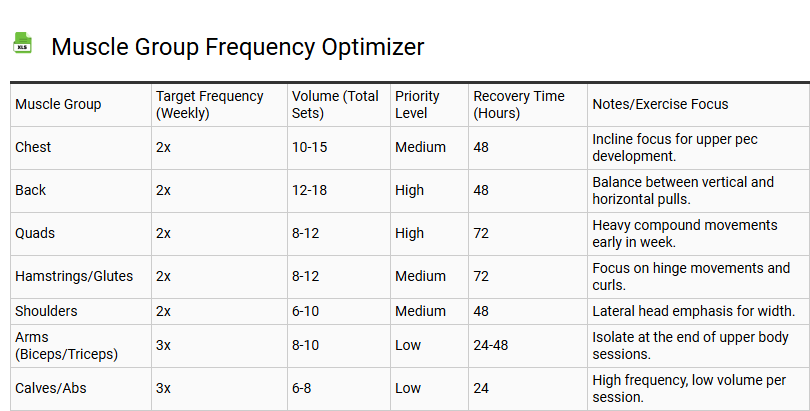
Muscle Group Frequency Optimizer
💾 Muscle Group Frequency Optimizer .xls
This Muscle Group Frequency Optimizer serves as a strategic framework designed to maximize hypertrophy by balancing weekly volume with individual recovery cycles. By calculating the optimal muscle protein synthesis window, this tool helps athletes refine their training frequency to maintain an elevated anabolic state. It evaluates the stimulus-to-fatigue ratio, ensuring that muscle fiber recruitment is prioritized while preventing systemic fatigue and overtraining.
The template facilitates a data-driven approach to split routines, whether utilizing undulating periodization or traditional high-frequency programming. By aligning mechanical tension and metabolic stress with physiological adaptation rates, users can optimize their anabolic window. This optimization ensures that each muscle group receives sufficient overload while respecting localized tissue repair, leading to consistent strength gains, improved body composition, and superior volume load management across the entire microcycle.
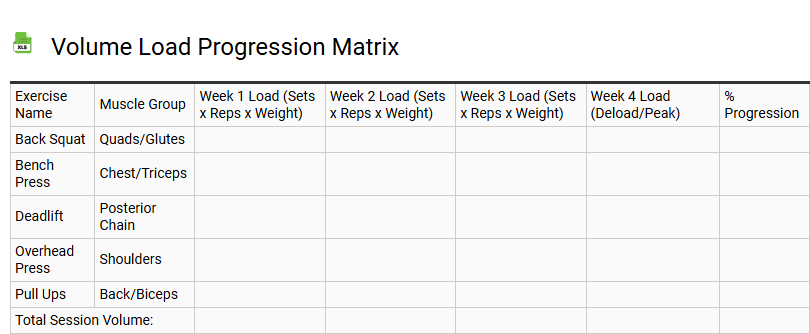
Volume Load Progression Matrix
💾 Volume Load Progression Matrix .xls
A Volume Load Progression Matrix serves as a sophisticated tracking framework for monitoring progressive overload through the calculation of total tonnage (sets × reps × weight). This template is essential for optimizing muscle hypertrophy and strength gains by visualizing workload capacity across specific microcycles and mesocycles.
By documenting baseline metrics, athletes can systematically adjust training intensity and frequency to ensure consistent physiological adaptation. The matrix facilitates structured periodization, allowing for precise volume load manipulation while integrating RPE (Rate of Perceived Exertion) to gauge recovery needs. Utilizing this data-driven approach helps prevent performance plateaus and manages mechanical tension effectively. Implementing this matrix ensures that every resistance training session aligns with long-term hypertrophy goals and metabolic stress targets, providing a clear roadmap for sustainable athletic development and incremental performance improvements.
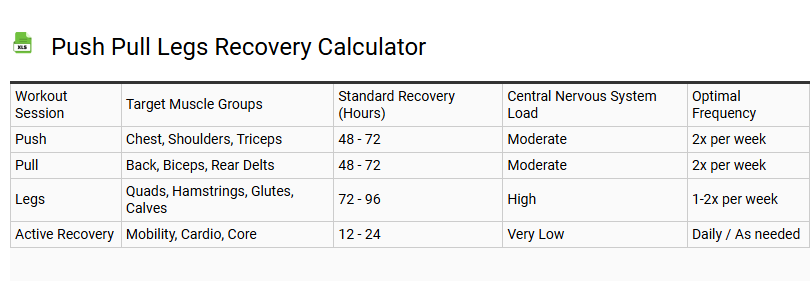
Push Pull Legs Recovery Calculator
💾 Push Pull Legs Recovery Calculator .xls
This Push Pull Legs Recovery Calculator optimizes your training frequency by analyzing muscle protein synthesis windows and systemic fatigue. By evaluating your total training volume, intensity, and sleep quality, this tool determines if your bodybuilding split allows for sufficient cellular repair. Effective hypertrophy requires balancing high-intensity resistance sessions with strategic rest days to prevent overtraining and adrenal burnout.
The algorithm incorporates metrics for CNS recovery and delayed onset muscle soreness (DOMS) to suggest the ideal interval between sessions. Whether you utilize a high-frequency six-day rotation or a classic three-day schedule, managing progressive overload through data-driven recovery ensures consistent strength gains. Use this template to track volume load, monitor fatigue accumulation, and identify when a deload week is essential for peak performance and long-term muscular endurance.
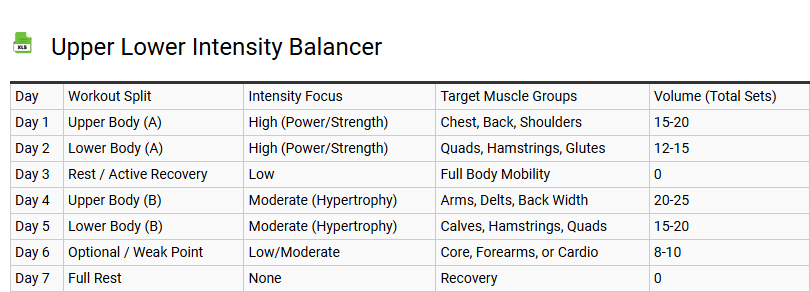
Upper Lower Intensity Balancer
💾 Upper Lower Intensity Balancer .xls
The Upper Lower Intensity Balancer is a sophisticated training framework designed to optimize hypertrophy and neuromuscular recovery. This template systematically partitions compound movements and isolation exercises across the kinetic chain, ensuring muscle protein synthesis remains elevated throughout the week. By utilizing periodization techniques, the balancer manages central nervous system (CNS) fatigue while maximizing mechanical tension.
Key features of this programming include:
- Volume Management: Precise tracking of sets and reps to prevent overtraining.
- Intensity Distribution: Strategic use of RPE (Rate of Perceived Exertion) to balance heavy loads with metabolic stress.
- Progressive Overload: Ensuring consistent strength gains through structured microcycles.
- Systemic Recovery: Allowing adequate rest intervals for physiological adaptation.
This split routine facilitates a balanced workload between upper body push-pull dynamics and lower body posterior chain engagement, promoting long-term functional hypertrophy and sustainable athletic performance.
Hypertrophy Periodization Planner
💾 Hypertrophy Periodization Planner .xls
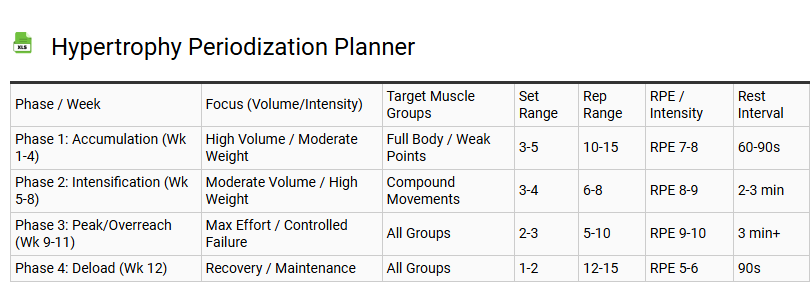
A comprehensive hypertrophy periodization planner serves as a strategic framework for maximizing muscle growth through structured mesocycles. This template facilitates systematic progressive overload, ensuring consistent volume accumulation while effectively managing neuromuscular fatigue. By strategically manipulating training intensity and rep ranges, athletes can optimize mechanical tension and metabolic stress, the primary drivers of muscle protein synthesis.
The layout integrates dedicated deload weeks to prevent overtraining and promote physiological recovery. Users can monitor training frequency across distinct microcycles, focusing on hypertrophy-specific stimuli. This data-driven approach balances structural integrity with evidence-based programming, allowing for precise adjustments in exercise selection and rest intervals. Implementing this framework ensures a sustainable path toward sarcoplasmic hypertrophy and myofibrillar gains within a professional strength training or bodybuilding context.
Strength vs Volume Distribution Sheet
💾 Strength vs Volume Distribution Sheet .xls
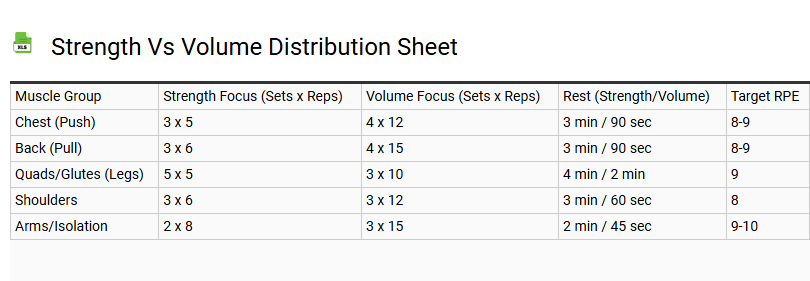
A Strength vs. Volume Distribution Sheet serves as a fundamental framework for precise periodization and workload management. This analytical tool enables athletes to balance training intensity with total tonnage, ensuring a seamless transition between hypertrophy and peak power phases. By visualizing the inverse relationship between rep ranges and 1RM percentages, coaches can optimize mesocycle planning and mitigate systemic fatigue.
Utilizing this template facilitates data-driven decisions regarding:
- Volume accumulation for muscle cross-sectional area growth.
- Intensity distribution to enhance neuromuscular adaptation.
- RPE tracking for auto-regulation and recovery monitoring.
- Strategic deloading protocols to prevent overtraining.
Integrating these metrics within a training log empowers lifters to master progressive overload while maintaining structural integrity across diverse macrocycles, ultimately maximizing performance outcomes while minimizing injury risks.
Weekly Training Load Heatmap
💾 Weekly Training Load Heatmap .xls
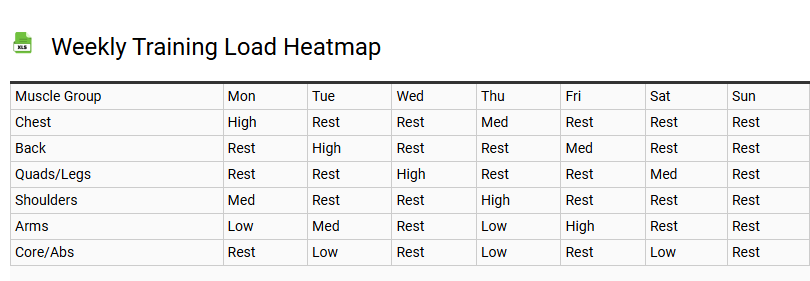
A Weekly Training Load Heatmap serves as a sophisticated visual analytics tool for tracking exercise intensity and cumulative volume across a microcycle. By utilizing color-coded data visualization, this template allows athletes and coaches to monitor progressive overload and manage physiological stress levels effectively.
This dynamic dashboard integrates key metrics such as RPE (Rate of Perceived Exertion), duration, and frequency to calculate chronic workload. By highlighting fluctuations in exertion levels, users can optimize periodization strategies and prioritize recovery optimization. Implementing this systematic approach to performance monitoring is essential for injury prevention and avoiding overtraining syndrome. Whether evaluating cardiovascular strain or resistance volume, the heatmap provides a clear overview of training distribution, ensuring every workout session aligns with long-term athletic performance goals and metabolic conditioning.
Exercise Variety and Overlap Tracker
💾 Exercise Variety and Overlap Tracker .xls
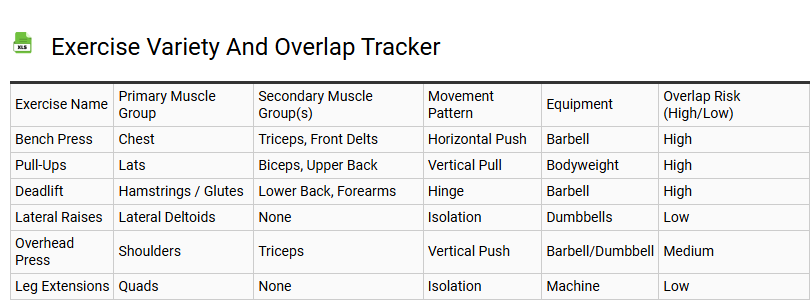
Efficiently manage your fitness progress using an Exercise Variety and Overlap Tracker. This organizational tool monitors the distribution of movements across different muscle groups to ensure balanced physical development. By cataloging every lift and movement, you can visualize where training volume clusters, helping to prevent overuse injuries and stagnant plateaus.
Utilizing this framework allows you to:
- Identify redundant patterns that target identical motor paths.
- Diversify movement planes for holistic structural integrity.
- Optimize recovery by spacing out high-stress overlapping exercises.
- Ensure full-body stimulus through varied resistance profiles.
This systematic approach transforms a simple workout log into a strategic roadmap for long-term hypertrophy and strength gains. By maintaining a clear overview of your training landscape, you guarantee that every session contributes uniquely to your total performance goals.
Rest Day and Fatigue Management Log
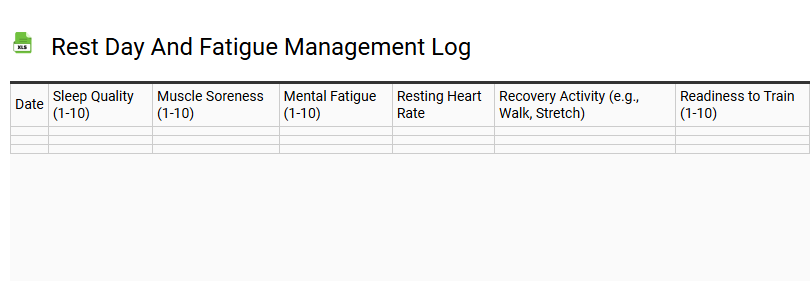
💾 Rest Day and Fatigue Management Log .xls
Optimizing athletic performance requires a data-driven approach to active recovery and neuromuscular fatigue. This template serves as a comprehensive recovery log, allowing users to track critical biometric markers and subjective wellness indicators. By monitoring sleep quality, muscle soreness, and resting heart rate, athletes can effectively prevent overtraining syndrome and systemic burnout.
Integrating Rate of Perceived Exertion (RPE) and stress levels into your daily workout diary facilitates better load management and periodization. Documenting hydration and nutritional intake alongside heart rate variability (HRV) ensures a holistic view of physiological repair. Use this fatigue management tool to identify patterns in chronic fatigue, adjust training volume during deload weeks, and maximize hypertrophy or endurance gains through strategic downtime and injury prevention protocols.
Compound vs Isolation Ratio Analyzer
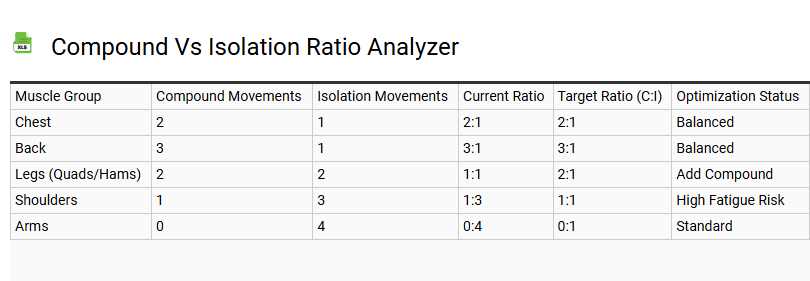
💾 Compound vs Isolation Ratio Analyzer .xls
This analytical framework evaluates the strategic balance between multi-joint compound movements and single-joint isolation exercises. By quantifying training volume, the tool ensures an optimal distribution of mechanical tension and metabolic stress, both critical drivers for muscle hypertrophy. Precise auditing of this ratio facilitates neuromuscular adaptation while maintaining structural balance across the kinetic chain.
Utilizing this template allows athletes to monitor progressive overload across foundational lifts versus targeted accessory work. Key benefits include:
- Optimized muscle fiber recruitment through varied movement patterns.
- Enhanced recovery management by preventing excessive systemic fatigue.
- Refined programming variables for specific aesthetic or performance goals.
Maintaining a data-driven ratio prevents training plateaus and promotes long-term musculoskeletal health by balancing heavy primary patterns with refined, high-repetition isolation stimuli.
Body Part Frequency Planner
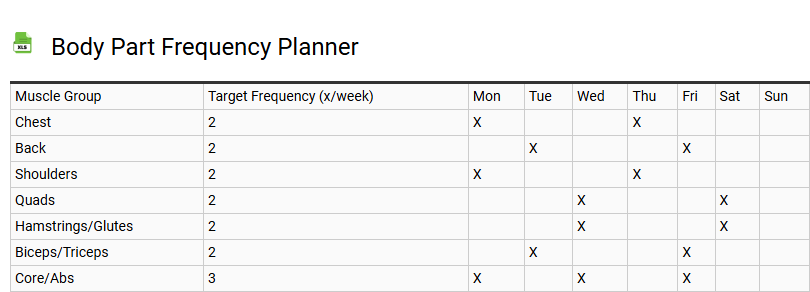
💾 Body Part Frequency Planner .xls
A Body Part Frequency Planner serves as a strategic framework for organizing resistance training sessions to maximize hypertrophy and strength. By tracking the repetition of specific muscle groups within a weekly microcycle, athletes can optimize muscle protein synthesis windows and ensure adequate recovery. This template facilitates precise volume distribution, allowing for balanced load management across primary and secondary movers.
- Optimizes training frequency for consistent physiological growth.
- Manages systemic fatigue and localized delayed onset muscle soreness (DOMS).
- Balances compound movements with targeted isolation exercises.
Utilizing this structured approach ensures that each anatomical region receives the necessary mechanical tension and metabolic stress required for adaptation. This systematic method prevents overtraining while maintaining a high-intensity stimulus throughout the training split, ensuring long-term athletic progression and physical development.
Set and Rep Range Distribution Tool
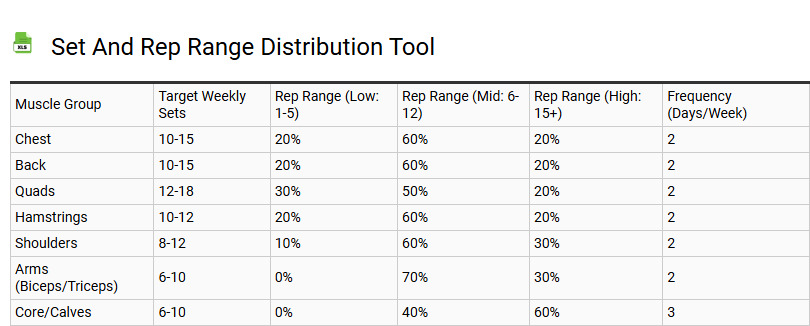
💾 Set and Rep Range Distribution Tool .xls
The Set and Rep Range Distribution Tool is a sophisticated resource for athletes and coaches aiming to optimize training volume and intensity levels. By precisely calculating total workload distribution, this template facilitates effective progressive overload across targeted muscle groups. Users can strategically balance hypertrophy-focused repetitions with lower-rep strength training protocols to maximize muscle fiber recruitment and metabolic stress.
- Optimize total tonnage for improved periodization cycles.
- Analyze RPE (Rate of Perceived Exertion) to enhance recovery management.
- Refine volume allocation to mitigate the risk of overtraining.
This dynamic framework streamlines workout programming, ensuring every training stimulus aligns with specific physiological adaptations. Whether targeting mechanical tension or muscular endurance, this tool provides the analytical clarity needed for superior performance longevity and consistent strength gains within any fitness regimen.
Progressive Overload Tracking Dashboard
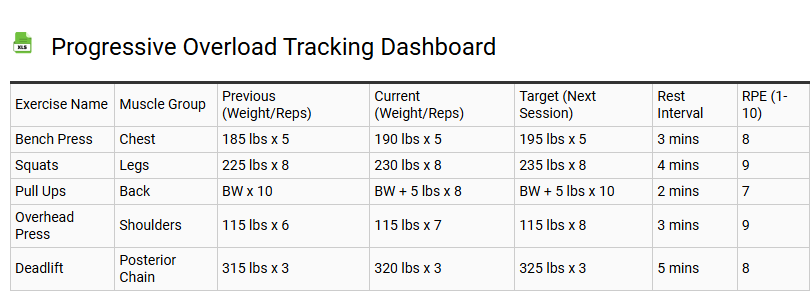
💾 Progressive Overload Tracking Dashboard .xls
This dashboard template provides a structured framework for monitoring physical advancement by organizing essential workout metrics into a centralized interface. Users can efficiently record weight, repetitions, and sets to calculate total training volume across various exercises. The layout prioritizes chronological data entry, allowing for immediate comparison between current performance and historical benchmarks.
Integrated visual tools display trends in intensity and recovery, ensuring that each training session builds upon the last. By monitoring one-rep max estimates and rest intervals, athletes can precisely adjust resistance levels to stimulate continuous muscle adaptation. This structured approach helps prevent plateaus by highlighting necessary increments in workload.
- Automated volume calculations for every movement.
- Historical peak tracking to drive consistent personal records.
- Time-based charts for monitoring strength gains over specific training blocks.
The design transforms raw exercise data into a clear roadmap for long-term athletic success.
Daily Undulating Periodization Model
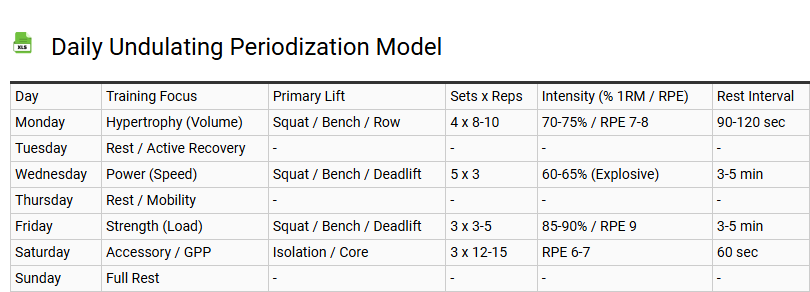
💾 Daily Undulating Periodization Model .xls
Muscle Recovery Status Heatmap
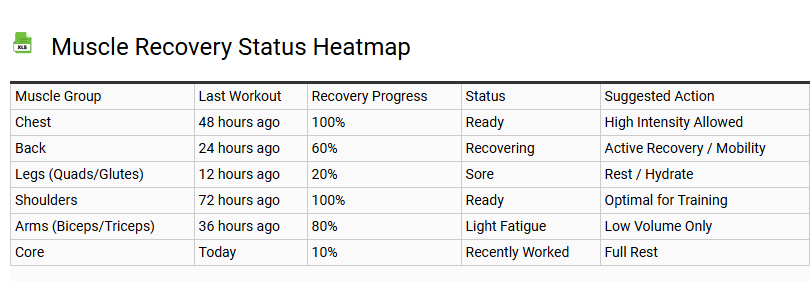
💾 Muscle Recovery Status Heatmap .xls
The Muscle Recovery Status Heatmap is a precision tool designed to visualize physiological readiness and muscular fatigue across the kinetic chain. By utilizing a color-coded gradient, this template tracks the transition from acute inflammation and Delayed Onset Muscle Soreness (DOMS) to optimal tissue repair.
Athletes can monitor metabolic waste clearance and glycogen replenishment by inputting daily biometric data. This visual interface highlights critical recovery zones, enabling data-driven decisions regarding training volume and hyper-compensation cycles. Key metrics integrated into the heatmap include:
- Localized muscle stiffness and myofascial tension levels.
- Neuromuscular activation readiness and power output potential.
- Impact of active recovery protocols on blood flow.
Leveraging these insights prevents overtraining syndrome, ensuring periodization aligns with actual myofascial recovery for sustained peak performance and injury prevention.
Volume Equated Split Comparison Tool
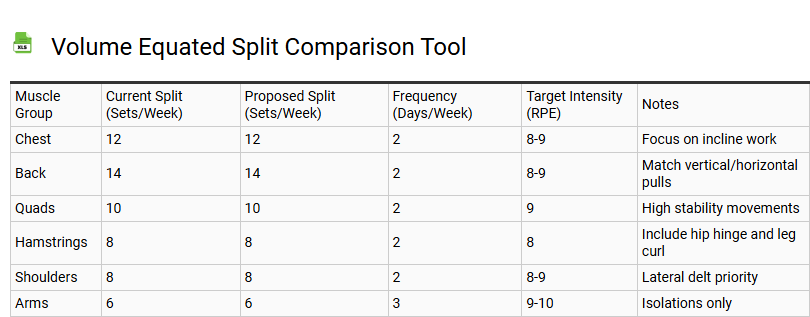
💾 Volume Equated Split Comparison Tool .xls
The Volume Equated Split Comparison Tool allows athletes to evaluate different training structures while maintaining a consistent total workload. By balancing sets, repetitions, and intensity across various routines, you can isolate variables such as frequency or exercise selection to determine their impact on performance and recovery.
This template facilitates a data-driven approach to programming by focusing on:
- Workload Consistency: Ensuring total tonnage remains identical between compared splits.
- Recovery Analysis: Observing how different distributions of stress affect muscle soreness and readiness.
- Hypertrophy Optimization: Identifying the most efficient organizational structure for muscle growth.
By holding volume constant, you eliminate the common error of comparing routines with different work capacities. This ensures that any observed progress is a direct result of the programming architecture rather than simply increasing the amount of work performed.
Training Stress Score Calculator
💾 Training Stress Score Calculator .xls
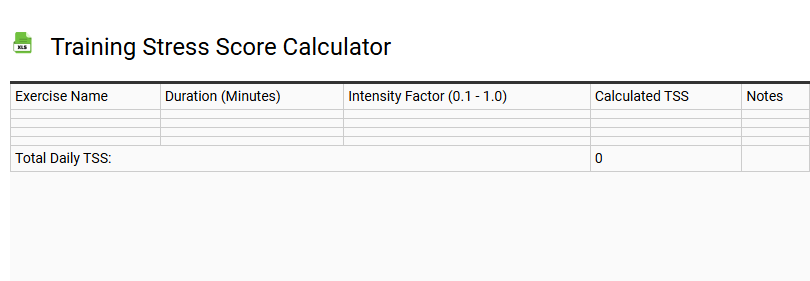
This Training Stress Score (TSS) calculator provides a quantified measurement of the physiological load induced by a workout. By integrating Functional Threshold Power (FTP), Normalized Power (NP), and session duration, this tool determines the Intensity Factor (IF) and total training load. Utilizing precise power meter data, athletes can monitor their acute training load (ATL) and chronic training load (CTL) to mitigate the risk of overtraining.
Understanding TSS is essential for managing aerobic fitness and ensuring adequate recovery time between high-intensity sessions. Whether focusing on endurance performance or explosive intervals, tracking these metrics helps in modeling training stress balance (TSB). This template simplifies complex physiological stress calculations, allowing for strategic periodization and optimized peak performance during competitive cycles by analyzing workload distribution and caloric expenditure effectively.
Microcycle Volume Distributor
💾 Microcycle Volume Distributor .xls
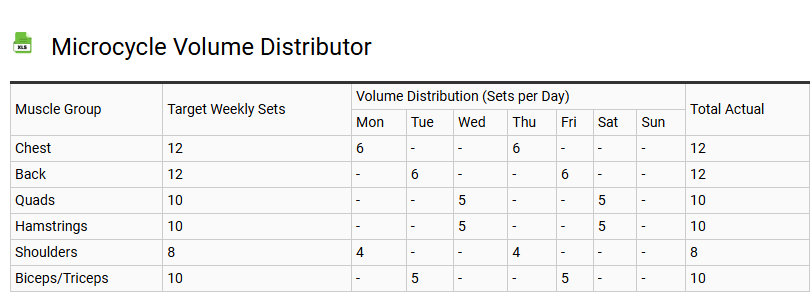
A microcycle volume distributor is a specialized framework designed for precise strength training periodization. This template facilitates the strategic allocation of weekly workload, ensuring targeted hypertrophy and strength adaptations. By systematically balancing total sets, repetitions, and tonnage across daily sessions, practitioners can maintain progressive overload while prioritizing effective fatigue management.
- Optimizes training frequency and individual recovery capacity.
- Integrates autoregulation metrics such as RPE and intensity percentages.
- Distributes volume across specific movement patterns or muscle groups.
Utilizing this structural blueprint allows for the monitoring of metabolic stress and mechanical tension. This methodology ensures seamless transitions within a mesocycle, mitigating overtraining risks and fostering consistent physiological adaptations. Precise volume distribution is a cornerstone of elite athletic programming, streamlining the path toward peak performance and long-term musculoskeletal development.
Exercise Sequence Efficiency Log
💾 Exercise Sequence Efficiency Log .xls
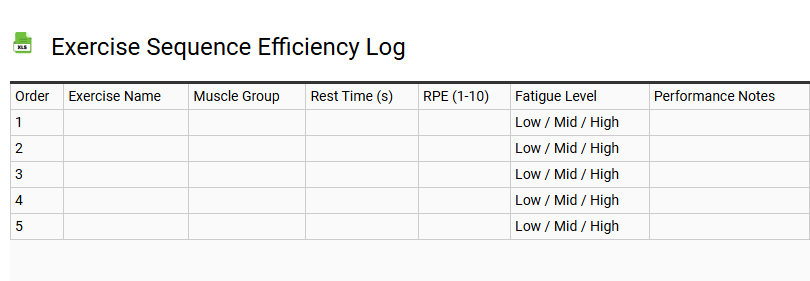
An Exercise Sequence Efficiency Log is a strategic tool designed to optimize workout structure and maximize training density. By systematically tracking the exercise order, athletes can analyze how metabolic demand and muscle fatigue influence overall performance. This log facilitates the monitoring of transitions between compound movements and isolation exercises, ensuring peak physiological response.
- Record recovery intervals to maintain high intensity.
- Analyze volume load to identify strength gains.
- Evaluate workout flow to eliminate training bottlenecks.
- Monitor rest periods for improved hypertrophy.
Utilizing this template allows for data-driven adjustments to supersets and circuit training protocols. By auditing the exercise progression, you ensure that neuromuscular demand is balanced throughout the session, ultimately enhancing athletic performance and gym productivity.
Muscle Fiber Type Training Splitter
💾 Muscle Fiber Type Training Splitter .xls
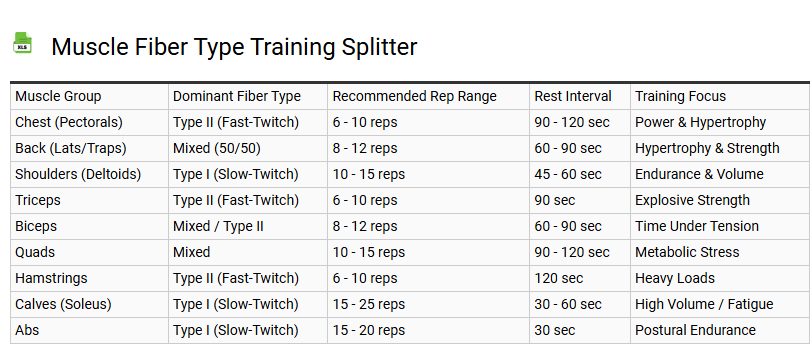
A Muscle Fiber Type Training Splitter optimizes hypertrophy by tailoring exercise variables to the specific physiological composition of different muscle groups. Human skeletal muscles consist of Type I (slow-twitch) fibers, which are fatigue-resistant and oxidative, and Type II (fast-twitch) fibers, which generate high power but fatigue quickly.
This template organizes programming into two primary stimuli:
- Metabolic Stress: High-repetition ranges (15–25+) and short rest intervals specifically target Type I fibers and increase sarcoplasmic volume.
- Mechanical Tension: Low-to-moderate repetition ranges (3–8) with heavy loads and longer recovery periods recruit high-threshold motor units associated with Type II fibers.
By rotating these modalities, the splitter ensures comprehensive development across the entire fiber spectrum. This strategic distribution prevents overtraining while maximizing motor unit recruitment and structural adaptation for balanced strength and aesthetic gains.
Maximize gains using this workout split optimization sheet, meticulously designed to balance training volume and recovery periods. By organizing targeted muscle groups and refining exercise selection, you ensure the ideal frequency for hypertrophy. This data-driven template facilitates consistent progressive overload while aligning routines with specific fitness goals. Simplify performance tracking and adjust your weekly schedule to eliminate plateaus. Download this resource to refine your programming and achieve peak physical conditioning through structured, science-based training organization.