
Zero Waste Kitchen Log Template: A Practical Guide to Tracking Food Waste
Implementing a Zero Waste Kitchen Log is a transformative strategy for food waste reduction and sustainable pantry management. By maintaining a detailed inventory tracking system, you can effectively minimize spoiled leftovers and optimize your compost output. This eco-friendly habit streamlines meal planning, ensuring every grocery item supports a circular economy. Monitoring your kitchen's output helps lower monthly expenses while significantly reducing your environmental footprint through mindful consumption. Please check our already made variation of templates below.
Food Waste Tracker
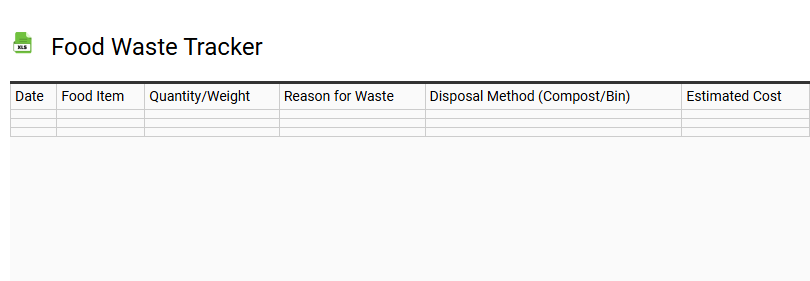
A Food Waste Tracker is a specialized digital tool designed to help households and professional kitchens monitor discarded items and optimize consumption. By documenting exactly what is thrown away, you can gain visibility into your disposal habits and identify recurring patterns of loss.
This template allows for the precise logging of essential data, including:
- Item Description: The specific food or ingredient being discarded.
- Quantity: The weight or volume of the wasted resource.
- Reason for Loss: Identifying if the waste occurred due to spoilage, over-preparation, or expiration.
- Cost Impact: Calculating the financial loss associated with discarded goods.
Regularly updating this log encourages more mindful grocery shopping and improved meal planning. By transforming waste data into actionable insights, you can significantly reduce your environmental footprint while maximizing your food budget efficiency.
Pantry Inventory and Expiry Monitor
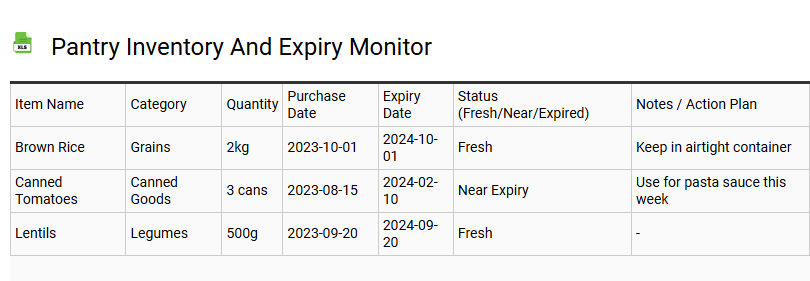
💾 Pantry Inventory and Expiry Monitor .xls
Maintaining a professional pantry inventory and expiry monitor is essential for efficient kitchen organization and reducing food waste. This digital stock tracking system helps users manage the shelf life of various perishable goods and dry staples effectively. By implementing a structured grocery management template, you can monitor expiration dates in real-time, ensuring optimal food safety and quality.
Key benefits of utilizing an inventory management system include:
- Streamlined meal planning based on available ingredients.
- Optimized bulk buying strategies to save costs.
- Enhanced visibility of storage containers and hidden cupboard contents.
- Reduced overspending through accurate stock levels assessment.
Consistent home inventory updates allow for a "first-in, first-out" approach, transforming chaotic storage into a high-functioning food supply hub. This proactive household management tool is vital for any modern, sustainable kitchen.
Leftover Management Log
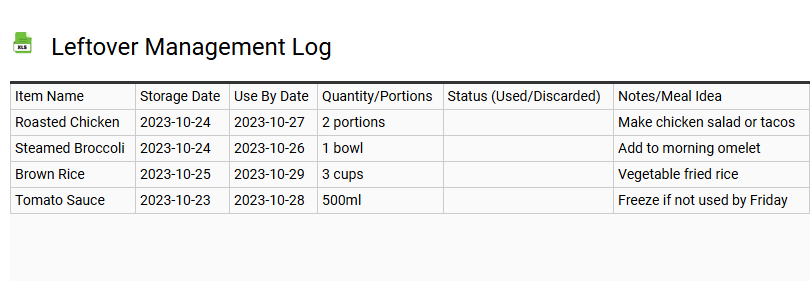
💾 Leftover Management Log .xls
Implementing a leftover management log is a strategic approach to food waste reduction and enhanced kitchen efficiency. This essential inventory tracking tool helps households and professional kitchens monitor surplus ingredients, ensuring food safety through accurate expiration date documentation. By recording meal prep dates and specific storage conditions, users can optimize the shelf life of refrigerated items and frozen portions.
This zero-waste template functions as a comprehensive culinary resource management system, promoting sustainability and cost-effective meal planning. Integrating a tracking sheet into your daily routine prevents spoilage and enhances pantry organization. Utilizing batch cooking data within this log simplifies leftover repurposing, effectively transforming excess food into nutritious meals while significantly minimizing environmental impact and monthly grocery expenditures.
Weekly Trash Audit Sheet
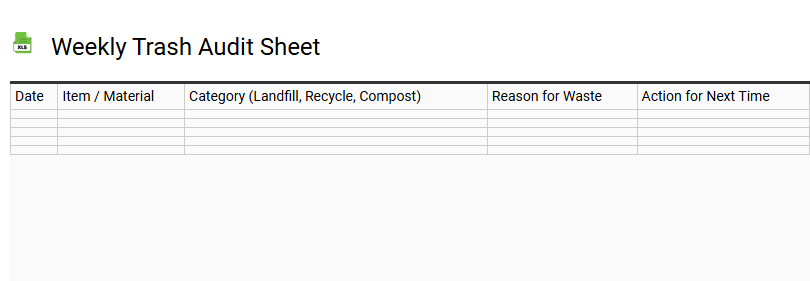
💾 Weekly Trash Audit Sheet .xls
A weekly trash audit sheet serves as an essential instrument for systematic waste management and sustainability. By maintaining a detailed audit log of discarded items, users perform a comprehensive waste stream analysis to identify landfill-bound refuse versus recycling stream potential. This template facilitates the tracking of organic waste, plastic reduction efforts, and occurrences of bin contamination. Monitoring disposal habits over seven days allows for data-driven decisions that increase landfill diversion rates and minimize your environmental footprint. Utilizing a structured refuse tracking method helps highlight avoidable single-use materials, guiding households or businesses toward zero-waste goals. Through consistent evaluation of discarded items, this audit sheet transforms routine disposal into actionable insights for improved resource recovery and long-term ecological responsibility.
Perishable Food Priority List
💾 Perishable Food Priority List .xls
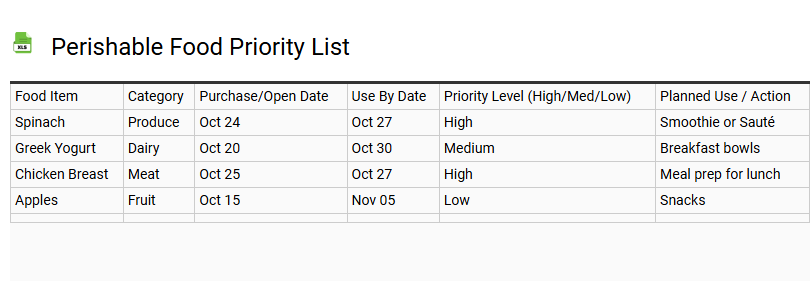
An effective Perishable Food Priority List categorizes inventory based on shelf life and storage requirements to minimize waste. Organising items by their spoilage rate ensures that high-risk ingredients are consumed while at peak freshness.
- Immediate Priority: Items like fresh seafood, berries, and leafy greens that require use within 48 hours.
- Intermediate Priority: Poultry, ground meats, and soft cheeses, which typically remain stable for three to five days.
- Extended Priority: Resilient produce such as citrus, root vegetables, and hard cheeses that last a week or longer.
By implementing this tiered structure, kitchens can streamline meal planning and improve inventory rotation. This systematic approach tracks every item from arrival to consumption, maintaining high standards of quality and food safety throughout the storage cycle.
Bulk Bin Shopping Calculator
💾 Bulk Bin Shopping Calculator .xls
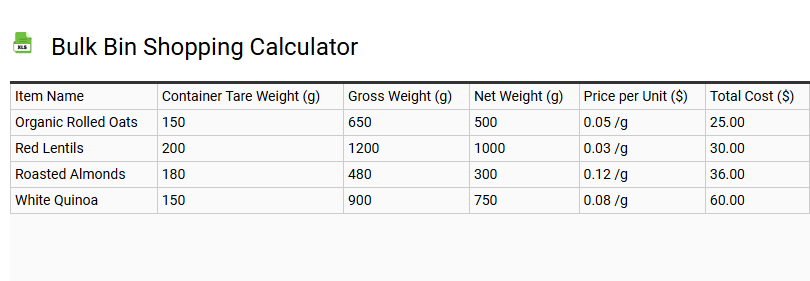
This bulk bin shopping calculator streamlines your zero waste lifestyle by simplifying price conversions for loose goods. Accurately determine the final cost of dry pantry staples like grains, nuts, and spices by subtracting the tare weight of your reusable glass jars or cloth bags.
Designed for eco-conscious consumers, this tool handles unit price math-whether measuring in grams, ounces, or pounds-ensuring transparency at the checkout counter. By tracking weight and volume accurately, you can optimize your grocery budget while reducing single-use plastic packaging.
Transitioning to sustainable shopping becomes effortless when you can instantly calculate the value of package-free inventory. Use this interface to manage bulk aisle selections, compare costs, and support a circular economy. Empower your journey with precise measurements for every refill, minimizing environmental impact and maximizing savings at your local food co-op.
Compost Contribution Tracker
💾 Compost Contribution Tracker .xls
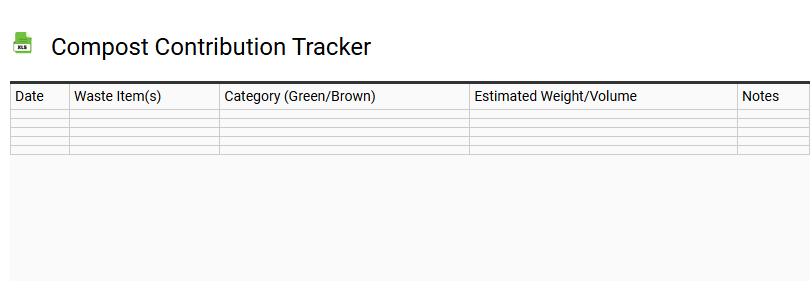
A compost contribution tracker serves as a vital tool for sustainable waste management, allowing users to monitor the balance of organic waste inputs. By systematically logging green materials, such as household food scraps, and brown materials, like cardboard or dried leaves, you can maintain the ideal carbon-to-nitrogen ratio for rapid decomposition. This template helps track moisture levels and aeration needs within your composting bin or vermicompost system to ensure a healthy aerobic process. Utilizing a digital log facilitates better waste diversion rates, transforming kitchen scraps into nutrient-rich humus. Regular entries improve soil health by providing data-driven insights into your biochemical recycling efforts, preventing odors, and optimizing the production of organic fertilizer for your garden or landscape.
Ingredient Substitution Guide
💾 Ingredient Substitution Guide .xls
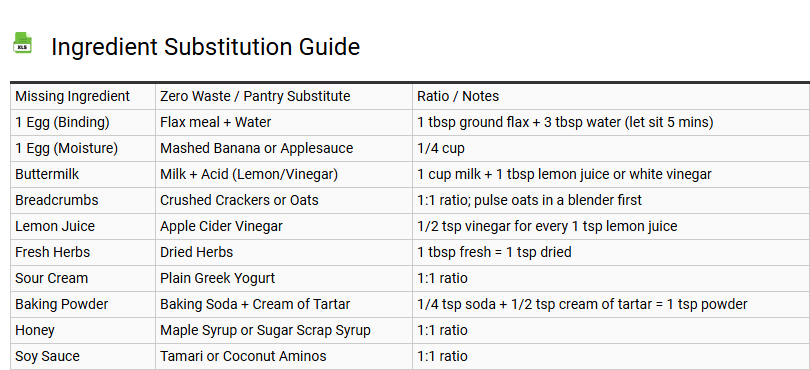
Optimize your culinary workflow with this comprehensive ingredient substitution guide. Designed for versatile recipe adjustments, this template assists when navigating pantry shortages, dietary restrictions, or allergen-friendly requirements. Each entry focuses on maintaining flavor profiles and textural integrity, ensuring consistent results in every dish. Whether you are seeking vegan alternatives, gluten-free swaps, or baking ratio modifications, this resource provides nutritional replacements that preserve the essence of your original meal. By mastering moisture balance and chemical leavening, you can confidently exchange perishables for shelf-stable kitchen staples. This culinary tool is essential for recipe testing and flavor mapping, offering emergency substitutions that prevent kitchen waste. Improve your kitchen inventory management and adapt any gastronomic technique with these strategic ingredient swaps tailored for modern cooking needs.
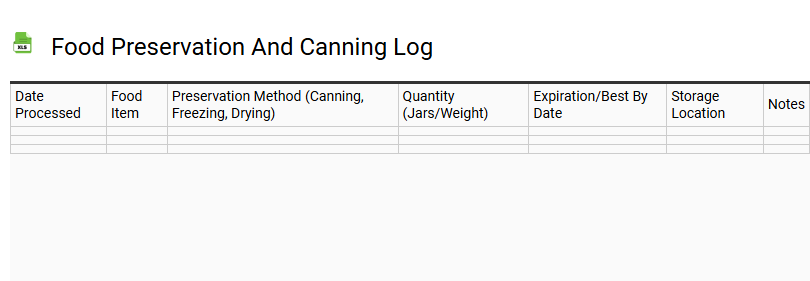
Food Preservation and Canning Log
💾 Food Preservation and Canning Log .xls
Maintaining a comprehensive food preservation and canning log is essential for ensuring food safety and optimal pantry management. Utilizing a standardized template allows you to meticulously track batch dates, processing methods-such as water bath canning or pressure canning-and precise headspace measurements. Documenting acidity levels and pH balance is critical for preventing spoilage and extending the shelf life of your home-preserved goods.
A high-quality log should facilitate the recording of:
- Sterilization procedures for jars and equipment.
- Specific processing times and PSI settings.
- Verification of seal integrity post-cooling.
- Detailed ingredient sourcing and recipe adjustments.
Consistent inventory tracking through a dedicated logbook streamlines your harvest workflow, reduces waste, and provides a reliable reference for future seasons. This systematic approach ensures every jar meets rigorous quality standards for long-term storage.
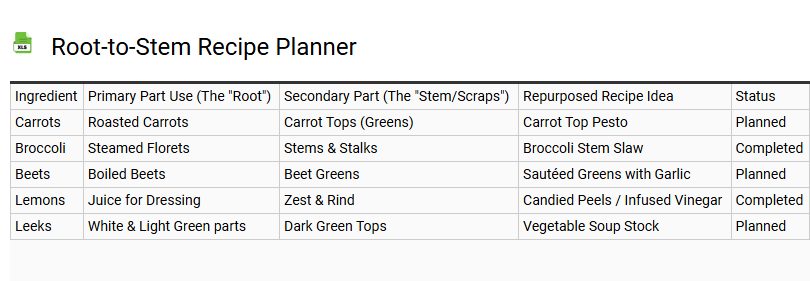
Root-to-Stem Recipe Planner
💾 Root-to-Stem Recipe Planner .xls
This root-to-stem recipe planner serves as a comprehensive framework for zero-waste cooking, emphasizing the full utilization of seasonal produce. By integrating sustainable kitchen practices, this template helps users transform often-discarded vegetable scraps, such as fibrous stalks and nutrient-dense peels, into culinary highlights.
Optimized for culinary efficiency, the planner encourages food waste reduction while maximizing nutrient density. Documenting creative uses for broccoli stems, carrot tops, and beet greens fosters an eco-friendly lifestyle and reduces grocery overhead. This circular economy approach to meal prepping ensures every plant-based ingredient is honored from harvest to plate. Use this structured layout to refine your sustainable cooking habits, minimize your carbon footprint, and discover the gourmet potential hidden within every part of your garden-fresh vegetables.
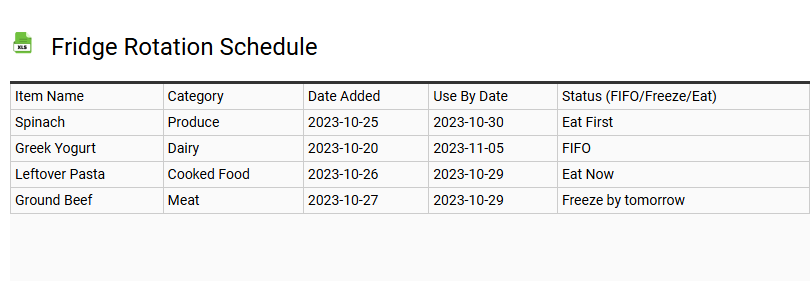
Fridge Rotation Schedule
💾 Fridge Rotation Schedule .xls
Implementing a fridge rotation schedule is a fundamental practice for maintaining peak food safety and operational efficiency in any kitchen. By utilizing the FIFO (First In, First Out) method, this template ensures that perishable items are consumed in the order they were received, significantly reducing food waste and spoilage. Use this log to track expiration dates, storage times, and inventory levels within your cold storage units.
Effective stock rotation involves clear labeling and consistent monitoring of use-by dates to prevent cross-contamination and ensure kitchen hygiene. This structured approach to inventory management helps staff identify older stock quickly, streamlining food preparation and supporting health code compliance. By maintaining a rigorous refrigeration log, you optimize shelf life, improve sustainability, and ensure that only the freshest ingredients reach the table.
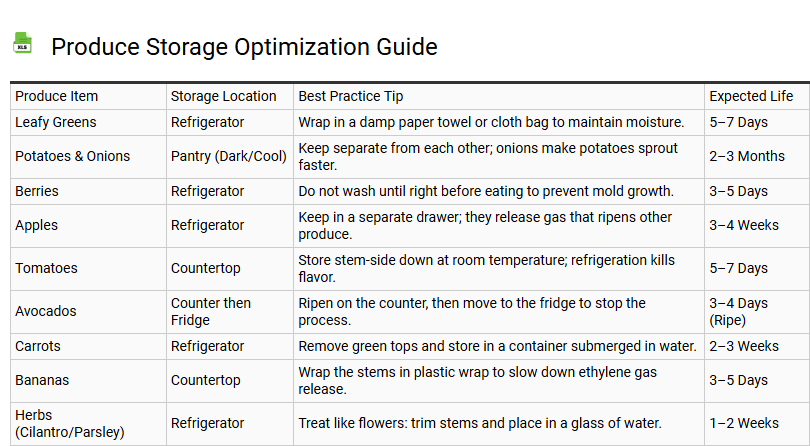
Produce Storage Optimization Guide
💾 Produce Storage Optimization Guide .xls
Maximizing produce shelf life requires understanding the delicate balance of temperature control and relative humidity. To prevent premature spoilage, categorize items by their sensitivity to ethylene gas, a natural ripening agent emitted by fruits like apples and bananas. Storing these separately from ethylene-sensitive leafy greens prevents rapid wilting and yellowing.
Effective food preservation strategies include:
- Utilizing crisper drawers to regulate airflow and internal moisture levels.
- Keeping root vegetables in cool, dark, and dry environments to inhibit sprouting.
- Maintaining precise refrigeration settings to slow microbial activity.
- Avoiding premature washing to minimize residual moisture, which often triggers mold growth.
By optimizing these storage conditions, you enhance nutrient retention and maintain the crisp texture of your harvest, significantly reducing household food waste through professional post-harvest handling techniques at home.
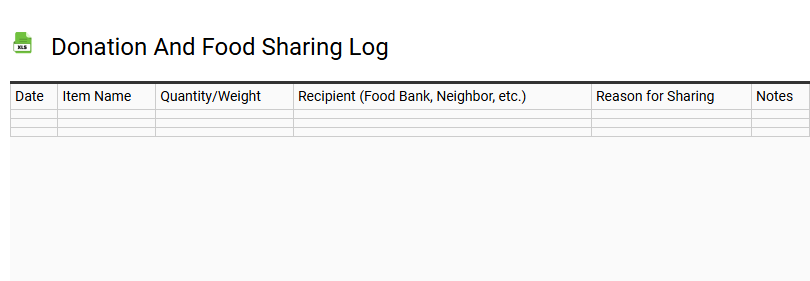
Donation and Food Sharing Log
💾 Donation and Food Sharing Log .xls
This donation and food sharing log template serves as a vital instrument for food security initiatives and community hunger relief programs. By implementing a structured inventory management system, organizations can meticulously track surplus food distribution and charitable contributions. This digital ledger monitors non-perishable goods, fresh produce, and prepared meals, ensuring complete transparency within the supply chain from donors to local community pantries.
Integrated waste reduction strategies are supported through detailed data entry fields for expiration dates, quantity metrics, and storage requirements. Utilizing this tool simplifies volunteer logistics, allowing for real-time updates on food bank stocks and resource allocation. By streamlining food recovery programs through precise record-keeping, stakeholders can enhance sustainability efforts and optimize redistribution networks to effectively support vulnerable populations while minimizing environmental impact.
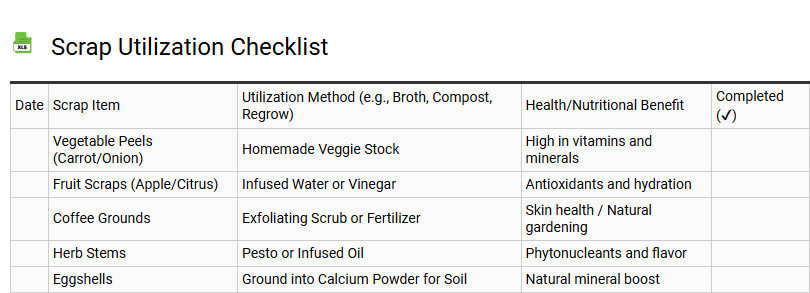
Scrap Utilization Checklist
💾 Scrap Utilization Checklist .xls
A comprehensive scrap utilization checklist serves as a fundamental pillar for lean manufacturing and effective waste management. This template streamlines the identification of material recovery opportunities, ensuring that industrial byproducts are systematically diverted from landfills. By prioritizing raw material optimization throughout the production cycle, organizations can enhance resource efficiency and foster a circular economy.
Key components of this audit include:
- Inventory Control: Tracking surplus off-cuts to minimize over-purchasing and storage overhead.
- Secondary Resource Assessment: Evaluating the salvage value of metal, plastic, or timber remnants for repurposing.
- Sustainability Audits: Measuring the environmental impact of waste reduction strategies and recycling protocols.
Implementing these protocols facilitates significant cost reduction and operational excellence. By refining material handling processes, facilities transform discarded scraps into valuable assets, optimizing the overall bottom line and supporting long-term environmental stewardship.
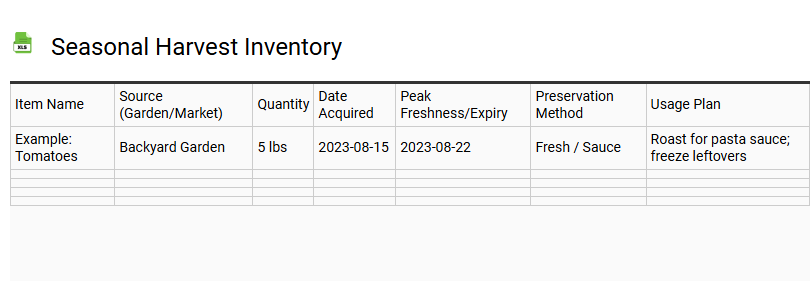
Seasonal Harvest Inventory
💾 Seasonal Harvest Inventory .xls
Implementing a zero waste kitchen log is an essential step toward sustainable living. By utilizing a structured template, households can effectively track food waste, manage pantry inventory, and refine meal planning strategies. This systematic approach reduces environmental impact while optimizing your grocery list. Adopting a waste reduction tracker helps identify patterns in discarded scraps, fostering a circular economy at home. Start your journey toward an eco-friendly lifestyle today by documenting consumption habits to ensure long-term kitchen management efficiency and sustainability.